BBC BLOGS - West Country Cash

Archives for November 2009

Selling cider to Somerset

Dave Harvey|11:18 UK time, Monday, 30 November 2009

It's surely our version of the proverbial coal carpetbagger on Tyneside. Or the aggregates merchant touring Dubai offering a new, finer grain of sand.
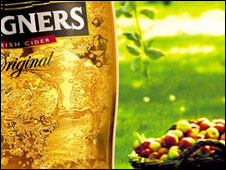
Irish cider makers, MagnersIrish cidermakers Magners have got so hot at making cider cool, they've just bought one of Somerset's crown jewels, Gaymers of Shepton Mallet.

This is a story of the brazen nerve of the outsider, and the old business rule of finding the most sacred rule in the book, then smashing it.

A few years ago I was carrying out some intensive research at the Bath & West Show, with the nice folks of the Somerset Cider Brandy company. The Irish were the talk of the tent. Magners had crashed onto our TV screens with funky, dreamy ads. Cider was poured over ice. And if that wasn't bad enough, it was selling like hot cakes.

"They've broken the oldest rule in the book," smiled Julian Temperley, leaning a barrel of his old Burrow Hill brew. "Everyone in the English cider business has always sworn by it: don't mention apples."

He was right. And you can check, right now, with your eyes closed.

Conjure up every cider advert or logo of the past 30 years. What do you see? Bows and arrows. Strong English arms. Even a woodpecker, for goodness' sake.

Julian Temperley, with his Somerset Cider Brandy"Cider has always been sold here as stronger and cheaper than beer," continued Julian, warming to his theme. "Essentially, it's a cheap route for northerners to get merry."

Anyone who knows Julian Temperley won't be surprised by his directness, but he had a point. And he knows his stuff. Just last week, he was awarded a Judges' Award by Radio Four's Food programme.

Magners read this rule book, and smashed it. They came over here and sold their Irish cider with backlit, young, groovy types enjoying a summer vibe. Orchards. Beautiful, rosy apples. It was cosmopolitan, cool, aspirational. Suddenly, every It Bar in town stocked it.
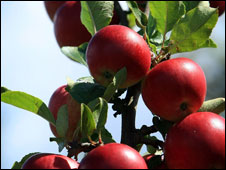
Cider apples in SomersetWell, Somerset fought back of course. Gaymers released their own vintage in chic bottles, and used the same "apples are it" marketing style. And it worked. There is, it seems, room for both Gaymers and Magners in the chillers of Europe's bars.

But today, the Irish have bought up the Shepton Mallet Cider Mill. C&C, the company behind Magners, have paid Constellation Wines, the people who own Gaymers, £45m. 250 staff will transfer, and I'm told there is no threat to their jobs.

And here's the irony. It's probably good news for Somerset cider. Gaymers have been owned by a wine group for years now, and Constellation are clear that "the drive is to focus primarily on wine".

Yes, a spokesman assures me, Gaymers will continue as a strong brand. But what a day. A Somerset cider company says it is in stronger health because the Irish have bought it.

The final twist in the tale is in Magners' history. In Ireland they're not called Magners, but Bulmers. Why? Because many years ago, the Herefordshire cider dynasty that is Bulmers set up an Irish offshoot. As happens, it split off after a while and went native. And now the Irish cousins are back here, teaching Somerset cider men how to sell their brew.


Bailing out the builders

Dave Harvey|10:48 UK time, Monday, 23 November 2009

Call them what you like, Urban Splash are no cowboys.

They've become famous for taking the toughest industrial eyesores and transforming them into fashionable apartments, desirable hotels, eye-catching office blocks.

Chips Re-development, Manchester

They started out as a few funky young guys in Manchester, trying their hand at the property game. Now, when they give advice on urban regeneration, ministers listen.

Yet today they must wait on tenterhooks for a government bail-out to get them building again.

Why? What's happened to Britain's coolest developers?

I meet Tom Bloxham in Sheffield

"It's not Urban Splash's fault, it's not our customers' fault, it's not even our banks fault," the chairman tells me. "It's the world's fault."

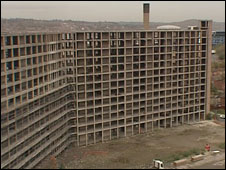
Tom Bloxham has a reputation for straight talking, so I shouldn't be surprised at this. I met the Urban Splash founder and Chairman at an astonishing site in Sheffield, Park Hill.

Park Hill Flts, SheffieldThere's plenty here to stop you in your tracks. Just look at the place. But for me, the amazing thing is the builders.

They are, well, building.

Everywhere else, they've stopped. At Watchet Harbour, in Somerset, plans for the marina development have stalled. Birnbeck Pier, off Weston, has had the Urban Splash hotel/apartment blueprint agreed, but there are no diggers here.

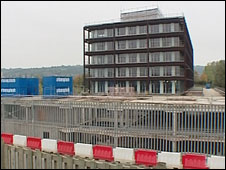
And the biggest mothball of them all is at Imperial House, in Bristol. I've been investigating what's gone on here for Inside Out West, our documentary series on BBC One, and you can read the story here.

Imperial House, now known as 'Lakeshore', South BristolBut in a nutshell, it's another iconic industrial relic - this time the former offices of Europe's largest cigarette factory at Hartcliffe. And once again, fancy flats were promised - and sold. And a year ago, all evidence of building stopped dead.

People who bought the flats have their lives on hold. They paid deposits of around £8,000, which usually means most of their savings. They expected to be in by this summer, but have now been told it will be 2011 at best.

The odd thing, though, is Urban Splash have sold more than 200 of the 400 apartments. So, crunch or no crunch, surely this project could go ahead?

The problem, as ever, is not sales but debt. The company's latest accounts (which only cover the year ending March 2008) reveal debts of £201m. And total equity in the firm is just over £92m. When property accountants see a debt-to-equity ratio of more than two, their eyebrows start to twitch.

"What you have to do is stop spending money." That's the advice I get from a respected Bristol accountant, Mike Warburton. "Stop building apartments you haven't sold, and even stop building places you have sold. Hang on to your funds."

When you hear that, the silence in Hartcliffe sounds different. Looked at by a banker, the absent crane and the dearth of diggers is a perfect scene. No money is being spent, that debt is getting no bigger. Eventually, people will start buying apartments again on the completed projects, and then the glaziers and joiners will return.

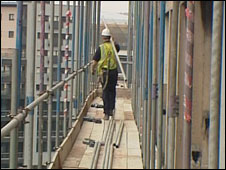
Scaffolder at work, Park Hill, SheffieldSo why, then, is Sheffield a hive of activity? Huge concrete and steel balustrades are being winched into place. The windows are going in. Miles and miles of scaffolding creep up the building like ivy.

But this is government cash - £39m from the Homes and Communities Agency, part of the so-called "Kickstart" programme. Park Hill is deemed a vital community project. It will lift the area, deliver affordable housing, bring jobs. So ministers are backing it.

Lakeshore, as the Bristol project is called, is also waiting for a bail-out. I understand that they've asked for up to £20m, and insiders say the signs are looking good.

"We're very hopeful," insists Tom Bloxham, atop his government-backed 13-storey block in Sheffield. "We're hopeful that very soon you'll see the HCA backing Lakeshore, and work going back on track, and hundreds of jobs coming to Bristol."

Hopeful? I ask. Can you do better than hope?

He shrugs, a little frustrated, you feel. "Look, I wish I was in charge of the economy, of the world situation, but I'm not. All I can say is, ask me next week and I'll be more definitive."

He runs a huge company, built on imagination, enterprise and bankers ready to lend. Now he must wait on Whitehall. Wait to see if his business fits the agenda of ministers and civil servants. Wait, in short, for a bail out from the taxpayer.

Sound familiar?

Have you been caught out by the property crash? I'd love to hear other tales of how the massive fall in flat sales has affected you. Join in the conversation here.

Anyone for champers?

Dave Harvey|14:45 UK time, Tuesday, 17 November 2009

You go to a lot of awards bashes in this job. You know the sort of thing: 'Best Call Centre Operative'. 'Van and Truck Champions of the West'. To be honest, if you're not up for a gong yourself, a night in with a reality show on Channel Five is more thrilling.

Champagne anyone?

But in a recession, industry bashes get more interesting. The Wiltshire Business Awards are one of the biggest, and I got an idea how interesting they might be this year at my first click.

On Friday, when I looked for it, the glossy appeal for proud companies was right next to a story for our times : Swindon Bankruptcies on the increase.

They've asked me to host the trophy fest, which is very kind of them, but I'm starting to wonder who'll be there. Five insolvency firms, competing for "Kindest Bailiff Award"? Half a dozen pound shops going for the "Best Deal in Devizes"?

Well, a quick chat with last year's winners suggests there might be a few pleasant surprises.
Rex Harrington and Greta Hodgkinson in Summer,The Four Seasons
The Young Achiever award went, in 2008, to Amy Williams, from Marlborough. Amy set up one of those "why didn't I think of that" businesses. She will teach you to dance, spectacularly, for one night only. Your wedding night. Wedding Day Dance has had a great year, built on the old adage that there are some things people never scrimp on, however tight the budget.

The overall winners on the night were a dynamic team of pharmaceutical number-crunchers. Tucked away in a Trowbridge back street Themis realised they had an advantage over the huge American market they could never lose.

Time.

US pharmaceuticals churn out millions of numbers - every kind of data imaginable. And when the average American chief exec sits down at 7am, they expect a full report on yesterday's numbers. Until Themis came along, this was done by midnight number-crunchers, working through the night. But Trowbridge wakes up five hours before Wall Street, so the directors here spotted an edge. Working hard from 8am till midday, they produce reports for US bosses that have become the gold standard.

Now, they do lots of clever stuff with these numbers I barely understand. There's more to it than just waking earlier in Wiltshire. But they were happy to claim that as their USP, and who am I to argue?

So who will this year's survivors be? I'm reminded of a wise old dairy farmer near Westbury, whose advice to young dairymen could guide pretty much any industry today. "Get big, get niche - or get out".

If you fancy entering the Wiltshire Business Awards, you've got until Friday 20 November. But if you've got an unusual tip for surviving the crunch - which is more than just a gratuitous ad for your company - I'd love to hear it here.

Kraft v Cadbury : It's Crunchie time.

Dave Harvey|13:37 UK time, Monday, 9 November 2009

Will the world's richest investor save the world's oldest chocolate firm?

It's an extraordinary question, and the answer lies somewhere between Keynsham, North East Somerset, and Omaha, Nebraska.
cadburys-slice.jpg

The chocolate firm belonged to Joseph Fry, who registered a patent in 1777 for the manufacture of chocolate tablets, in Union Street, Bristol. Part inventor, part apothecary, the Quaker chocolatier lived an extraordinary life, (read more on that here), and his sons eventually created the world's first edible chocolate bar (before then it had only been a drink) in 1847.
But it's the Fry factory at Somerdale, outside Keynsham, that matters today.

Fry's Chocolate Cream. Turkish delight. The Crunchie, the CurlyWurly. Names that make mouths water across Britain, names that make us all seven years old again. All made in the famous chocolate factory at Keynsham.

Spin forward a couple of centuries and, as we now all know, the factory is now owned by Cadbury. Another Quaker baby, yes, but those days are long gone. Now the investors want returns, and the management insist a move to Poland will cut costs.

And that, we all thought, would be that.
Goodbye Crunchie, hello 'Crunchski'.
Quite.

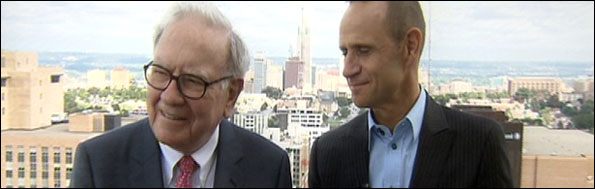
Warren Buffett with Evan Davis
But then, enter the world's richest investor. Warren Buffett, the "sage of Omaha", the man who started with nothing and now, at 79, is worth a cool $40bn. His firm, Berkshire Hathaway, is the biggest single backer behind Kraft, who today have launched a formal bid for Cadbury's.

So far, so much business as usual. Investors, multinationals, buyouts. No more the magic of the Quaker Apothecary, the sugary dreams of childhood.

Except that Kraft have pledged to save Keynsham. No really, the UK CEO told me so - and if you don't believe me, watch this.

In order to see this content you need to have both Javascript enabled and Flash installed. Visit BBC Webwise for full instructions. If you're reading via RSS, you'll need to visit the blog to access this content.


Cadbury's management will dismiss this offer out of hand. But it's not their answer that matters. It's the investors. Over the weekend, the City's smart money was on a refusal unless the price went above £8 a share. Today's bid works out at just £7.20 (though because it involves Kraft shares, the actual bid price fluctuates).

Is that it then? Game over? Mr Buffett rebuffed by Bournville?

Warren Buffett is famous for his thrift. He recently told Evan Davis that he never offers more than a company is worth, even if the market is bidding the price up. If he thinks Cadbury is worth £7.20 a share or £9.8bn, he will walk away before raising his bid. And for Keynsham, that may finally be that. The little bar created by a Quaker apothecary in a Bristol backstreet will head east to Poland, and our chapter in the story of chocolate will close.

Unless, unless... I don't think this tale is done with surprises yet, do you?

Maltese lace and licorice torpedos: small shops take on the big chains

Dave Harvey|06:02 UK time, Wednesday, 4 November 2009

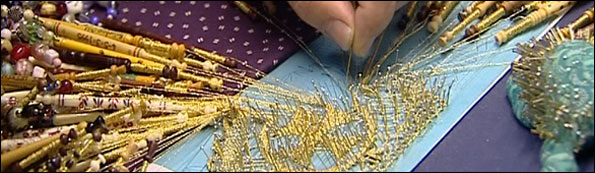
Lace making in Gloucester
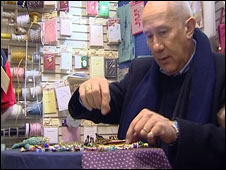
Geoff Burch is full of stories.

The one about his wife escaping from Cheltenham Ladies College down twisted sheets is made up, I'm sure of that.

The one about the bank call centre that won best customer service, but then was told they had cheated because they had "just given the customers what they asked for", well, that has the ring of truth to it, doesn't it.

Mostly, he tells stories about shops. He's one of these business gurus, and he travels from Cheltenham all over the UK handing out tips to small firms, especially small shops.

To add another to his story larder, I teach him to make Maltese Lace.

Geoff Burch learnslaceWell, actually Chris Lane does the teaching, she runs a wonderful haberdashers in Gloucester. If Aladdin had been into embroidery, this would be his cave. Geoff is impressed, with her knowledge and her stock.

"This lady has buttons for teddy eyes, plastic dolls faces," he gushes. "Seventy types of gold yarn - fantastic!"

But he thinks Chris rather hides her lamp under a bushel.

We've come here because small shops like Chris are engaged in a mighty battle, as never before. On one front, of course, the recession, and tight-fisted shoppers. On the other, an avalanche of chain stores from the big multiples. In the last year, the west country has seen hundreds of swanky new shops opening. First Bristol's Cabot Circus, then Gloucester's new Designer Quays, and now - on Wednesday - SouthGate in Bath.

So can the independent shopkeeper survive? Geoff says yes, enthusiastically, but not if they wait for trade.

"Have you thought of popping down the Quays and offering classes?" he asks Chris, over her lace pillow. "An introduction to gold lace - it would go down a storm."

She's not sure. She likes our cameras being there, but you can tell she didn't think unsolicited business advice was part of the deal.

Old fashioned sweets from Aunt Sally
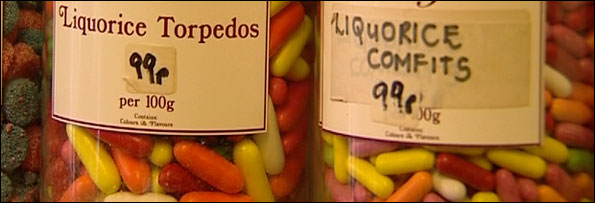
We get a similar story in Aunt Sally's old fashioned sweetie shop, on Westgate Street. Flanked by boarded up casualties of the retail crunch, Aunt Sally sells over 200 varieties of classic old treats, in those famous jars. Foam Bananas, Licorice Torpedos, Butter Tablet (the proper stuff, from Scotland, none of your pale imitations here).

"How about a website?" asks Geoff, sucking on a foam banana ('haven't had these since I was a lad!'). Sally's not sure. Sounds like a lot of work, and her trade is OK - at the moment.

At some point I'm sure we asked lots of hard journalistic questions. Have the Quays really increased footfall in the town, like the city fathers promised? Have the multiples sucked people out of the city centre? Is there a pattern to all these shops that have gone bust?

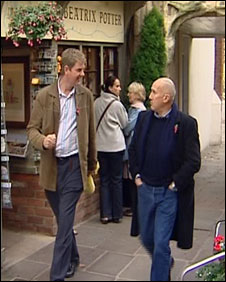
Dave and Geoff go shopping in Gloucester Trouble is, small retailers are wonderfully diverting. And we kept getting diverted. In Bath, we hit Walcot Street, a kind of Independent State of Retailing. Geoff nearly bought a new pair of boots for the Harley. I popped into big John's bike shop to get change for the meter, and came close to replacing my aging mountain bike with its annoying clunky gears.

But OK, I can hear you clamouring to know the future. Will Bath's quirky shops survive SouthGate? "Yes of course, if they are any good," Geoff soothes.

"Blindfold me and put me in any high street in the country, I'd not be able to tell where I was. But look around you" - he waves his arm at the Bath stone crescents, the Abbey steeple, the high hills around - "where else could we be but Bath! And these quirky one-off shops are what make it. Not some anodyne shopping centre out of a packet!"

It's a rather encouraging story, this. Geoff likens both the crunch and the chain store threat to a hard frost. Weak shops will, sadly but brutally, be weeded out. The strong will flourish.

"The multiples are the middle line," he declares. "Independents need to shoot above the line or below the line. If you go above, they can't touch you for service, for variety, for quality. But don't get caught in the middle."

You can catch up with all the BBC Bristol SouthGate news here. And I'll leave you with a guided tour of SouthGate courtesy of our friendly Bath reporter, Ali Vowles.

In order to see this content you need to have both Javascript enabled and Flash installed. Visit BBC Webwise for full instructions. If you're reading via RSS, you'll need to visit the blog to access this content.


BBC © 2014The BBC is not responsible for the content of external sites. Read more.

This page is best viewed in an up-to-date web browser with style sheets (CSS) enabled. While you will be able to view the content of this page in your current browser, you will not be able to get the full visual experience. Please consider upgrading your browser software or enabling style sheets (CSS) if you are able to do so.