BBC BLOGS - West Country Cash

Archives for October 2009

At Bristol docks, the recovery is still at sea

Dave Harvey|07:02 UK time, Friday, 23 October 2009

Patrick Kearon could be in Shakespeare. He has an argosy, bound for Bristol. It will bring prosperity to the Royal Portbury Docks, where he works, and the people of the west country. But it's not even on the horizon yet.
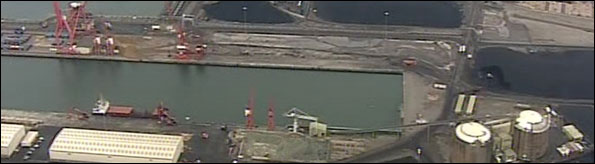
Royal Portbury Docks, Bristol

"Our story is still negative," he tells me. These docks are the second busiest in the country, a fine artery to feel if you want to take the pulse of the west country.

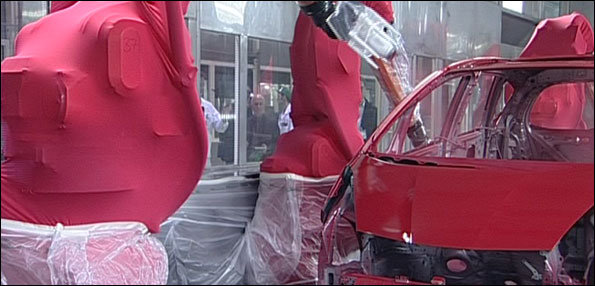
I see Hondas made in Swindon being loaded here for export. When Renishaw of Gloucestershire carefully pack their high tech medical components for Chinese customers, they'll leave from these quays. Build a row of townhouses in Taunton, and it's likely your steel and cement will swing off a geared ship at Portbury.

And the numbers here tell a clear story.

Year on year, coal is down. Building materials are down, steel, even booze is down. Cars are the only positive, and even they are only moving more than at Christmas 2008. Compared with summer 2008 and before, car imports and exports are still down a fifth.

I drive round the docks with Patrick, on a filming recce for Points West. We're expecting the GDP numbers out today to go slightly positive, but everyone tells me any recovery will be very fragile. Would the docks make a good backdrop to our story on the day?

It's a TV dream. Vast ocean liners swallow Hondas like mackerel. In the coal stacks, you lose your scale and it looks like a giant black sandpit. And then Patrick says something unusual.

"We don't want to clash with your story, Dave. If the story on Friday is about recovery, we might not be the right location. Our story is still negative."

Honesty has certainly been one fruit of this recession. Patrick's not the only businessman who's abandoned trying to talk up his trade.

Here are three of my "insiders" with their take on the story so far:

In order to see this content you need to have both Javascript enabled and Flash installed. Visit BBC Webwise for full instructions. If you're reading via RSS, you'll need to visit the blog to access this content.


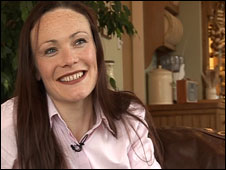
"It's certainly no time for champagne," smiles Lucy Bristow wryly. "More a half glass of chardonnay." Lucy is my insider in the west country job market, and she reckons things are still awfully iffy.
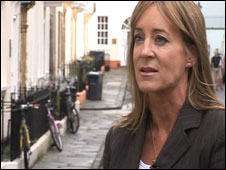
Lucy Bristow
"It's unpredictable," she says, "some sectors are up, like financial services - which fired lots of people last year, but is now coming back with jobs. But it's still an employers market out there. I think it's way too early to call a recovery."

And yet and yet, those estate agents I met yesterday, those furniture makers, they are seeing proper business coming back, aren't they?

This is all rather hard for journalists. I come back to the newsroom and tell my tale. "Well, is it boom or bust?" someone asks. "Is the recovery here - or not?"

The honest answer is this. It's a bit of a mish-mash. Some areas, like lawyers, finance, estate agents, are busier than they were a year ago when the global crunch hit home. Others, like the docks, and a lot of manufacturing, are still quiet. Then you get the niche business, reliant on exports and enjoying the weak pound maybe. ( In fact, Renishaw are a case in point: their trade to China has lifted recently, allowing them to restore some of the pay cut staff had to take.)

It's not much of a headline is it?
"Mixed fortunes for the west as some businesses do well and some others find it tough, but not as tough as it used to be, mind you September was OK, but then August...."

I decide to go with the docks for our filming. Positive figures or negative, this place captures the spirit of business in the west better than any words.

Hmmm. Help me out here. How is it for you?

Update: 13:02
Well, that was a bolt from the blue. Negative numbers, the recession continues.
As you'd probably guessed, journalists had been planning for a small recovery, guided by the "experts". Turns out my man at the docks was on the money: the worst of this might be past, but there's still more rain out there than economic sunshine.
Is the west country hot property once again?

Dave Harvey|08:55 UK time, Thursday, 22 October 2009

Everyone called her brave. Many called her foolish.
And she herself is blessed with a lucky name.

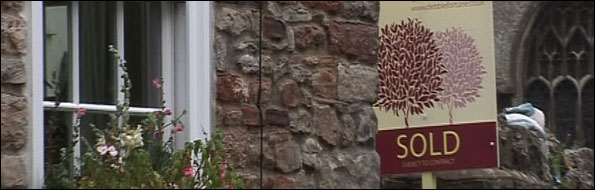
Sold sign in Wrington, North Somerset

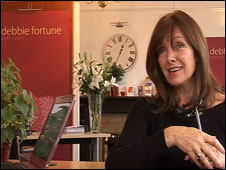
In January Debbie Fortune opened an estate agency, in the pretty North Somerset village of Wrington. It was the depth of the housing crash, the worst trading conditions most in the business had seen for a generation. But as she told me at the time, "things could only get better."

So have they? Nine months on, I call in on her shop to see how her new baby is faring.

"We're selling houses," she smiles. "The level of activity for the middle of October is unprecedented."

"Oh come on Debbie," I chide, "you're an eternal optimist - your cup is always half full. Things aren't that good, surely?"
Debbie Fortune.jpg

She tells me it's not just her agency, but the surveyors and solicitors she works with have noticed it too. Many have had to take more staff on to replace those they lost in the winter of 2008.

Up the road in Bristol, I hear the same story. When a short report on this ran on BBC Points West this morning, the phone started ringing. Andrews, a big chain of agents that operate across the West Country, told me Bristol is hot hot hot.

"We were filming with a TV property show last week," their chief executive tells me, "and they said they hadn't seen houses sell as fast as Bristol anywhere outside London."

OK, estate agents are always optimists, always talking up the market. But the sold signs are convincing. And although the actual sales figures are confidential, I have seen them - and they aren't making it up.

So what's going on? Who's buying? Who's lending again? What happened to the crunch?

The simplest answer comes from one of Debbie Fortune's buyers. Catherine Spalding is gushing over a £675k family house in Churchill, North Somerset. Old pine kitchen, stone floors, plenty of light and views, a playroom for the kids. Catherine's only question is, can she sell her own house in Bristol to move out?

"We just need to move," she tells me, "to find room for this growing family. We didn't really think about the economy at all!"
Catherine Spalding
George, her 18-month-old boy, is bouncing around on the stone floors, loving the space. Catherine is a dentist, her husband's job is secure, they can enjoy record low mortgages and the price gap for people trading up is smaller now than ever. It all makes sense.

That's been the story of this recession in the West Country. The "haves and have nots" are no longer about money, but secure work. If your job is safe - and plenty are - then the cost of living has really dropped dramatically, and those people are spending again.

But there's something beyond the practical sums.

"There's just a really strong confident feeling around," Debbie Fortune insists. People, she thinks, can sense when the market is hot again, and they move fast. In Bristol, Andrews are taking sealed bids on some houses, so keen is the interest.

So is that it? A massive fall in prices - over 20% in a year in Bristol and Bath - huge job losses in estate agencies and solicitors offices; and now - the sun comes out again?

Confidence, luck, optimism; these are the intangibles of a recovery. Does fortune favour the brave? Debbie will find out over the next year, that's for sure.

It's boom time for the debt doctors

Dave Harvey|17:27 UK time, Wednesday, 21 October 2009

South Petherton is a smallish village on the Somerset Levels, not at all the sort of place you'd expect to find a booming modern business.

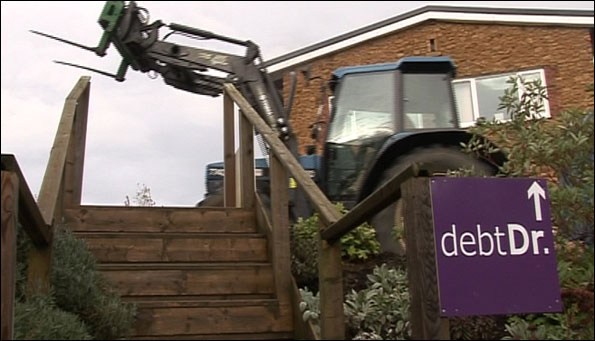
But I've got used to surprises reporting this recession. The company I'm looking for is in a converted barn on a potato farm, just outside the village.

Debt Dr HQ in South Petherton
Jeremy Hockley runs the place, he employs nine people here and another 50 around the UK. And when we meet, I joke that he's the one person most people in the country would happily see go bust.

Mr Hockley calls himself "the debt doctor". His firm helps people suffering the thick end of the recession. Outright bankruptcy or just ends that don't meet, he has advisors all over the country.

"Eighteen months ago we had 15 guys," he tells me. "Now there are over 50 of us. I'm afraid we'll be in business for a while yet."

If you want to measure the human cost of this recession, Mr Hockley's firm is a good yardstick. When the credit crunch first hit, his enquiries went through the roof.

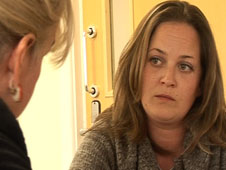
Today, one of his advisors is talking to Cassie Russell. The details, as ever, are hugely complicated. But the headline is simple, and stark. Cassie and her family are £17,000 in the red. It started with a car loan, then that was "consolidated" into another larger loan, and so on.
cassie russell
"The company that sold us the first loan could see we couldn't really pay it," she tells me. "I know we were responsible too, but we didn't think we had any choice. They shouldn't really have lent us that money so easily."

Today, Cassie is starting the bankruptcy process. It's not without its problems, but it will give her a clean start. In the UK, this now happens once every four minutes.

"Every day we're seeing more people like Cassie," Mr Hockley tells me.

"And the amount they owe is going up too. The trouble is, the old methods of refinancing their debts have vanished. Extra mortgages, unsecured loans, that sort of thing - none of that is possible any more."

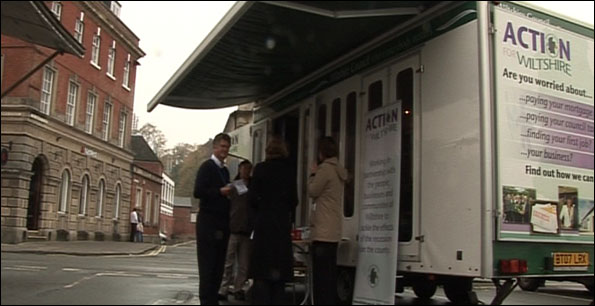
The other side of the West Country, in a bustling market in Devizes, I meet a very different woman - but hear the same tale. Sarah Cardy runs West Wiltshire Citizens' Advice Bureau. Unlike the Debt Doctor her advice, of course, is free. And so when the numbers of people seeking help shot up, she needed to get extra funding.

Wiltshire CAB on the Road

The CAB has just had £288,000 from the county council for a new helpline, offering advice to people caught short in the recession. And Sarah's noticed a major new trend.

"We used to hear from people who found themselves £30 or £50 short at the end of the month. Now people are finding themselves more like £1,500 out of pocket. They've made commitments to loans and mortgages, and when they lose their job, it all gets very tough."

Experts tell us that the recession is starting to ease slightly, that numbers out this Friday might show UK PLC actually growing slightly, or at least shrinking less than we have for the last five quarters.

Does it feel that way to you? Or are you, like thousands of people seeking help with mountainous debts, still trying to sort out the wreckage from the credit crunch?

Dole queues fall across the West for the first time

Dave Harvey|11:02 UK time, Wednesday, 14 October 2009

Is this the end? The beginning of the end? The end, as the man once said, of the beginning?

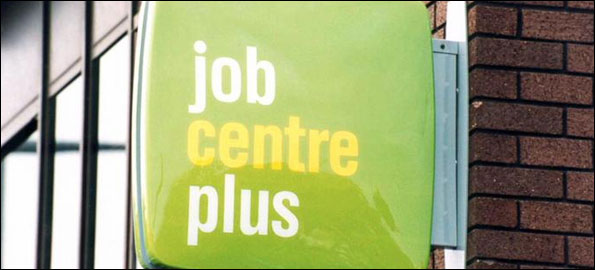
This morning unemployment has fallen in every one of the West's local authority areas.

jobcentre

Not huge - in Wiltshire it was just 40 people - but the numbers claiming jobseekers allowance fell everywhere.

Here's the list:

Somerset : 308 down
South Gloucestershire : 219 down
Bristol : 201 down
Gloucestershire : 169 down
Dorset: 154 down
Swindon : 118 down
B & NE Somerset : 53 down
North Somerset : 51 down
Wiltshire : 40 down

And for all those statistics-lovers out there who want to see three monthly comparisons, the numbers are all down on May's figures too. Yes, there are still thousands more people out of work here than there were a year ago. In Bristol for example, unemployment grew from 6,134 last September to 11,306 last month.

But now the queues have stopped growing, and started shrinking.

In total, there are 1,313 people in the west of England who have stopped signing on.

And that should be good news. So why is nobody cheering?

I can't find a soul in a suit who thinks this recession is anywhere close to ending yet.

It's the Big W they're all afraid of. Not the Woolies store of course, not any more. But the fear that no sooner have we come up out of the credit crunch, than a big public sector freeze sends us crashing down again.

Now all the politicians have talked openly of cutting the debt by curbing Whitehall spending, the only question is where the axe will fall.

And in the West, a lot of cash comes from Whitehall. Councils, yes, but also our huge Universities; the massive MoD supply and logistics HQ at Abbey Wood; big hospital trusts and quangos like the Environment Agency.

No-one expects to see nurses uniforms in the dole queues, at least not soon. But even if politicians save those "front line staff", as they call them, others will feel the chill.

Contractors, whether in computers or training or bricks and mortars, turned to the public sector when commercial work ran dry in 2008. But contractors are the first to get trimmed back when hospital managers or university Vice Chancellors are trying to cut costs.

Now, as one man said to me the other day, they hope the private orders will come back before the public purse snaps shut.

Still, today our jobless numbers have fallen. A new supermarket opens in Chard, hiring 59 people.

So not the end then, no. But maybe, Mr Churchill, the end of the terrible beginning.

Behind the scenes at Bath's new shopping centre

Dave Harvey|16:06 UK time, Monday, 12 October 2009

When Bristol opened its flash new shopping centre a year ago, they had circus dancers on the roof. Trapeze artists cavorted high above shoppers.

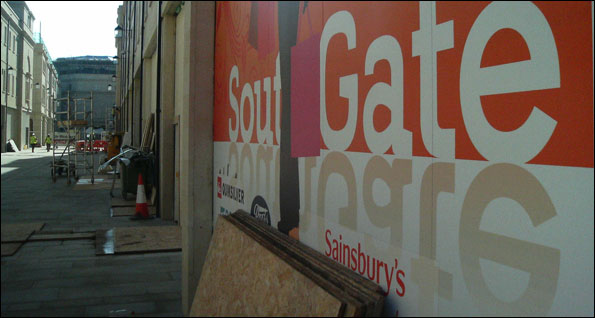
So what is Bath planning for its new SouthGate shopping centre, which opens in three weeks on 4 November?
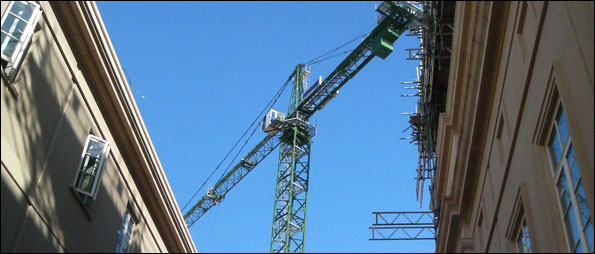
Southgate shopping centre under construction

A Roman quadrille marching down Milsom St? Beau Nash and a throng of Georgian dandies flouncing through the Pump Rooms?

"We thought we might ask a couple of schools down to cut a ribbon", the man from SouthGate confides. This is Razzamatazz, recession style.

Actually, it makes perfect sense. For entirely practical reasons, they will open SouthGate in three phases. A third of the shops in November - including a huge new Boots, Sainsbury's, and H&M. Phase 2 opens in May 2010, and then in September the builders leave and the flagship Debenhams store will open.

I've just had a wander round behind the scenes, and you can see how they're getting on here.

southgate.jpg

Because the centre's opening in phases, it's all much calmer than the final weeks before Bristol's Cabot Circus opened in September 2008. Every cherry-picker in the west was commandeered, and shops were still fitting out at midnight before opening day. None of that at SouthGate.

And since they're opening what will still be a massive building site, they could hardly have a big flashy ceremony. Cranes and diggers rather spoil the effect.

But somehow, it all seems rather symbolic. Cabot's opening day now seems like a flashback to another world. A world of instant credit and endless shoppers. A world where you could sell pretty much anything to the passing crowds. A world that has gone.

SouthGate even has the right shops for the new mood. Sainsbury's. Boots. Debenhams. Practical, everyday shops instead of fripperies and fancies. It's ironic really, when you think about the two cities. Bristol, traditionally the more grimy, working, down to earth city gets the flashy new Circus. Bath, home of the dandy and still beloved by lunching ladies, gets sensible SouthGate.

Can Mr and Mrs Average save Swindon?

Dave Harvey|18:38 UK time, Tuesday, 6 October 2009

In these uncertain times, here's a prediction.

When the first "Made in Swindon" Jazz rolls off the production line at Honda today, they will cheer. For the Swindon workers itself, the move is clearly a massive morale lifter. They've been open for four months since the long shutdown which made the recession real to the town, and this is just what they need. Obviously the work on the new car is welcome, but more than that, this is a huge shout from Tokyo to Swindon:

"We Trust You".

honda jazz in swindon plant

But even more interesting is what it tells us about the rest of Swindon, possibly the world, as we cope with this global recession.

Average sells.

Honda has survived where Nissan and Toyota have gone into the red because it sells inexpensive, sensible, family cars. To cash strapped sensible families. And they're not alone.

Which building society is the only one in the country not to demutualise and chase quick bucks on the world money markets? Nationwide, now advertising themselves as "reassuringly boring", and of course based in Swindon.

So is Swindon the home of Mr Average? Well, one TV documentary thought so. A three month search for Mr A ended, for this reporter, in an estate in Dorcan.

The town has average house prices, average population by most measures (average age, average unemployment levels) and is widely used by companies to test new products.

"Average is the new black", suggests Jeremy Holt. Mr Holt is a pinstriped lawyer in the town, but he's one of those lawyers with an eye for the zeitgeist.

"People trust things that are dull and that work. We're in an era where people don't want to take risks."

This is not to suggest that everything in Swindon is dull. There are clubs, nightlife, and a lot more proper art than outsiders expect. But the money in this town comes from reliable cars, solid mortgages, and mobile phones you use to talk to people.

Update 16:41
They cheered. Phew, got that prediction right then.

Kraft get smooth over Cadbury's

Dave Harvey|15:42 UK time, Tuesday, 6 October 2009

As any lover of cream cheese knows, Phily is smooth stuff. So it should be no surprise that their media operation is like velvet. Even so, today took the biscuit.

I was called to meet Kraft's UK Chief Exec, Nick Bunker, in Cheltenham. Some 600 people work at the US food giant's British HQ in the town, so no surprise there. Mr Bunker runs Kenco coffee, Philadelphia and Dairylea cheese, a host of biscuits and a few chocolate brands, notably Terry's of York.

But I'm told to head for Cheltenham's 'Open Doors' project, where Mr Bunker will be making ham sandwiches for down and outs.

Now before you get too cynical, Kraft have been supporting this charity for 20 years, and today thousands of staff were out, like him, volunteering. Still, he didn't have to choose today to meet journalists like me and talk about Cadbury's did he?

Here he is then, reassuring the people of Keynsham that their chocolate factory would be safe in his hands:

In order to see this content you need to have both Javascript enabled and Flash installed. Visit BBC Webwise for full instructions. If you're reading via RSS, you'll need to visit the blog to access this content.


Kraft, of course, is in the middle of a delicate takeover operation, its multinational hand poised over the Cadbury chocolate box. The details are all here, but suffice to say Cadbury's aren't interested.

Normally this would be seen in Whitehall as "US giant circles much-loved homegrown Quaker family business". But Kraft got off to a flying start, as I remarked at the time, by offering out of the blue to save the Keynsham factory that Cadbury's have earmarked for closure.

Since then, the takeover panel has set a deadline for Kraft to put up or shut up. By 9 November, they must either formalise an offer or withdraw. It will be up to investors, of course, to decide if the price is right. But what about the mood music?

That's where my little tete a tete today comes in.

Keynsham_chocolate_factory.jpg
With takeover lawyers breathing down his neck, there is little Nick can tell me about the deal. He repeated the commitment made by Irene Rosenfield, his company's CEO, to keep the Keynsham factory open. I asked him how - when Cadbury's have insisted they must move to Poland - Kraft could make any money there.

"Its important we don't get ahead of ourselves," he soothes, "but our statement is very clear, it's about growth and it's about investment."

Do we believe him? Well, for evidence he points to his old company, Terry's and its famous chocolate orange. Kraft bought the famous stocking-filler in 1994, and persisted with its ancient York factory for 13 years. Eventually, he sighs, the plant was just too old and too big - they were using one floor out of four - and production moved, you guessed it, to Poland.

But here's the thing. Nick Bunker is adamant he is "passionate about brands", and that "he respects the heritage of much loved national chocolate brands", like Terry's and Toblerone and Milka. I ask him if a chocolate orange made in Poland and owned by a US conglomerate is in any sense still British. Oh yes, he soothes again, as warm and comforting as a soft-centred Belgian truffle. The brand is utterly British.

Intriguing, this battle. We'll find out in the next month if Kraft are going to put their money where their smooth-tongued talk is. And then the Keynsham chocolate workers will discover if Kraft are soft-centred, or hard as a Crunchie.

Cat food, toothpaste, and option fatigue

Dave Harvey|12:02 UK time, Monday, 5 October 2009

"Why do we need 93 types of toothpaste, Dave?"

You get asked some weird questions in this job.

"Or 78 varieties of cat food? I know cats are picky, but this choosy?"

I'm in Swindon today, filming for a piece on Wednesday about Honda starting to make a new car (not new to you, just new to this factory, but a very big deal for the town). But I've been collared by Mark O'Donnell, one of those radio alchemists who can turn a frustrating session of online shopping into three hours of decent radio.

Mark couldn't believe the choices online. You know this already, but Mark's a bit of an online shopping virgin. "I mean, it does your head in - where do you start? 75 different olive oils."

In America they have a name for it, of course. 'Option fatigue'. Years ago when I was a producer on Radio 4's You and Yours I interviewed a psychologist who coined the term. His comments stuck. It's Christmas, you decide to buy a nephew a kite. You've not bought a kite for a while, so it's all new. And wow! What a lot of kites! Bewildered, you choose the one near the till, in the orange pack, called "KillaKitez!".

It turns out that this is a new kite, just launched by some people who thought they'd spotted a gap in the market. Your sale will boost their numbers, and so reinforce their decision. And so, kite no. 136 hits the market.

"But why can't we just stop?" blusters an infuriated Mark on BBC Wiltshire. "It's all gone mad, we have people starving and they produce 47 varieties of razorblade!"

For that, I can offer three little words. The little words that marketing men have always known drive business upwards.

"New and improved".

Have you had enough of choice? Or is the alternative a Stalinist shampoo store selling men's, women's and maybe kids' shampoo only? I'd love your comments - why not add them here?

Or e-mail [email protected], or you could go on Mark's Facebook page here. Is that enough choices for you?

Update 15:26: Just seen this on another blog I like.

"... just by installing Spotify's iPhone app, I'd able to access millions of tracks spanning every genre - anytime, anywhere - for ten quid a month. The 1992 me would have broken down and wept at the amazing opportunity this represents. And yet I hesitate to take the plunge...."

It's not only me...


BAE: Bribery allegations - or just a way of doing business?

Dave Harvey|10:35 UK time, Thursday, 1 October 2009

"One man's bribe is another man's commission." That's how one leading Bristol business guru reacted to the furore over today's announcement that BAE Systems face allegations of bribery.

British Aerospace's old Bristol factory
Across the west country, thousands of people work, broadly speaking, in the defence business. 3,500 work at Airbus in Filton, and their A400M plane - the replacement for today's Hercules transport aircraft - is a key programme. South Africa and Malaysia are key customers for this plane.

TyphoonsOver the road at Rolls Royce, 1,800 people work on the military programmes, making engines for the Typhoon and components for the new Joint Strike Fighter.

We've been at it a long time around here. The test track at Swindon's Honda plant was once a runway for the Spitfire factory. The other great hero of the Battle of Britain, the Hawker Hurricane, was created up the road by the Gloster Aircraft Company.

Today, military suppliers need international customers to survive (actually, they always have). And there are those who argue that if you trade with Arab states or South East Asia, you must expect different rules of business. "Is it a backhander - or just the way the Arab Princes expect to trade?" asked Mike Warburton, senior partner at Grant Thornton in Bristol.

Today's charges, of course, are not about Arabs. The deal with Tanzania was tiny, just £22m. And for Graham Davey of the Bristol Campaign Against the Arms Trade, the amount of business it brought wasn't worth the questionable ethics involved. The SFO will decide whether BAE strayed, of course, but the debate is already alive.

"Does South Africa need to spend £3bn on arms, when it has an Aids epidemic and chronic poverty?" asks Graham Davey. Maybe not, I counter - but you can hardly blame BAE simply for meeting an order. "That is the argument of the drug pusher," he replies. "It's not a trade we should be in, and certainly not in the underhand way that these deals are done."

For Mike Warburton though, this is a real industry, trading worldwide and employing thousands. BAE is the UK's largest manufacturer, and Mike worries that the SFO will be sending out a message that Britain is no longer serious about the defence business.

So what about you? Should we accept different standards round the world, and encourage a strong sector which employs thousands round here? Or is it time to clean up Britain's arms trade?

BBC © 2014The BBC is not responsible for the content of external sites. Read more.

This page is best viewed in an up-to-date web browser with style sheets (CSS) enabled. While you will be able to view the content of this page in your current browser, you will not be able to get the full visual experience. Please consider upgrading your browser software or enabling style sheets (CSS) if you are able to do so.