BBC BLOGS - West Country Cash

Archives for September 2009

Curbing bank bonuses: I've found the victims

Dave Harvey|13:00 UK time, Monday, 28 September 2009

An end to greed and recklessness!" "An end to automatic bank bonuses!"

You know who said that. And you know why. Even if you keep your cynicism locked away, it's not hard to find reasons for the Chancellor to tell the City to stop paying those huge Christmas bonuses.
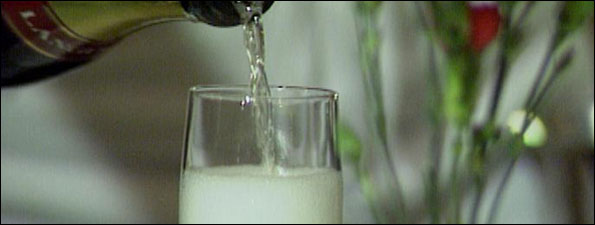
ChampagneAnd who will feel sorry for them? Who will ride to their rescue? Champagne salesmen maybe? Party organisers in Surrey? Well, how about a west country carpenter?

A few months back I went to an auction. Not Sotheby's, nothing fancy - it was a bankruptcy auction on an industrial estate in Bristol. They were selling huge saws and belt sanders the size of your garage. The lots were all that was left of Crabtree Kitchens, a lovely family firm that would make any west country heart beat with pride.

Richard Morley, the director, is a lovely man with a twinkling eye and a great eye for craftsmanship. The staff were loyal, regular Bristolians. The City seemed a world away. But Crabtree Kitchens was sunk by the financial storm that hit London a year ago.

You see, those evil bankers have to spend their evil bonuses somewhere. And the classic treat is a new car and a new kitchen. No bonus, no new kitchen. Orders plunged.

You can read more about how this hit Crabtree, and how two of the staff set up a new company, here.

Surely if we've learnt anything from this global recession, it is that everything is connected. Alistair Darling's "bonus crackdown" will get easy cheers today, for sure. But somewhere in the "real world", ordinary companies with ordinary employees will pay the price.

Update 29.09.09
I just spoke to Zoe Wilkins, the designer at Crabtree Kitchens who has set up a new kitchen company with the former master joiner. The new firm is busy, they've already completed four kitchens and have quotes on another five. So who's buying? Mostly, it seems, people who've decided not to move house, but to extend the kitchen. This firm seems intent on being a weathervane for our times, doesn't it?
Cabot Circus: Are you singing Happy Birthday?

Dave Harvey|11:06 UK time, Thursday, 24 September 2009

There's hardly a Bristolian without an opinion on it.

Talk about quantitative easing and eyes may glaze. Raise the question of government-backed securities in Lloyds, and you may lose your audience. But tell people you're covering a shopping centre's first birthday party - and prepare for an earful.

The numbers are huge. £500m invested. Four thousand jobs. Twenty million shopping visits in a year.

We'll come to the thorny question of whether Cabot Circus is making any money later - and yes, your thoughts, experiences and opinions are very welcome here right now.

First though, the neighbours. Before I went inside the Circus, I had a look round the back. Where there are some mighty unhappy people.

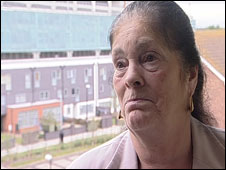
Patricia O'Reilly

"There's a hell of a lot missing," Patricia O'Reilly tells me. She lives in the flats behind the car park, and remembers talk of landscaping, a neighbourhood gathering place, their own parking spaces. Patricia's part of a local residents association, chaired by John James who feels promises have been broken.

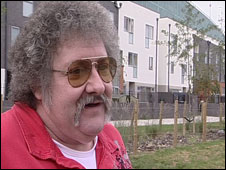
"They came to lots of our meetings, showed us lots of improvements," he says. "Can you see it? Because I can't."

John James

Now here's the thing. John and Patricia can't show us a piece of paper promising specific improvements that the developers have failed to deliver. They admit they were seduced by friendly talk that never got down to details. And of course, the area is better than it was.

"We do have regular liaison with local residents, a number of them I speak to on personal terms," James Bailey tells me. Mr Bailey is one of the centre managers at Cabot, and he doesn't think they've broken any promises.

But remember that price tag. £500m. Half a billion pounds. If they'd spent half of one percent of that on St Jude's, the place would win Britain in Bloom. As it is, there are a few shrubs and some new paving. A bit of new turf and a pole which, one day, will have a CCTV camera on it.

Many round here think the council was weak with the developers, so eager were they to get the flashy new shopping centre and its attendant jobs and glitz. And a neighbourhood that had been long neglected could only get better with a new megastore, couldn't it?

Developers are clever people. They know how to create an atmosphere in which everyone - locals, campaigners, councillors - think they are getting everything they could ever dream of. When you scrutinise the fine print, of course, it says "benches, landscaping and communal area". And is a square of paving stones a communal area? By the time the diggers are gone, everyone's just happy the dust has settled.

Whether you go inside the shops at all, Cabot has changed the city skyline for ever.

Better? Worse? Everyone has an opinion - let's hear yours now!

Tomorrow, Friday, they'll be having a birthday party. Will you be joining the celebrations?

Phil Gayle will be talking about Cabot too, on BBC Radio Bristol's Interactive, Friday morning from 9 - 10. Give him a call.

Pick your crash : how bad is it out there?

Dave Harvey|14:21 UK time, Tuesday, 15 September 2009

So, a year on from Lehman Bros collapse and the Lloyds / HBoS merger, is life getting anything like back to normal?

There are plenty of pundits out there offering opinions, and the BBC website is awash with Lehman anniversary analysis. I offer you a photo quiz. I'll be trying it on people coming to the Bristol Business Show in Brunel's old station today, but you can have a go here.

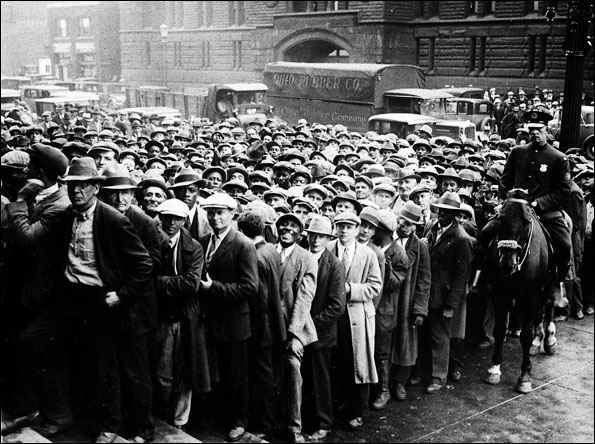
Wall St Queue

On Wall Street in 1929 they stopped trading and started queuing. Is your trade going through the equivalent of the Great Depression now? It might sound ridiculous, but on the Avonmouth trading estates I've heard people say it's not been so quiet for 70 years.

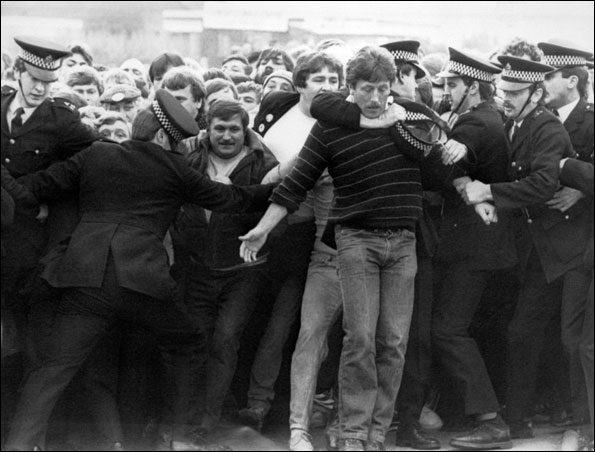
Miners Strike

Or maybe it feels more like 1984. Dole queues lengthening, miners striking, businesses collapsing - but not quite the financial disaster of 1929.

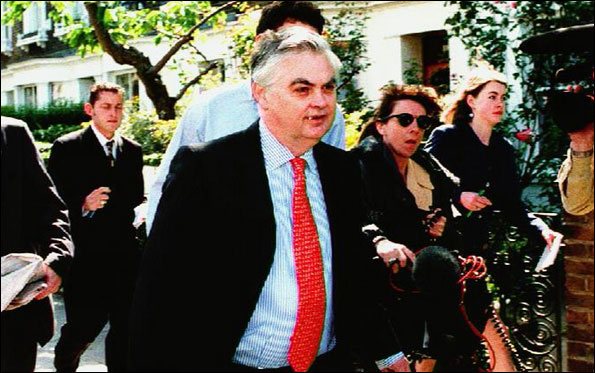
Norman Lamont

For some, it's milder yet. Remember Norman Lamont? This is him keeping ahead of the press pack in 1992 after Sterling crashed out of the ERM and interest rates sky-rocketted. Britain's output sank, of course, but not as badly or for as long. Will business bounce back soon this time round?

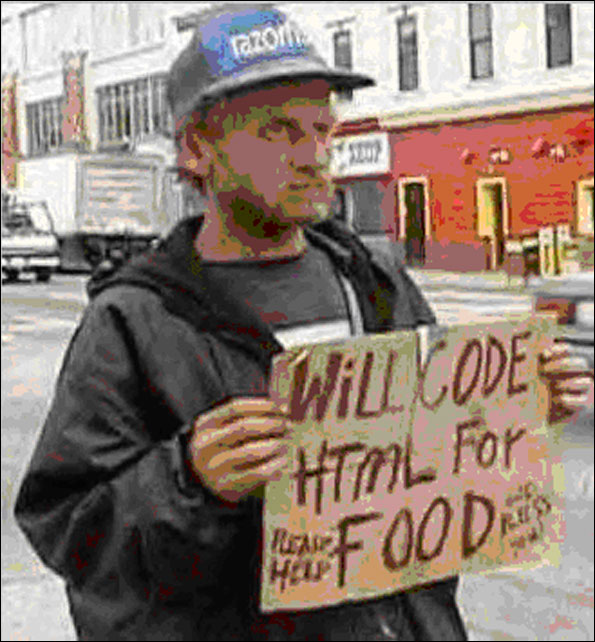
dot com victim

And yes there are some firms out there trading happily along, with nothing more than the blip of the dot com bust of 2001. Bristol has a large digital media village employing over 50,000 people, and ironically many of them tell me the current recession is passing them by.

Over to you then. I'll blog again after the show, when I've heard how Bristol firms are feeling, but in the meantime - pick your crash.

Tourism: has Bath bucked the trend?

Dave Harvey|17:06 UK time, Tuesday, 8 September 2009

They said America would stay home.

Worried about money, the yanks would pass on that trip to Europe. The one truth about recessions, they said, is that tourism slumps.

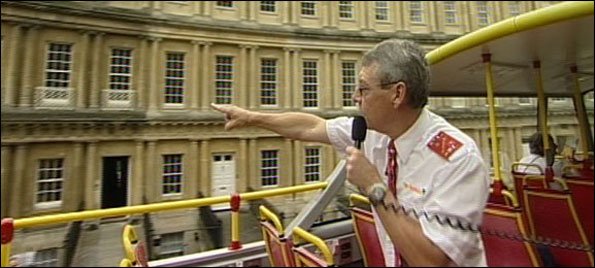
Bath's open top tour bus

Around the west country hoteliers, ice-cream sellers and tour guides steeled themselves for a miserable summer. Then, in April, the Met Office told us it would be a "barbecue summer". And pundits predicted that Brits would stay home for the holidays too, bringing some consolation.

So what happened?

On an open top bus tour through Bath, I met the whole story.

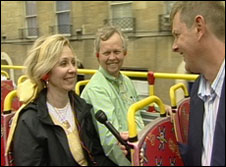
Larry and Tina Taylor from OklahomaThis is Larry and Tina Taylor, from Sapulpa, Oklahoma. They tell me they love Bath. Nationwide, the number of American visitors is down, by 12%. But in Bath, US numbers are slightly up. (Most interesting, maybe, is that Larry and Tina are smalltime landlords, renting property out in the mid-west. And yes, they are still flush enough for a European trip.)

Two rows behind the Taylors sit two Germans, Mark and Claudia. We chat as the bus cruises through The Circus, half listening to the amusing commentary about Nicholas Cage selling his house and losing £300k.

European trade is down 6% across the UK, according to Visit Britain. But Mark and Claudia are loving Bath, and so are their French, Italian, Spanish, Dutch friends. Continental visitors are slightly up here.

In fact throughout August, the Open Top Bus Tour's trade increased by 15%. Enquiries at Bath's Tourist Information Centre were up 7%. Visitors to the Abbey went up from 39,907 to 50,171.

Why?

Well first - and this is not meant unkindly - Bath is a safe bet. In a recession people stop buying whimsical, flippant, risky things. Supermarkets do well. Chocolate bars too. And for holidays or a day trip, people back a dead cert. In Bath you're guaranteed buckets of history and jaw-dropping architecture, and if it rains it doesn't really matter.

Bath's second strength is normally its weakness. Business conference trade is poorly served here, without many venues to hold big events. And on average people stay two or three nights, there are few week-long stays.

"But that weakness has become our strength," says Robin Bischert, Chief Exec at Bath Tourism Plus. "Business tourism has been really badly hit, firms have all cut back. And we've not suffered as much, because we're not really in that market."

But they aren't filling Rebecca's Fountain with champagne just yet. Although numbers are up, spending is down. Pizzerias tell me there's a lot more sharing going on. Table wine and tap water are de rigeur. South West Tourism, the quango that helps advise people in the holiday business, issued a warning this week against complacency.

Are they right? If you're in the holiday trade, I'd love to hear your summer stories.

Will Kraft save Keynsham?

Dave Harvey|14:52 UK time, Monday, 7 September 2009

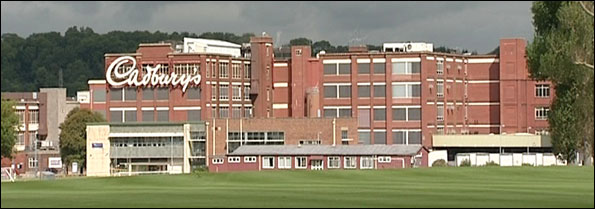
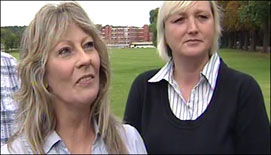
Amoree Radford had almost given up. Now... Amoree's not the sort of woman to give up easily. She's been running the 'Save Cadbury's' Campaign enthusiastically for two years, after the chocolate giant announced it would be closing its Keynsham factory in 2010.

Keynsham's chocolate factory

"Chocolate's in our blood round here," Amoree tells me. "There's been a chocolate factory here since the eighteenth century with Fry's. People play football on the Fry Grounds, bingo at the Fry Club. Keynsham just won't be Keynsham without Cadbury's."

Amoree got thousands onto the streets of this small north east Somerset town, even Roger Moore backed the cause. But it seemed a battle of the heart against cold commercial calculus.

amoree radford

Cadbury's insisted selling up and moving the plant to Poland would boost their profits. Polish costs would be lower, and the Keynsham factory was on prime land - ripe for development. The firm weathered the local battle and appeared to have won the war. By this weekend Amoree was all but on her own.

Then, Kraft wade in. In their massive takeover bid for Cadbury's they could have merely made encouraging noises about supporting UK jobs. But no; they specifically picked up the Keynsham plant - or "Somerdale", as it's known.

The company statement says: "We believe we would be in a position to continue to operate the Somerdale facility...."

Which demands two questions: One, how can they make money in Keynsham when Cadbury's insist they cannot? And, two, why make such a play of it now?

In the way of boardroom battles, neither firm is answering questions like that. But Unite, the union involved, has a theory that holds water. Steve Preddy, their Bristol man who's been following this closely, tells me that Cadbury's were interested in "short term profits, to please their big investors", and that Kraft are in it for the long term.

"Over 5 to 10 years", Mr Preddy tells me, "Kraft can clearly see that the profitability lies in the UK, so it makes sense to make the chocolate here." He would say that, wouldn't he.

But it adds up. Cadbury's are making good money in the recession, but city analysts agree that they need to show good numbers every quarter to avoid hostile takeover bids. Kraft has fewer worries like this, and would be in it for the long term. And since 2007, the shine has gone off the Polish deal.

First, fuel has gone up sharply, and threatens to stay up. Suddenly trucking Crunchies back from Poland looks rather expensive. Second, the weak pound has made it relatively cheap to make things here. But most of all, that "prime real estate opportunity" in Keynsham looks rather less attractive now property has slumped so sharply.

Cadbury's, of course, insist their planned move to Poland is still on. And Kraft won't be drawn on why they have come out fighting for Keynsham so strongly. But it is clear that raising specific commitments to specific factory ramps up the political pressure behind this deal. Kraft are now portrayed as the supporters of British jobs and British factories, instead of the American Giant trying to steal a gem of British industry.

"It's clever stuff", Union man Steve Preddy smiles to me. "You can see Ministers getting interested now, instead of just the boardrooms."

Is it enough to save Keynsham? We'll have to wait until the Crunchie crumbles, I guess.

BBC © 2014The BBC is not responsible for the content of external sites. Read more.

This page is best viewed in an up-to-date web browser with style sheets (CSS) enabled. While you will be able to view the content of this page in your current browser, you will not be able to get the full visual experience. Please consider upgrading your browser software or enabling style sheets (CSS) if you are able to do so.