BBC BLOGS - West Country Cash

Archives for August 2009

The weird world of organic milk

Dave Harvey|06:00 UK time, Thursday, 27 August 2009

Hold on to your seats, there are more twists and turns in this story than a twisty turny thing.
So yesterday we learnt that dairy farming is on the slide, with six farmers quitting every week. If I tell you that the market experts TNS have recorded a fall in organic food and drink sales of 12.9%, would you rush out and buy an organic dairy farm?

No? Well, maybe you should. First twist: Organic milk sales are actually up. By 6%, according to OMSCO, the Organic Milk Suppliers Co-op, and they should know. Why? well, organic milk isn't much pricier than your average milk, compared with say chicken where the price difference is huge. And people who like it are sticking with it.

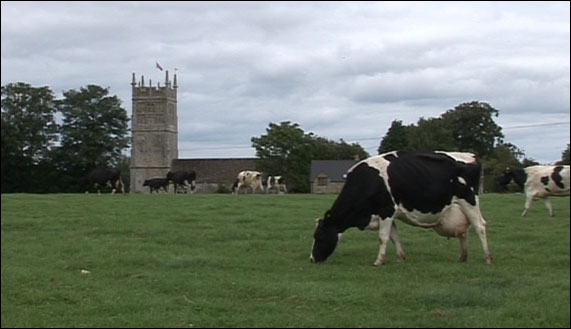
So, organic dairy farmers are rolling in clover then, right? Well, while you reconsider buying that organic herd, gaze into the eyes of these lovely Wiltshire Holsteins.

cow_close.jpg

Bought the farm? Wrong again!

The other side of the balance sheet is looking horrible. Costs. Diesel's up. Labour's up. Feed, most of all, is up. Which means organic dairy farms just about break even - so long as nothing unusual happens.

Which, on a farm, is almost never. There's always a tractor broken down, or a hole in the roof, or a flood in the milking parlour. Except on Greg Clarke's farm in Burton, Wiltshire.

The place is immaculate. First there's the two huge steel sheds with massive stanchions and concrete floors you would happily let your mother-in-law sleep on. The milking parlour could host Chanel beauticians, it's that white and clean. And in another gleaming shed, a shiny new tractor.

Ok, I exaggerate a bit, but compared with farms I usually visit, Greg's place is top drawer. Where's he get the money for all this? Organic milk? No. Houses.

Greg, like a few other farmers down our way, happens to farm where people want to live. Burton, a quiet village just off J18 of the M4, is des res. So he sold off a plot of land and now a dozen pretty townhouses stand on it. And that bought Greg a shed or two, a decent milking parlour and a new tractor.

Told you it was twisty turny, didn't I? Now, who fancies a caption competition?
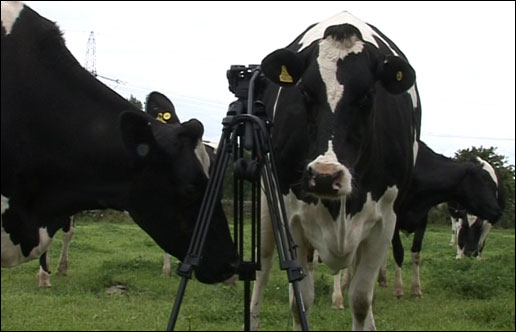
cow_tripod_still.jpg

Can you make money out of milk?

Dave Harvey|10:13 UK time, Wednesday, 26 August 2009

For as long as I can remember, dairy farmers have been in crisis. There was a brief blip last year when the Chinese got so rich they started eating ice cream, but now the recession has largely killed that and things are back to normal.

"We're losing six farms a week, and it's a disgrace."

Cow grazing

Derek Mead is a well known dairyman round here - and known for being a likeable "Farmer Grump". He thinks the constant exodus is appalling. Latest figures from the industry body DairyCo show 94 farms went out of production round here last year. (If you like milk stats, they're all here.)

So how many are left? Across the west country - not counting Devon and Cornwall - there were 1,716 at the last count. Which suggests you can make money out of milk, somehow.

Take Geoff Bowles, near Frome. When the G20 leaders gathered it was his milk, cream and butter on the table. It also graces Harvey Nichols, Harrods, all the posh shops. Ten years ago, his family dairy farm was struggling, until someone told him this.

"Get big, get niche or get out." It's an axiom that served Geoff well. He sold his cows, bought some prime Jersey cattle and built a dairy. He makes his own clotted cream, cream and butter, and sells direct. I made a film about him - you can watch here.

All over the west country you find guys bottling their own with cute labels, churning ice cream, making yoghurt. But with nearly 2,000 dairy farms, they can't all do that. We'd never stop eating ice cream, and we'd run out of milk for our tea.

"It's a tiny minority, maybe 10%," David Cotton tells me. David farms near Glastonbury and knows milk well. "Most of us milk cows, fill tankers, send it off to be made into cheese or butter or sold as milk. I milk 8,000 litres a day here. Imagine if I turned up at a Farmers' Market with that lot to sell!"

So most farmers, it seems, are selling into the bulk markets for cheese, butter and dried powder, or into what they call, rather oddly it seems, the "liquid milk" market.

And these markets, like any others, go up and down. Milk costs us about 60p a litre in the shops, of which the guy who milked the cow gets about 22.5p. (Stat courtesy of Dairyco again.) When that price paid to the farmer goes down by 1p, they lose between £5,000 and £10,000 depending on the size of the herd.

Many farms only make £10,000 a year profit, so when I tell you the price has dropped 2.5p in 2009, you can do the maths.

But here's the thing. Supermarkets are no longer the villains. Mention Tesco or Asda on a family farm and you expect to get your ear chewed off. But not any more. Supermarkets have done deals with "partner farms" to guarantee a supply of fresh milk. In return, the farmers get a price fixed at the cost of production, plus a margin. There's a complicated formula and plenty of hoops to jump through, but they mostly seem happy with it.

So who is going bust then? From what I've heard, it's three types. Dairymen approaching retirement in their 50s struggle to find someone to take the farm on. Often their kids want nothing to do with it, and few farms are sold outright. Technically then, they haven't actually gone bust - just sold up.

The second group are the farmers caught in the collapse of Dairy Farmers of Britain, the Uk's biggest co-op, which went bust in June. Some have found a new contract, but hundreds are still being paid just 10 a litre by the receivers. Here's a good report on what that feels like.

And the third group who are up against it? The guys in the middle, who haven't gone niche, haven't done a deal with the big boys, haven't got a field to sell to developers. Their milk goes into the huge world lake for cheese, butter and that dried powder the global food industry puts into the oddest things. (Ham with milk in it? Read the label...) While the price is as low as it is - just 22p a litre - hundreds more of these farms will slowly die out.

Will that matter? Should we just let them go to the wall? If dairy herds get bigger and more commercial, cows spend more time indoors and farm buildings are more steel than cotswold limestone, would you care?

If you're in milk, or you just like eating or drinking the stuff, hit that comment button now.

Has the dole queue stopped growing at last?

Dave Harvey|09:52 UK time, Wednesday, 12 August 2009

The latest count at the jobcentre is striking.

Across the South West the number of people claiming JobSeekers Allowance has fallen - by one person!

Who are they? Where do they live? What job did they get?

It may be Tom Harrington.

Tom used to run training at the Woolies Distribution depot in Swindon, till the firm went famously bust. For months he and his 400 workmates have been signing on and scouring the job pages.

Well, Tom has a job, I'm pleased to report. He's got on his proverbial bike, all the way to Burton-on-Trent, and is helping sort out a troubled warehouse for a big national booksellers.

OK, he's probably not the only one. But in Swindon as a whole, 219 people stopped signing on - and presumably found a job - between June 11 and July 9. The jobseeker count in Gloucestershire fell by 169. In Dorset, it fell by 2. (You can hear the sensational local headline now can't you: Dole queue falls by twice the regional average!)

It's not all good news. Bristol's jobseekers count has risen by 227, the highest in the west country, but still less than the national average. There have been slight increases in North Somerset (131 extra) and Bath and NE Somerset (58 more).

Is there a pattern? It's mighty hard to spot on. But there is evidence at least of where things are heading. Private companies say they are starting to hire again, according to a survey of personnel directors - the guys who actually do the hiring. Grimmer news though in public sector jobs, where all the signs are the cold wind is now blowing.

The people who watch these things tell me to expect a slight recovery in commercial work, but a big squeeze on jobs in councils, universities, hospitals, the MoD; in short, a whole lot of jobs round our way.

But what's your experience? This is a story where no one person has all the facts, and I'd love to hear what it looks like to you.

PS: If you want to see the figures raw, click here and then open up the August page, look for "LMSswest0809.xls" and click on p16 on the bottom tabs. More stats there than you can ask for.

BBC © 2014The BBC is not responsible for the content of external sites. Read more.

This page is best viewed in an up-to-date web browser with style sheets (CSS) enabled. While you will be able to view the content of this page in your current browser, you will not be able to get the full visual experience. Please consider upgrading your browser software or enabling style sheets (CSS) if you are able to do so.