
Imagine you could experience severe sunburn just by going on a short trip to the supermarket. That’s what happened to three-year-old Eddison from Kent. After being taken to the shops or out in his pram, his skin would turn red and blister, even if he was fully clothed and there was little sunshine.
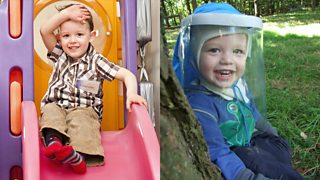
Eddison inside and outside in full protective gear
His mum and dad, Nicola and Andrew, eventually discovered that he had a very rare skin condition called Xeroderma Pigmentosum. It’s an hereditary condition that means the skin cannot repair itself after being damaged by UV radiation. It affects just one in 250,000 people in the UK today and means they are 1000 times more susceptible to skin cancers.
Recently, many of us have been relishing the first sunshine of the year, but children with XP avoid going outside in daylight. If they do, they apply high factor sunscreen to their skin every few hours, wear long sleeves, gloves and a protective hat with a special visor that blocks out UV light. The windows of their homes, schools and nurseries are fitted with the same special film called Dermaguard which filters out UV rays and they have regular check-ups at a specialist clinic, at least every six months.
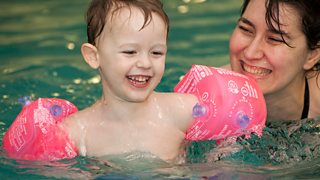
Eddision’s family have a zero tolerance policy to UV so he has a device to measure the invisible UV rays from things like lighting. His family has raised funds to build him an indoor garden at home. There, he and his younger brother Raife can kick a football around on the astroturf surface, play on the swings and care for his pet rabbit.
Aside from the isolation and frustration of not being able to play outside, children and young people with XP may also experience difficulties making friends because they are different as well as teasing and self-consciousness.
But since 2002, BBC Children in Need has been helping to fund the XP Support Group so that it can provide information, fun and friendship to the 100 or so families in the UK affected by the condition.
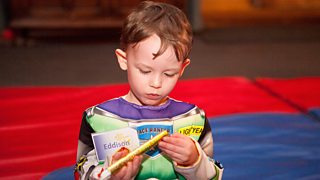
Founder Sandra Webb set up the group after her son Alex, now 19, was diagnosed. A grant of £9,500 contributes towards the cost of activities and volunteers at the Owl Patrol Camp of 2014 which was held at St Katharine’s House in Freith near Henley-on-Thames in mid-February.
It’s an annual residential held at the same location each year because CiN funding previously paid for specialist UV film to be fitted to all the windows. CiN has also paid for equipment, toys, games and art supplies. It’s a weekend when newly-diagnosed families can get information and support or those who know each other through the Support Group can meet up, talk to each other, and get advice or give feedback on their experience to the foremost experts in the field.
Sandra said: “Each year our camp is themed and activities are chosen in line with the theme and we decorate the rooms to match. For 2014 it was 'Heroes & Villains'. All the arts and crafts activities are available to children and adults. We also invite doctors and experts in the field to talk to them. The camp treats XP patients and their non-affected siblings equally. We believe that siblings also need support as they often feel that more attention is paid to their affected sibling than to themselves.”
The house has enough rooms for around 35 families, 40 per cent of whom are new to the group, like Eddison, and who are helped to adapt to the diagnosis that comes as such a shock in the beginning.
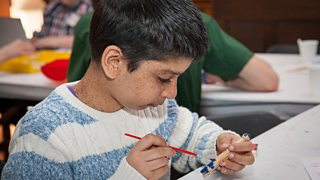
Ahmed, who’s 11, had been counting the days until returning to Owl Patrol Camp after enjoying so much last year. For him, his mum, his brother and sister, it meant a nine-hour journey from Bradford because of transport issues caused by the recent floods and storms. But once at the house, Ahmed showed off his superb origami and indoor football skills. The experience also included an early evening swim, the chance to take part in a karate session, the opportunity for teenagers to make a podcast or leaflet of top tips and advice to younger children with the condition, all washed down with good food and friendship.
Ahmed said: “I don’t like wearing my hat and visor and it keeps breaking. But my friends at school know why I have to and it’s OK. I’ve had a small bit of skin removed near my mouth that doctors were a bit worried about but you can hardly see it. The main problem I’ve got at the moment is round my eyes.”
Sandra introduces families to specialists like ophthalmologist Susie Morley, so they can talk to her about the latest research on eye protection. She carries out regular checks on children like Ahmed because exposure to sunlight can damage the surface of the eyeball and if they are affected by neurological damage it can affect eye movements.
They can also meet nurse Sally Turner who works on an outreach basis, visiting families at home or children at school to educate teachers and ensure that buildings and school clothing are UV safe. And there are also dermatologists, a geneticist and clinical psychologist who all specialise on the condition.
It’s Professor Alan Lehmann from the University of Sussex whose team diagnoses most cases of XP in the UK.
He explained: “We analyse the skin biopsy and either find that the skin cells can’t repair UV damage or that they can’t copy the DNA that carries out that function.”
These are all the people that families of children with XP are likely to meet at the clinics they attend in either Birmingham or London. To have a one-stop shop for them once a year where they can also make friends and have fun is invaluable.
Thank you for donating to BBC Children in Need so we can continue to fund residential stays for children with rare diseases like XP.
