Glastonbury and BBC TV: How it works
Blog comments are currently unavailable. Find out more.
Post categories: Glastonbury
 |17:21 UK time, Thursday, 23 June 2011
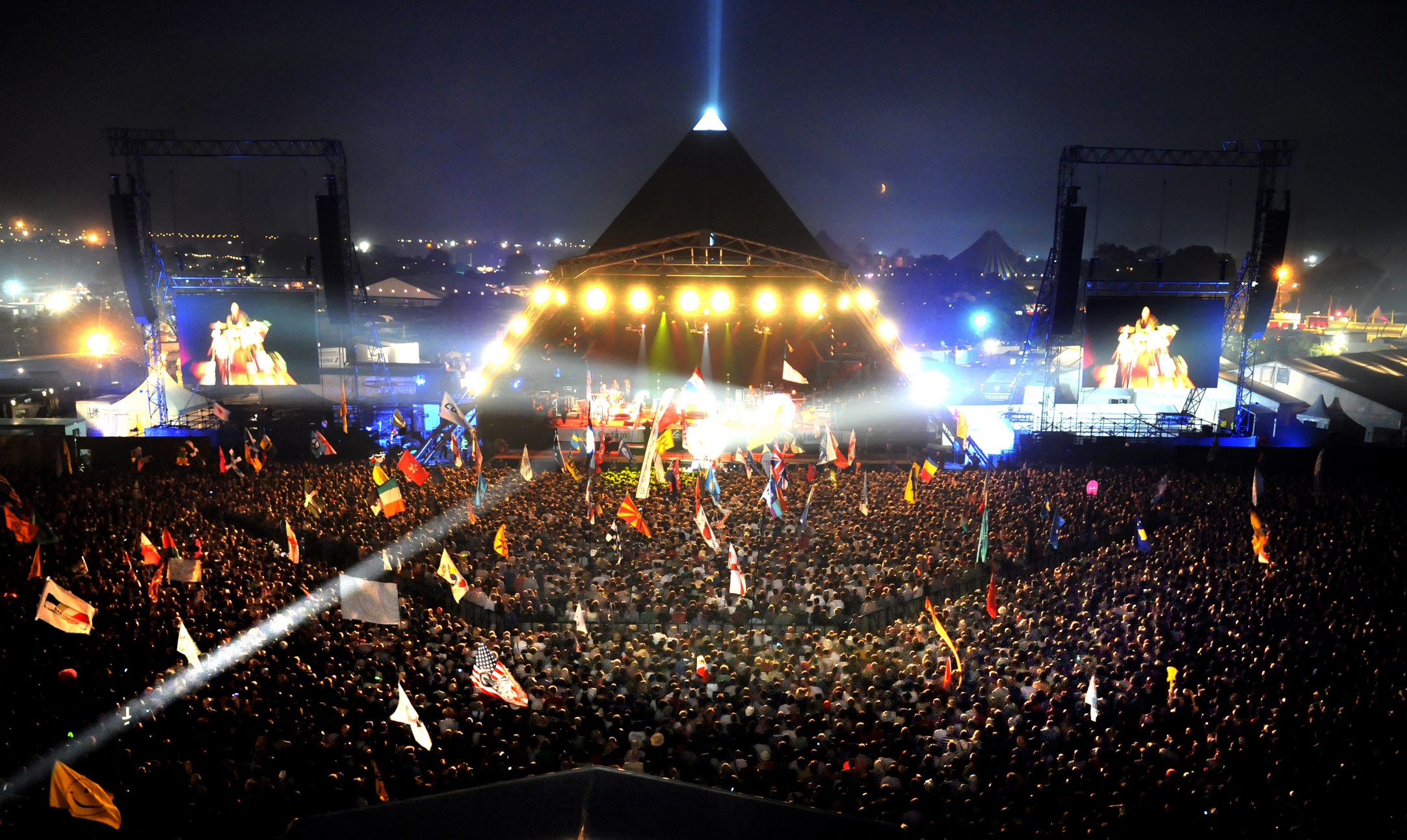
I have been covering Glastonbury Festival for BBC TV since 1997. Every year this week makes me feel like I am a nervous farmer just before harvest, scanning the skies anxiously. Of course the weather will be what the weather will be and it never seems to dampen that famous Glastonbury spirit that enables a city to spring up in a valley outside Glastonbury almost overnight and for those sudden citizens to behave with Caribbean charm and good manners while they are together in Avalon.
Although I have been covering Glastonbury for 15 years I have spent most of my time at the festival trudging between the trucks from which we broadcast that back onto the Pyramid Stage and across the stream to the BBC compound where our central presentation position and our catering tent resides. That's a long and squelchy trudge when it's muddy.....
Our coverage has grown over the years and now spreads across BBC Two, Three and Four, red button and online at bbc.co.uk/glastonbury with the attendant catch-up services, not to mention the substantial coverage on BBC 6 Music with support from Radio 1, Radio 2 and Radio 4.This year we are filming the Pyramid, Other, West Holts, John Peel and BBC Introducing stages and bringing some 15 different artists from the Dance Village to the Acoustic, Spirit of '71 and Avalon Stages to the BBC TWO presentation area to perform for the channel. We have around 38 hours of broadcast across the terrestrial and digital channels, half-hour highlights from a wealth of sets will go up on BBC online and hopefully even more will rotate on red button.
Glastonbury is surely the richest and most eclectic three day live music event in Europe and probably the world and the BBC's coverage across the weekend is undoubtedly the largest and most ambitious live music TV broadcast going. Being big means trying to create real appointment to view moments with the headliners who regard the last slot on the Pyramid Stage as a date with destiny. We broadcast these headline moments live to air these days and try and build up to them like a boxing match as BBC Two comes on air to catch the electricity of Bono and co, finally stepping off their own gargantuan tour to show they can still deliver as a four-piece, in a field with a festival crowd that isn't the regular U2 punter they encounter at their own gigs. We work hard with each act to capture their performance distinctly as they adjust the stage and bring their screens, lasers and what have you to bear on their career-defining moment.
BBC Three tries to show the audience substantial amounts of the likes of Tinie Tempah, Jessie J, Plan B and Mumford & Sons while BBC Four offers heritage performers including Morrissey, BB King and Kool and the Gang. Television hours means we can't show all of each artist and many of the artists don't always want us to show all of everything, as they or the BBC may be faced with technical problems, playing in a field in quick turnaround without much of a soundcheck.
Glastonbury is so impossibly rich - just study the list of artist and stages on the Glastonbury and BBC websites that it's impossible to capture it all. We have crews out in the field bringing you live and edited reports from far-flung areas like Block 9 and The Rabbit Hole and alongside those acoustic moments, we bring cabaret performers and poets to our presentation area to try and hint at what the festival has to offer. Changing between BBC services isn't quite like stumbling in the dark between stages but the BBC's multi-platform offer is all about choice and we try to use our services not only to bring you the big Glastonbury moments but also to discover some of those unpredictable and surprising treats that you stumble accidentally upon and that make Glastonbury the greatest festival in the world.
Did I already say that?
Mark Cooper is the Creative Head, Music Entertainment