BBC Music Blog
  1. BBC Music
  2. Blog Home

Archives for August 2009

Countdown to Beatles Week

Blog comments are currently unavailable. Find out more.

Post categories:

Nigel SmithNigel Smith|16:16 UK time, Friday, 28 August 2009

beatles_large.jpg

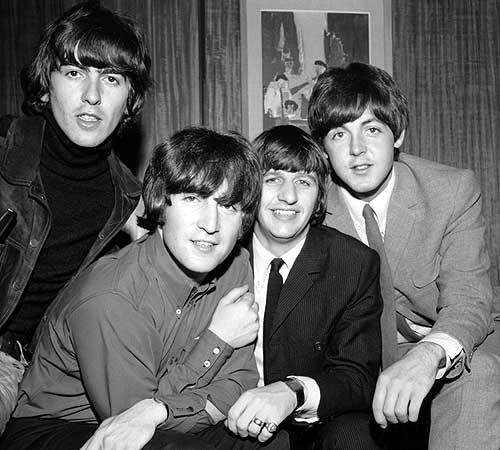
BBC TV's Beatles Week begins on Saturday 5 September, so all fans of the Fab Four should cancel their evening engagements or make sure they know how their PVRs or dusty VHS recorders work. We also have some special contributors to the BBC Music blog lined up next week to talk about the programmes.

At the centre of Saturday's schedule on BBC Two is a new documentary called The Beatles on Record that offers a concise overview of their recording history from Please Please Me to Abbey Road, told entirely by the Beatles and producer George Martin. Next week I'll be explaining how you can get involved with other fans to talk about this programme.

That programme is bookended by a repeat of The Timewatch doc Beatlemania and the Maysles brothers' legendary film about the Beatles' first US tour. Next week on the blog we are thrilled that Albert Maysles will write about making this groundbreaking film in 1964 and share some clips from the 'Making Of' documentary. The evening ends on BBC Two with a screening of Help!

The season continues on BBC Four with a wonderful Storyville film, How The Beatles Rocked the Kremlin. Veteran filmmaker Leslie Woodhead, who first shot the mop tops at the Cavern Club in 1962, travels to Russia to reveal how The Beatles, banned in the USSR, helped end the Cold War. Leslie will also be writing about the film on the blog next week.

The season concludes on Friday 11 September with ... Sings The Beatles, a new compilation from the BBC archive featuring acts as diverse as Sandie Shaw to Siouxsie and the Banshees and The Carpenters to Candy Flip performing Beatles covers.

Stay tuned!

Celia Sheen and her Theremin

Post categories:

Steve BowbrickSteve Bowbrick|17:24 UK time, Tuesday, 25 August 2009

The original score for Schnittke's Nagasaki Oratorio, the first work in last night's Prom 52, calls for a musical saw. In subsequent performances, though, a Theremin was substituted for the saw. Last night's Theremin player was Celia Sheen - Britain's leading exponent. In the remarkable video she plays the theme from long-running ITV whodunit Midsomer Murders and in her interview with Samara she explains how the instrument works and how she came to play it (which, spookily, has quite a lot to do with John Landis, director of Michael Jackson's Thriller).

Listen to Samara's interview with Celia and leave comments on the Radio 3 blog, where this post originally appeared.

Cello insights on the Radio 3 blog

Blog comments are currently unavailable. Find out more.

Post categories:

Steve BowbrickSteve Bowbrick|07:47 UK time, Sunday, 16 August 2009

Alban Gerhardt, cellist

Over on the Radio 3 blog we're covering the BBC's giant annual music festival The Proms (classical music's Glastonbury) in some detail. We've got two musician/reporters on the spot for every Prom. They're tweeting, recording interviews using their mobile phones (and an audio blogging service called Audioboo) and taking photographs. After Thursday's cello-focused Prom 38 - which featured the world premiere of Unsuk Chin's terrifyingly difficult new cello concerto - Samara Ginsberg, who is a cellist herself, recording a short interview with soloist Alban Gerhardt. Listen for some surprising insights into the pressures on a soloist in a difficult new work. And, I should point out, by way of warning, that the clip includes some strong language.

Steve Bowbrick is editor of the Radio 4 blog and is helping with the Radio 3 blog while the Proms are on

  • You can listen to or watch the whole Prom on the Radio 3 web site, until Thursday. The concert was also part of a Radio 3 experiment called Maestrocam, which allows you to focus on the conductor's work for the whole performance - it's fascinating and hypnotic. Watch it here.

Les Paul R.I.P.

Blog comments are currently unavailable. Find out more.

Post categories:

Pete Marsh - BBC Music Interactive|11:54 UK time, Friday, 14 August 2009

Tributes have been pouring in to the legendary Les Paul, who died yesterday. Mr Paul was probably best known for designing the guitar that bore his name (this BBC News gallery shows just a few of the hundreds of gurning rock star types who've played them), but he was also a crucially important figure in the history of recording, being one of the first to experiment with the dark art of multi-tracking. This was something that Bob Harris touched on in his tribute on this morning's Today programme, and can be best heard in Paul's work with his wife Mary Ford (here's some pretty wonderful footage from Youtube).

Even though his hit-making years were long behind him (Les and Mary chalked up an impressive 16 top ten hits between 1950 and 1954) and worsening arthritis had forced him to relearn how to play the instrument a number of times, Les continued to play regular jazz gigs at New York's Iridium club until two months ago. Last year, the BBC caught up with him to film him in action for Imagine - The Story of the Guitar.

I wonder if Slash will be as cool when he gets to that age?

A Personal Tribute to Mike Seeger

Blog comments are currently unavailable. Find out more.

Post categories:

Nigel SmithNigel Smith|15:10 UK time, Wednesday, 12 August 2009

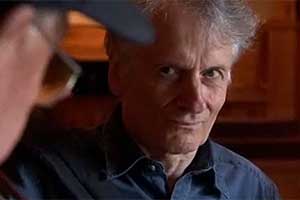
While I was writing my post commemorating Mike Seeger on Monday I phoned Jill Nicholls, the producer of Folk America, to ask if she had any words she'd like me to add about her meeting with Mike while making the series. Jill was in an airport with little time to talk but yesterday sent me a lovely email, with reminiscences and extracts from her interview with Seeger. It's a wonderful tribute. Jill writes:
mikeseeger2.jpg

"I was lucky enough to meet Mike Seeger last summer when I was filming for the Folk America series. Obviously he was on our 'A' list of desired interviewees. His personal musical journey threaded in and out of everything we were hoping to cover in the series - from his passion for and deep knowledge of old time southern music, to his involvement in the 60s folk revival, trying to get that music across to a bigger, younger, city audience to whom the old was something rich and strange.

He invited me and my cameraman Daniel Meyers to come to his house in Lexington, Virginia, a beautiful peaceful sun-filled place where he lived with his wife Alexia, also a musician. Mike played some Dock Boggs for us on his banjo, making you feel that Dock was there with you in the room - as he often had been together with Mike, telling his own life story into Mike's tape machine between coal miner's coughs. Mike also played us Henry Thomas's Fishing Blues, with some hand crafted quills, again combining authenticity with absolutely present tense commitment to the music. These were no museum pieces - they lived.

From the long, thoughtful interview that he gave us that day, always fair, always precise, choosing his words carefully, I especially remember him saying that he didn't see why people like him -and like the New Lost City Ramblers which he helped to start - should be attacked, as they often are and often were in the 60s for just repeating the past, for being stuck in the past. "So many people look on somebody and say, you're stuck in the past. Well, classical musicians play Mozart. That's stuck in the past. People perform Shakespeare. They're stuck in the past. And some people will take it and change Shakespeare a little bit, and that's what some of us do. And some people even go crazy with some of Shakespeare's stuff and bring it right up to date, and there are people doing that in old time music now. I think that people should ask the musicians what they think about their music."

It's interesting that Mike Seeger compares 'old time' music playing with classical music. He himself came from a classical music background - his father was the composer Charles Seeger, his mother Ruth Crawford Seeger, whom I have been reading about since meeting Mike in Alex Ross's fantastic book, The Rest is Noise. Ross calls Ruth Crawford Seeger "one of the few major women composers of the early 20th century".

Mike said of his background: "My father was a musicologist; he was mostly interested, before my birth, in modernist music and dissonant counter point and just kind of looking at the whole musical spectrum. My mother was a modernist composer and she was pretty well known in the early 30s in the modernist music community, which was about 200 people maybe across the country at the time. But they discovered and took on the mission to try to keep old time music alive in the early 30s as part of the movement towards people's music. I was fortunate to be brought up in a family that loved old time traditional music and - and had a mission of trying to keep it alive."

It was a mission Mike continued throughout his life. He was happy to answer all our questions, but very keen that we should show that this is a living tradition, stronger now, he felt, than it was in the 60s: "This is an exciting time in the revival. There are gatherings of musicians around the country, only maybe 10-15-20,000 people playing this kind of music but once in a while we get a little bit of visibility on the media or in the internet, and that helps more people to come this direction and be able to realise all the wonderful things there are about this music."

He was also very keen that we should meet traditional musicians who did not have the benefit of his famous family name (the most famous of course being his older half brother Pete). He drove us up to see a local man called Bruce Clarke, who runs a music venue for traditional song and dance in an old barn in the middle of the countryside, Mike and Bruce sat together by an open doorway, soft rain falling on the hills and trees outside, taking off from each other, as serious as your life but laughing, showing such mutual respect. It struck me that Mike was where he wanted to be."

Jill Nicholls produced the BBC series Folk America

Mike Seeger RIP

Blog comments are currently unavailable. Find out more.

Post categories:

Nigel SmithNigel Smith|11:10 UK time, Monday, 10 August 2009

mikeseeger_large.jpg

Sad news at the weekend to hear about the death of Mike Seeger. Mike was a legendary banjo player and stalwart of the American folk revival in the 50s and 60s. His band The New Lost City Ramblers inspired Bob Dylan among others. In his memoir Chronicles Volume 1 Dylan writes of Seeger, "He was extraordinary, gave me an eerie feeling. Mike was unprecedented. He was like a duke, the knight errant. As for being a folk musician he was the supreme archetype. He could push a stake through Dracula's black heart. He was the romantic, egalitarian and revolutionary all at once - had chivalry in his blood"

Even if you are not familiar with Seeger's music chances are you've seen him on television. He was one of of the many contributors to Martin Scorsese's Dylan doc No Direction Home and last year featured in our series Folk America.

This is a Folk America outtake we put on the website that captures both Mike's great playing and also his humanity.

In order to see this content you need to have both Javascript enabled and Flash installed. Visit BBC Webwise for full instructions

If you'd like to hear some the New Lost City Ramblers' music I've created a 10-track Spotifyplaylist that gives a flavour of their work.

If you have any memories or thoughts about Mike Seeger and his music please do share them below.

Related Links

Spotify Playlist: The New Lost City Ramblers

The Road to Musical Stardom Starts Here

Blog comments are currently unavailable. Find out more.

Post categories:

Nigel SmithNigel Smith|17:13 UK time, Wednesday, 5 August 2009

introducing_grab.jpg

BBC Introducing is our initiative to support "unsigned, undiscovered and under the radar music". A few weeks ago we launched a new Advice section to the Introducing website. There are dozens of videos to watch involving artists such as Chipmunk and Gossip, industry professionals and DJs all talking about getting gigs, making records and how to make sensible business decisions. Tom Robinson, who presents the Introducing show Fresh on the Net on 6 Music has written a great piece on his blog about this new venture.

The Telegraph's Neil McCormick has also recently written a blog post about BBC Introducing. Neil was on the panel to select which bands will play the Introducing stage at the Reading & Leeds festivals later this month. A long list of 65 was drawn from recommendations from every Introducing radio show across the UK and Neil, along with the likes of Steve Lamacq and Arctic Monkey Alex Turner, submitted their favourites. If you don't know much about BBC Introducing Neil's blog is a great snapshot of the artists we're supporting who just bubbling under.