BBC Music Blog
  1. BBC Music
  2. Blog Home

Archives for March 2009

Her Majesties

Blog comments are currently unavailable. Find out more.

Post categories:

Mark CooperMark Cooper|13:21 UK time, Friday, 27 March 2009

As far as British pop queens go - we've never had it so good. Since Amy Winehouse went supernova with Back To Black, we've had Duffy, Estelle and Adele feasting at the Grammys while Leona Lewis is shaping up to beat American divas like Whitney or Mariah at their own game. Meanwhile Lily Allen is at the forefront of a diverse bunch of confident young women setting the world to rights in their native tongue - think Kate Nash, Little Boots, Florence and the Machine, Emmy The Great and the rest. And I haven't even mentioned Girls Aloud...


This golden age made us think about the women who came before - the Brit girls of the 60s who kicked off the modern age - and the pop queens who brought us through the 70s and 80s into something close to now. We pitched the idea of a celebration of our British pop queens to BBC One and, hey presto, they gave us the money and the slots to make two one hour films.
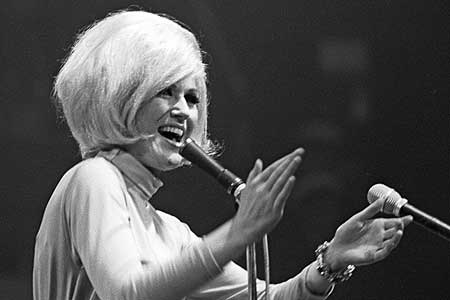
dustyspringfield.jpg

We set about the difficult task of compiling a list of 12 female stars who'd somehow changed the game, who'd imposed themselves upon the pop firmament or tilted at its windmills, women whose careers would sweep us through the decades and, by very juxtaposition with one another, tell the story of those decades in a very particular kind of soundtrack.

Choosing was a nightmare and there's no doubt it would have been easier for us to go with a squad system - 20 Queens would have been so much easier and fairer than 12! Think of the 60s alone where we chose Dusty, Sandie Shaw and Marianne Faithfull but left out Lulu and Cilla. But we decided early on to choose on the grounds of which Queens would take us on contrasting journeys, whose lives and careers would provide different narratives, different struggles, different songs.

That's why we quickly admitted two women from other countries whose pop careers have been firmly based here and who we took to our hearts early on - take a bow, Suzi Quatro and Kylie Minogue.

When I think of the Queens that are missing in action I wake up in a hot flush which is why we've put the Queens of British Pop website together, to remind you of the strength and joys of the field - of Lulu, Sandy Denny, Lynsey De Paul, Joan Armatrading, Sade, Dido and so many more.

Enjoy them, celebrate them, let us know your own favourites - the women who write their names most brightly across your sky.

One last thing - we didn't choose on exclusively musical grounds and we wouldn't begin to suggest that our 12 represent the best female pop vocalists from the UK. Many of our chosen 12 are wonderful singers and great songwriters but finally, for us, this was about something else besides and the women we've chosen are there because their songs and experiences and impact best write the story of the last five decades.

Mark Cooper is the Executive Producer of Queens of British Pop

We're Live, And Looking For Feedback

Blog comments are currently unavailable. Find out more.

Matthew ShorterMatthew Shorter|17:43 UK time, Monday, 23 March 2009

The new website has launched. If you're a loyal user of our old website, please have a look at my previous two posts for details of some of the changes. Either way, we'd love to hear what you think. Comment here, or contact us directly.

I've also blogged at the BBC Internet Blog focusing a little more on what's going on under the bonnet.

Thanks, and happy browsing!

A Sneaky Peek Part 2

Blog comments are currently unavailable. Find out more.

Matthew ShorterMatthew Shorter|12:35 UK time, Monday, 23 March 2009

We're now hours away from our music site relaunch and we're all in a lather of excitement up here in Music Interactive central. There's a couple of additional points I'd like to make in the meantime, this time about some things from our existing site that are being dropped.

If you're used to getting your online radio listening via our "Listen" page, you'll need to set up a new bookmark. For some time this page has been duplicating the content that's available at https://www.bbc.co.uk/radio/programmes/genres/music/player, so now we'll be offering this link from our homepage as the primary source of genre-based links to BBC radio programmes on demand. There's a similar page for TV at https://www.bbc.co.uk/tv/programmes/genres/music/player, by the way, which is also linked from our new homepage. You can also get both TV and radio via the iPlayer music category page.

Similarly, we feel that our "TV and Radio Listings" page is surplus to requirements now that the same content is available here.

If you're a regular reader of our album reviews, you'll immediately notice two things. Firstly, we don't have audio clips on the new pages. We're working on a way to bring this feature back to the review pages, but the old approach doesn't work as a result of the way the new pages are coded and published, and we decided that we didn't want to hold back our relaunch until we had a new system in place.

Secondly, we have a new comments system which we hope will work more smoothly (here's an example). It requires registration to comment, so that comments will be attributed to a user's BBC profile (we also find that registration normally raises the tone of the conversation in web comments), and comments will also appear immediately rather than needing to wait until they're approved by an editor here. Unfortunately we won't be able to retain comments from the old system across our archive of reviews.

Finally you'll notice that the new site doesn't have a navigation bar across the top or left hand side of the page. We like to think of ourselves as an honest broker between the BBC's family of music brands, and our main reason for being is to help music fans find BBC content via the genres, artists or albums that interest them, rather than providing a branded destination in ourselves. We've also tried to ensure that we offer useful contextual navigation between the different pages in our site within the pages themselves. For both of these reasons, we've taken the step of dropping our navigation bar. We hope you'll find the site a smooth experience to navigate. Once again, feel free to comment here or contact us directly.

We're Changing: A Sneaky Peek

Blog comments are currently unavailable. Find out more.

Matthew ShorterMatthew Shorter|15:32 UK time, Friday, 20 March 2009

We're three days away from relaunching our music site. If you're reading this, you've already shown a gratifying level of interest in what we do with music here at the BBC, so I'm guessing you might like to have a first look at what's changing.

The big news is that, from about 2,000 hand-built and increasingly shop-worn looking artist profiles, we're now going to have more than 400,000 new artist pages which assemble themselves automatically and dynamically from a variety of data sources from inside and outside the BBC, and which will be working much harder to promote the great content that the BBC generates week in, week out. So if you want to hear Pete Tong interviewing Röyksopp, see Bonnie 'Prince' Billy performing live for The Culture Show, or watch Seal's exclusive Maida Vale session, you need look no further than the page for the relevant artist and we'll have it covered. You can find any of these pages by using the BBC search box at the top of this page, or even just type the artist's name at the end of the url https://www.bbc.co.uk/artists/ (so, for example, https://www.bbc.co.uk/artists/pink floyd).

We're making our pages wider to bring ourselves into line with the rest of the BBC website, and once again this is going to make it easier for us to expose a greater range of the wonderful music content that the BBC is making. We're no longer faced, for example, with the dilemma of whether to offer fans of classical music the chance to catch up on Dvořák's Stabat Mater on Performance on 3, a BBC Four documentary recreating Handel's Water Music or Building a Library comparing available recordings of Dido and Aeneas, we can now cover all three.

We've added contextual programme recommendations to our artist pages and album reviews based on who plays which artists - so if you're reading a review of Marianne Faithfull's new album and would like to hear the kind of programmes that broadcast her music, you can follow the links to Nemone, Iyare and Shaun Keaveny's programme pages. (By the way, if you're interested in what's going on under the bonnet to make this possible, I'll be posting to the BBC Internet Blog early next week. I'll post the link here too.)

We've also got a lovely new homepage where we have a link to our latest blog post, a whizzy new way of showing the artists broadcast on BBC radio and again, just more space to show you the unparalleled range of music that the BBC has to offer.

We're ironing out several things over the weekend, so don't worry too much if you chance on something that's not working as it should. One of the things we're going to fix before we launch in earnest is our "contact us" form. In the meantime, please feel free to leave any comments here - good or bad.

Rehearsals with a Eurythmic

Blog comments are currently unavailable. Find out more.

Post categories:

Sarah MurphySarah Murphy|12:26 UK time, Thursday, 12 March 2009

The bare trees outside LSO St. Lukes church on a dreary afternoon last Saturday look like something out of a Tim Burton film - stick-like and eerie. Inside it's a great deal more inviting. The BBC Concert Orchestra's string section are warming up and the lighting is being pleasantly toyed with.


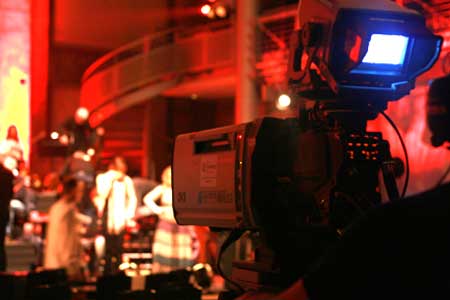
The crew are ready to start rehearsals for the latest BBC One Session featuring distinctive contralto, Annie Lennox. Cameras are being manoeuvred into place, cables carefully placed out of harm's way.

annielennox1.jpg

The string section run through the percussive opening to Sweet Dreams... signaling that this performance will be a tour through her greatest hits spanning Lennox's multicoloured hair dye days with Eurythmics, as well as her successful solo work.


4:35pm. A relaxed looking Annie arrives wearing tracksuit bottoms and a white t-shirt. I love a woman who dresses for comfort. She meets the director Nick Wickham and conductor Robert Ziegler as they prepare to get down to the business of rehearsals.


4:40pm. Annie lets fly with an unexpected, very loud high pitched yelp into the mic. I nearly fall off my stool, and hope no one saw anything. (Must remain inconspicuous fly-on-wall observer. Must not be forcefully removed for clumsiness). Her backing vocalists practise some synchronised sways and hand claps with the first full track, Little Bird taken from her 1992 solo debut Diva.


4.47pm. There's no applause as they finish the track and it feels strange. I'm not about to come to the party though - even though it sounds impressive inside the Hawksmoor church. This is the bit the audience never sees. All the pre-performance fuss.

4.52pm. The strings launch into Walking on Broken Glass and Annie practises her strut and where she'll move on stage during the recording.


4.58pm. Solo keys play the opening to 1985's There Must Be An Angel (Playing With My Heart). It's slow and crisp, without any hint of the original synth. (I presume there'll be no harmonica either. Thank God the 80s are long gone). Annie launches into her 'da da da da das' with a soulful approach and it's shiver worthy.


5.10pm. Lennox sits down to rehearse the solemn Cold. She practises where she should come in and apologises profusely for confusing the lyrics. There's some conferring with the backup singers over forgotten words and they continue to practise it. In her soft Aberdeen accent she reveals the 'beauty of it not being a live broadcast'. The cutting room can fix possible errors, but you can tell she's a perfectionist.

5.16pm. OWWWWWWWWWW. Loud amp fuzz prompts heads to turn and glare at the guitarist. Messing with a lead? GUILTY.

5.22pm. Annie moves to a small satellite stage in amongst the tables where the intimate audience will be seated (including, thanks to a tip off, a certain handsome Doctor). She practises her piano playing and a rendition of another 80s hit she recorded with Aretha Franklin.

Microphone placement is proving a slight problem. She sings, "Behind every, great man, there has to be a great woman". Make that "behind every great woman there has to be at least five men if one's mic is buggered".


5.35pm. The string section are busy delving into the daily papers and other reading material as they wait for their next cue to play. Looks like they're off the hook for the moment.


5.49pm. Tea lights are being delivered to the tables to add to the ambiance and 'reserved for fans' signs are placed on the front tables. Her devoted followers are going to get the best seats in the house.


6.01pm. The string section put down their newspapers and mags to contribute to I Saved The World Today, as the jimmy jib moves round to hone in and out on Annie as she sings. A gentlemen next to me measures the decibel output with a compact toy making sure the sound levels won't disturb the neighbours later on.

6.06pm. Annie strikes a bass drum with force and conviction as her band turn up the volume during Ghosts in My Machine from her solo album of 2007 .

6.15pm. Time for a survey. Annie turns to the orchestra and asks "Hands up who'd still be doing classical music if they had another choice?"

A few of the players hesitate, but I think that's a two thirds majority in the affirmative. She reveals how she could have been doing that. "Playing cello". Lennox was originally a student at the Royal Academy of Music in London after being offered a place at the age of 17.

6.16pm. Her new cover of Irish band Ash's Shining Light prompts hand claps from her three backing vocalists. She helps them out a bit with the timing and they take note.

6.27pm. Rehearsals come to a close with a classic and Annie thanks everyone for their efforts. She takes a breather and contemplates the real performance due to take place in around two hours.

-----------------------

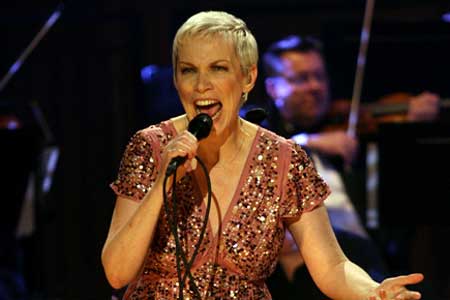
8:50pm Back at St. Luke's, I return to a room that now looks ready for a show. The audience have arrived and have no idea what to expect. I take my seat, smug and all-knowing, yet hoping for some surprises. The orchestra are dressed in black tie. The band and back up singers are all made up. There's lights, cameras and soon-to-be action. Annie is introduced to warm applause and the real show begins... again.

annielennox2.jpg

Watch the full BBC One Session with Annie Lennox on Saturday 28 March.

Blue Notes

Blog comments are currently unavailable. Find out more.

Paul Evans|17:38 UK time, Thursday, 5 March 2009

paulevans_58.jpg I'm a senior producer in BBC Wales whose life is spent in, let's face it, musical heaven. I make programmes about music for Radio 4 and one of my greatest sources of pride over the last seven years has been to produce Ken Clarke's Jazz Greats, a very welcome by-product of which has been to introduce me to a genre of music I wouldn't have lowered myself to listening to whilst doing a music degree in the mid 70s.

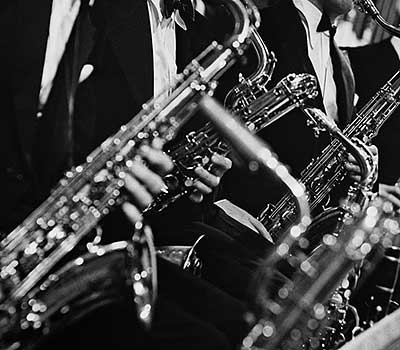
In fact the 'J' word didn't darken my world for another 20 or so years when, covering for another producer who'd gone sick (I wonder why), I had to interview Ken Clarke about his favourite saxophone players. With a mind on who he was and my total indifference and ignorance of the subject, mental images of the former chancellor with all guns blazing at the despatch box or on the Today programme raced through my mind along with lambs to the slaughter and yours truly being roasted on a spit! "A word for level Mr Clarke?" and we're off, or at least he was off.

saxophone_blog.jpg

I still have this image of him leaning back in his chair, jacket off, cigar and mug of coffee on the table with the Palace of Westminster as a backdrop, just talking and talking and talking about jazz. Correction, not talking... it was more a stream of consciousness flooding out of him with a passion that sometimes eludes 'expert' interviewees. It was as if he had been waiting all day for someone, anyone, to turn up and ask him about jazz!

Interview, or rather monologue in the can, I broached the subject of getting him to do something on Radio 4 with the commissioner of music programmes. I'd barely finished the sentence before he exclaimed YES! And then after the first series, four more please... and then, four more again! And they kept calling for more and more which is where we are at with Ken's seventh series of Jazz Greats this Tuesday at 1.30pm on Radio 4.

After that first series I got a message from his assistant, another stranger to jazz, to say that at last she understood and appreciated what Ken had been going on about for all those years... and she liked it! The response we get from people like her, who come to jazz as a result of listening to Ken, is something I am particularly proud of, even more so in that jazz aficionados also welcome his contribution with open ears. So how do we 'can' Ken's enthusiasm and knowledge into a half hour package? His diary is, to say the least, pretty full, particularly at the moment.

Yet for each interview recording session (that's around 90 minutes per programme), he is totally absorbed in jazz. He brings with him a formidable knowledge, and as you'd expect, does not hold back on personal likes and dislikes: it's highly doubtful he will have a CD of Fats Waller playing the organ in his car (17 March), but his interviewees do fight back. In fact on 10 March he even concedes (maybe just a millimetre) to saxophonist Soweto Kinch that when the great Charlie Parker debased himself by playing with a string orchestra, Parker's contribution wasn't too bad.

And yes, thanks to Ken Clarke my CD shelves buckle under the weight of all the music I was too proud to listen to as a music student, and the 'J' word really does figure heavily in my life. Why not try it?

If you're a Twitter user you might want to join in with a little experiment we're trying this week called Good Radio Club. The idea is to use Twitter to get a conversation going about Ken's programme while it's on air. To join in, listen to the live edition of the show (this won't work with listen again!) and Twitter your thoughts about it to the world, then make sure you include this 'hash tag' in every tweet you send: #goodradioclub - we'll pick up your tweets and include them in the conversation for others to read. Learn more about this at the Good Radio Club web site.

Paul Evans is the producer of Ken Clarke's Jazz Greats on Radio 4.

Ian Carr and Keith Tippett

Blog comments are currently unavailable. Find out more.

Jez Nelson|10:39 UK time, Tuesday, 3 March 2009

This week's Jazz on 3 was to be entirely dedicated to the music of the pianist Keith Tippett but then came the sad news of the death of another British jazz great Ian Carr who passed on Wednesday 25 March.

iancarr.jpg

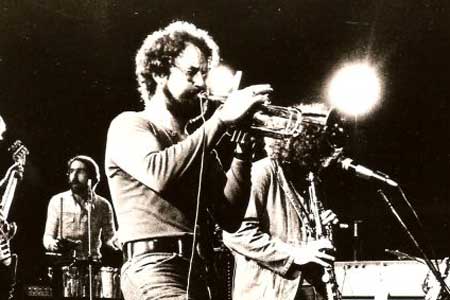
For 40 plus years Ian was a major force on the European jazz scene - as a trumpet player, a band leader, a composer and of course a writer. He had two very direct impacts on my own music tastes. Getting in to jazz in the early 80s I was blown away by the early albums of his jazz-rock fusion band Nucleus. Ian's musical experimentation ran in parallel with Miles Davis' new directions in sound. People often assume Nucleus just followed the trail of In A Silent Way and Bitches Brew. But the truth was Ian was doing his own thing - inspired as much by Soft Machine as Miles.

The second influence was through his writing. His biographies on Keith Jarrett and Miles were definitive and opened up both world's to me. Ian also consulted on the excellent TV documentaries that Mike Dibb made about both Miles and Keith.

We're putting together a full Jazz on 3 tribute to Ian and Alyn Shipton will be re-running his Jazz Library on Carr soon. But I did have time to squeeze in one tune on this week's show. Snakehip's Dream was originally recorded on the album Solar Plexus. But I chose to play a version from a 1971 BBC studio session - it's been released under the name The Pretty Redhead. This captures the original Nucleus lineup on staggeringly electric form with a great solo from Ian to set the pace. RIP Ian Carr.

The live music on this week's show is a double bill from Keith Tippett. Firstly we hear him with wife Julie. This set was the second half of a Tippett night at last year's London Jazz Festival. The pair rekindle their unique on-stage relationship that combines Keith playing (often treated) piano and Julie singing and playing percussion.

The whole performance is entirely improvised but uses Julie's poems as raw material. The second set is from the band Mujician - an occasional but much lauded improvising quartet featuring Tony Levin, Paul Dumall, Paul Rogers and Keith.

I thought it might be nice to complement the programme with some recommendations of further Tippett listening from some of the people who he has influenced. Their thoughts are below and I'd welcome your additions.


Robert Wyatt


Keith's accompaniment throughout Which Way Now (Cuneiform, 1975), by Harry Miller's Isipingo is like nothing you've ever heard - that side of his playing should be better acknowledged. And I'm a fan of Julie Tippetts' Sunset Glow (Polydor, 1974).

Riaan Vosloo (bass player who has recently recorded with Keith):

Keith Tippett's Dedicated To You But You Weren't Listening (Vertigo, 1971) and September Energy (RCA Neon, 1971) - I love these records, the energy and the mayhem, and hearing those great British musicians helping to forge a new type of music. I was also bowled over by Linuckea, Keith's composition for string quartet and piano; it's one of the most startling pieces I've ever heard and defies easy categorisation.

That's one of the key characteristics of all his music, there are elements that can be identified as this genre or that genre but generally it's his own thing, and I think that's the highest compliment. Julie Tippetts' Shadow Puppeteer (Resurgent, 1999) is a lovely and unusual solo vocal album.

Matthew Bourne (pianist):

Keith gave me a copy of his solo piano record Friday the 13th (Voiceprint LCVP136CD) for nowt (I had no money, but promised to send it to him the following week - which I did!). I'd always wanted to hear it since I'd first known about it's existence back when I was still at college. It's one of my favourite of all his solo recordings. I don't really feel that words can do justice to this sublime performance - Keith really is one the world's most unique voices on the instrument.


John Fordham (The Guardian):

Dedicated To You But You Weren't Listening (Vertigo, 1971). Tippett's one of contemporary jazz's great piano improvisers, and Mujician one of the great free-jazz bands. But, alongside Ian Carr's Nucleus (which this album closely followed, and on the same label), his first jazz-rock band with Elton on sax, Gary Boyle on guitar and Robert Wyatt on drums, threw open the door on what was possible in an emerging fusion style outside of America. Tippett's and Elton Dean's compositions crackled with fresh ideas, and the leader's arrival as a potentially transforming force was impossible to miss.

Dave Kane (bass player founder Leeds Improvised Music Association):

The Bristol Concert (What, 2000), by Mujician and the Georgian Ensemble, is the first Mujician record that I ever bought. It totally blew me away! Mujician are amazing (as always) on the record, but it was Keith's compositions that really inspired me. He has an incredible ability to compose music containing the perfect balance of strictly notated music and free improvisation. Absolutely beautiful!

Dave Stapleton (pianist):

I met Keith whilst studying at Royal Welsh College of Music and Drama. We played First Weaving, which is on Keith Tippett Tapestry Orchestra - Live at Le Mans (Edition Records), in the college big band and I was blown away with his writing. Not only for the use of his harmony and melodic ideas but also by how he structured the music. I then later released the live recording on my label so I have a particular attachment to this CD. Dedicated to You But You Weren't Listening (Vertigo, 1971) has a fantastic energy and some great compositions - a must for any fan of Keith's music. There are so many great solo piano records by Keith but Friday the 13th (Voiceprint LCVP136CD) particularly inspired me. Amazing.