How to create PSAs in emergencies
BBC Media Action's Parambrahma Tripathy on the six crucial lessons learned while making audio spots to help people affected by a cyclone in Odisha, India.

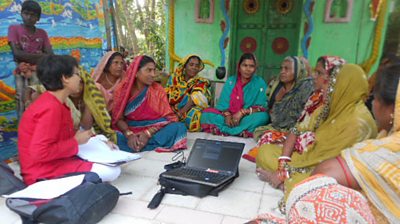
The BBC Media Action team in India are used to tight deadlines. But last October, we faced a deadline with a difference: after cyclone Phailin hit the eastern state of Odisha, we had 72 hours to script, produce and broadcast three radio public service announcements to provide life-saving information to those affected.
The key issues that we needed to communicate immediately to those reeling from the cyclone were: how to make drinking water safe, how to avoid diarrhoea and avoid danger in flood water.
Then in the two months after the cyclone we produced a further eight PSAs, which were played on loudspeakers on auto-rickshaws in remote areas of Odisha where there’s no radio reception.
Here’s what our team learned about how to use radio/audio to help save lives in such an emergency:
1. Get the brief right
When it comes to lifeline communications, the one luxury you don’t have is time so there is very little margin for error or delay.
That means the most important thing is to get the brief – how you’re going to plan the outputs – right. And to do it quickly.
Unsurprisingly, communication here is key: our team in the Bhubanswar office in Odisha were constantly on the phone, keeping our Delhi team aware of every single development on the ground. This was invaluable in fine-tuning our technical brief.
2. Choose the right platform – and change if necessary
It sounds obvious but it’s worth repeating: know the platforms which are right for your audience.
Immediately after the cyclone, our announcements went on air on the most popular radio stations in the state: commercial FM stations in Odisha, AIR (All India Radio) and community radio stations.
And when incessant rain and electricity cuts continued for days after the cyclone hit, we changed our approach by playing the messages on loudspeakers on rickshaws.
3. Hit on a powerful central idea
This is perhaps the most crucial thingto get right.
While brainstorming our central idea, we examined the devastating super cyclone which hit Odisha in 1999 and had claimed thousands of lives.
We remembered the mayhem didn’t stop the day after the cyclone hit but instead continued for months as people struggled to get information. And while we talked, it became obvious that knowledge is key.
This insight led us to the popular Odia proverb "Janile Kariba, Janile Jiniba" which means “When you know you will do, when you know you will win.” And that became the campaign tagline.
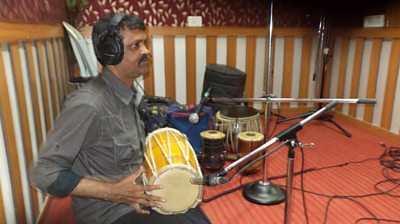
In the aftermath of any disaster, it’s important to strike a balance between communicating the correct information and using the right tone and format for your audience.
It’s got to be both full of correct information and strike a popular chord.
Recognising this, we decided to use the dahuk sangeet format for the eight PSAs we broadcast after the first few days of the emergency had passed.
Dahuks are street performers who compose instant couplets in their sangeets - ‘songs’ - which keep crowds enthralled at the famous Rath Yatra festival (Chariot Festival) held each year at Puri in Odisha.
This format allowed us to communicate the correct information in a way that we knew would be popular with our audience.
5. Test quickly
Even in such a short timeframe, rapid pre-testing is crucial. Before we embarked on producing all the PSAs, we tested two of them in one of the worst-affected areas, checking how much information people recalled after listening, how much they liked them and how much they understood.
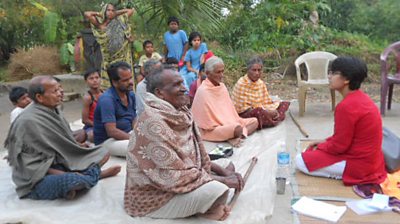
We had less than 10 hours to modify our content after pre-testing.
And this is where contacts come into play. We tapped into contacts among the local film, TV and music industry and persuaded some famous Odia singers and voiceover artists to feature in our PSAs.

There will be cyclones again in Odisha. We cannot stop them. But the last two months have taught me an invaluable lesson. If you communicate the right things at the right time, you can save a lot of lives and help a lot of people.
This Post-Phailin Lifeline Communication Programme was made with funding from the European Commission's Humanitarian Aid department (ECHO).
Related links
BBC Media Action's work in India
BBC Media Action's resilience and humanitarian response
Latest India stories
More stories from IndiaSearch by Tag:
- Tagged with IndiaIndia
- Tagged with AsiaAsia
- Tagged with StoriesStories
- Tagged with Resilience and humanitarian responseResilience and humanitarian response
- Tagged with Capacity strengtheningCapacity strengthening
