When six seasons became two
BBC Media Action's Md. Ehsanul Haque Tamal in Bangladesh on how conversationsin Dhaka's Korail slum have helped to shape Asia's biggest ever survey about climate change.

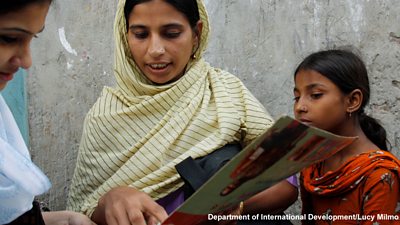
"Dhaka is the capital of Bangladesh and Gulshan and Banani is the capital district of Dhaka, so people come here for higher chance of getting job."
This was the reason given by one middle-aged man for migrating to the Korail slum which fringes Gulshan and Banani, one of Dhaka's most affluent areas.
We asked him to share his experience as part of a community assessment for our project, Climate Asia, which aims to understand people's daily experience of climate change on the ground and what information they need.
Migrant workers
Korail slum is home to over 40,000 people who have migrated from all over Bangladesh to find work. Some have had to leave their villages due to river erosion and others due to famine. People choose Korail for the job prospects and the low cost of living. One interviewee said, "You will not find a 2000 Taka (about 17 GBP) room rent anywhere [else] in Bangladesh."Most men in Korail work as day labourers. The women work in the garment industry or as servants in the nearby houses of Gulshan and Banani.
The world over slum-dwellers live in difficult, cramped and insanitary conditions, and it's no different in Korail. Residents co-exist in tightly packed houses; many rent single rooms in what are no more than tin sheds. Most households have illegal gas, electricity and water connections, for which people pay rates to middlemen rather than the government. The roads are so narrow that the slum dwellers can't use any kind of vehicle to get around, and the fire brigades find it hard to get through in an emergency. People live under constant threat of eviction.
We found many people who said that Korail slum was a toxic place. Residents living nearby have filled Gulshan Lake (which covers the slum from three sides) with garbage. Fish cannot survive and a terrible smell is a constant and unpleasant presence.
Erratic rainfall
Whilst awareness of the term 'climate change' was low among our interviewees, the community was aware of changes in the weather and their surroundings.
Most of the slum dwellers we spoke to felt there had been changes in the climate. They believed that there were only two seasons: summer and winter, although there are traditionally six in Bangladesh. People thought that there was more rain and that it had become more erratic. One male respondent said, "The season has changed, it doesn't come when it is supposed to."
Some people felt that pollution from vehicles and even the melting of the polar ice caps were causing the changes in weather, but most felt that it was down to the wish of Allah and that they had nothing to do with these changes.
Reaching people
We also learned the way in which media plays a part in people’s everyday lives. Some households, despite the basic conditions, have managed to rig up satellite TV, other residents gather in tea stalls to watch TV together. Our research found that the women in Korail liked to watch TV serials and movies whereas the men preferred to watch the news. Very few people listened to the radio and read newspapers, but most use mobile phones.
We have taken what we have learned in Korail slum, and another 39 community assessments across seven countries, to build up a picture of how individual communities are experiencing changes in climate. They have taught us how they understand climate change and the ways in which we can reach them.
We will use this information to explore how communication could be most useful to communities in responding to changes in climate and crucially, how this can work best within the structures of community life.
More than 30,000 people were interviewed for the Climate Asia project across seven countries - Bangladesh, China, India, Indonesia, Nepal, Pakistan and Vietnam in the region's largest ever public investigation of its kind.
The project will launch a series of tools, including research reports and an interactive data portal, in September 2013, which will allow users to explore research data and develop communication to meet public needs.
Related links
BBC Media Action's work in Bangladesh
Latest Bangladesh stories
More stories from BangladeshSearch by Tag:
- Tagged with StoriesStories
- Tagged with BangladeshBangladesh
- Tagged with AsiaAsia
- Tagged with Climate AsiaClimate Asia
- Tagged with Resilience and humanitarian responseResilience and humanitarian response
