Rape in Sierra Leone: breaking the silence
BBC Media Action's Alpha Kamara on how two radio shows threw the spotlight on sexual violence in Sierra Leone, gathering government support for victims and reflecting shifting public attitudes towards the issue.

"Justifying rape because of the way a woman dresses is like justifying armed robbery because of poverty and hunger." So spoke Mustapha Bai Attila, the Deputy Minister of Social Welfare, Gender and Children’s Affairs in Sierra Leone, on a recent episode of our radio debate programme Tok Bot Salone (Talk About Sierra Leone).
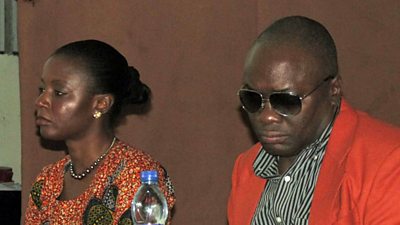
The deputy minister was part of a panel answering questions from an audience of over 200 people about an issue that has dominated headlines in Sierra Leone over the past few months.
This is partly because of two high-profile court cases which have thrown the issue of rape and sexual violence into the spotlight.
The first involved a government minister accused of rape; the second was the death of a woman, Christiana Juma Jalloh, after a brutal gang rape in Pujehun district in southern Sierra Leone.
Christiana Juma Jalloh’s uncle was interviewed on Tok Bot Salone’s sister programme, Fo Rod (Crossroads), which broadcast packages about the issue from across the country and invited listeners to have their say by text message.
Over 100 rapes reported each month
Rape and sexual violence statistics in Sierra Leone make for grim reading. According to the Rainbow Center, an initiative which supports victims of sexual violence, from January to September this year, there were over 1,300 rape and sexual violence cases recorded across the country, the majority of which involved children, some as young as three years old.
Last year, a new sexual offences act protecting victims and increasing penalties for offenders was brought into law after a long campaign by women’s groups. But the same groups have criticised its implementation.
Such a background meant that this particular Tok Bot Salone episode proved particularly fiery.
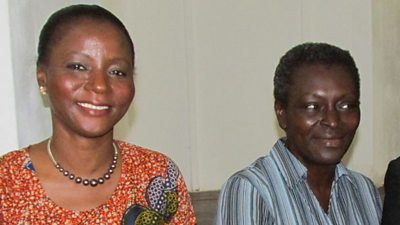
Alongside the Deputy Minister on the panel were the President’s gender adviser, the head of the arm of police which investigates sexual offences, and representatives from the advocacy group Legal Access to Women Yearning for Equal Rights and Social Justice(LAWYERS) and Women in the Media Sierra Leone (WIMSAL).
Fierce dissent
When Claudia asked the hall whether they thought rape was a serious problem in Sierra Leone, almost all of the audience agreed. However, there was space for dissenting voices – which provoked fierce debate.
For example, station manager of the Voice of Islam radio station, Sheik Fomba Abubakarr Swaray expressed a widely-held opinion in the country – that rape victims are also somehow to blame: “I think sexual abuse is not a big problem in Sierra Leone,” he said, adding that in a society where “women are outrageously transparent… rape is sure to be an issue.”
The response from the audience and the panel was fierce. Echoing the Deputy Minister of Social Welfare Gender and Children’s Affairs Mustapha Bai Atilla’s passionate defence of the victims, the President’s Gender Adviser Naasu Fofanah also singled out the culture of silence and secrecy surrounding the issue. “The issue of silence needs to be tackled seriously because it’s the root of this menace,” she said. “Until we break the culture of silence, this issue will not be solved.”
Respect for the victims
She also called on the public to always report cases to the police, a comment that sparked off a common complaint in the audience. They all said that rape cases were not treated in enough confidence at the local level and called for anonymity and more respect for victims.
Naasu Fofanah told them that because of such complaints, she had “approached the Attorney General and the Minister of Justice to know how they are pursuing cases of rape”.
Deputy Minister of Social Welfare Mustapha Bai Atilla also told the hall that if anyone had a complaint about how the police was treating a rape case, they should report it directly to him. “Rape against woman is violence against the state,” he stressed and added that the Sierra Leonean government is currently working on increasing the jail term for rape from its current limit of 15 years to 40 years.
Shift in attitudes
These special Tok Bot Salone and Fo Rod episodes were broadcast across Sierra Leone on over 30 local stations - and the feedback has been very positive.
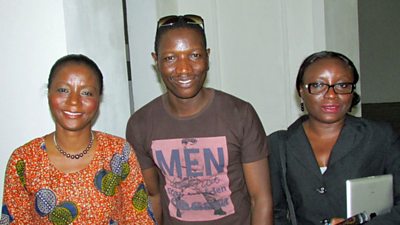
Mariama Dumbuya from the advocacy group LAWYERS welcomed the opportunity to discuss the issue and called for more programmes on the topic to raise awareness.
And while we can’t conclusively prove the connection, the police unit in charge of investigating rape allegations, the Family Support Unit (FSU) have told us that since the programme and other radio programs, more people have come forward to report rapes.
As one listener, Sange Watana from Don Bosco Fambul, a local organisation that supports victims of rape in Sierra Leone, said, “Rape can only be a big issue if we all stand up and say no to it. The people of India did the same and it became a worldwide issue.”
Related links
BBC Media Action's work in Sierra Leone
Alpha Kamara's blogs from Sierra Leone
Latest Sierra Leone stories
More stories from Sierra LeoneSearch by Tag:
- Tagged with Sierra LeoneSierra Leone
- Tagged with AfricaAfrica
- Tagged with StoriesStories
- Tagged with Governance and rightsGovernance and rights
