Weathering change: opinions from the frontline
While Rio + 20 is underway, BBC Media Action is undertaking the first ever Asia-wide study into the impact of climate change on people's lives, across seven countries and surveying 25,000 people.

Twenty years after the landmark Rio Earth Summit, more than 50,000 people have once again descended on Rio to debate the future of our planet and the people who live on it. Away from the rounds of high-level discussions, BBC Media Action is also hard at work on these issues. The recently launched Climate Asia research project aims to put the everyday experiences of Asian people at the heart of responses to some of the world’s greatest human and environmental challenges.
With a survey of over 25,000 people across seven countries, Climate Asia is the first ever region-wide study into the impact of climate change on people’s lives.
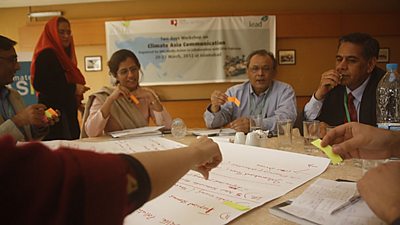
In January the Climate Asia team began work on the first phase of this research and communications project. We conducted a series of in-depth interviews and communications workshops in Bangladesh, China, India, Indonesia, Nepal, Pakistan and Vietnam focusing on the tricky issue of communicating climate issues. Our work so far has featured more than 300 experts and opinion formers from government, civil society, business, academia and the media.
While the Rio summit will feature the language of the global policy elite – a sea of acronyms and targets – our interviewees have highlighted the importance of using language people understand. One way to do so is to talk about problems people experience every day like food security, water scarcity, unpredictable weather, disease and migration. As one Bangladeshi civil society representative noted many people "don’t understand the term 'climate change', or its causes, but they feel the impact of climate change."
Farmers, fishermen and people whose lives are directly impacted by changes in climate were identified as our key potential audience for communications workshops. But rather than scaring people with stories about extreme impacts, participants emphasised the importance of using the media to communicate positive messages centred on the benefits of taking action to improve lives and livelihoods in the face of changing climates.
When asked for good examples of climate change communications, our respondents tended to provide examples of where climate change was related to other issues, including development, disaster preparedness and biodiversity. Others highlighted the importance of linking climate change to existing public priorities, particularly those related to development. This message may be of relevance to our friends in Rio who are currently struggling to unite diverse environmental and social agendas. The task may be tricky but linking these issues may make them easier to communicate.
The Climate Asia team is now using these findings to inform design and implementation of Asia’s largest ever survey of public understandings of climate change. Ultimately we hope to use all of this information to create new communications tools and messages for audiences across Asia. Our goals may not be on as grand a scale as those of sleep-deprived government officials in Brazil, but they are ambitious and we believe that our work can and should complement theirs.
Related Links
BBC Media Action's Climate Asia Facebook page
Rio + 20 United Nations Conference on Sustainable Development
Go back to BBC Media Action website
Search by Tag:
- Tagged with StoriesStories
- Tagged with Climate AsiaClimate Asia
- Tagged with Climate changeClimate change
- Tagged with ResearchResearch
