

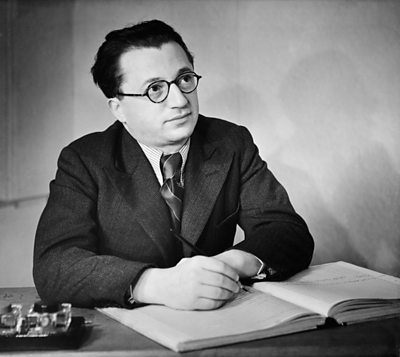
Themes of London premiered 83 years ago on 8 December 1937, on the BBC National Service. This hour-long work was the creation of Viennese composer Julius Burger (Bürger), whose life and works were left in obscurity until recently. Burger pioneered a new genre for the BBC in the 1930s which he called ‘Radio Potpourri’. On the surface, these popular collage works provided entertainment to the British public in the golden age of radio. Dig deeper and one finds the story of a composer on the cusp of a successful career in Germany, who had to flee for his life after the Nazis came to power. In fact, Burger wrote most of his BBC Potpourris on the run, moving between hotels and short let accommodations throughout France, London and Vienna.
Burger’s first engagement as a composer/arranger with BBC Radio came in late 1933 with his proposal to create an hour-long musical montage centred around the works of the waltz-composers Joseph Lanner and Johann Strauss. The work titled Vienna (1933) premiered on 4 January 1934 with a reprise the following day - all radio was live in those days! - and marked the starting point of a successful eleven year relationship with the Corporation.
Radio Potpourri
‘Potpourri’ is a collage of multiple musical melodies grouped together around a central theme. Burger did not by any means invent the genre: composers had been making potpourris since the 18th Century. He took what were usually 10-minute melanges of music and expanded them into hour-long epics for the medium of radio.
These incorporate a storyline and narration over a tapestry of musical themes. The genre is best described by Burger’s colleague and main supporter at the BBC, the conductor Stanford Robinson, in a Radio Times article (‘Preparing an Hour’s Potpourri’) from 1935:
Musical Potpourri? It doesn’t sound a very original idea. But a Julius Buerger potpourri for soloists, chorus, and orchestra, lasting an hour, is to the ordinary potpourri, which plays for nine or ten minutes, as a modern Cunarder to a primitive paddle-steamer. Buerger has specialised in this type of programme, peculiarly suitable for the medium of radio, and has brought it to a point very near perfection."
- Stanford Robinson. ‘Preparing an Hour’s Potpourri’. Radio Times Issue 616. P.3. 19 June 1935.
The plastic nature of the genre provided potential for a tailored work to fit any occasion. The ‘Geographic Potpourri,’ for example, took the listener on a journey by utilising music from a travel itinerary. Burger’s Holiday in Europe (1934) followed a honeymooning couple as they travelled from country to country across the continent; World Tour (1935) followed a group on a cruise ship around the globe; The Empire Sings (1938) explored the sights and sounds of the British Empire, then at it geographic height.
Some focused on a single city - Vienna - in the 1935 work City of Music. Other potpourris told the life stories of composers through their own music, as in The Life of Offenbach (1935) and Johann Strauss : A Biography in Music (1936). Burger even wrote one to celebrate the Allied victory in Europe, Victory Rhapsody (1945). Only one offered a journey through time and space: Themes of London (1937).
Rediscovery
While still working for the BBC (who never were able to arrange a work permit for him to emigrate to Britain), Burger moved to New York, where he would have died in relative obscurity if not for his rediscovery in 1990, then aged 93. When I started working on his life and music, I was fortunate to have access to a collection of personal papers, manuscripts and personal effects brought together by Burger’s solicitor Ronald Pohl and then donated to the Exil.Arte Centre for Banned Music at University of Music and Performing Arts Vienna. This collection is the central repository on Burger (as well as dozens of other composers from the ‘Lost Generation’). Unfortunately, the archive lacked much information about his work with the BBC (1933-1939).
The BBC Written Archives contain carefully preserved documentation including contracts, internal memos and personal correspondence between Burger and conductor Stanford Robinson. As I began sifting through the materials, I kept seeing the same phrase over and over which I later came to realise encapsulates Burger’s major works with the BBC – the ‘Radio Potpourri’. I could now piece together an idea of what these works may have contained but without viewing the manuscripts themselves, the picture would remain incomplete.
After an unsuccessful attempt to locate these scores, I entertained the possibility these manuscripts might have been present in the Music Library when Broadcasting House was bombed in the Blitz of London on 15 October 1940. After discussion with my supervisor, Dr. Thomas Irvine, I was put in contact with BBC Librarian, Tim Auvache.
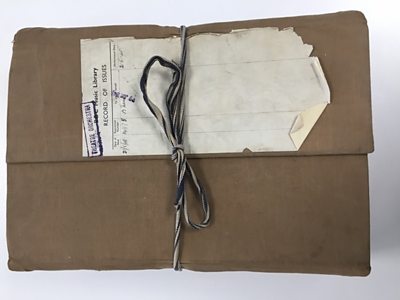
A further search using the anglicised spelling ‘Buerger’ produced successful results! The catalogue revealed the location of four bundles containing nearly six thousand pages of handwritten manuscripts in the Sheet Music Library, Perivale, London. While not all the works had been preserved, there were seven ‘Grand Potpourri’ master scores spanning from 1934-1938. A further search in March 2020 located still more manuscripts.
The works were now yellow with age but the swift scribbles covering the pages were easily recognisable as belonging to Burger. As I sifted through the bundles, I was struck by one work in particular for its face-value oddity - a radio work written by a Viennese composer, displaced and on the move throughout Europe, about the capitol of the British Empire through the ages – Themes of London.
Themes of London
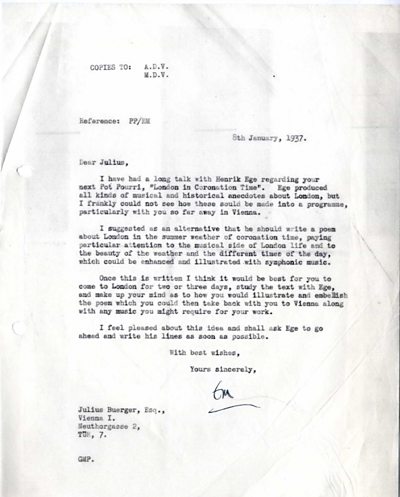
The concept for this work was pitched to colleague Stanford Robinson and Eric Maschwitz (then Director of the BBC Variety Department) as a musical commemoration upon the Coronation of King George VI on 12 May 1937. Upon Maschwitz’s suggestion, the work was reworked for later broadcast in December of that year. What resulted was a musical representation of London, offering historic glimpses of the capital throughout the ages.
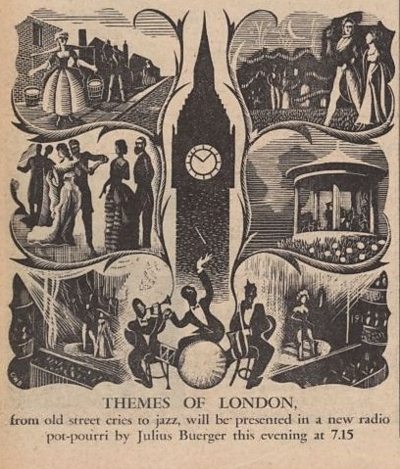
After an introduction by narrator Henrik Ege, the chimes of Big Ben and the Changing of the Guard announce the opening of the potpourri before dipping back into the 17th century with Street Seller cries and the National Anthem. Burger then guides the listener into Baroque London, with the incorporation of themes by Henry Purcell and George Friedrich Handel as well as folk melodies from all parts of the British Isles.
The piece then segues to the Victorian ballroom as Burger weaves dance music and polkas together before transporting the listener to the Hyde Park bandstand with the incorporation of military marches. Forward again onto Edwardian London with the inclusion of popular period pieces until the work reaches its exciting climax in contemporary 1930s London with popular jazz tunes ‘On your Toes’ and ‘I’m in a Dancing Mood’.
What would the contemporary period be without at least an homage to the cinema organ performed by Reginald Foort? The work comes to a peaceful conclusion with an echo of the Westminster chimes as the sun sets over the Thames and ‘God Save the King’ plays serenely in the background..
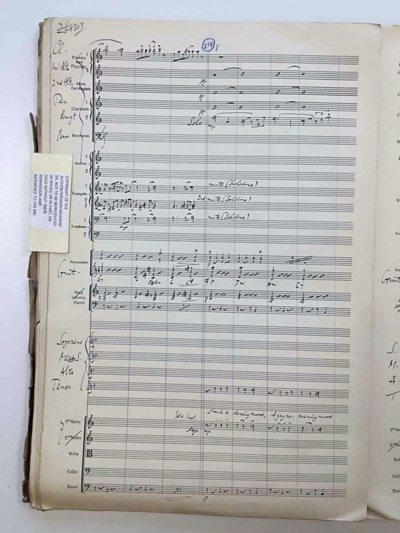
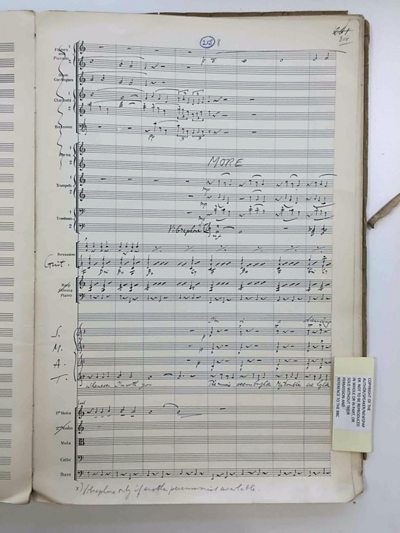
Themes of London showcasing Burger’s mastery over compositional styles was presented by well-known performers of the day including narration by Henrik Ege, sopranos Lorely Dyer & Gwen Catley, tenor Derek Oldham, baritone John Rorke, plus other popular figures such as Bertha Wilmont, Sam Costa, girl-harmony group The Radio Three, and Reginald Foort at the BBC Theatre Organ. The performance was rounded off with the BBC Chorus-Section C and the BBC Theatre Orchestra under the baton of Stanford Robinson. Fortunately, Themes of London remains one of the few manuscripts preserved of which an original recording exists.
From early 1938, Burger lived exclusively in London after the Annexation of Austria on 12 March made it clear he would no longer be safe in his native Vienna. In 1939, he emigrated to the USA and became an arranger/orchestrator for conductor Andre Kostelanetz before conducting a short run of ‘Songs of Norway’ on Broadway.
From 1949 until his retirement in the late 1960s, Burger served as an assistant conductor and repetiteur for the Metropolitan Opera. Burger’s story echoes that of countless émigrés fleeing oppression of that period and these works stand as a testament to their contributions in many facets of British culture and society. My thanks to the diligence of the BBC Music Library and Written Archives for preserving these works.
Biography
Ryan Hugh Ross is a doctoral student and ORT Marks Fellow at the Parkes Institute, University of Southampton. His dissertation focuses on the effects of diaspora on the life and music of Viennese émigré composer Julius Burger. In November 2019, he released his first album titled A Journey in Exile : The Lieder of Julius Burger containing the composer’s unpublished songs spanning from 1915-1988.
- A Journey In Exile: The Lieder of Julius BurgerMore information on Julius Burger
