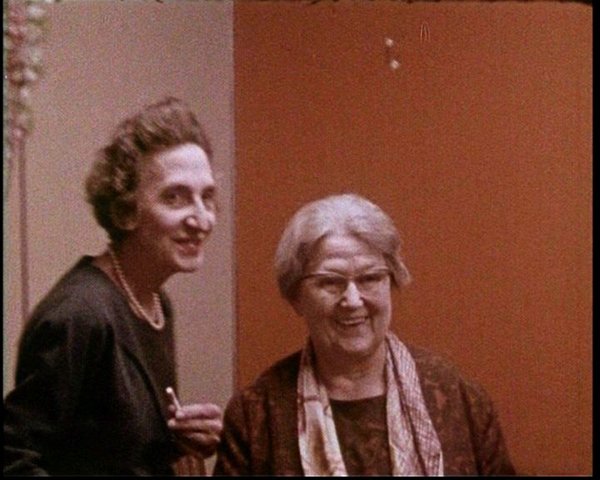
BBC BLOGS - Adam Curtis Blog

Archives for December 2010

DAVID DIMBLEBY AND THE PANDAS OF DOOM

Post categories:

Adam Curtis|16:53 UK time, Thursday, 23 December 2010

Comments

Here are two films for the holiday.

One is a film made by a young David Dimbleby about a group of 500 British ballroom dancers on an ocean cruise in the summer of 1973.

The second film tells the history of how pandas got involved with power politics in the 20th Century - and the strange consequences for politicians in the West.

There is no connection between the two films.

Dimbleby's film is wonderful. It is beautifully shot - the images of the dancers rehearsing on deck under the grey skies of the Atlantic are great.

But underneath Dimbleby also cleverly uses the film to analyse the relationship between eroticism, friendship between men and women, and sex.

It is also very funny and affectionate.

In order to see this content you need to have both Javascript enabled and Flash installed. Visit BBC Webwise for full instructions. If you're reading via RSS, you'll need to visit the blog to access this content.

I have always thought that pandas, in evolutionary terms, are the most sophisticated animals in the world.

They cannot look after themselves, they are useless at reproducing. But to compensate they have managed to persuade the most advanced creatures on the planet - human beings - to care for their every need.

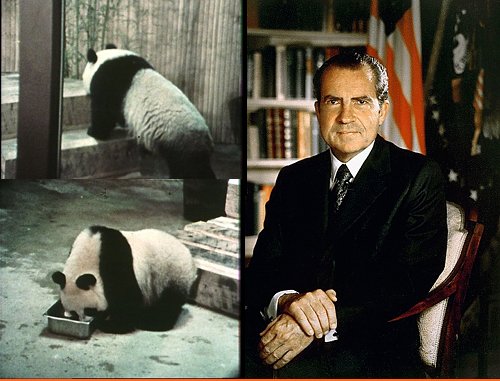
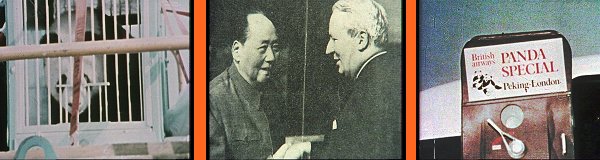
Here is a film made in 1976 called Very Important Pandas. It is the history of our relationship to pandas which not only explains how they came to have such a grip on our imaginations, but it also shows what happens when pandas get involved in power politics.

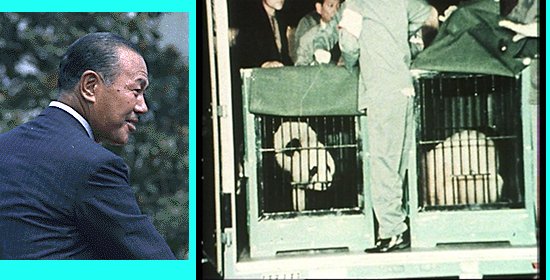
As the presenter points out - any world leader who was given a pair of pandas in the 1970s fell from power pretty soon afterwards.

Richard Nixon and Ling Ling and Hsing Hsing
Edward Heath and Chia Chia and Ching Ching
And Prime Minister Tanaka of Japan who was found guilty of accepting bribes from the US Lockheed Corporation - pictured below with his pandas, Lan Lan and Kang Kang
And, as if to prove the film's point, the same year it was transmitted, Prince Bernhard of the Netherlands, who had helped make the pandas famous, was also found guilty of accepting bribes from Lockheed.

Prince Bernhard had been one of the co-founders of the World Wildlife fund in 1961. The fund had decided to make the panda its international logo. It was an act that made pandas the top "charismatic mega fauna" of the world.

Prince Bernhard tried to claim he had taken the money for the pandas. But noone believed him - and he was stripped of his title, his uniform, and forced to resign.
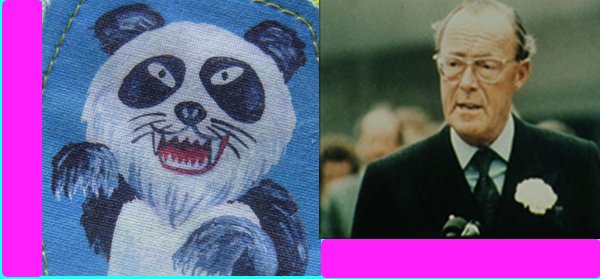
The second part of Very Important Pandas is a film made by the People's Republic of China in 1975 about the pandas and their environment in south-east China.

It is beautiful and strange. It has a great mood and pacing - and sometimes looks like the work of Jeff Koons. And there is a lovely section about the birth of a baby panda.

The Chinese film also tries to put the odd evolution of the useless panda into a revolutionary socialist perspective. The narrator quotes Friedrich Engels:

"F. Engels points out that each advance in organic evolution is at the same time a regression"

David Attenborough couldn't have put it better.

In order to see this content you need to have both Javascript enabled and Flash installed. Visit BBC Webwise for full instructions. If you're reading via RSS, you'll need to visit the blog to access this content.
WICKED LEAKS

Post categories:

Adam Curtis|13:47 UK time, Friday, 17 December 2010

Comments

Bradley Manning, the intelligence analyst who is alleged to have leaked the thousands of state department cables, has often been compared to Daniel Ellsberg who leaked the Pentagon Papers in 1971.

But I have stumbled on a film in the archives that tells the story of another leaker in America who tried to do the same thing, but even earlier.

He was a young State Department diplomat who stole and copied thousands of Top Secret cables. Like Daniel Ellsberg, his aim was to release them to stop America’s involvement in what he believed was a disastrous foreign war.

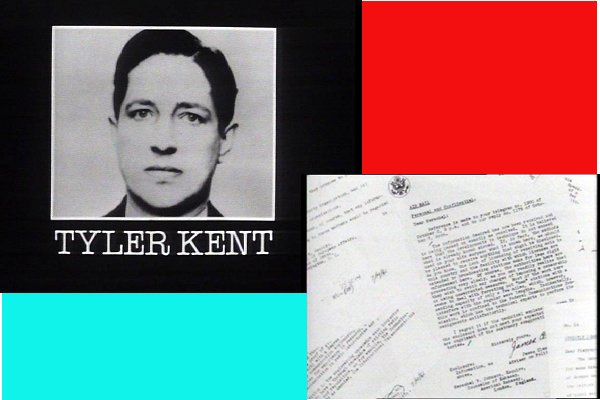
He was called Tyler Kent. He was a diplomat at the US embassy in London in 1940 and he wanted to stop President Roosevelt bringing America into the war to help Britain.

It is a fascinating story, but it also brings an odd perspective to the contemporary Wikileaks story. 

Tyler Kent was a horrible man. He was a rabid anti-communist who believed that the Jews had been behind the Russian Revolution.

He was convinced that Germany should be allowed to destroy both Communist Russia and the Jews. And America should not get in the way of that being allowed to happen.

Looking back, most people now feel that Daniel Ellsberg was right in 1971 because the Vietnam War had become a horrible disaster that needed exposing.

Today, we are not sure of Bradley Manning’s motives (and it hasn't been proven that he is the source of the leak), but again there is a general feeling that it was good thing because the cables have exposed an empty nihilism at the heart of America’s foreign policy.

But the perspective the Tyler Kent story brings is the realisation that diplomatic leaks are not automatically a good thing. It just depends on who is using them. And why.

Back in the past Tyler Kent wanted to use secret information to destroy the things that the overwhelming majority of the British people believed in and were prepared to fight for.

Back in 1982, Robert Harris tracked Tyler Kent down. He was living in a caravan in a trailer park on the US-Mexico border. Harris persuaded Kent to be interviewed and then made a film for Newsnight that told the story.

It is a great piece of historical journalism. Kent explains how his aim was to release the secret cables during the Presidential election campaign in 1940. Over 80% of the US population didn’t want to go into the war – and the cables showed President Roosevelt secretly promising Churchill help against Germany.

Harris makes a powerful case in the film that if Kent had succeeded America would not have entered the war. And history would have been completely different.

Tyler Kent himself is weird and mesmerising. But still unrepentently anti-semitic.

And the film also shows just how easily Tyler Kent found willing accomplices in the heart of the British Establishment. They wanted to get rid of the Jews and communists too, even at the expense of their own country.

The film begins on the morning of the 20th May 1940. Churchill had been sending secret cables to Roosevelt begging for American help.

In order to see this content you need to have both Javascript enabled and Flash installed. Visit BBC Webwise for full instructions. If you're reading via RSS, you'll need to visit the blog to access this content.
THE OFFICE PARTY

Post categories:

Adam Curtis|14:03 UK time, Wednesday, 8 December 2010

Comments

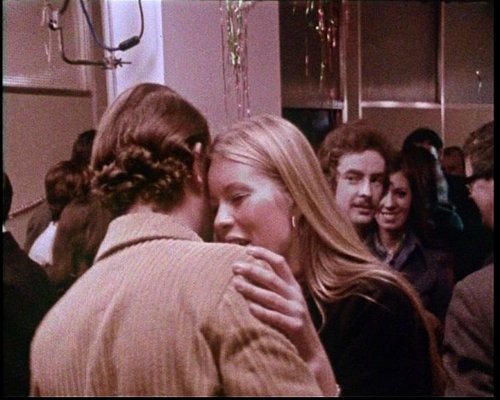
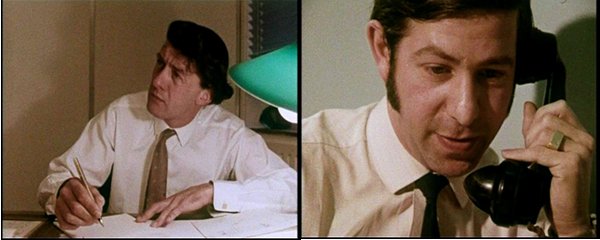
Here is a lovely documentary made in 1969 about that year's Christmas office party at a London advertising agency.

I've used shots from it in the past - but I've always loved it as a film - so I thought I would put it up.

It tells the story of the preparations as well as the party - and it beautifully captures the mood that Christmas parties always create in offices.

The firm is called Davidson Pearce Berry and Tuck. I did a bit of research on them and it turns out that the film also captures them at a fascinating moment of change.

The original agency had been around for years and had always done very straight Industrial advertising in trade magazines - aimed at buyers. Their biggest clients were firms like Colt Heating and Ventilation, Wates the builders, and Holman Compressed Air.

Not boutique.

But recently two very ambitious young advertising men had joined. One was called Norman Berry - who had come from Young and Rubicam, the other was called Allan Rich.

They were determined to turn the agency into what Mr Rich describes as "a sexy boutique agency". They were modelling themselves on the new kinds of American agencies that people like Mary Wells had set up in New York.

And they had just scored a great success. The firm had got the account of the Conservative Party and its new modern leader Edward Heath. They were going to do the advertising for the 1970 General Election.

Saatchi before Saatchi.

And they were changing the firm radically. The old patrician world of British advertising was being dismantled and by now much of it had gone from the agency.

The only real remnant of that old world in the film is Mary Crowley from Accounts (along with her unnamed friend from Wages). I love Mary Crowley, she is like a ghost from an older Britain haunting the new "on-trend" flash agency.

But that new world wouldn't last long. The firm would succeed with helping Edward Heath get elected. But very soon an economic crisis would hit Britain - and advertising too.

The firm was bought by the giant US agency, Ogilvy and Mather, and Norman Berry went off to America. And the old agency just faded away.

In order to see this content you need to have both Javascript enabled and Flash installed. Visit BBC Webwise for full instructions. If you're reading via RSS, you'll need to visit the blog to access this content.