Kabul: City Number One - Part 9
1-2-3-4 - WHAT ARE WE FIGHTING FOR?
On November the 4th last year Paula Loyd, a cultural anthroplogist attached to the US army, was interviewing an Afghan man in a small village in southern Afghanistan.
As she asked him about fuel prices he suddenly poured petrol over her from a jug he was holding. He then set her alight.
Paula Loyd had a guard nearby. He shot the Afghan man in the head. Loyd died of her burns and the guard has been convicted of manslaughter.
Paula Loyd was an idealistic young American who wanted to help solve the chaos that had resulted from the invasion of Afghanistan - chaos that she believed resulted from inflexible dogmatism on both sides of the conflict.
Here is some video of her on a panel at the Woodrow Wilson International Center for Scholars in June 2006.
In order to see this content you need to have both Javascript enabled and Flash installed. Visit BBC Webwise for full instructions. If you're reading via RSS, you'll need to visit the blog to access this content.
Paula Loyd's horrific death brought into the open an extraordinary project she was part of. It had been set up by the American military to try and change the way both sides in the Afghan conflict see each other.
It is called The Human Terrain System.
The idea is simple. Instead of concentrating only on fighting on the "physical terrain" - the cities, deserts and mountains of Afghanistan - the aim is get inside the minds of the Afghan people - the "human terrain" - to find out how they see the world, how they think and feel. And then, with that knowledge, to exploit and control this "human terrain" by engineering new ways of thinking inside the minds of the Afghan people.
The project was created by an American anthroplogist with a fantastic name.
Montgomery McFate.
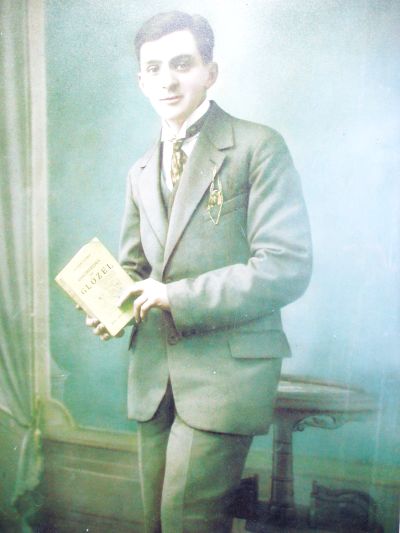
She was born in 1966. Her parents were counterculture radicals in the heart of the experimental art scene in San Francisco so she is very much "second-generation cool". She became a punk in the Bay Area in the early 80s.
Back then she was called Mitzy Carlough. Here is a picture of her in the 80s - from a website about Mitzy created by one of her friends.
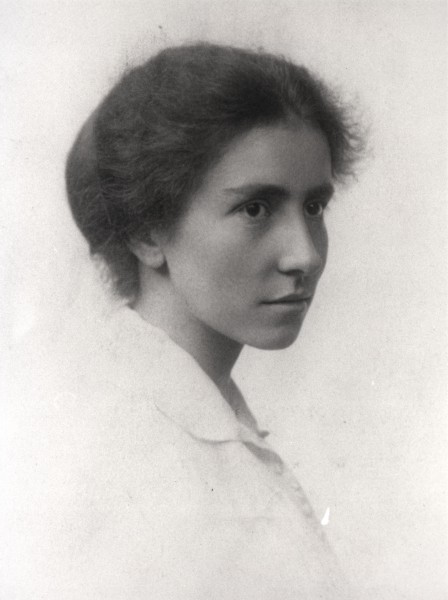
 And here is Montgomery McFate as she now presents herself on her website.
 Montgomery grew up to be a serious anthropologist who liked to study conflicts. In the early 1990s she says that she went and studied the Provisional IRA and the British soldiers in Belfast. And wrote a thesis about how they saw each other.
Then in 2004 she was studying the American army and she became convinced that one of the reasons for the disasters in both Iraq and Afghanistan was because there weren't any anthropologists in the military.
There was no-one to tell the soldiers and the generals why the insurgents were attacking them. There was absolutely no understanding of what anthropologists call "the social and cultural knowledge" of their adversaries.
So Montgomery McFate decided to rectify that. And in 2005 she went on the attack. She wrote an article for The Military Review called "Anthropology and Counterinsurgency: the Strange Story of their Curious Relationship".
In it McFate brilliantly took apart the academic discipline of anthropology and its pompous pretensions of neutrality. She went back into its history and showed how anthropology from the very beginning had evolved as a intellectual tool to consolidate Britain's power in its Empire.
One of the discipline's most famous pioneers, Bronislaw Malinowski, had explicitly stated that anthropology should be used to solve the problems faced by the rulers of the empire including those posed by "savage law, economics, customs and institutions"
Here is Malinowski studying a problem posed by a man in a wig. It is from his "Sexual Life of Savages in North-Western Melanesia"
 And from then on - as McFate showed - anthropologists became the handmaidens of power struggles, espionage and treachery throughout the 20th century.
Here is the legendary Sylvanus Morley who discovered lost Mayan temples in the jungles of Central America.
 He had worked as a spy throughout World War One for the US government, using his fieldwork as cover. And here is the vast temple in the Mayan jungle that he uncovered.
 Then in World War Two many anthropologists joined the Office of Strategic Services - the predecessor to the CIA. The most famous was Gregory Bateson who used his ethnographic knowledge to produce "black propaganda" in the Pacific.
Bateson was also allegedly involved with experimental psychological warfare experiments later - in the Cold War. These included MK-ULTRA and its mind control experiments.
While Bateson's wife, Margaret Mead, used her knowledge to help create a psychological warfare training unit for the Far East.
 And Mead's alleged lover - another anthropologist, Ruth Benedict, did a fascinating study of the Japanese mind. She convinced the senior US military commanders and President Roosevelt and President Truman that the Japanese were "culturally incapable of surrender" and would fight to the last man.
Then there was the extraordinary Colonel Edward Lansdale. He was an advertising executive who invented what he called "psywar" when he almost singlehandedly stopped a communist takeover of the Philippines in the 1950s.
 To do this Lansdale employed anthropologists to research into the fears and beliefs of the Huk rebels. He then used the information ruthlessly to create more fear. He described how he used the terror of vampires.
"One Psywar operation played upon the popular fear of asuang, or vampire. When a Huk patrol came along the trail, the ambushers silently snatched the last man of the patrol.
They punctured his neck with two holes, vampire fashion, held the body up by the heels, drained it of blood, and put the corpse back on the trail.
When the Huks returned to look for the missing man and found their bloodless comrade, every member of the patrol believed that the asuang had got him and that one of them would be next"
Lansdale said these techniques were incredibly effective.
But it was in Vietnam that anthropology, along with many other academic disciplines, truly became the handmaiden of power.
Anthropologists, psychologists and sociologists designed vast programmes of social engineering and psychological manipulation. The aim was to change the way the Vietnamese peasants saw the world - and out of this create a new loyalty to the American vision of building a capitalist democracy in South Vietnam.
And out of that came Project Camelot. It was an attempt to build a system that could be applied anywhere in the world, inside any developing country that was fighting an insurgency. It was, the Pentagon said -
"A general social systems model which will make it possible to predict and influence politically significant aspects of social change in the developing country - by understanding the sociological and anthropological characteristics of the people involved in the war."
In 2005 Montgomey McFate saw these ideas as the model for what anthropology could do for American foreign policy in a war zone.
And that is what she re-created in the Human Terrain System.
Here is part of a film the Pentagon made in 1968 which explains how this universal model of psychological manipulation can be applied. It is set in a fictional country called Hostland. The film implies that it is a Latin American country - because at that time the US military were worried by Chile. But everything in it can equally apply to the American fears about Afghanistan today.
In order to see this content you need to have both Javascript enabled and Flash installed. Visit BBC Webwise for full instructions. If you're reading via RSS, you'll need to visit the blog to access this content.
Montgomery McFate believed that that experiments in Vietnam back in the 60s had failed because of the rise of the anti-war movement. The protestors said academic knowledge was being used to control, enslave, and even annihilate many of the people they studied. As a result anthropologists gave up and retreated into their Ivory Tower.
But there were other problems with the experiments of the 1960s. Problems that have been forgotten about - but are fascinating in their implications for Afghanistan today.
The fact is that the programmes created by the anthropologists in Vietnam had a strange logic built into them that led them not to help the American war effort but actually to undermine it and corrode it in a fundamental way.
It happened because the basis of all anthropology is "cultural relativism" - the idea that the way individuals think and what they believe has to be seen in terms of their own culture. The founding father of Anthropology was Franz Boas - and in 1887 he defined it:
"Civilization is not something absolute, it is relative - and our ideas and conceptions are true only so far as our civilization goes"
In other words the Western idea that democracy is a universal principle that should spread across the world might be an ethnocentric fantasy.
But that is exactly what the Americans were fighting for in Vietnam. And what we are fighting for today in Afghanistan.
Back in the nineteenth century the European empires were happy to accept the local cultures and use anthropological knowledge to manipulate and control them. They were secure in the knowledge that they were superior to the "savages"
But now the Americans want everyone to be like them.
In Vietnam the anthropologists and other academics became a central part of what was called the Pacification Program. It set out to gather vast amounts of anthropological and sociological data about the Vietnamese people. The academics and the military then designed schemes that would not only engineer social change, but also alter "the inner belief structure" in the minds of the Vietnamese peasants.
The Americans had started by building what were called "Strategic Hamlets". These were new model villages that were designed not just to keep the peasants safe from the Vietcong - but also to psychologically transform the villagers into new kinds of model democrats.
The thinking was driven by simplistic psychology - behaviourism - that said that new environments would create new people. But they failed because the Vietnamese peasants hated being relocated and trapped inside compounds in the middle of nowhere.
In the face of this, anthropological thinking began to take over. Instead of trying to turn the peasants into Americans, the anthropologists said, the programmes should take the traditional culture and use it to create a new kind of nationalism and national unity to combat the communist inspired unity in North Vietnam.
Here is a great report from 1967 about the psychological warfare programme - psywar. Its about the Rural Spirit Drama Troupe - a group of Vietnamese entertainers created by the Americans to try and connect the peasants with their (supposed) national myths and evoke a new sense of national unity.
In order to see this content you need to have both Javascript enabled and Flash installed. Visit BBC Webwise for full instructions. If you're reading via RSS, you'll need to visit the blog to access this content.
But as the reporter points out - it is hard to make such a programme work when you are bombing and strafing the very same villagers because you think there might be Vietcong hiding in their village.
So the anthropologists went further. They set out to create a full-blown revolutionary nationalism in South Vietnam. But as they did so they they began to move away from any ideas of modern democracy and towards something rather strange and sinister.
A new organisation was created called CORDS - Civil Operations and Revolutionary Development Support. It set out to create thousands of "Revolutionary Development Cadres". These were young South Vietnamese men who were organised into political cells that were direct copies of the revolutionary communist cells of the Vietcong.
The members of the cadres were then taken to special schools set up by the CIA where they were educated in a strange, mystical nationalism. It was an odd mish-mash of elements of Vietnamese history and magical myths and beliefs also from Vietnam's past.
It was cultural relativism in action. Those running the Revolutionary Development Program were arguing that you can only create a national identity with the things from the culture that will bind and inspire the people.
Here is a film of one of the schools - and a fantastic piece of footage of the passing out parade. It is held at night. The man presiding is the South Vietnamese Prime Minister Air Vice-Marshal Ky. As the reporter says, the parade is like a proto-fascist rally, the very thing that America had fought and defeated in Europe only twenty years before.
In order to see this content you need to have both Javascript enabled and Flash installed. Visit BBC Webwise for full instructions. If you're reading via RSS, you'll need to visit the blog to access this content.
At the same time the Americans running the war were also coming to accept that widescale corruption was a central part of the political culture of South Vietnam. They gave up on any idea of turning the country into a modernised democracy. They had to - because it was the only way of stopping the increasing terrorist bombings and shootings in the heart of Saigon.
The central figure was the Prime Minister - Air Vice-Marshal Ky. Here are some frame grabs of him in his preferred fashion choice.
 Marshal Ky had little interest in democracy. He was also an admirer of Adolf Hitler. He took power in 1965 at the point when American attempts to pacify South Vietnam had failed utterly. Vietcong terrorists were letting off bombs all over Saigon - even in the US Officers Club and the US Embassy in the heart of the city.
Ky told the Americans that he would stop this by being "a strong man". He did this by reviving a vast intelligence network created in the 1950s under the old French colonial regime.The organisation was euphemistically called the Office of Social and Political Study. It literally paid hundreds of thousands of people to be spies. The only problem was that it cost a fortune - but those in charge in the government funded it by smuggling heroin.
Here is a description by Alfred W McCoy in his wondeful book - The Politics of Heroin:
"With profits from the opium trade and other officially sanctioned corruption, the Office of Social and Political Study was able to hire thousands of cyclo-drivers, dance-hall girls ("taxi dancers"), and street vendors as part time spies for an intelligence network that soon covered every block of Saigon-Cholon. Instead of maintaining surveillance on a suspect by having him followed, the intelligence controllers simply passed the word to their "door-to-door" intelligence net and got back precise reports on the subjects movements, meetings and conversations"
Marshal Ky re-activated the network. The man he put in charge was General Nguyen Ngoc Loan who was to become world famous in 1968 for putting a bullet into the head of a Vietcong suspect in front of the world's TV cameras.
Within weeks almost all Vietcong terror attacks ceased. And for over two years it stayed that way. General Loan tracked down the communist terrorists and got rid of them. The liberal belief among the Americans that they could "reform" the country disappeared, as did their qualms about "police-state" tactics.
And, just like in the 1950s, General Loan paid for all this by smuggling opium. According to Alfred McCoy both he and Air Vice-Marshal Ky ran a vast smuggling operation using South Vietnamese Air Force planes to bring opium down from the Golden Triangle into Tan Son Nhut Air Base in Saigon - where Marshal Ky used government money to build a palatial residence next to one of the runways.
The opium was then given to the Chinese to turn into heroin. And they began to sell it to the American troops.
Here are two bits of film of General Loan. They give you a sense of him as the character the Americans called "Laughing-Loan"- and as a man who used fear to maintain power.
They were filmed just as his world was collapsing. In 1968 the Tet offensive had begun and the Vietcong and North Vietnamese were overwhelming the cities of the south. It was something even his network could not prevent.
But by now General Loan had dragged the Americans into accepting a vast corruption of the political process. And any idea of transforming the country into a new democracy had also been destroyed.
In order to see this content you need to have both Javascript enabled and Flash installed. Visit BBC Webwise for full instructions. If you're reading via RSS, you'll need to visit the blog to access this content.
I rang Montgomery McFate and asked her what she thought anthropology could offer the American military in Afghanistan.
Immediately she said "cultural relativism".
I asked her for an example. She told me how one of her Human Terrain teams had been working at the large US base at Khost in eastern Afghanistan. The American troops there had noticed how Afghan workers on the base disappeared into the bushes outside the base with young Afghan boys every Thursday.
It became known as "Man-Boy-Love-Thursday".
The Americans running the base had decided it was wrong. They worried about elder men preying sexually on young boys. They wanted to arrest the Afghan men - but the Human Terrain team persuaded the base commanders that this was an accepted part of Afghan sexual culture.
I wonder how long it will be before the anthropologists start telling the military that what they think of as "corruption" is in reality a deeply rooted system of tribal patronage in Afghanistan that they should accept.
Here are some brilliant rushes of the Afghan National Army in Khost training to be just like the American army on parade. But you will never get American soldiers to dance as beautifully as this.
In order to see this content you need to have both Javascript enabled and Flash installed. Visit BBC Webwise for full instructions. If you're reading via RSS, you'll need to visit the blog to access this content.