Planet Earth II: Exploring boundaries of nature and technology

Jack Burgess
is a BBC content producer
Tagged with:
Large swathes of our planet have changed dramatically over the last 10 years and the world of broadcasting has experienced similarly seismic transformations.
The original series of Planet Earth in 2006 was lauded for its pioneering approach to natural history film-making. The scale of its five-year production process was unprecedented and it was the first BBC series to be filmed in full high definition (HD).
Ten years later, the Planet Earth II production team wanted to be similarly innovative. So the new series is the first to be commissioned by the BBC in ultra-high definition (UHD). And an array of new technologies have helped capture footage in ways previously thought impossible.
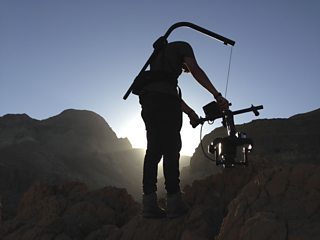
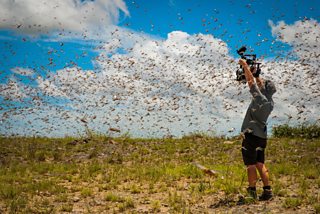
Stabilisation technology for cameras has progressed considerably. The MoVI and DJI Ronin are lightweight and easy to transport (above and below) in contrast to the burdensome and costly stabilisers of the past. They allow camera operators to film smooth, balanced shots whilst on the move or positioned in an awkward location. This technology was used to capture a memorable scene of two male Komodo dragons in the first episode of the series. They also filmed shots alongside a swarm of a billion flying locusts, lemurs leaping through the rainforest and shots from the perspective of a new-born baby Ibex.
The latest high-quality camera traps also opened up exciting new avenues for the team. Remote trigger cameras have become more affordable and have a higher resolution, allowing the team to get crisp, vivid footage of the world’s rarest animals in remote locations. Stunning footage (below) of a snow leopard in the Himalayas was captured using new camera traps and Producer Fredi Devas explains how they were used throughout the series.
Drones have also provided a world of aerial possibilities. The hatchling marine iguanas’ battles against racer snakes – which became an instant internet sensation after transmission of the first episode – was partly captured using drones. So was footage of Araguaian river dolphins in the Amazon.
Low-light cameras have also experienced a substantial change, with 4K cameras boasting considerably increased sensitivity. Camera operators can now film in situations previously considered too dark. These cameras were used to capture hyenas at night, bioluminescent jungle animals and birds of paradise in the gloom.
These technologies will surely become more common in the coming years. The BBC is currently developing a 4K Ultra HD iPlayer service, for example. With virtual reality and 360-degree video looking like game-changers for the future, it would be great to be able to fast forward to 2026 and see what Planet Earth III will look like. But that’s a new technology that's still on the drawing board.
