About the BBC - BlogAbout the BBC - Blog
Local Navigation

Archives for September 2011

Songs of Praise at fifty - and the use of BC and AD

Blog comments are currently unavailable. Find out more.

Post categories:

Aaqil AhmedAaqil Ahmed|17:40 UK time, Friday, 30 September 2011

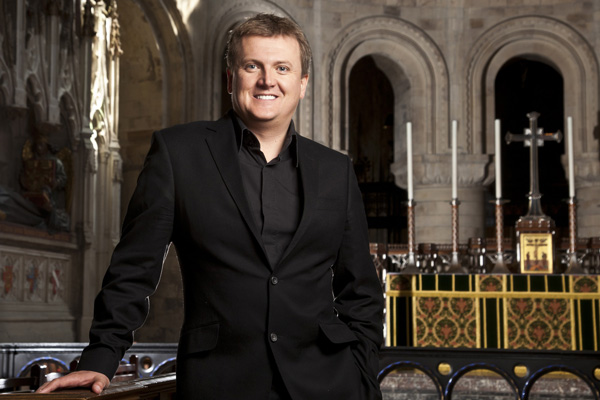
Aled Jones, presenter of BBC One's Songs of Praise

This Sunday at 5.30pm on BBC One the 50th anniversary programme of Songs Of Praise, Songs Of Praise: 50th Birthday Celebration transmits. Fifty years in broadcasting is an incredible achievement.

From humble beginnings broadcast from the Tabernacle Welsh Baptist Church in Cardiff on October 1 1961 Songs Of Praise has become nothing short of a national institution and the cornerstone of our religious and ethics programming.

I was lucky enough to be one of nearly 7,000 at the recording of the programme on Sunday 25th September at the birthplace of TV, Alexandra Palace. It was absolutely fantastic to be part of the audience, and also meet many viewers, presenters past and present, and some of those behind the scenes who had worked on the programme over the years.

Songs of Praise surviving and flourishing is no accident; a lot of people on- and off-screen over the last fifty years have worked hard to make it happen. As The Right Rev Nigel McCulloch Bishop Of Manchester wrote in the Radio Times, Songs Of Praise shows "that there really are a lot of good people around." A fitting testimony to the programme if ever there was one.

Whilst attending the recording last Sunday some people asked me about a story that had made the headlines that day concerning the use of date systems BCE (Before Common Era) and CE (Common Era). The story, suggesting we had dropped AD (Anno Domini) and BC (Before Christ), was quite simply wrong. We have issued no editorial guidelines or instructions to suggest that anyone in the BBC should change the terms they use. The BBC, like most people, use BC and AD as standard terminology.

But we recognise that it is possible to use different terminology, and that some people do: that is what is reflected on our Religion website. Even though we told the newspaper this, they ran the story anyway.

Just for the record, for our religion and ethics programming on BBC television and radio we generally use AD and BC. It is a shame that people seeking to make mischief should cast a shadow over the wonderful celebration of our Christian religious heritage that is Songs of Praise.

Aaqil Ahmed is Commissioning Editor Religion and Head of Religion & Ethics

A season of BBC2 programmes about mixed-race Britain

Blog comments are currently unavailable. Find out more.

Post categories:

Chantal Badjie|09:00 UK time, Thursday, 29 September 2011

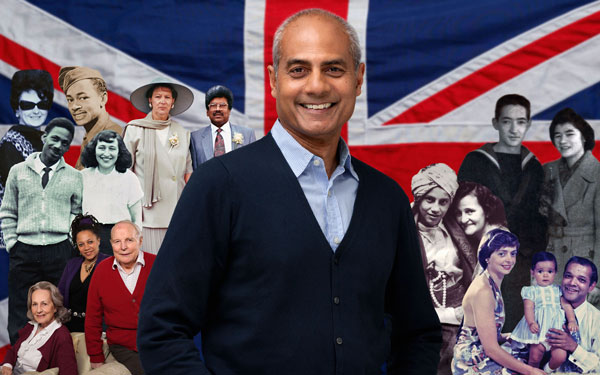
George Alagiah, presenter of the BBC's Mixed Race season.

When my parents Bianca (Sicilian/Maltese) and Ade (Sierra Leonean/Gambian) got married there was still a lot of disapproval towards mixed-race marriages. White woman who partnered black men in the late 50s and 60s were often seen as 'loose' or 'immoral.' Certainly my brothers and I grew up in the 60s and 70s during a period of much sharper prejudice towards people who looked 'different'.

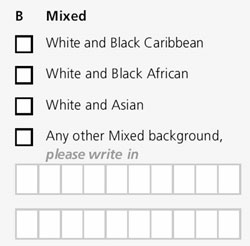
On April 29th 2001, a new category was added to the census. Simply called 'Mixed' it allowed mixed-race people for the very first time to tick a full range of boxes to describe their identities. Being mixed-race myself, this felt like a 'eureka' moment ...as if we had finally been accepted into the mainstream cultural landscape.

The 'Mixed' question from the 2001 Census

The 'Mixed' question from the 2001 Census

A few years later, while running some BBC career workshops at a South London school I couldn't help but notice how confident and upbeat the young mixed-race people seemed to be. It seemed that life and aspirations had certainly changed for the better for young mixed people since my day.

And this in turn became the seeds of the mixed-race season which launches tonight. Crucially, this is not just a season for mixed-race people, or those in a mixed-race relationship. It is relevant to everyone.

BBC Two is committed to reflecting contemporary society and Britain in 2011 has proportionately one of the largest mixed-race populations in the Western world. So the history of mixed-race Britain plays a part in the history of all of us.

It is for this reason that we wanted the season to explore the mixed experience in Britain - and around the world, from the distant past to the present day, using the testimonies of a range of people to illuminate this seldom-told story. We wanted to explore these issues irrespective of whether the people involved are, for example, of White UK, African, African-Caribbean, Chinese or South Asian origin.

The season does not claim to examine every single mixed-race issue in the UK, nor that we have represented every combination of mixed-race relationship. That would be impossible. What we wanted to do is provide a snapshot of mixed-race Britain past and present, and to demonstrate that this story is a key part of Britain's social and cultural landscape.

But we do have an exciting mix of drama and documentaries that provide a snapshot of mixed-race Britain and demonstrate that this story is a key part of Britain's social and cultural landscape. We wanted especially to look at: the experience of someone who was born mixed-race in the 1930s and who also happened to be a great British cultural icon (Shirley); the science of genetic inheritance and the nature versus nurture debate (Twincredibles); the imperial and global history of mixing (How The World Got Mixed Up) plus a sharp close up look at mixed-race relationships and wider society in the twentieth and early twenty first centuries (Mixed Britannia).

Leading the season is Shirley, an intimate and revealing drama that tells the life-story for Dame Shirley Bassey. She's one of Britain's national treasures but her rise to international stardom was no ordinary rags-to-riches story. It's an extraordinary tale of overcoming poverty through personal sacrifice and we're thrilled that our fantastic cast will bring this story to life for our viewers.

Following on from this is Twincredibles, a fascinating documentary that delves behind the headlines and explores what life is like for five sets of black and white twins born to mixed parents. Many of us are familiar with the newspaper pictures which pop up every few years, but this film unpeels the impact this genetic phenomenon has on how the twins see themselves and how the outside world views them.

In the one-off history documentary, How The World Got Mixed Up, we examine the complex history of interracial relationships and chronicles the shifts in attitudes that for centuries have created controversy and anxiety all around the world.

If the 19th century was a story of mixed-race being created through white men travelling out to Asia, Africa and the New World and creating a mixed-race population outside Britain then Mixed Britannia tells the 20th century story of African, Asian, Arab and Caribbean men coming to Britain and forming mixed-race partnerships here. Presented by George Alagiah, this three-part series explores the remarkable and untold story of Britain's mixed-race community through the decades and examines how mixed-race has become one of the country's fastest growing ethnic groups. But most of all, the series tells an extraordinary tale of love, of couples coming together to fight prejudice and create a new society.

So from the mixed category being included in the census, to Britain in 2011 - what a difference a decade makes. By March 2010 research at Cardiff University was identifying that mixed-race people were perceived as the most attractive, and with increasing numbers of high profile mixed-race relationships it suddenly felt that the entire narrative had turned a corner. So this year when I filled in my census form and ticked mixed white and black African it didn't feel like a special moment. It simply felt perfectly normal to be British and mixed.

Chantal Badjie is Editorial Lead on the Mixed Race Season

Meals on Wheels - respect, independence and community

Blog comments are currently unavailable. Find out more.

Post categories:

Lisa EdwardsLisa Edwards|16:59 UK time, Friday, 23 September 2011

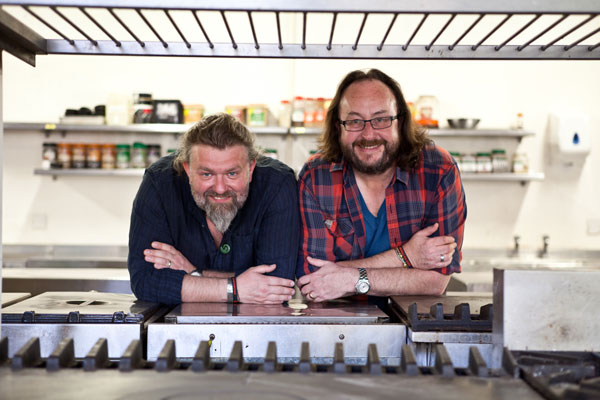
The Hairy Bikers

I remember very vividly the smell that used to greet me on entering my Grandma's house, the smell of traditional home cooking. A piece of meat roasting in the oven, potatoes dug up from the garden.

When my Grandma got too old to cook for herself (she steadfastedly refused to go into a home until she was 93!) she was eligible for the local Meals on Wheels, I know she relished the daily visit that this amazing service offered, a hot meal and a chat with someone from her local community and it took the pressure off my own busy Mum.

So when the idea for Hairy Bikers' Meals on Wheels landed on my desk I was instantly drawn to it. I knew it could be a series that would resonate and address some of the big issues of an ageing population in hard economic times. It absolutely felt like a public service programme, but the big challenge lay in how this might translate into the Reithian values of educational and entertaining television.

The thing that made this a really distinctive proposition, for me, was The Hairy Bikers. They are home cooks who have an amazing affinity with people. They also had personal experience of some of the issues in the series - both Dave & Si had cooked for their mothers through illness and old age so they knew the importance good fresh food could make. I knew they would bring real value to the subject and that this was going to be much more than a chop-and-cook style TV show; this idea would have a real emotional investment.

This commission was never about badgering cash-strapped councils or taking on big businesses We all agreed what this series was about was showing love and heart through food and time and really making a difference.

The Hairy Bikers know food - this was the easy part. However, this series needed to be about so much more than food. It was about rallying a volunteer force to cook and deliver the food and to change its old-fashioned profile to appeal to a whole new generation and inspire them to come forward to help the elderly people in their community. A lot of the under 35s we talked to didn't even know what Meals on Wheels was!

We focused on two different models, a council in Elmbridge that had an existing MOW service but one that was on the brink of collapse due to ever-tighter budgets and an ageing volunteer force. And an area in Yorkshire - Slaithwaite - where there was no existing MOW at all. What we tried to achieve was to show that if people care enough, have the passion, the enthusiasm and the drive to make a difference, they really can, whether that's improving on an existing service or starting one from scratch.

We managed to get a leading ad agency on board to rebrand the service which gave the series a real boost, as did support from a number of celebrities. Making a difference is really what's at the heart of this series. Meals on Wheels is about respect, independence and community, whether that's giving an hour of your time to drive meals to those that need them once a fortnight, or fundraising to start a brand new service like our amazing ladies in Slaithwaite.

We knew it was important for this series to have a life after it had transmitted. BBC Online and BBC Learning both invested in the project and managed to get the UK's leading volunteering website Do-it involved in the series, so if people were inspired to do something after watching the programmes they could simply click on the website and find out how they could help in their local area.

It's amazing how many different opportunities are out there over and above Meals on Wheels and details of all these are on the website. Dave and Si say in one of the episodes; "we don't want to be those two blokes who do something for the telly then walk away and it all falls apart." We all wanted this series to have a legacy. After the first episode transmitted last Tuesday, the BBC and Optomen were almost over-whelmed with people offering to volunteer. We hope it's struck a chord with people across the country and that you enjoy the rest of the series.

Lisa Edwards is Commissioning Executive for Hairy Bikers Meals on Wheels

Eastenders: E20 - Changing opinions and lives through drama

Blog comments are currently unavailable. Find out more.

Post categories:

Sarah MillerSarah Miller|15:31 UK time, Friday, 23 September 2011

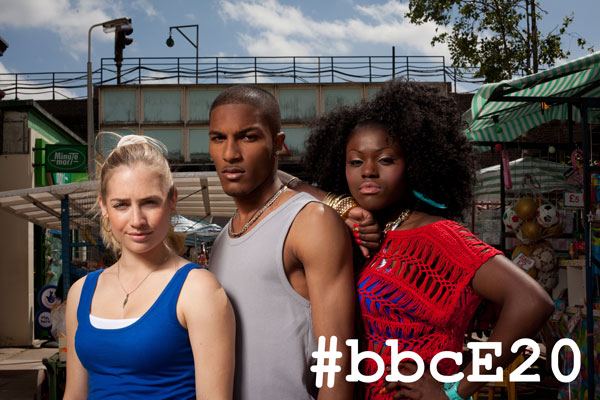
Cast members from the BBC's E20

Drama in the curriculum

About a year ago my Controller Saul Nassé invited me to meet with him and Deborah Sathe, the Producer of EastEnders' teen spin-off - E20, with a view to having BBC Learning commission the next series...The approach really fitted with our new Learning strategy which is to work alongside big BBC brands and talent... But before I signed up, I wanted to run a 'health check' with a couple of secondary schools and see if the idea of combining a top BBC drama with the Personal Social and Health education curriculum - would really stack up.

PSHE is taught in all secondary schools, but a difficult subject for teachers to deliver. It usually falls to the form teacher, and involves all the contentious teen topics - sex education, drug and alcohol abuse, crime (well, that's more citizenship - generally also covered by the same teacher), as well as self esteem, identity and financial capability. Some of these topics are natural territory for a soap like EastEnders, and drama is in fact the perfect medium for this kind of subject: it allows pupils to distance themselves and talk in the third person about quite difficult and personal themes.

Going to school

I took the idea into schools, and canvassed teacher/student opinion: the teens I spoke to were already watching E20 and were delighted about the opportunity of being able to view it in school! - They were already aware of the kinds of issues being raised by the drama, in series 1 and 2 - teen pregnancy, cultural identity, relationships, friendships, surviving without adults; they were already having 'water-cooler' conversations in the playground - why not in the classroom, with a teacher involved in the debate too?

BBC Learning has made some fantastic TV dramas over the past 30 years - specifically to support PSHE in fact, long before it was even called that. Both 'Loved Up' in the Nineties, (within the multi-award winning 'Scene' strand, and which was notable at the time for being the first collaboration between BBC Drama and BBC Education - as we were then), and Melvin Burgess' 'Junk' (amongst many other strong Scene dramas) - have been much praised and used by teachers and pupils alike for addressing contentious teen issues - ecstasy-use and heroin addiction respectively.

No goggle-boxing

For E20, delivering the drama online, allows for short-form episodic story-telling, with the 'teacher wraparound' instantly available: for E20 we're providing factual background documents: key questions to stimulate debate in class, character monologues, where individual characters talk directly to camera about a specific issue or decision, allowing the audience to understand their point-of-view, and debate its moral position etc. - with all teaching content tagged to the relevant education curriculum (UK wide)- so that teachers are confident about what they're teaching and how they're covering curriculum requirements- you don't want to be accused of goggle-boxing! Or copping out...

So E20 actually continues a strong tradition of learning through drama... But what is totally new and innovative about this latest collaboration is that it's written by young people, aged from 16 to 22 and what's more - teens who've never written for TV before. Quite a high risk strategy, but one that has paid off in terms of the freshness of the dialogue and credibility of the teen characters that they've created. The sexual relationships theme, which runs through the heart of Series 3, is also very current - it coincidentally ties in with a recently launched Government campaign aimed at raising awareness of domestic violence and abuse within teen relationships.

The best video can change opinions, and lives: I hope teachers and students will come in their millions to view and to debate E20.

Sarah Miller is Executive Producer for BBC Learning

  • Series three of EastEnders: E20 launches this week. Episodes are available on Tuesdays, Thursdays and Fridays on the E20 website, with an omnibus on BBC Three on Fridays at 8.30pm.
  • Teachers can visit the BBC Learning PSHE and Citizenship website for EastEnders: E20 teaching resources. These resources will be updated weekly, as the series is broadcast.
  • The picture shows the latest additions to the Albert Square spin-off: Ava (Sophie Colquhoun), Donnie (Samuell Benta) and Faith (Modupe Adeyeye).
  • Himesh Patel plays Tamwar Masood in EastEnders and is a writer for E20. Read his blog post on the BBC TV blog.

Getting beyond the statistics - unemployment on BBC Three

Blog comments are currently unavailable. Find out more.

Post categories:

Harry LansdownHarry Lansdown|12:18 UK time, Friday, 23 September 2011

BBC Three's Up For Hire logo

Unemployment from the BBC Three audience's perspective

Today, as unemployment figures for young people top the million mark, it's important to ask - how can television respond to this crisis? How can it link with radio and social media to create a debate that gets to the heart of the underlying issues? And how can we enrich the lives of our audience to help them engage with the challenges of finding work?

We are putting these questions to the test, beginning on BBC Three on Monday, October 17th, at 9pm with the series Up For Hire Live.

Working alongside BBC Learning, and Radio One, we have set up an ambitious, live series, with full online support, designed to look at all aspects of unemployment from a BBC Three audience perspective. Ultimately, we hope it will serve as a meeting point between those looking to kick start their working lives on the one hand, and on the other employers and experts about how best to help them achieve this.

The series operates on a number of levels: firstly, it aims to get beyond simple statistics and get under the skin of four unemployed people's lives and look at the issues they face. Our contributors have kindly agreed to let us film an observational documentary based on their experiences.

Up For Hire Live will introduce four characters aged between 19 and 23: Chris, Ben, Kirsty and Sasha. Two are graduates, two are not. Sasha is also a mother of two. But what unites them is they are all struggling to find full time work. So we have put them through a 'fast track career' in just two weeks: they have gone from entry level jobs at a holiday park, to each running a branch of a retail chain, to working abroad for a wedding company, to finally working alongside CEO's of some large companies.

Each night, we follow a different stage of this whirlwind experience and we meet the four in the studio as they relive the highs and lows of their extraordinary journey. We see some them struggle to make a good impression on their first day, learn how to manage a team, and negotiate contracts as they all get to push themselves to the limit. The final episode of the series catches up with the four in their search for work as they aim to put their new found skills to the test. Not only will we see if it helps them find a career path, but the BBC Three viewers will be able to gain knowledge and ideas from watching their experiences.

Paid work placements

Secondly, we have invited a number of well known companies to offer a total of 23, paid work placements to the BBC Three audience, the majority of which will each last for three months. Applications can be made via our website at www.bbc.co.uk/upforhire. It will launch from 10am, Friday 23rd September. The closing date for applying is midnight on Friday 30th. However, the site will remain live throughout October. None of the decisions on whom to hire will be made by the BBC, and all interviews will be carried out by the companies themselves.

Some of those unsuccessful candidates' will also receive feedback on their applications, so they can continue their search with increased confidence and learn from any previous mistakes. This part of the programme is not designed to expose or embarrass the individuals involved, and all unsuccessful candidates will be told privately and not on air.

Additionally, we will be hearing stories from a range of celebrities about their first jobs and any interview disasters that happened along the way. They will also be discussing how they managed to get where they are today and any key advice they would give to job-seekers wanting to get their foot on the ladder.

A forum

The aim of this television series is to offer our audiences some guidance through the challenging, complex world of work. Building on this foundation, we have created a forum on Facebook, where people who are looking for help on how to get a full-time job, can meet with employers to get a whole range of advice. This is not a recruitment site, but rather companies and experts will be on hand to offer all sorts of advice and tips around how best to find a job, when to look, how to maximise your chances, prepare for an interview etc.

This site will open on October 3rd, and will provide a way for thousands of people to get involved in arguably the most urgent issue affecting our audience. There are also a series of practical, short films on the BBC website featuring a number of industry experts. These tackle subjects such as how to fill out a CV and how to prepare for a job interview, as well as giving tips on improving your employability skills.

Presenter Richard Bacon will hit the BBC Three screens at 9pm on 17th October, and working along side him will be Radio One reporter Tina Deheley. For this week Radio One's breakfast show will also be running an Up for Hire theme and will be focussing on youth unemployment. The BBC Three programme is broadcast live each evening so Richard and Tina can respond to questions asked by the viewers immediately and the series will be as current and topical as possible.

Harry Lansdown is Commissioning Editor, Factual, Formats and Specialist Factual at BBC Three

BarCamp? What's a BarCamp?

Blog comments are currently unavailable. Find out more.

Post categories:

Ian ForresterIan Forrester|14:15 UK time, Thursday, 22 September 2011

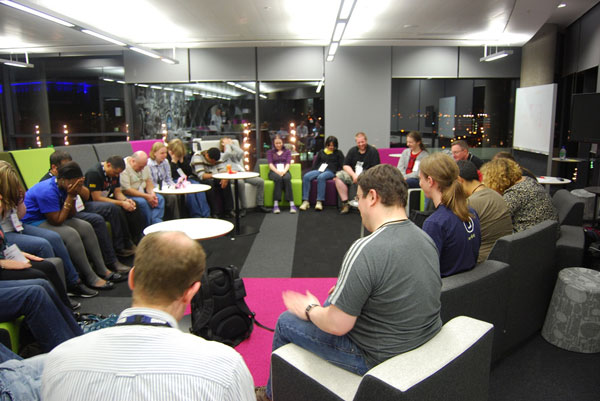
BarCamp attendees play Werewolf at BBC MediaCityUK

Last weekend we did something a bit different at the BBC. On Saturday 17th and Sunday 18th September we hosted the BBC's first ever BarCamp, in our northern home at MediaCityUK.

'What's a BarCamp?' I hear you cry. Well, it's been described as many things from an 'un-conference' to a 'catered conversation'. But really BarCamp is all about the ideas. People came to BBC North for this event buzzing with new ideas around technology, future media and a range of different interests including gaming, social media and... country music.

Right off the bat I felt that our new creative hub at MediaCityUK could provide BarCamp-ers with the perfect venue. So we opened up the spaces and brand new facilities in BBC Quay House to over 200 participants for a weekend of discussions, demos and interaction. No running order, no set agenda - just a big empty 'grid' of 20-minute slots where attendees could post their ideas to present a session over the course of two days. Highlights included: Should we Teach Computer Programming to Schoolchildren?; Tips to Build a 3D Scanner and even a debate on 'How to be Happy'.

BarCamp attendees at BBC MediaCityUK

Video, pics, slides from #bcmcuk session on using social media to help the homeless: https://ow.ly/6xxi7#mcrbeacon

Sep 18 via HootSuiteFavoriteRetweetReply

Great session on #digitalcomics at #bcmcuk today. Interesting to hear different perspectives/approaches to it. How do you like your comics?

Sep 18 via Twitter for AndroidFavoriteRetweetReply

Thanks for nice feedback for my gamification talk at #bcmcuk#barcampmediacity heres the long version of the slides https://t.co/PUBeeqi0

Sep 17 via webFavoriteRetweetReply

@BarCampMCUK here's my speech recognition blog: https://t.co/1OQpzqpB#bcmcuk

Sep 17 via TweetDeckFavoriteRetweetReply

We were supported by seasoned BarCamp team Geeks of London and the wonderful Manchester Girl Geeks who did a fantastic job encouraging women to attend the activities. In fact, it was one of the largest BarCamps ever held in the UK.

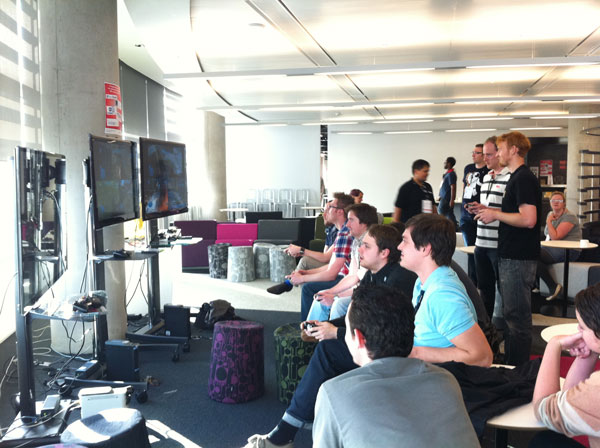
Of course we paused the sessions for regular food and drink intake, plus the obligatory 7.10pm mass screening of Doctor Who on BBC One, with popcorn! As the evening drew on the games began. There were marathon X-box games, PowerPoint Karaoke and rounds of the parlour game 'Werewolf'. In the early hours people left to catch a few hours sleep and some - christened the 'magnificent overnight 7' - even pulled an all-nighter. Many returned for another round of innovative sessions on the Sunday.

At BBC North our aim is to find new ways of working and it's events like BarCamp that will really help the BBC become a more open and collaborative organisation. We were proud to host the BBC's first BarCamp and judging from the feedback, it's the kind of thing we should be doing more of.

1st BarCamp and had a brilliant time, thanks to @cubicgarden and all for organising a memorable event. Met tonnes of cool people #bcmcuk

Sep 18 via webFavoriteRetweetReply

Barcamp MediaCityUK #bcmcuk was BRILLIANT! Thanks to all who organised it. Hope it'll be a repeat event.

Sep 18 via webFavoriteRetweetReply

Ian Forrester is a Senior Producer in BBC Research & Development, BBC North Lab

A 'beta' version of the BBC's new homepage

Blog comments are currently unavailable. Find out more.

Post categories:

Phil FearnleyPhil Fearnley|10:00 UK time, Wednesday, 21 September 2011

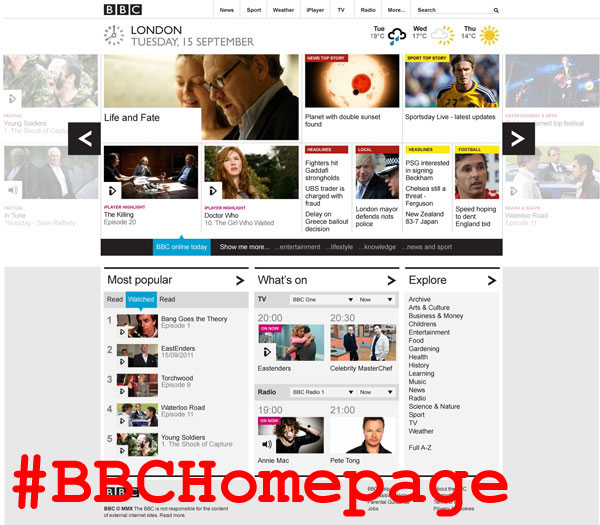
Screenshot of the new BBC homepage, launching in beta testing on 21 September 2011, with the hashtag #BBCHomepage

In my role as General Manager for News & Knowledge at BBC Future Media, I oversee eight of the 10 major areas (we call these 'products') of BBC Online working with my editorial counterparts - including the BBC homepage. Today, we relaunched the homepage in a test ('beta') version for public use and feedback. The new page is accessible from a link at the top of the current homepage, or directly at beta.bbc.co.uk. I hope that users who give the new homepage a go find it much improved. My colleague James Thornett has written about the relaunch in more detail over on the BBC Internet Blog and would like to know what audiences think. Please leave your feedback comments on his blog post.

As users start to use the new homepage, I wanted to explain why we've introduced changes.

In last year's Strategy Review ('Putting Quality First') we proposed a BBC Online which:

  • Had half the number of top-level directories, down from the 400 we had then (i.e. /sitename)
  • Cost 25% less to run (i.e. the BBC Online Service Licence for 2010/11 is £135m - we intend to cut spend to £100m)
  • Sent double the traffic we did then to external websites, helping the broader UK digital economy
  • Made more Nations & Regions content available
  • And, critically, did 'fewer things, better'.

We're making progress in all of these areas and in January of this year, we outlined how we would address the challenge of doing more with less - importantly a move away from building websites via separate new media budgets, towards one cohesive online service with clear lines of accountability.

But this is more than just sound governance - the changes will create a more distinctive, joined-up service for licence fee-payers which is recognizably 'BBC', and greater clarity for the industry in terms of how much we'll do on the web, setting boundaries for what we will and won't do online.

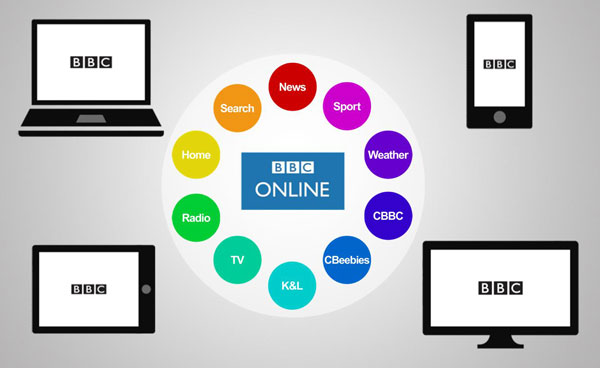
We've arrived at a BBC Online service comprising ten distinct areas or 'products'. Each product is at a different stage of its life: BBC News and BBC iPlayer are both concrete propositions; others, like the fledgling BBC Knowledge & Learning product are approaching the final stages of definition. All will be built on the same shared infrastructure to allow a more seamless transition between them.

The third dimension to our strategy is to provide greater value for money for licence fee-payers, by broadening access to our products across four screens - beyond the web to mobile, tablet, and connected TV. Our BBC News product demonstrates this commitment: it's available on the web, as a mobile and tablet application, and more recently has been optimized for connected TV, launching on the Samsung Smart TV platform in June.

Slide illustrating the idea of one service, ten products, four screens

One service, ten products, four screens

So we summarise this strategy as: 'one service, ten products, four screens'.

The homepage occupies a unique position within BBC Online: though BBC Online is a distinct service, and the homepage a single product within it, editorially the page can show off the breadth of content we make available on the web. But showing this breadth has been our perennial challenge. To date we've made tweaks to a relatively static page to better fulfil this purpose; with the move to a new technical platform, we've had the opportunity to rebuild the page from first for the 9 million-plus average weekly unique browsers.

The new BBC homepage launched in beta today marks a departure from the way we've approached this challenge until now and introduces a new, more visual approach to showing off our content on the web, and eventually on mobile, tablet, and connected TV devices too. Other features include:

  • Simple filters enabling users to tailor the page based on their interests.
  • Sliding 'drawers' to reveal more or less detail from showcases of the most popular content from all of BBC Online at any time and real-time listings for BBC TV and Radio.
  • At-a-glance aspects - news and sport headlines, weather forecasts with lottery and travel news updates to follow, plus traditional index-based navigation for quick look-up.
  • In time, nations' homepages united into a single product to provide relevant local and national information based on a user's choice of location - a key 'Putting Quality First' commitment.

We believe the redesigned page makes it easier for visitors to find the content they're looking for, whilst discovering something new - I hope you agree.

Phil Fearnley is General Manager for News & Knowledge, BBC Future Media

  • More about the beta release of the new BBC homepage in the press release on the BBC Press Office web site.

Archiving the Army with BBC Four

Blog comments are currently unavailable. Find out more.

Post categories:

Roly Keating|14:40 UK time, Friday, 16 September 2011
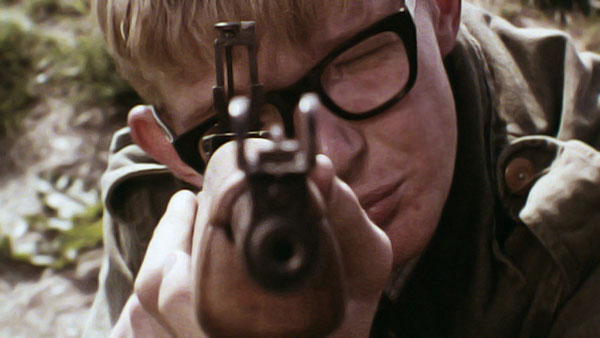
A production still from 'My Friends Think I'm Mad', a 1968 documentary about a cadet in the Royal Armoured Corps

It seems like only last week that I was writing here about what a busy year this is proving to be for archives. Well, here we are again - this time to celebrate the launch of BBC Four's first online Collection of classic television programmes from the archive. It's the beginning for us of a whole new way of thinking about the relationship between the immediacy and ephemerality of broadcast TV and the permanent, connected medium of the web.

If you've seen the trails on air you'll probably know that Army: A Very British Institution is the latest of BBC Four's distinctive thematic seasons: in this case a mix of brand new documentaries and series such as Sandhurst that in different ways explore the institutional culture of the Army. This isn't the raw frontline fighting captured so dramatically in BBC Three's Our War and other recent films, but rather the fascinating, intangible realm of regimental tradition and values that gives the British Army a character unlike any other in the world.

It's the sheer richness of this social history that made Richard Klein and his team choose this season to launch what will be an ever-expanding series of thematic online collections from the archive. Of course, from its very beginnings as a channel BBC Four has always been a gateway to the archive. The Timeshift strand - now into its tenth year - has long specialised in plundering the archives to tell resonant tales of social change. And the big seasons - from The Sixties to The North - have often scheduled archive gems alongside the new commissions.

What's different now is that the channel has an official remit to extend its knowledge and passion for the archive into the internet age. As I reported here in February, the channel's Service Licence has been amended to allow it to curate and publish archive content permanently online, alongside and complementing its broadcast output. It means that from now on BBC Four's major seasons - the products of many months or even years of planning and preparation - will have the chance to leave a lasting legacy on the web for future audiences to explore and enjoy.

In the case of Army: A Very British Institution that means a chance to bring back to modern viewers some remarkable programme content, much of it observational documentary footage which hasn't seen the light of day since first broadcast. There's far more there than we could ever fit into a linear schedule - but for anyone with a personal or family interest in the regimental life of the Army over the past fifty years this is a unique resource. See Mark Urban's introduction for a taste of what's included, and what it tells us about how army life has changed over many decades.

Of course, the BBC archive is vast, and for every programme we make available there will be hundreds that we haven't. One of the factors we have to take into consideration when we decide what to release is what rights we own - not every programme belongs to the BBC in its entirety for all time. Often a decision will have been taken at the time to acquire rights to broadcast a programme for a more limited time, at a lower cost to the licence fee payer. In that spirit, focusing on the wealth of programmes we do own offers the best value.

If putting this together has meant a new way of working for the programming teams on the channel, it's also been a new challenge for the Online teams, who - as Ralph Rivera posted here a couple of months ago - are on a journey to transform our online offer from a series of disparate websites into 'one service' on the web that connects all the BBC's services, content and programmes into an increasingly seamless online experience. In this case, that's meant learning from the best of our original Archive pages - whose content will over time migrate to the new format - and blending it seamlessly with the functionality audiences are familiar with from iPlayer.

This is just one of the ways in which we're determined to make it easier for all of us to access and enjoy the riches of archive content. It's not just about making BBC Online itself more coherent and easier to use. It's also about us getting much better at linking up to relevant content and archive material elsewhere on the web - more on that in a few weeks' time.

Roly Keating is Director of Archive Content at the BBC

BBC Radio 1's Big Conversation

Blog comments are currently unavailable. Find out more.

Post categories:

Piers BradfordPiers Bradford|13:19 UK time, Friday, 16 September 2011

What do you get if you take 70 young people and put them in a room for 3 hours?


The answer to this is not a protest, a civil uprising or even a hint of trouble. In fact what we got was a diverse range of views, thoughts and opinions and perhaps even a small step towards a rebranding of the much-maligned 'youth of today'.

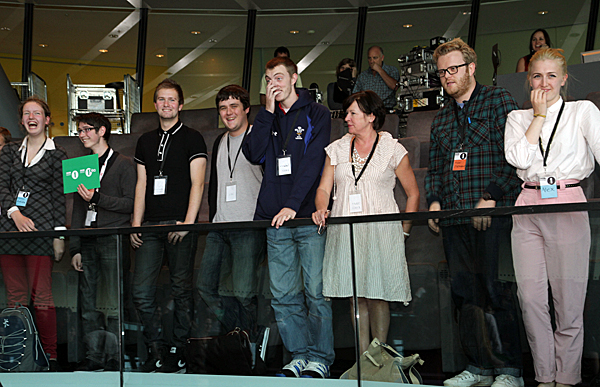
Attendees at the Radio 1 Big Conversation at London's City Hall.


On Tuesday 13th September in London’s City Hall, we held Radio 1’s first ever 'Big Conversation'. It was based around 70 young people, from a wide range of backgrounds, recruited by The Prince’s Trust, V-Inspired and The British Youth Council. They were invited along to share their ambitions, issues and concerns about the future. Also in attendance were 20 'influential adults', including Simon Hughes MP, Tim Loughton MP, Michelle Mone OBE, Jamal Edwards (founder of SB:TV) and the CEO’s of assorted youth organisations.


At the start of the year, Ben Cooper (Acting Controller of Radio 1) and I started planning how we could use the power of Radio 1 to really give young people a voice. We are rightly proud of the unique relationship Radio 1 has with its young audience, reaching nearly half of them every week. And yes - we interact with them constantly. But how could we harness this power and give them a real platform to share their views with the people who might actually be able to make a difference?


This formed the basis of the Big Conversation and, as the events of the summer unfolded, it felt ever more pertinent that we were giving young people the chance to challenge some of the media stereotypes that were being bandied around.


On Tuesday we broke our group of 70 into 8 groups to discuss a range of themes including employment opportunities, education choices, media portrayal, inspirational figures and where best to get advice. We had a further 2 'virtual tables', allowing the wider Radio 1 audience to participate via Twitter and Facebook. We’ve subsequently heard that, unprompted by us, whole classrooms got involved as part of their lessons.


After sharing stories, thoughts and opinions, our groups were challenged to condense their thoughts into a newspaper headline summing up how they felt and what they would do if they ran either Radio 1 or the whole country for the day.


'Degree or not degree' was undoubtedly my favourite headline– but behind that pun was a real desire to be given more options. Given the spiralling cost of a university education and the lack of guaranteed work at the other end of it, they were keen to explore other credible career paths.


Aside from this, other themes came through loud and clear as we went through their presentations: the young people in the room wanted a voice, inspiration, and most of all they are keen to be judged on individual actions – not as a homogenous group.

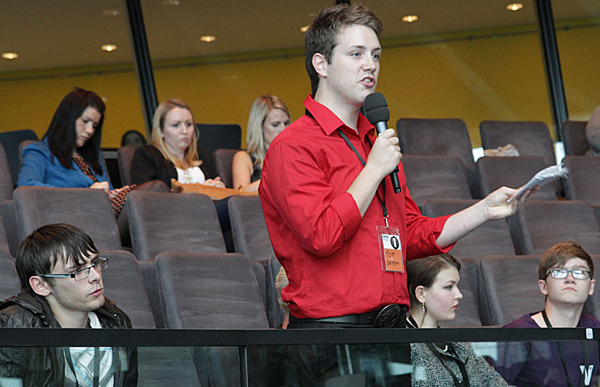
A attendee at the Radio 1 Big Conversation session in London's City Hall.


Finally they made it very clear that it was not enough for Radio 1 to have facilitated this discussion and to have heard what was said. They want us to act on it too.


We are therefore making a commitment that all of Radio 1’s social action work over the next 12 months will be guided by the output of the Big Conversation. The shape of this activity will be announced on 9th October, as part of Radio 1’s Teen Awards.


I actually told a small lie at the start of this blog. There was a hint of trouble, entirely caused by me. With the benefit of hindsight, perhaps providing trumpets, football rattles and vuvuzelas to liven up the feedback wasn’t the best idea. I can only apologise to all 8 floors of City Hall for disturbing their afternoon’s work.


Piers Bradford is Commissioning Editor, BBC Radio 1 and BBC Radio 1Xtra


The BBC Symphony Orchestra rehearsing for the Last Night of the Proms

Blog comments are currently unavailable. Find out more.

Post categories:

Steve BowbrickSteve Bowbrick|16:45 UK time, Friday, 9 September 2011

Tomorrow night sees the climax of this year's BBC Proms. It's been a record-breaking season - with 94% attendance for evenings at the Royal Albert Hall. Over 300,000 will have attended a Prom by the time the season finishes. In July, on the day of the First Night, we spoke to Proms Director Roger Wright about his hopes for the season. Yesterday we spent the afternoon with Conductor Edward Gardner as he rehearsed the BBC Symphony Orchestra and soprano Susan Bullock for the Last Night. Click 'play' for the result. It's going to be a remarkable evening.

Steve Bowbrick is editor of About the BBC

The BBC - helping the creative economy to grow

Blog comments are currently unavailable. Find out more.

Post categories:

John TateJohn Tate|16:14 UK time, Friday, 9 September 2011

Helping the creative industries restart and diversify Britain's economy is a crucial element of Jeremy Hunt's plan for a new Communications Act. How then does the BBC measure up to this aspiration?

A BBC report published today, Helping Drive growth in the UK creative economy (PDF), describes how the Corporation helps create the right conditions for growth in the creative sector. The BBC's primary purpose is to inform, educate and entertain but, like other public institutions, it can make a positive contribution to growth. The BBC does this in two ways: by enhancing the productive potential - 'supply-side' - of the creative sector, and by stimulating the demand for services, products and exports. Here are some examples of how this works in practice.

Training and developing creative talent: Last year the BBC invested over £30m in training the creative sector, and supplied over 3,800 days of training to more than 2,400 non-BBC staff. The talent nurtured benefits the wider industry, with many presenters, writers and performers moving between the BBC and commercial broadcasters and independent producers.

Investing over £50m in Research & Development activity: Because the BBC is committed to open platforms and technologies, we enable other companies to create their own value on the back of them. Just think how many set top boxes, flat-screen TVs and digital radios have been sold as a result of the BBC's work on Freeview, Freeview HD, FreeSat, NICAM and many other innovations.

UK content sector: The BBC's £1 billion investment, combined with healthy competition for commissions between in-house and independent suppliers, has helped underpin a vibrant commercial UK production sector. Without this role, the sector could lose over a quarter of its income.

Supporting digital markets: BBC Online - now the 5th-most popular web destination for UK users - gave many people a reason to go online for the first time. Likewise, BBC iPlayer has helped expand the audience for online audiovisual content to the benefit of other providers. Our work to support RadioPlayer has bought around 300 commercial radio stations together in one place.

Growing exports and inward investment through BBC Worldwide. Our commercial arm continues to grow, doing business in 200 countries and territories. It works with over 300 indies and turns the best UK content into global brands. Turnover increased 7.8% to £1,158m last year; it now accounts for nearly 10% of UK creative industry exports; and helped attract £59m of inward investment in 2009/10 from overseas broadcasters.

Showcasing and supporting the Arts. through outstanding projects like A History of the World in 100 Objects, the BBC provides significant benefits to other cultural organisations. In the last week alone, we've launched two more such landmark projects - Handmade in Britain in partnership with the V&A, and the Private Lives of Medieval Kings with the British Library. And through our radio stations and BBC Introducing we help discover great British music talent that often goes on to global success.

Delivering our sixth public purpose - to bring new communications technology to audiences - helps the economy rebalance towards more digital, high-tech industries.

Creative clusters. By focussing our expertise geographically such as Natural History in Bristol and Drama in Cardiff, the BBC has created sustainable production centres, helping the UK to have a more balanced economy. Many thousands of people will directly benefit from employment, training, business or partnership opportunities from MediaCityUK in Salford.

The BBC can only benefit the creative industries in these ways because of its scale, international reach, stable funding and commitment to the highest levels of quality.

At a time when more and more public institutions are being challenged to make a contribution to growth as well as to fulfil their public functions, the BBC has hopefully shown a lead.

John Tate is Director, BBC Policy & Strategy and Chairman, BBC Studios & Post-Production

Travelling in time with the BBC archive

Blog comments are currently unavailable. Find out more.

Post categories:

Roly Keating|17:01 UK time, Monday, 5 September 2011

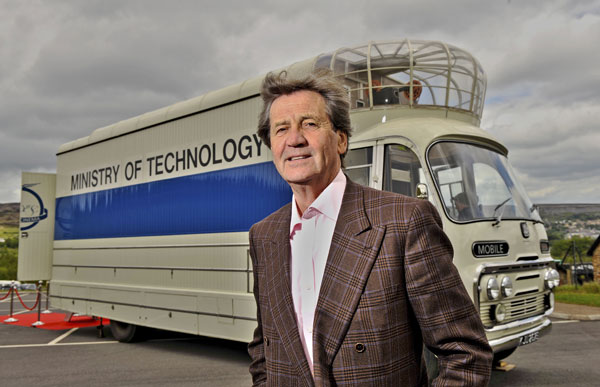
Melvyn Bragg, presenter of BBC2's The Reel History of Britain.

2011 is turning out to be an important year for archives - and not just the BBC's. Earlier in the year I wrote here about the change in some our service licences that will allow more and more selections from the BBC's programme library to be published freely and permanently on the web. Radio 4 listeners are already enjoying the benefits: if you haven't checked out the addictive archive of Desert Island Discs please go there now (though do come back). And later this month BBC Four will be launching the first of its own online collections from the TV archive - more on that soon.

Big things have been happening behind the scenes too. Last month, as John Linwood explained here, we opened the BBC's new state-of-the-art archive store at Perivale, which will house and protect the core of our archive for many years to come. Meanwhile the British Film Institute unveiled its remarkable new building in Gaydon in Warwickshire - a high-tech wonder on the site of a former nuclear bunker which will hold more than 450,000 cans of film from the BFI's collection, including highly flammable and unstable nitrate.

These things aren't happening in isolation. When we set out our archive vision two years ago we were determined to work as closely as possible with other great public archives, such as the BFI. The Screen Heritage UK programme that has funded Gaydon and other UK initiatives over the last few years is underpinned by many of the same ideals that have shaped our own archive strategy. In both cases it's not just about preservation or even digitisation, vital as they are. It's about working together across the whole sector to set common standards for search and discoverability. And it's also about finding new ways to make archives of all kinds more visible, accessible and enjoyable for audiences.

That's where projects like Reel History of Britain are so timely. Starting tonight and then every weeknight at 6.30, this is a new 20-part series presented by Melvyn Bragg and commissioned by Liam Keelen for BBC Two Daytime. The idea is so simple it's a surprise no-one's done it quite this way before: assemble a rich library of material from different regions on specific themes, and take it round the country in a mobile cinema to show it to the people who have the closest connection to it. From the fishing industry in Great Yarmouth to the clubs of Soho, what emerges is an informal and frequently touching social history of the UK.

The whole project has been produced in partnership with the BFI and with the support of many other national and regional film archives, and is a great example of how digital media is making it easier than ever for public organisations to share assets and make connections. In this case, for instance, our website for the series will link directly to the BFI's, where you'll be able to view the original, full-length versions of many of the films featured in the series. And we'll be using the red button to show a selection of the full-length titles from the BFI directly after the main transmission - so if you see a glimpe of something fascinating in the show chances are you'll have the chance to explore it in more detail afterwards.

At its best - carefully selected, fully restored, put in the right context - archive footage can be the closest any of us will get to time travel. Suddenly, with a shock of recognition, a world we thought was lost opens up in front of our eyes. That's a sensation Reel History of Britain offers episode after episode: we hope you enjoy it.

Roly Keating is Director of Archive Content at the BBC

About this blog

Senior staff and experts from across the organisation use this blog to talk about what's happening inside the BBC. We also highlight and link to some of the debates happening on other blogs and online spaces inside and outside the corporation.

Here are some tips for taking part.

This blog is edited by Jon Jacob.

Subscribe to this blog

You can stay up to date with About the BBC via these feeds.

If you aren't sure what RSS is you'll find our beginner's guide to RSS useful.

[an error occurred while processing this directive]

Follow this blog

Other BBC blogs

More from this blog...

Categories

These are some of the popular topics this blog covers.