About the BBC - BlogAbout the BBC - Blog
Local Navigation

Archives for June 2011

Drama from the North - Jimmy McGovern in Manchester

Blog comments are currently unavailable. Find out more.

Post categories:

Peter SalmonPeter Salmon|13:22 UK time, Wednesday, 29 June 2011

Editor's note: between 1997 and 2000, Peter Salmon was Controller of BBC1. During his time there he commissioned a drama called The Lakes - SB.

As I prepare to interview Jimmy McGovern, one of Britain's greatest writers, it takes me back to when I commissioned his drama The Lakes. To be honest, it was one of the several times I thought I'd get sacked when I ran BBC One. I had just worked with Jimmy at Granada on the searing Hillsborough drama, and The Lakes was a tough drama serial that I decided to schedule on Sunday evenings. Unsurprisingly, there was more than a little outrage and a bulging mailbag of complaints.

It might not have been the kind of genteel drama that audiences normally expected on a Sunday evening, but it was classic McGovern. It was real, honest and a bit raunchy. I loved it but it was too much for mainstream audiences and the critics who felt it was too raw for Sunday evening viewing.

But I had spotted an opportunity to ring some changes. I wanted to see if he could create a long-running series, serving up a fresh taste of the North, anchored fast in the lives of Northern audiences.

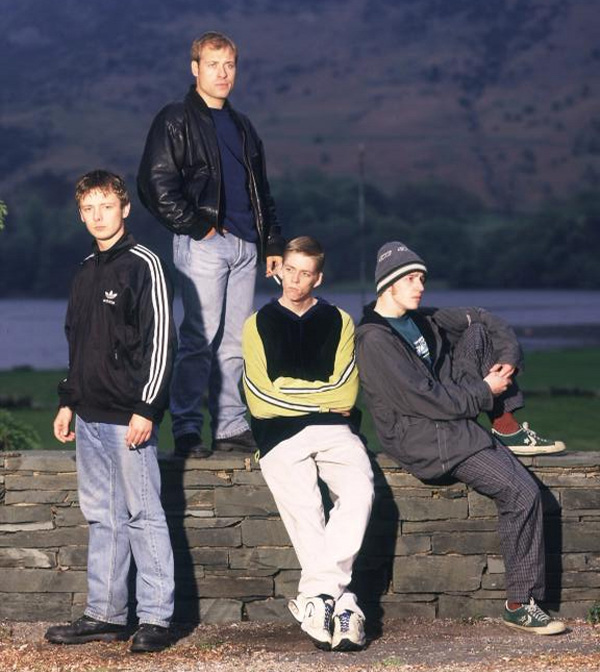
I secretly hoped it would lead to a creative push for the BBC in the North and that together with EastEnders it might have done what Coronation Street and Emmerdale do for ITV every week. But sadly it didn't get beyond a second series, the debut of John Simm, notwithstanding.

So when I interview Jimmy and his new drama partner Sita Williams at the RTS North West Tony Wilson Lecture event this week, I will definitely ask the question. What would it take to come up with a new, regular, community-based drama serial from the North? And if so, does he have the appetite and the stamina to create one for a new decade and a new audience? And just who will be the new John Simm?

Peter Salmon is Director of BBC North

  • Peter will interview Jimmy McGovern and Sita Williams when they give the 2011 Anthony H Wilson Lecture at 6.30 pm on Thursday 30th June at MOSI in Manchester. More information on the RTS North West Facebook page.
  • News and information on the BBC North web site.
  • The picture shows the cast of The Lakes in 1997. John Simm is on the left.

The first BBC online industry briefing

Blog comments are currently unavailable. Find out more.

Post categories:

Steve BowbrickSteve Bowbrick|10:03 UK time, Tuesday, 28 June 2011

In order to see this content you need to have both Javascript enabled and Flash Installed. Visit BBC Webwise for full instructions. If you're reading via RSS, you'll need to visit the blog to access this content.

Ten days ago, BBC Online held the first of a planned series of regular briefings for partners and suppliers in the UK online industry. The idea was to present BBC Online's plans for the coming years and help suppliers understand how they can get involved and contribute to the future of the BBC's digital business. The whole event was recorded and the BBC Internet blog has been publishing the sessions over the last week. The final video, a Q&A with Director of Future Media Ralph Rivera led by Roly Keating, was published yesterday. Read all the blog posts - and watch all the videos - about the event on the BBC Internet blog. There will be another briefing in Salford at the end of the year.

Steve Bowbrick is editor of About the BBC

Summer and Autumn on BBC Two

Blog comments are currently unavailable. Find out more.

Post categories:

Janice HadlowJanice Hadlow|17:08 UK time, Friday, 24 June 2011

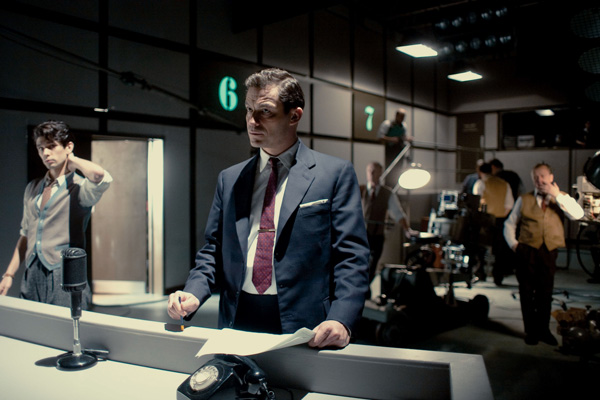
A publicity still from BBC Two Production 'The Hour'

Dominic West stars in BBC Two's new production, The Hour.

This week we've launched the new BBC Two Summer and Autumn season highlights online. It's a schedule that has been months, indeed years, in the planning and I hope by seeing all the programming together you will get a sense of the range, breadth and, of course, the distinct flavour that is BBC Two.

So what's coming up? Well, we'll be continuing our resurgence in drama and comedy. Any moment now, you'll be able to enjoy The Hour - our next six-parter, set in 1956 in a BBC newsroom, written by Abi Morgan. We're delighted to be showing Page Eight, David Hare's first TV drama for 20 years, and definitely well worth the wait; and also Paula Milne's evocative adaptation of Sarah Walter's book, The Nightwatch.

And I can reveal that next year we can also look forward to an exciting multi-part series from Stephen Poliakoff. Dancing On The Edge is set in 1930s London and follows the stories of a black jazz band and their circle.

These pieces will be part of an amazingly rich drama offer in 2012 including an ambitious adaptation by Tom Stoppard of Ford Maddox Ford's Parade's End; Top Of The Lake, a thriller from acclaimed New Zealand director Jane Campion; Paula Milne's White Heat, which follows a group of friends from their first meeting in 1969 to the present day; and Sam Mendes's take on what for me are some of the greatest of all Shakespeare's history plays. Can't wait...

There's new comedy from Stephen Merchant and Ricky Gervais, showcasing the talents of short actor Warwick Davis; and we can also look forward to the return of the much-loved Rev, Episodes and Grandma's House.

Meanwhile factual continues to fire on all cylinders. There's a rich mix of new, exciting factual programming, that engages with the contemporary world in a very BBC Two way: whether its exploring the landscape of modern British life in the Mixed Race Season; reflecting on ten years of war in Afghanistan; joining the Hairy Bikers as they campaign for the survival of Meals on Wheels in their next series; or enjoying Brian Cox and A Night With The Stars, an unplugged encounter between the nation's coolest particle physicist and an opinionated gathering of scientific scholars and enthusiastic amateurs.

One of the things I most hoped to see on the channel when I took over were more women doing more things more often and with more authority. So it was particularly pleasing to see that ambition begin to bear fruit over the last year. We welcomed some great new female talent to the channel, including: Amanda Vickery, presenter of At Home With the Georgians, which put the domestic lives of real people in the historical spotlight. She's now working on a film about Jane Austen for BBC Two; Lorraine Pascal whose debut series Baking Made Easy was one of the biggest popular factual successes of last year and who we hope will be starting work soon on a second series, Home Cooking Made Easy; and Lyse Doucet, who is already part of the BBC Two family with wonderful reports she's done over the years for Newsnight and has now made an extraordinary film for us in our Afghanistan season, about life in that country behind the headlines. It's a great programme - it goes out in two weeks, and will add a whole new dimension to your understanding about that troubled country.

And on top of all that, BBC Two is also the channel that brings you Top Gear, Dragon's Den, Coast and Springwatch. That offers distinctive journalism almost every night of the year in Newsnight. That will bring you Ian Hislop on Victorian bankers and Waldemar Januszczak on the Impressionists. That will tell you how to bake the perfect scone as well as explore the hidden mathematical patterns which underpin the natural world in Marcus du Sautoy's forthcoming series The Code. BBC Two will make you laugh with Mock the Week and cry with Great Ormond Street revisited. As a channel, BBC Two isn't always easy to pin down; sometimes we defy categorisation. But for me it's this rich variety, this eclectic mix of intelligent output, that makes us interesting.

Janice Hadlow is Controller of BBC Two

Bitten nails and goose bumps - the 2011 Reith Lectures

Blog comments are currently unavailable. Find out more.

Post categories:

Sue EllisSue Ellis|14:37 UK time, Tuesday, 21 June 2011

In order to see this content you need to have both Javascript enabled and Flash installed. Visit BBC Webwise for full instructions

When I walked into the Radio Theatre at Broadcasting House there were many 'unknowns'. Would there be enough people in the audience? Would the main guest be able to join us? Would John Simpson be arrested?

We were about to play the first Reith Lecture in the 2011 'Securing Freedom' series to an audience who were hoping the lecturer, Burmese democracy leader, Aung San Suu Kyi, could join them, somehow, to discuss the lecture.

By now I'm used to 'unknowns'. Back in January, we decided to approach Aung San Suu Kyi, recently released from house arrest, to give this year's Reith Lectures. I turned to both Fergal Keane and John Simpson for advice and it was Fergal who led me to the family of Michael Aris, Suu Kyi's late husband. They offered to put the proposal to her. At the same time Tin Htar Swe, the head of the Burmese Section, also tried to contact her on our behalf.

It took weeks before finally... 'yes, she would be delighted. She knows what the Reith Lectures mean.' I'd already enlisted the help of BBC Newsgathering, who offered to send in a team experienced in evading the secret police. They would record two lectures. And it was to protect their safety that we kept the whole thing secret. Any secret mission worth its salt needs a code name and rather randomly, Aung San Suu Kyi became a.k.a. Maggie Philbin. Naturally, we also considered carefully the security implications for Aung San Suu Kyi, but, true to form, she wasn't concerned in the least.

I learned that Daw Suu, as she's known affectionately, wanted to talk about dissent and the struggle for freedom. We sat back and waited again. For an editor having no control over content is not easy. One day I grew impatient and rang Suu's house on a number I'd been given. 'Ah, the Reith Lectures, yes, we know about them, please send an email to this address....' So I emailed the NLD (the National League for Democracy) from a gmail account, making no mention of the BBC. Back came a reply to my BBC address from someone called 'John'!

Communication by email was sporadic and presumably monitored by the authorities, but, finally, I arranged to speak to Suu. It was quite a moment. She told me she was very nervous about giving the lectures and apologised for being so busy. When I told her they would be filmed, she groaned and said, 'but I thought this was radio!'

By the time the Newsgathering team went into Burma, in secret, I'd only seen a draft version of one lecture. We'd sent back some suggested changes and then waited. The two days that the team were in Burma were nail-bitingly tense. Even if they managed to record successfully at her house, would they get the lectures out intact? And would they be any good?

They did and they are, as the audience at the Radio Theatre can testify. The final unknown: would we get Daw Suu on the line to answer questions about her lecture. And this is where John Simpson stepped in. He and his producer bravely, under the noses of the Burmese authorities, took satellite equipment to her house to enable us to link up with her. The line dropped off a few times, but as the lecture ended, she was there, asking not to be given any 'nasty questions'. There were tears. Nail-biting gave way to goose bumps. It was a truly moving and memorable experience.

In the run-up to the broadcast of Aung San Suu Kyi's Reith Lectures, Radio 4 is podcasting a selection of programmes from its archive exploring the themes of Burma, democracy and dissent.

Aung San Suu Kyi's Reith Lectures will be broadcast at 0900 BST on BBC Radio 4 on Tuesday 28 June and 5 July and will be available for download via the programme podcast. During each live broadcast, the Radio 4 blog will be hosting a live discussion - join in on the Radio 4 blog, or on Twitter, using #Reith. Follow the Reith Lectures on Twitter.

Sue Ellis is Editor of the Reith Lectures

The BBC's online industry briefing

Blog comments are currently unavailable. Find out more.

Post categories:

Steve BowbrickSteve Bowbrick|13:23 UK time, Tuesday, 21 June 2011

[View the story "Getting to know BBC Online" on Storify]

In search of the BBC's Northern Soul - television from Manchester

Blog comments are currently unavailable. Find out more.

Post categories:

Laurence InwoodLaurence Inwood|15:21 UK time, Friday, 17 June 2011

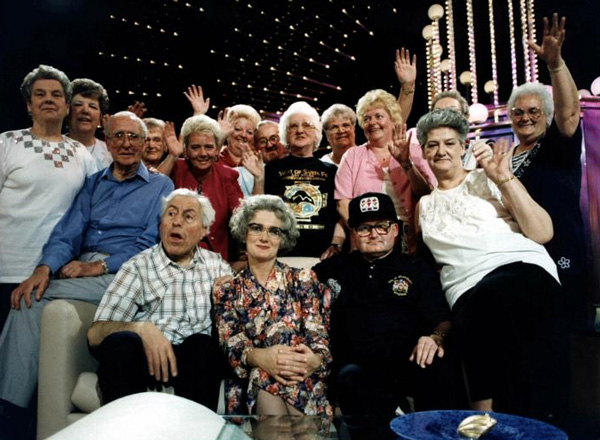
Caroline Aherne as Mrs Merton with the audience of British OAPs she flew over to Las Vegas for a series of shows

Television Centre may seem like a surprising place to start making a documentary about BBC Manchester but as I discovered during the course of the filming, the North West's influence within broadcasting spreads far beyond the perimeter of the M60.

I am in London for two days to interview five contributors about the North West's impact on television over the last 50 years. They are a very mixed group of people. Aled Jones, Christopher Eccleston, Debbie McGee, Janet Street Porter and Juliet Morris. On the face of it they have nothing in common, apart from the fact they have all worked and performed in the North West of England.

Juliet Morris is the first guest and speaks of fond memories working in Manchester. At one point she presented three different shows from the BBC Oxford Road studios, The Travel Show, Here & Now and The Heaven & Earth Show. She tells me she loved the place; says it was compact and cosy and had a really positive vibe about it. She's not seen the new building at Salford but says she will miss the old place.

New Broadcasting House has never won any prizes for its architecture. The staff based in Manchester who are moving to Salford are looking forward to working in brighter and more modern surroundings and few will miss the old building.

But later Aled Jones echoes the sentiment expressed by Juliet Morris. The Songs of Praise presenter tells me he has some lovely memories of New Broadcasting House, although he jokes it has never been 'new'.

Janet Street Porter is even less complimentary about the building from where she launched a whole new brand of youth programming in the mid-80s. She confesses she couldn't stand the place and on a recent visit to Manchester she was appalled to discover it hadn't changed since she last worked in it.

However, like the others she talks about the creativity of the people who worked in the building. Programmes like Reportage and Rough Guides made a massive impact on the way television was produced at the time and still influences others today. This is thanks in no small part to the people who worked in Manchester.

Debbie McGee confesses she never worked at BBC Manchester, although her husband, the magician Paul Daniels did. Her connection with Manchester relates to her appearance on the Mrs Merton Show in 1995. She was the very first guest and didn't know what to expect when she agreed to take part. Caroline Aherne's opening question, "What first attracted you to the millionaire Paul Daniels?" has gone down in television folklore and Debbie finds it as funny watching the old clip back today as she did at the time.

The following day Christopher Eccleston explains the humour of Mrs Merton is very Northern. He says it is the type of humour you find a lot of in Manchester and Liverpool and this unique outlook on life is one of the reasons why the North West is blessed with so many great scriptwriters. He says we all think we're comedians.

There are certainly some very good storytellers. When it comes to television drama the North West is blessed with some of the best scriptwriters of the present day. Jimmy McGovern, Paul Abbott, Danny Boyle, Peter Bowker. Chris tells me they all have one thing in common: they are all great listeners. And it is by listening to the real lives of the people who inhabit Merseyside, Lancashire and Cheshire that they are able to produce such great drama.

And what does the Salford-born actor make of the BBC's move to Salford? He smiles and says it's like it's coming home. Much of the best of British television has originated from the North of England and the BBC has been far too London-centric for years.

As I travel north on the M6 I think about some of the observations made by the different contributors over the two days and I realise that they were all relaying a similar message: that the North West has a long and successful history in television. One thing is certain, the new departments in Salford will not be starting from scratch. By going to London I have discovered the BBC really does have a Northern Soul.

Laurence Inwood is producer of Auntie's Northern Soul

Connected storytelling - one service, ten products, four screens

Blog comments are currently unavailable. Find out more.

Post categories:

Ralph RiveraRalph Rivera|12:00 UK time, Friday, 17 June 2011

Editor's note: the presentation above is the one Ralph made at the BBC Online industry briefing. You can see more BBC presentations here - SB

The main thing I wanted to talk about today is storytelling and technology, and how we are bringing the two together in concert to make BBC Online better.

I believe that media is simply the intersection of storytelling and technology - whether it's the Gutenberg press, radio or television - technology has enabled more pervasive and immersive storytelling, and it will be that way with the internet.

It's in that spirit that we approach our digital future - not as a software company with content as a feature, but a storyteller with software as an enabler.

New strategy

In January we announced a new strategy for BBC Online. The big picture here is a vision of quality and distinctiveness over quantity, the discipline and simplicity of going from hundreds of websites to 10 products, and the commitment to work with industry to build a sustainable digital public space. All of which will make BBC Online better for audiences.

One service

At the heart of this is looking at BBC Online as one service. It is the gateway to content and experiences across the entirety of the BBC. It provides the connective tissue that enables us to inform, educate and entertain as part of one narrative - not as a disjointed set of activities. We have reorganised the business around this principle. It also sets the boundaries of what we will do, and not do, online.

Ten Products

We will have ten products which are complete unto themselves, and in support of our five editorial priorities. Each are distinctive and clearly-defined, but will evolve to become even more powerful together, as we and our audiences create journeys that run fluidly between them. These will not be silos.

We continue to develop these products. Highlights since January include CBBC, a redesign we dubbed Shed No Tears (more on why from product manager Phil Buckley here). Radio player got off to a great start, BBC iPlayer interlinking went live and BBC News continues to be the place where audiences come for the big news stories, and stay.

Four screens

To date the bulk of our activity has been focused on the PC. We see the emergence of a post-PC world and we are embracing it as an opportunity to reach our audiences on whatever 'piece of glass' they choose to use, with an experience appropriate for each device.

We're making progress. The BBC iPlayer can already be accessed through many different devices, with the growth rate in mobiles, tablets and TVs outstripping that of PCs.

We're experimenting with dual screen companion devices, where what you do on your tablet or phone is related to what you see on your TV, for instance with our Autumnwatch trial.

We have had 6 million downloads of our BBC News application on Apple and Android smartphones and tablets globally. Coupled with the website, the BBC News product is already present globally across three screens. And today, we announced its arrival on a fourth - the TV.

Connected storytelling

Of course, the BBC isn't the only broadcaster thinking four-screen and digital. It's the industry's direction of travel. And if I stopped here, this presentation could have been delivered by anyone at Google, Yahoo! or AOL.

What makes the BBC different, what really sets it apart, is its ability to tell stories. Quality editorial, delivered in a way that people love and trust.

Radio 4, News at Ten, Doctor Who, Desert Island Discs, The Huey Show, Luther - these are not just brands, programmes, or networks but ideas. Ideas that mean something real to people, with stories that are crafted, nurtured and told over time.

It's been that way for 80 years on radio, it's that way now on TV, it's going to be that way on any internet-connected device, and it will be that way hundreds of years from now in the holodeck... (Yes, I am a Trekkie).

The internet is enabling connected storytelling. And by connected, I mean three things:

Audiences - connected to us and each other. Together we can create personalised, interactive and social experiences.

Editorial - the storytelling itself - connected through professional, algorithmic, and social curation. This creates a more complete and immersive experience than is possible from any one source, and;

Devices - connected to one another and working in concert. We can create experiences best suited for the capabilities of whichever of the four screens you happen to be on.

I think this adds up to a far better service for our audiences. And while all aspects are important, it's the BBC's traditional editorial strengths in professional storytelling that will make us truly distinctive.

Partnership

Finally, a word on partnership. The BBC cannot do this alone, and we are looking to our partners to help us realise these plans, whether that's developing better links with the start-ups that are putting the UK on the map as a hub for digital innovation, global deals with social networking sites, improving relationships with independent production companies or partnerships with consumer electronics companies - these partnerships will be the key to transforming BBC Online into the Connected Storyteller we all want it to be.

Ralph Rivera is Director of Future Media at the BBC

Seventeen days in Salford with the BBC Philharmonic

Blog comments are currently unavailable. Find out more.

Post categories:

Richard WigleyRichard Wigley|11:22 UK time, Thursday, 16 June 2011

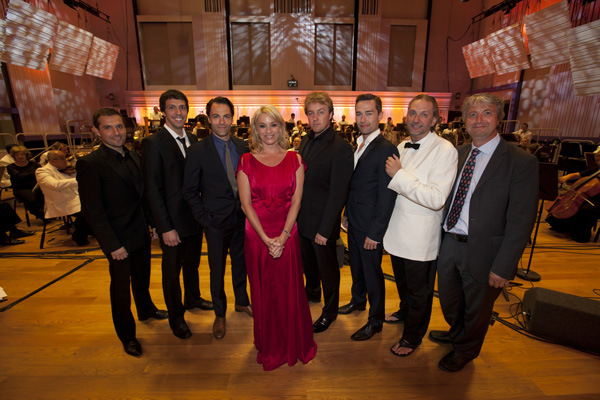
Richard Wigley (far right) with Tamzin Outhwaite and the stars of BBC Radio 2's Friday Night is Music Night, one of the highlights of the BBC Philharmonic Presents Festival

Richard Wigley (far right) with Tamzin Outhwaite and the stars of BBC Radio 2's Friday Night is Music Night, one of the highlights of the BBC Philharmonic Presents Festival.

The BBC Philharmonic Presents... festival has been an amazing seventeen days designed to unveil our wonderful new orchestral studio in the heart of Salford Quays. It has been the culmination of many years of teamwork by Peel Media and the BBC, geared to creating the ideal vehicle for the BBC Philharmonic's unique and impassioned brand of performance.

BBC Philharmonic Presents... has a simple concept at its heart; that the orchestra would feature on the BBC's national radio networks and on BBC Radio Manchester. I couldn't have asked for more from our friends across radio, BBC Project North and my own administrative team; they embraced the idea and built much, much more with it than I dreamt was possible. It has become much bigger than the initial idea and a paradigm for the new creativity we are expecting at MediaCityUK.

On 1 June we opened live on In Tune on BBC Radio 3 (our home network) with Conductor Emeritus Yan Pascal Tortelier. Two nights later Tamzin Outhwaite hosted a Friday Night is Music Night live for Radio 2, with the leading men of the West End belting out the best tunes from the shows; any nervousness I had about the ability of the studio to take a big sound was misplaced. Sunday Worship for Radio 4 was simply beautiful; uplifting music and the local narrative proved very powerful. The next day the orchestra moved onto the phenomenon that is Nero's Dubstep Symphony for BBC Radio 1 and 1Xtra; the sight of their fans hailing our musicians (and raising the roof in the process!) will live long in the memory. The following day 750 schoolchildren came to hear Pictures from an Exhibition animated by our Timpanist Paul Turner.

My colleague Rhian Roberts of BBC Radio 5 live has been a lynchpin in the planning for Mediacity, and her idea to stage Kermode & Mayo's Film Review live with the orchestra was the foundation stone for BBC Philharmonic Presents... It was a wonderful and complete collaboration between 5 live, TV (Red Button), Radio 3 and the Philharmonic, with listeners led from the afternoon on 5 Live to Live in Concert on Radio 3.

For 6 Music we performed Steve Mackey's prog rock-inspired Dreamhouse for Stuart Maconie's Freak Zone, before Radio 3 colleagues presented the Academy of Ancient Music. Following a collaboration with the Royal Northern College of Music featuring the music of Christopher Rouse, BBC Radio Manchester presents Salford Tales on Thursday; a gritty yet optimistic reflection of life in Salford as told by firemen, binmen and dinner ladies. It is entirely appropriate that our new Chief Conductor, Juanjo Mena, should close this dynamic musical journey with a mix of locally born international composers and music influenced by his homeland of Spain.

The twitterati and emailers have been providing rich and vibrant feedback, it's interesting to read the same sentiments about being uplifted expressed by listeners to Radios 1 and 4 (albeit in quite different language...) The BBC Philharmonic musicians have been magnificent and I'm delighted that so many millions from across the age range have had the chance to experience their magic on radio.

After BBC Philharmonic Presents... finishes, the orchestra's busy Summer continues with a major collaboration with Damon Albarn as part of the Manchester International Festival before heading down to London to take part in the world's biggest and best classical festival, the BBC Proms.

Richard Wigley is General Manager of the BBC Philharmonic

John Myers' review of the BBC's popular music stations

Post categories:

Tim DavieTim Davie|10:10 UK time, Tuesday, 14 June 2011

Tim Davie, Director of Audio & Music, blogs this morning on the BBC Radio blog:

Today we are making public a report which looks at potential synergies and savings within Radio 1, Radio 2, 6 Music and 1Xtra.

Last year, I asked John Myers - CEO of the Radio Academy and one of the most respected figures in the radio industry - to review how our popular music stations are run and how they work together. The key challenge was to identify possible ways of sensibly reducing costs while protecting the quality of our programmes.

The findings of the report will help us with our current planning as we look to save costs. John's extensive experience in commercial radio meant he could take an informed and objective view of our operations...

Read the rest of Tim Davie's blog post and download John Myers' review (as a PDF) on the BBC Radio blog...

Helen Boaden, Director of BBC News, at the LSE

Blog comments are currently unavailable. Find out more.

Post categories:

Steve BowbrickSteve Bowbrick|15:01 UK time, Friday, 10 June 2011

Polis is a journalism think tank based at the London School of Economics. Today they're hosting the second annual 'Value of Journalism' conference, on the theme 'media and power'. Helen Boaden gave the keynote address - about 'holding power to account' - and then joined a Q&A hosted by Krishnan Guru-Murthy from Channel 4 News. This video of her appearance was made by the BBC's College of Journalism.

Steve Bowbrick is editor of About the BBC

Arriving at Media City - a sports reporter goes North

Blog comments are currently unavailable. Find out more.

Post categories:

Francis Keogh|15:45 UK time, Wednesday, 8 June 2011

The BBC's new offices at MediaCityUK in Salford Quays

Editor's note: Frank Keogh is a senior sports reporter at the BBC. He and his family have moved to Salford. He'll be sharing the experience with us here on the blog. He starts with an introduction:

One thing helped my decision to up sticks 200 miles from London to the North West.

My football team West Ham would be playing in Manchester, on Merseyside and at several other big local grounds. Then they were relegated.

I'll be blogging during 2011 as we reshape our lives in the north and settle into a new work HQ at MediaCityUK in Salford Quays.

In another life, I was a crime reporter. For the last decade, I have worked on the BBC Sport website, with horse racing, football and the Olympics among my areas of interest.

I'm a former school chess and table tennis finalist, and desperately hoping I can somehow improve my 22 golf handicap. You can follow me on Twitter.

After 11 years at Television Centre in London, a new place of work has a hard act to follow.

There can be few venues that have welcomed such a range of entertainers, celebrities, sports stars and politicians down the decades. So it was nice to sign off from the BBC's iconic west London building, ahead of the relocation to Salford, with a chance encounter.

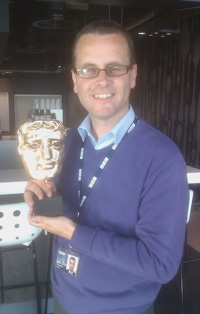
Frank Keogh, BBC sports journalist, with a BAFTA won by his department

Frank with the Bafta won by sport's Formula One TV team.

As we headed down from our Sport department on the fifth floor, the lift stopped at level three and in walked comic Matt Lucas. The last celeb I'd been in a lift with was Bruce Forsyth. "Higher or lower," I'd joked and the gag brought a chuckle, and even a surprise handshake, when retold to Lucas.

His good wishes were a nice touch as we prepared to move from one part of little Britain to another. It's 195 miles from Wood Lane to Manchester, and while the new workplace home of Salford Quays does not have the Television Centre tradition, it does have something different.

There are no bins at your desks, quirky meeting places apparently called 'thought wheels' and a place to make tea and coffee known as a 'refresh area.'

At a social session to welcome new movers, the boss of BBC North, Peter Salmon, showed off a Bafta won by sport's Formula One TV team. "This is given for great content and this will be a place to make great content," he said to a heartwarming cheer.

An appearance at our Quay House building by Brucie's Strictly partner Tess Daly, who was filming a promotional video, added a touch of excitement. The waterside location, open plan design, colourful meeting areas, even the view of Old Trafford bring a feeling of change to this place.

Then there are the accents. Suddenly as a Southerner who has never lived further north than Northampton, you are in a minority. Two people I have never met before immediately guessed which football team I support (West Ham) by the way I talked.

And you sense football, and sport in general, will be a common verbal currency in the new location. Both Manchester City (FA Cup) and Manchester United (Premier League) held open-top bus tours through the city within a week although after their Champions League defeat to Barcelona, there was an irony in the sign which said: "Man Utd victory parade - delays expected."

Of course, there are negatives to a big move. The sense of upheaval, almost loss, at the change. Those with children, leaving friends behind, will perhaps feel it most keenly.

And one suspects the people who will find the switch particularly hard are the partners. While I am busily bantering away at work with colleagues old and new, my wife is in a new town where she knows no-one.

In a lower moment, she posted a homesick Facebook status update where she talked about going home. There was plenty of empathy from the excellent group set up by two partners of Sport staff who have already moved and don't work for the BBC.

It probably didn't help that we have been without home broadband for a fortnight, and the radio silence meant the post was left hanging in the air. But it was with a small sense of progress that she was able to update - albeit a week later - in a chipper mood.

However difficult it might seem, there is usually someone having a tougher time. On my first working day in Manchester, in a city centre coffee shop, I saw a discarded pregnancy test in the unisex toilets.

Later in the week, a distraught cabbie told me about how a friend had written off his beloved sports boat. He plans to buy a new one and as the year progresses, it will be time to sink or swim for all of us.

Frank Keogh is a Senior Broadcast Journalist at BBC Sport

Despicable Dick & Righteous Richard in Sheffield - the BBC at Doc/Fest

Blog comments are currently unavailable. Find out more.

Post categories:

Charlotte MooreCharlotte Moore|09:54 UK time, Wednesday, 8 June 2011

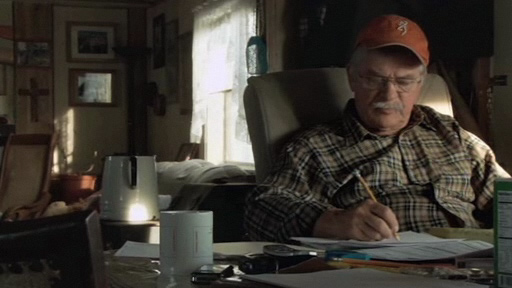
Still from Despicable Dick & Righteous Richard

Editor's note: Charlotte Moore opens her post about the BBC's contribution to the Sheffield Doc/Fest, starting this afternoon, with a clip from Despicable Dick & Righteous Richard, a Storyville commission to be shown at the festival - SB.

I'm a bit of a veteran at Sheffield Doc/Fest. I was there in the 90s when it started out as a haven for documentary anoraks with a penchant for obscure Finnish films, and have seen it grow since then - and particularly in the last few years - into one of the biggest events in the international documentary calendar. It's now well established as one of the year's highlights, where those of us who work in the industry get to compare notes on the burning issues of the moment, do business, and of course watch some brilliant films.

The BBC has long been committed to helping Doc/Fest cement its position on the documentary festival circuit, and this year promises to be one of our best yet. One of the films I'm most looking forward to is the premiere of BBC Two's Terry Pratchett - Choosing To Die. There has been quite a lot of press attention around the film already, much of it focusing on the rights and wrongs of assisted death, but at the heart of this moving film is an insight into the impossible predicament faced by Terry, and others like him, who must decide how to deal with degenerative and ultimately fatal illnesses.

Our flagship international documentary strand Storyville will enjoy a bumper year at Doc/Fest this year, with an impressive ten titles showing over the five days. The films range from The Interrupters - Steve James' longitudinal foray into the world of Chicago's spiralling epidemic of violence, following the men and women who intervene in conflicts before they erupt into violence on the streets of the city - to the hard-hitting Knuckle, which explores the seemingly unshakable tradition of bare knuckled fist fighting among Irish travellers. Not one for the faint-hearted! And then there's Despicable Dick & Righteous Richard, which sees the eponymous 69-year-old protagonist undertake a rigorous moral inventory to make amends for a lifetime's transgressions. And what an inventory it is...

I will be taking part in two sessions during the festival - I will be chairing a filmmaking masterclass for first-time documentary makers, and a commissioning panel with colleagues from ITV, Channel 4 and Channel 5 in which we will be swapping our 'desert island docs'. Elsewhere BBC Two controller Janice Hadlow will be hosting the BBC Interview, talking to the inimitable Adam Curtis about his recent series All Watched Over By Machines Of Loving Grace, which explored how people have been colonised by the machines they have built. And BBC Three controller Zai Bennett will be hosting an event on Thursday evening to mark the success of the Fresh documentaries strand, dedicated to first-time filmmakers. My Brother The Islamist is a recent film from the Fresh stable, and it will be screened ahead of the event on Thursday. And Bruce Parry will be attending the festival for the first time, letting us in on his fascinating experiences in the Arctic and other far-flung parts of the world.

Sheffield Doc/Fest is an opportunity for us to step back from the coalface of our day-to-day jobs and take stock of how the documentary industry is faring, and where it might be going. I think we're enjoying a boom time at the moment - they have never been in such demand on television, in the cinema, online and on DVD. The BBC's repertoire at Sheffield demonstrates that there truly is something for everyone now - whether you want to watch Jig, Sue Bourne's mesmerising peek into the maelstrom that is the Irish Dancing World Championships, or The Camera That Changed The World, Mandy Chang's exploration of the engineers and filmmakers who built and wielded the hand-held cameras that made it possible to record real life as it happened.

On top of all the activity at Sheffield, I announced a number of new documentary commissions earlier this week, confirming the BBC's commitment to documentaries: Welcome To Bangladesh, which will do for industrial waste what Bafta-winning Welcome To Lagos did for the slum - make it palatable, respectable, even desirable; Chatsworth, a new three-part series for BBC One, a modern take on Upstairs, Downstairs, offering a glimpse into life in one of Britain's most illustrious stately homes; and 7/7, which I hope will be the definitive film on the deadliest attacks in Britain since World War II - a story of agony, trauma and grief, but also hope, bravery and even forgiveness.

I want to ensure the BBC keeps pushing the boundaries of creativity, and responds to the fast-changing landscape of Britain in the 21st century. Therefore I look forward to talking to filmmakers at Sheffield to get their take on how we're doing, and look forward to reading your comments here.

Charlotte Moore is Commissioning Editor for documentaries at the BBC

3D for Wimbledon - the future of TV?

Blog comments are currently unavailable. Find out more.

Post categories:

Danielle NaglerDanielle Nagler|08:24 UK time, Wednesday, 8 June 2011

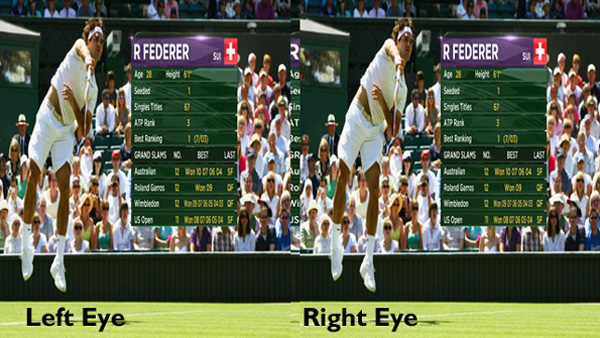
Roger Federer in a test image for the BBC's 3D coverage of Wimbledon

The first time I visited Wimbledon I expected it to look and feel exactly like it does on television. After years of sitting in front of the screen watching the balls, and spectators' heads, swinging backwards and forwards I thought I knew what sitting on Centre Court would be like. I realised that I didn't, and that while TV can do a great job it can't capture the magic of actually being there.

Like most of us I've never been lucky enough to sit and watch a finals match on Centre Court. But this year - the Wimbledon Championships' 125th anniversary - I've been working with others inside and outside the BBC to try to bring you the next best thing - the Wimbledon Singles' Finals, in 3D.

Wimbledon always feels timeless - but actually it has been home to successive TV sport innovations from an early appearance in colour, through to Hawk Eye technology.

We know that tennis can look thrilling in 3D - it can really bring the power players put into shots to life. I've been lucky to see some of the incredible test shoots we've been running, as the team are busy working behind the scenes to get everything in place for the broadcast, but I can't wait to see what a real match played by two of the world's finest will look like.

The broadcasts will be available to everyone with access to an HD service and a 3D TV set, via BBC HD, whether you get your TV from Freesat, Freeview, Sky or Virgin Media. And if you don't have a 3D TV, there are some opportunities to watch the broadcast in the cinema.

The BBC's been experimenting with 3D for decades - but as we all know the latest developments in 3D technology have made it much, much more sophisticated as a viewing experience, and we've been working with the All-England Club and Sony Professional for this BBC first. It will also be the first time that 3D broadcasting has been tried out across all the different TV providers so that it's accessible without subscription.

For all of us who don't have a 3D set at home, or a Centre Court ticket, the finals will of course be shown on BBC One and in HD on BBC One HD, as well as all the BBC's regular Wimbledon coverage - on TV, radio, and online.

I don't know yet whether 3D will be the future of television, or the future of Wimbledon: that's why we're doing this experimental trial. But I am really excited to experience the finals this year in 3D. And if you are able to watch in 3D I'd love to know what you think.

Danielle Nagler is the Head of BBC HD and 3D

Glastonbury - covering a major cultural event

Blog comments are currently unavailable. Find out more.

Post categories:

Andy Parfitt|15:09 UK time, Tuesday, 7 June 2011

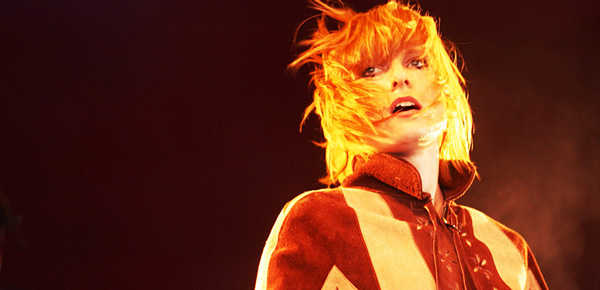
Florence Welch on the Introducing Stage at Glastonbury

Every year we have to counter the charge that the numbers of backstage talent the BBC sends to create Glastonbury is excessive. If the figures were 600, 300 or 100 people I don't think it would make any difference. Last year we sent 274 staff and freelancers and this year it will be less.

Glastonbury is a major cultural event and the UK's most significant popular music festival. Last year our coverage reached nearly 16 million people, was listened to by 5.7 million individuals and the website featured around 170 hours of video. The BBC prides itself on its high-quality coverage of major events like Glastonbury, so I thought I'd give you a glimpse of what I see backstage to give you a better scale to understand why, later this month, the BBC will send 263 of its best people to Somerset to bring a huge amount of content to our audiences across all our platforms.

The Glastonbury site is 1100 acres - more than double the size of the Olympic Park and Alton Towers and the equivalent of 550 football pitches - it's huge! It took me an hour to walk across the site (with no people there) and when at capacity over the weekend with around 135,000 people on site it can take much longer!

We have cameras and crew at six stages across this massive site - bringing audiences 38 hours of TV on BBC Two, Three and Four and around 50 hours of radio across 6Music, Radio 2 and Radio 1 plus extensive coverage on bbc.co.uk, as well as on four Red Button streams, offering a complete multi-platform experience.

As a former sound engineer, I'm going to tell you about the main Pyramid Stage sound for the Radio, TV and on-demand. We're talking about delivering some of the world's greatest artists (this year there's U2Coldplay and Beyoncé) to your TV, radio and computer in super quality. I can tell you that mixing the hundreds of sound feeds does not happen on mobile disco equipment - Sound II is the BBC's big digital mobile music studio - a truck crammed with the highest possible quality mixing desk, monitoring and FX systems. Inside, our very best sound engineers work on a shift system to deliver great sound day and night; there are stage technicians who lay the cables and set the mics; and production assistants who log, time, quality check and upload hundreds of tracks so that the BBC Radio stations can play out live music in their Glastonbury specials.

This is only one stage and only the sound - across a sprawling site which is bigger than Bath. There's also the John Peel Stage, West Holts Stage, The Park Stage, Other Stage and BBC Introducing Stage with each one having dedicated technical points. And there are dozens more stages, tents and areas where music and comedy acts are doing their thing - so getting around the site with equipment and artists can be a real challenge.

All this, even before we get to the multi hi-def camera points, the vision mixers, directors, vision control engineers, producers, the website techs and the fact that tons of kit has to be installed in a fairly remote valley in Somerset and taken down days later by riggers and drivers. I hope you'll appreciate that this is why it takes the number of people it does to deliver the BBC's high quality multi-platform content. I should add that as the broadcast partner, the BBC's pictures are beamed across the world with BBC WorldWide selling rights to coverage overseas and generating funds to be invested back into the BBC for making programmes.

And this is certainly no 'junket'. There's no BBC corporate hospitality and any BBC executives attending will also be working. Every member of staff onsite has a clear and accountable role - working hard and extremely long hours to offer unparalleled coverage. The people who work at the festival are some of the most dedicated, talented hard-working and professional crew I have come across in my career - and I have been around a long time!

Andy Parfitt is Controller Radio 1, 1Xtra, Popular Music and Asian Network

BBC Things To Do

Blog comments are currently unavailable. Find out more.

Post categories:

Saul NasséSaul Nassé|15:45 UK time, Monday, 6 June 2011

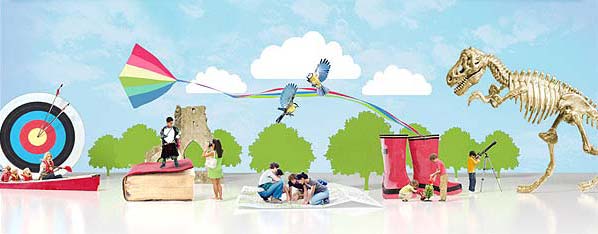
Things To Do

I had a moment of pleasurable serendipity last weekend. I was in Manchester with my wife and daughter as we prepare for BBC Learning's move to MediaCityUK in Salford later this month. As we walked through the city centre, I saw an interesting looking black tent pitched in front of Manchester's Town Hall. As we got closer I realised it was my very own Hands On History team, who'd rolled into town with their exhibition encouraging people to learn about their local history through Melvyn Bragg's new series The Reel History of Britain.

The exhibition was a delight, with ancient cine cameras, a mini cinema and experts you could chat to. BBC Learning runs dozens of these kinds of events across the year, part of our mission to inspire a life full of learning by letting people delve deeper into subjects they've been intrigued by on television, radio and online.

Many people will, like me, have the joy of coming across our events by chance but many others won't be so fortunate. To tackle this we've just launched Things To Do, a searchable website and mobile offer that lets people find learning and participation activities and events near them. Things To Do brings together all the activities and events that the BBC runs, linked to subject areas like Nature, History and Science into one place.

Importantly, everything on the site is linked to BBC content and involves real hands-on experiences - whether it's discovering more about the history of the local area, joining a nature treasure hunt or taking part in local stargazing activity. But it doesn't end with BBC-run events, we've teamed up with publicly funded and non-profit partners across the UK to showcase their related events and activities too. It's early days but we're gradually building and deepening the content, extending its geographical reach and bringing on board new partners, big and small.

All the activities and events on Things To Do are free for visitors or of minimal charge to cover costs. To ensure people are able to progress their interests and learning journeys, we've also built the system to encourage discovery of other areas, so you can come in through Nature but end up progressing through to Science or even Sport. We've also included links in every activity page back to the partner's event info.

I'm sure Things To Do is going to be a really popular part of the BBC Online Knowledge & Learning product and I think my teams and our partners are going to have to get ready for bigger queues outside Manchester Town Hall or wherever in the country they're creating activities and events that deepen people's experience of the best of the BBC's programmes.

You can find a more detailed description of Things To Do over on the Internet Blog.

Saul Nassé is BBC Controller of Learning

Better arts partnerships for the BBC

Blog comments are currently unavailable. Find out more.

Post categories:

Judith NicholJudith Nichol|16:54 UK time, Thursday, 2 June 2011

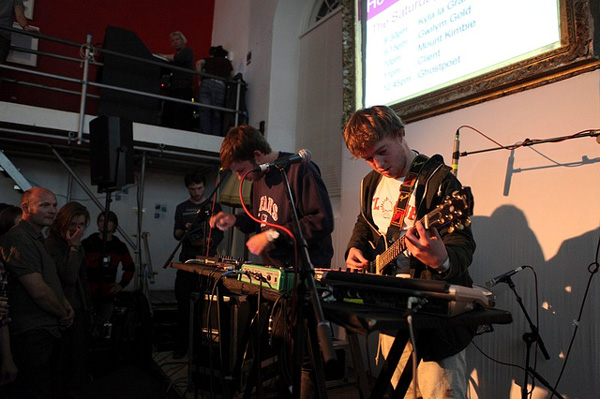
A picture taken at the HowTheLightGetsIn Festival in Hay-on-Wye on 28 May 2011

This evening Richard Klein, Controller of BBC Four will be speaking at the Philosophy and Music festival, HowTheLightGetsIn as part of BBC Four's partnership with The Institute of Art and Ideas. The festival is taking place at Hay-on-Wye and runs from the 26th May to the 6th June. It takes place alongside the book festival but has its own separate programme of talks, debates, music and much more.

Richard will be presenting Justice - A citizen's Guide to the 21st Century as well as taking part in a Q&A straight afterwards. This is only one part of BBC Four's involvement, which also covers John Mullan, talking about Great Thinkers: in their own Words, James Rogan talking about the Storyville documentary about Amnesty International and Jonty Claypole discussing how philosophers have used television to communicate ideas.

The BBC is keen to work in partnership with the cultural sector in ways which deliver greater value to audiences. Closer BBC collaboration with the sector could make arts content more visible, boost participation and engagement and achieve greater audience value for all bodies working in this area.

Good working partnerships are founded on transparency, mutuality and equity. In other words a partnership works well with:

  • Clear aims and objectives for the BBC and the partner
  • Demonstrable greater value to audiences
  • Sufficient resources to deliver the project
  • Fairness in dealing with all parties

The BBC looks for projects and partnerships that:

  • Can extend creative possibilities, reach and impact
  • Have potential for off air activities and community initiatives
  • Can enable national reach - e.g. public libraries - or who have a unique offering e.g. Culture24
  • Are not just about promotion

Benefits to the Arts sector can take many forms but should enable a more joined-up approach for key events and anniversaries, help reach new audiences, enhance the experience - whether in a gallery, museum or festival - improve training in the sector, and enhance outreach.

Audiences should see a benefit through delivering greater value and enriching the audience experience, providing ways to participate and interact and enhancing learning opportunities.

Some of the other partnerships that demonstrate these principles are:

Judith Nichol is Knowledge Partnerships Manager at the BBC

  • The picture shows a performance at the HowTheLightGetsIn Festival. More pictures on Flickr.

About this blog

Senior staff and experts from across the organisation use this blog to talk about what's happening inside the BBC. We also highlight and link to some of the debates happening on other blogs and online spaces inside and outside the corporation.

Here are some tips for taking part.

This blog is edited by Jon Jacob.

Subscribe to this blog

You can stay up to date with About the BBC via these feeds.

If you aren't sure what RSS is you'll find our beginner's guide to RSS useful.

[an error occurred while processing this directive]

Follow this blog

Other BBC blogs

More from this blog...

Categories

These are some of the popular topics this blog covers.