About the BBC - BlogAbout the BBC - Blog
Local Navigation

Archives for April 2011

Satirising the Royal Wedding - the BBC's agreement with Clarence House

Blog comments are currently unavailable. Find out more.

Post categories:

Steve BowbrickSteve Bowbrick|23:13 UK time, Thursday, 28 April 2011

There has been speculation on the the social networks today that the BBC has banned the satirical use of Royal Wedding footage online. To clarify, the BBC gave this response earlier today:

It has always been made clear by the BBC that use of its basic live news feed and BBC One programming for comedy, satirical or similar entertainment purposes would not be permitted contractually. This is a standard condition that applies to all broadcasters around the world who have licensed content from the BBC, ITN and Sky which includes footage shot inside Westminster Abbey in agreement with Clarence House.

Steve Bowbrick is editor of About the BBC

Sir Michael Lyons answers questions from Radio 4 listeners

Blog comments are currently unavailable. Find out more.

Post categories:

Steve BowbrickSteve Bowbrick|18:12 UK time, Tuesday, 26 April 2011

Sir Michael Lyons is the outgoing Chair of the BBC Trust. He appeared on Radio 4's weekly phone-in Call You & Yours today to answer questions from licence fee-payers. Listen again to the programme here and leave a comment below.

Steve Bowbrick is Editor of About the BBC

  • You & Yours is BBC Radio 4's weekday consumer affairs programme: Monday to Friday at 1200. Tuesday's programme is devoted to a phone-in, Call You & Yours.
  • You & Yours also has a blog.

My Web My Way relaunch: more accessibility information

Post categories:

Jonathan Hassell|16:21 UK time, Tuesday, 26 April 2011

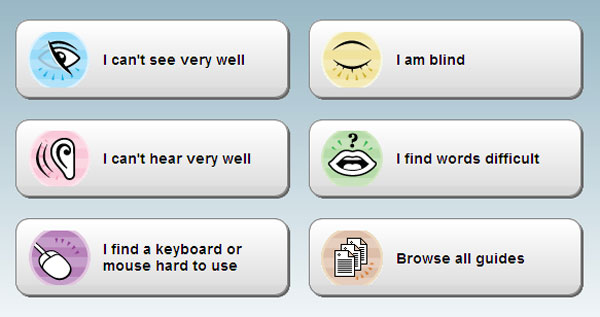
Illustration from the BBC's My Web My Way web site.

Editor's note: information about what's new on the relaunched accessibility pages on the BBC Internet blog - SB.

If you've visited the My Web My Way accessibility pages on BBC Online during the last few months you'll have seen a promo inviting users to preview a new version of the site.

This version revealed the beginnings of a more detailed and user-friendly My Web My Way, which I'm delighted to say has just launched in full.

My Web My Way is designed to educate audiences with accessibility needs about how to get the best out of the web - not just BBC Online - by using personalisation features in their browsers or operating systems, or using assistive technologies like screenreaders.

It's estimated that around 11 million adults have a form of disability and that this group tends towards 'heavy' media consumption - increasingly online. The sixth of the BBC's public purposes is to deliver the benefits of technology to the public, and this public must be as wide as possible. Because of this we've invested time in updating our accessibility information for the benefit of users with impairments - whether visual, hearing-related, motor-related or cognitive. Of course there are other providers of this kind of information, but to many the BBC is a trusted guide to the web.

So - what's changed?

Read the rest of Jonathan Hassell's blog post and leave a comment on the BBC Internet blog...

The BBC's new Director of Future Media reflects on technology, the web and the BBC

Post categories:

Steve BowbrickSteve Bowbrick|16:57 UK time, Thursday, 21 April 2011

A quotation from Ralph Rivera's speech to the W3CUKI meeting in Oxford on 18 April 2011

On the BBC Internet blog, Ralph Rivera, the American technology veteran who recently took over at the top of the BBC's digital and online division, brings together his observations on the launch of a UK office for the W3C, on the history of computing and on the role of the BBC. Read the post and leave a comment on the BBC Internet blog...

Steve Bowbrick is editor of About the BBC

Where does your local BBC get its news?

Blog comments are currently unavailable. Find out more.

Post categories:

Tim BishopTim Bishop|11:40 UK time, Tuesday, 19 April 2011

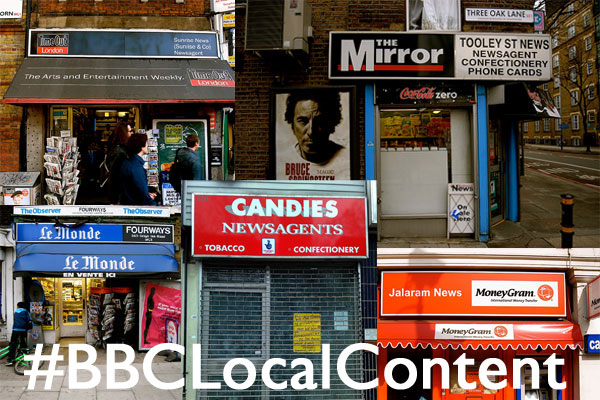
Newsagents' shops from Britain - by Steve Bowbrick

For many in the newspaper industry, and in particular the local press, the suspicion is that the BBC's Deep Throat is picking up a copy of the local paper.

It's a suggestion repeated fairly frequently and usually without much challenge. So what's the actual evidence?

Six months ago, the BBC and the Newspaper Society, the body that represents regional publishers, decided to work together to find out. The agreed method was simple. Monitor news in one area for a month then look at the stories that overlapped and trace them back to their source. Northamptonshire was chosen. It has two strong evening papers and a weekly run by Johnston Press. The BBC is not unusually well-resourced there.

This was a joint project, but I did most of the evidence gathering. Allowing for that and the fact there is bound to be some margin for error the picture we found was so clear that both the BBC and the newspaper managing director, who represented the Newspaper Society, agreed that the devil was not in the detail. What did we find? Local newspapers remain overwhelmingly the major publisher of local news and information.

Every day the two daily newspapers in Northamptonshire each publish more than four times as many stories as the BBC local radio station. Every day each paper publishes more stories than BBC Look East did in the entire month long period. Online, newspapers are also the volume provider with the two daily papers publishing 435 news stories and the BBC delivering 73.

Radio carried the vast bulk of BBC material, there were around 400 stories broadcast by BBC Radio Northampton in this period. Of those around 250 overlapped with those carried by the papers. Some overlap is inevitable. Snow and Remembrance Day events generated programmes on radio and reams of newspaper coverage. Media overlap, but on its own that tells you nothing about the source.

Publishing a story first is also not automatically the answer. A story about a poppy seller being spat at ran first on BBC Radio Northampton after he walked into the office. It was the front page lead in the paper next day and was extensively followed by national papers during the next week. But it wasn't lifted from the radio, he talked to everyone.

Around 20-30 stories looked like they might have originated from the papers. After checking that figure came down to 11. So from around 4,000 stories in the papers and around 400 on the radio just 11 stories were sourced by reading the paper. All those stories were then checked out by the BBC. Just five were hard news - job losses the paper heard about first, that sort of thing. The papers' news editors were clear, they listen to the radio and would have chased anything significant they had missed.

But if volume is not the issue, what about agenda setting? The front page seemed the obvious place to look. The two daily papers had 44 front-page leads, the BBC didn't carry 24 of them. In 22 relevant Evening Telegraph editions, 6 leads were also covered by the BBC. Two reflected bad weather and three were clearly diary or items from publicly available meetings.

The subject of the Northampton Chronicle & Echo front-page lead was aired on the BBC on 14 occasions. Seven of those would have been on all newsrooms diaries and a further five were from some form of press release. Only one was clearly a newspaper exclusive. If the BBC is devoted to following the papers' news agenda it's not doing it very well.

Simply counting stories also ignores significant differences in treatments. Holding the county's key public bodies to account or reporting on what they do gets greater prominence proportionately on the BBC in the way you might expect from a public service broadcaster.

There were also important differences in the nature and treatment of stories that a simple total of items conceals. The BBC station has a broader county remit and tends to be more interested in regional stories. That also reflects the broader editorial view that the station believes is right for its audience whilst the newspapers focused on being hyper-local by BBC standards.

In all the arguments about the BBC's impact in local markets it's easy to forget that the BBC's role can also be positive. The BBC supported on-air and participated in a key Evening Chronicle campaign in this period - 'Strictly Chron Dancing'

Beginning to transform all of this is the sheer amount of material on various forms of social media. The Northampton Chronicle's Daniel Owens writes a cracking column about how news works. He's clear what a difference social media is making, charting five to six stories a week which are picked up from social networking sites, available to all online users.

To sum up. Newspaper journalists listen to the radio and would not hesitate to follow up a story they had missed. Radio journalists read newspapers. This one month period probably favoured the BBC because it coincided with an editorially ambitious BBC initiative across England 'Living Longer' which aimed to really understand the issues facing an increasingly elderly population.

But forget the actual figures. Double, treble, quadruple them. The key thing we found is that neither side is dependent on the other.

Many stories do the rounds citing who lifts what from whom and there are some examples from both broadcast and print media of material being lifted and used unchecked and uncredited, but what this survey shows is that there's a lot less of it around than anecdotal evidence suggests.

Papers and radio co-exist and even work together. There's another England here, often fiercely proud of the place we live, generous to charity, supportive of each other, still shocked by the sort of crime that Midsomer would not blink at.

In the end somewhere is local to all of us. For the overwhelming majority it's a better place, too often hidden behind the national headlines. These are really strong content rich local papers, facing a multitude of threats to their revenue and therefore to their robust local journalism. But where you live is also a better place because of the strength and diversity of the local media. Without it we are all the poorer.

Tim Bishop is Head of Regional and Local Programmes at BBC East. He has been an evening newspaper editor, as well as a television and radio editor


Ralph Rivera on 'digital public space'

Blog comments are currently unavailable. Find out more.

Post categories:

Ralph RiveraRalph Rivera|11:00 UK time, Monday, 18 April 2011

Ralph Rivera is the BBC's new Director of Future Media. He's in Oxford today addressing a seminar to open the new office of the W3C, the web's standards-setting body. Later we'll publish a fuller blog post by Ralph but, in the meantime, here's his presentation.

The seminar began with a presentation by the web's inventor, Tim Berners-Lee, entitled Future Directions of the Web. Speakers from Vodafone, Microsoft and the Oxford Internet Institute are also present. The hashtag is #W3CUKI.

Steve Bowbrick is editor of About the BBC

Terry Pratchett: Choosing to Die

Blog comments are currently unavailable. Find out more.

Post categories:

Charlotte MooreCharlotte Moore|15:48 UK time, Friday, 15 April 2011

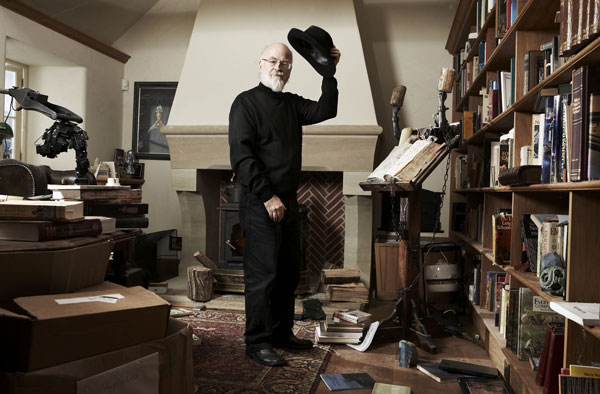
Terry Pratchett during the making of 'Terry Pratchett: Choosing Death

Death on television has always been a controversial issue - as such, it's not something that we'd ever take the decision to show lightly. Not only did we have to work closely with all of our contributors' families to make sure that the issue was handled as sensitively as possible, but we worked closely with our editorial policy team to make sure that all aspects of the documentary were in line with BBC Editorial Policy guidelines.

When we knew that we'd be following Terry Pratchett as he looked at the realities of assisted death, for us it was important that we faithfully documented his personal journey. Terry has often spoken of the fact that he may choose a medically assisted death when his condition progresses, so his priority was to look at what this decision would really mean. What would it feel like to make the final decision to die? What would it feel like to visit Dignitas? What would it be like to be present when the moment of death came?

Terry Pratchett: Choosing To Die looks at all of these issues in some detail, but in no way does he wave a one-sided flag for assisted death. Terry meets and is moved by a motor neurone disease sufferer who has chosen to stay in the UK and opted for hospice care; he struggles with the decision of a younger man with multiple sclerosis who has chosen to take his own life; he is particularly moved by Peter's (another motor neurone disease sufferer's) long journey to Dignitas, and finds watching the final stage extremely difficult.

What filming the documentary made clear was how complicated the issue was, and how much this is an important topic of debate. As part of this, on the same night, BBC Two will screen a Newsnight debate that gives all different voices a chance to discuss the issue.

We know that not everyone will feel comfortable watching Terry Pratchett: Choosing To Die, but we hope that all would accept that it's important that the BBC tackles the difficult subjects that we're often faced with in life.

Charlotte Moore is Commissioning Editor for documentaries

  • The BBC's Press Release about the programme is on the Press Office web site.
  • The BBC's Editorial Guidelines are on the BBC web site.
  • The picture shows Terry Pratchet during filming for his programme 'Living with Alzheimer's' for BBC Two in February 2009.

The Proms 2011 programme launches

Blog comments are currently unavailable. Find out more.

Post categories:

Steve BowbrickSteve Bowbrick|17:44 UK time, Thursday, 14 April 2011

Launching the 2011 BBC Proms

Post categories:

Roger WrightRoger Wright|12:27 UK time, Thursday, 14 April 2011

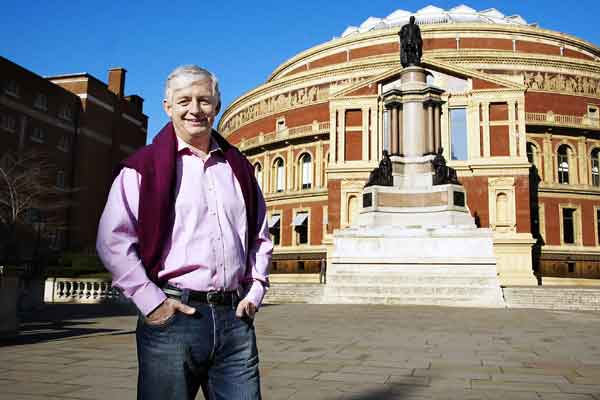
Photo of Proms Controller Roger Wright at the Royal Albert Hall

Editor's note: Roger Wright is Controller of BBC Radio 3 and Director of the BBC Proms. It's one of the most important days in his musical year - SB

It's the morning of the BBC Proms launch. I have a real sense of anticipation and excitement because, at last, it's possible to tell everyone about the 2011 plans.

I always feel rather unfriendly keeping the plans as secret as possible until now. We need as much publicity as possible on launch day as we have hundreds of thousands of tickets to sell and therefore want to spread the word as widely as we can. Leaks beforehand would simply drip the news out and potentially undermine the launch day splash.

Read the rest of this blog post and leave a comment on the Radio 3 blog...

BBC Three explores life for young parents

Blog comments are currently unavailable. Find out more.

Post categories:

Samantha AnstissSamantha Anstiss|16:21 UK time, Tuesday, 12 April 2011

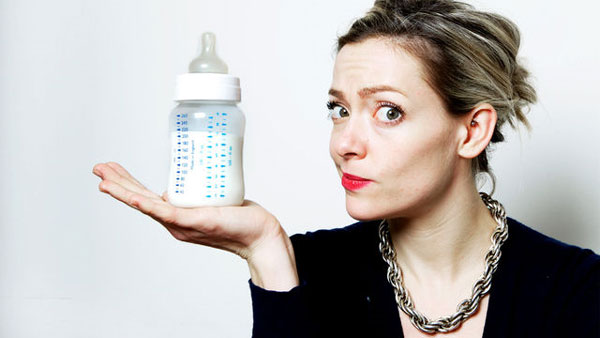
Cherry Healey Investigates

I've been blessed with three children who have given me some of the most joyous moments in my life. But they didn't come with an instructional manual and even if they did I probably would have been too exhausted and blurry eyed to read it. No amount of reading parenting books can prepare you for the seismic shift which occurs in your life with the arrival of a baby.

Tonight sees the launch of our Bringing Up Britain season on BBC Three - a collection of programmes that explore, without judgement, what life is really like for young parents in the UK. BBC Three had produced a number of programmes like Kizzy - Mum at 14 and Underage and Pregnant that had been watched by many viewers. Danny Cohen (now Controller of BBC One) was keen to explore the next generation of films in this area - instead of focussing purely on pregnancy he was keen to explore what happens when baby comes home.

In their different ways, all the programmes paint an intimate picture of both parenting and childhood - from extraordinary personal stories to practical advice and debate programming. It's not just aimed at mums and dads, we hope Bringing Up Britain will also offer a unique window into the complex, varied and sometimes downright hard lives of young parents, and the many issues they are now facing in today's society.

BBC Learning have also produced a series of short videos in which young parents share practical tips and advice. We're thrilled with this collaboration and hope that the additional online footage will help soon-to-be mums and dads understand the stark realities of their new-found situations, and reassure them that they aren't alone.

The Bringing Up Britain season kicks off tonight with Is Breast Best? at 9pm. BBC Three presenter Cherry Healey found the experience of breast feeding both painful and traumatic and with the UK having such low breastfeeding rates in comparison with the rest of Europe she is on a mission to find out how other mums feel. Viewers can also chat with her online during the programme.

Abandoned At Birth - Gatwick Baby and Jono Lancaster's So What if my Baby is Born Like Me? are moving portrayals of childhoods lost. Steven Hydes was abandoned at Gatwick airport when he was 10 days old and is on a life-defining search to find out his true identity. Jono has Treacher Collins syndrome - a rare genetic condition - and is trying to decide if or how he should ever have children.

It is essential that the young people we feature are portrayed accurately and fairly and I believe this is also part of the reason factual on the channel is doing so well. We have lead the way in covering issues that are relevant to the lives of young people in society - allowing them to tell their own stories in their own way. Take Misbehaving Mums to Be, a six-part series that follows a team of midwives as they take pregnant women who binge drink, chain smoke and over-eat and attempt to help them get back on track and into shape before they give birth. The statistics are quite staggering; 20% of women smoke during pregnancy; 35% of women continue to drink alcohol; and 20% of pregnant women are worryingly obese. Contributors in our series are very open about the difficulties they've faced - as well as their positive experiences - and I really hope the programmes will reassure other young mums who are struggling and help them to see that they really aren't alone.

Childhood obesity has reached alarming levels in the UK and Fast Food Baby follows families as they attempt to wean their children off a diet of fast food. The programme tries to understand and explore the reasons that parents up and down the country are resorting to convenience foods.

Preparing and caring for one child is a daunting enough experience for parents, and our last programme in the season, Meet the Multiples, captures what life is life in a multiple child home - from being told you are expecting more than one child, to insights into how it feels to reach young adulthood having grown up with so many same-aged siblings.

Factual programmes on BBC Three have seen a significant increase in audiences over the last two years, and I'm really proud of what we have achieved with the Bringing Up Britain season - a unique collection of programmes that tackle some important contemporary issues.

Samantha Anstiss is Commissioning Executive Producer for Bringing up Britain

Balancing the books at the BBC

Blog comments are currently unavailable. Find out more.

Post categories:

Helen Boaden|13:37 UK time, Tuesday, 12 April 2011

The BBC's motto: nation shall speak peace unto nation

I gave a speech to the Voice of the Listener & Viewer conference today at The Geological Society in London. The conference was called 'Risking Quality in Times of Change - what future for Public Service Broadcasting?' Among other matters, I talked about the licence fee settlement and the difficult decisions BBC News faces as we seek to live within our means, and about the impact on the BBC World Service from the cut in government funding. You can read the speech in full on the BBC press office web site.

Helen Boaden is Director of BBC News

  • We'll publish a recording of the speech here on the blog tomorrow.
  • The picture shows the BBC's motto, from an early coat of arms.
  • Also speaking at the Voice of the Listener and Viewer's Spring conference are Roger Graef (TV Producer), David Liddiment (BBC Trustee), David Elstein (former Chief Exec of Channel 5) and Stephen Whittle (former head of Editorial Policy at the BBC). Details on the VLV web site.
  • David Liddiment's speech to the conference is on the BBC Trust's web site.

(Hopefully) no more tears: CBBC website relaunch

Post categories:

Phil BuckleyPhil Buckley|11:36 UK time, Tuesday, 12 April 2011

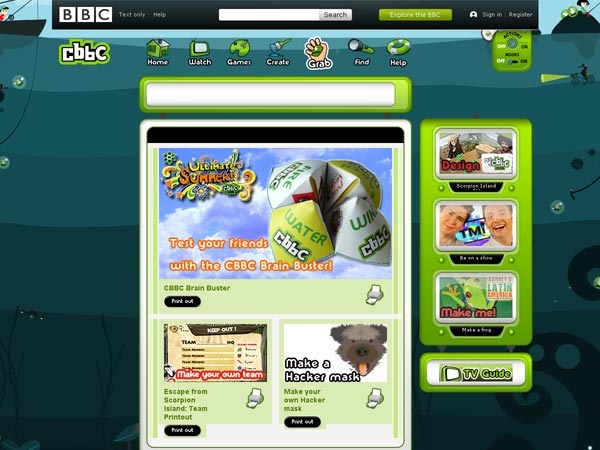
Editor's note: Phil Buckley is in charge of the CBBC web site and he's written a fascinating blog post - full of pictures and anecdotes - in which he talks about the special challenges of updating a web site loved by millions of children. Read it on the BBC Internet blog - SB.

A screenshot from the relaunched CBBC web site for children, March 2011.

Relaunching a children's website is a surprisingly perilous business. A relaunch, which is normally accompanied by a large amount of promotion and razzmatazz, often brings a huge spike in traffic to certain areas of the site, in particular to any place where you are able to complain.

To give you a sample, when the CBeebies website was relaunched in 2007, the message boards, also here, were hit by comments like...

Read the rest of Phil's blog post and leave a comment, on the BBC Internet blog...

Delivering Quality First - a more effective and simpler BBC

Blog comments are currently unavailable. Find out more.

Post categories:

Caroline ThomsonCaroline Thomson|10:02 UK time, Friday, 8 April 2011

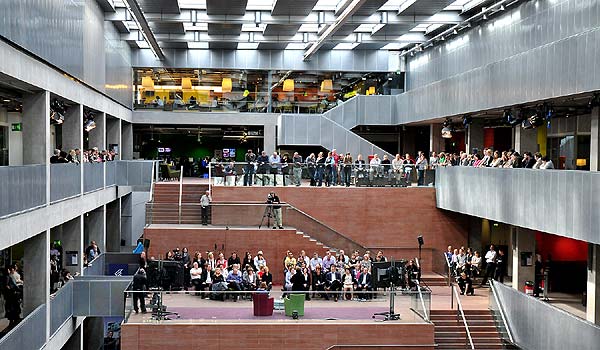
Delivering Quality First staff event in Pacific Quay

Yesterday I was in Glasgow giving a progress report to BBC staff about Delivering Quality First (DQF) - our initiative to reshape the BBC for the future. The BBC's mission remains the same - to inform, educate and entertain through programmes and services of high quality, originality and value. We are delivering that mission; 97% of the British public tune in to the BBC every week. That is an incredible privilege that brings with it great responsibility.

Our challenge is how to continue to fulfill our mission between now and 2016 whilst making 20 per cent savings. This is about finding better ways of working which will prepare us for a connected future. Linked to this we need to ensure that the BBC is creating programmes about the whole of Britain - serving our audiences throughout the UK.

Local and national broadcasting is at the heart of what we do. And as we move towards 2016 more of what we do will be done outside of London. Salford is just about to open for business - we are 6 weeks away. Sport, Radio 5 live, Children's are all coming together in one location. This is the model for the BBC of the future, and where many of the ideas from DQF will be piloted.

Pacific Quay is one of the most modern, state of the art, digital broadcasting facilities in the world and has helped BBC Scotland to already achieve a 30 per cent efficiency saving. We will be putting forward the really big decisions to the BBC Trust in July. They will then conduct a public consultation before any final decisions are made.

However in the meantime as we have talked with BBC staff there are some really useful ideas that they have come up to make us a more effective organisation, and which we can address right now. Some of the concerns that staff have raised include a frustration with outdated broadcasting equipment which can become a barrier to their ability to do their job well. There is also a feeling that there are too many layers of management and there is too much complexity in decision making.

We've listened to these concerns and are taking action to create a more effective and simpler BBC with clearer accountability:

  • To tackle the complexity that so often frustrates people working in and around the BBC and create simpler decision making - we will move to a maximum of 7 organisation layers. That means a maximum of seven layers including the DG and the most junior staff.
  • We will establish a technology fund to respond to staff concerns. We have already found an extra £1M specifically for technology upgrades in English Regions TV, and for BBC Radio Northampton which faced a particular problem.
  • Thirdly we are currently spread over 400 different properties. We want as much investment in future to be in programmes rather than buildings and so we are aiming to reduce the property space we occupy by 30 per cent by 2015.
  • Finally - there has been some speculation that we are considering reducing the redundancy terms for BBC staff. There are no immediate plans to change redundancy terms. Clearly we cannot rule it out, but today I have given a pledge that if we do decide to change them in the future, we will give staff eighteen months notice.

These common sense decisions are about getting the basics right before we embark on the bigger transformation ahead.

Caroline Thomson is the BBC's Chief Operating Officer

Religious Programming this Easter

Blog comments are currently unavailable. Find out more.

Post categories:

Aaqil AhmedAaqil Ahmed|14:24 UK time, Wednesday, 6 April 2011

Reconstruction of Jesus (Selva Rasalingam) being arrested by the temple guards

This weekend was the first weekend that I managed to venture into my garden. And, as I write, the sun is still shining and it is past 5pm - which makes more than a pleasant change. I love this time of year, as it marks the end of winter (and let's face it, it's been a long and cold one) and ushers in spring.

The arrival of spring of course also heralds the arrival of Easter, and this Easter the BBC has an array of programmes across television and radio - from live worship to challenging documentaries - to both mark and celebrate its significance. I am really proud of our Easter content - it really has got something for everyone. 

Highlights, as always, are too numerous to mention in detail here but I just wanted to talk about a few that I really hope you will be able to find the time to watch and listen to.

For Holy Week in Does Christianity Have A Future? Ann Widdecombe investigates the changing face of Christianity in the UK, with some fascinating results. And, in The Jesus Story, the life and teachings of Jesus are explored in a two-part series, featuring dramatic recreation of key moments of the Gospels, coupled with expert examination of the latest archaeological, historical and theological research. Both Does Christianity Have a Future? and The Jesus Story will be shown on BBC One.

We will also broadcast live from Westminster Abbey The Royal Maundy Service (BBC One, Thursday 21 April). Presented by Huw Edwards, the service coincides with Her Majesty Queen Elizabeth II's 85th Birthday, the first time this has happened during her reign.

And don't miss BBC Radio 4's Thought For The Day on Maundy Thursday with The Archbishop Of Canterbury, the Most Rev Dr Rowan Williams.

For Good Friday on BBC One Bettany Hughes asks What Is The Point In Forgiveness? Embarking on a fascinating journey through 2,000 years of our history, she tries to find out if the concept of forgiveness has actually benefitted mankind.

Also on Good Friday on BBC Radio 2, Aled Jones presents At The Foot Of The Cross. St Albans Cathedral is the glorious setting for meditation in words and music for Good Friday. Music, poetry and readings from the Bible read by Hugh Bonneville and Emma Fielding tell the story of the crucifixion with, at its centre, a complete performance of Fauré's Requiem .

And I'm delighted Easter From Kings makes a welcome return to BBC Two on Easter Eve, with music from Handel’s Messiah and Mozart’s Ave Verum Corpus being sung by the world-famous Chapel Choir.

Full details of all the Religion and Ethics programmes on BBC TV and Radio over Easter.

I hope you have a great Easter - and if you do find the time to watch and listen to some of our programmes, that you enjoy them!

Aaqil Ahmed is Head of Religion and Ethics and Commissioning Editor TV

Musical Extravaganza in the North East

Blog comments are currently unavailable. Find out more.

Post categories:

Alec McGivanAlec McGivan|11:54 UK time, Monday, 4 April 2011

Look North presenters Sharuna Sargur and Jeff Brown

Travelling around Tyne & Wear became much easier in 1980, when the Metro opened to transport Geordies around the region. To celebrate the system's 30th anniversary last year, BBC North East and BBC Outreach worked together to create the all-singing, all-dancing Metro the Musical.

Written by Benjamin Till and performed by over 200 members of the public, the short film highlights some of the stories of people who travel or work on the Metro.

The film has just been premiered at the Sage, Gateshead, and BBC Outreach was there to meet the participants and other local opinion formers. The event was filmed and broadcast on BBC Look North, along with clips of the film.

You can watch Metro the Musical on the BBC News Tyne & Wear website.

Alec McGivan is Head of BBC Outreach

Digital On-Screen Graphics - research findings

Blog comments are currently unavailable. Find out more.

Post categories:

Helen NormoyleHelen Normoyle|10:50 UK time, Friday, 1 April 2011

As digital switchover continues apace the audience can choose from lots of different channels and technologies to consume television programmes, with some having access to over 500 different channels. 

As the number of channels grows we at the BBC believe it is important that viewers can quickly identify when they are watching a BBC service. That is why the BBC, like many other broadcasters, insert channel identifiers for dedicated digital channels. The identifier, called a Digital On-Screen Graphic (DOG), is normally at the top left-hand part of the picture to avoid clashing with subtitles or captions.

You may ask the question why don’t we show on screen graphics on BBC One and BBC Two as well. The reason we don’t is that they are very well established channels that always appear on positions 1 and 2 of the EPG. Our digital channels are much newer and are on different numbers, depending on what platform you’re watching on, be it Freeview, Freesat or one of the subscription options available, and DOGs allow viewers to identify the channel instantly.

DOGs have always been subject to wider public interest and every now and then we’re asked why we use them. Over 48 million people watch the BBC’s television channels each week and it’s natural that, within a group that large, people will have differing views about DOGs. With that in mind, we commissioned a detailed piece of research to gain a deeper understanding of how the public at large feel about Digital On-Screen Graphics.

The research was carried out by Ipsos MediaCT using in-home interviews, amongst a nationally representative sample of 1031 people across the UK. The research took place from 5-11 March 2010 and we would like to share some of those findings from the research with you.

Download the research summary by Ipsos Mori (PDF 1.4MB)

Do people notice DOGs?

Very few of the people interviewed spontaneously noticed the DOGs on screen, even when prompted. The DOGs aren’t the first thing the eye is drawn to, even on a TV screen that was not very busy. Our research found that the majority of people tend to agree that they ‘don’t really notice them’.

Do people find DOGs helpful?

Despite this claimed low awareness, DOGs are the most commonly cited aid in helping people identify the channel they are watching. This puts it ahead of the EPG and other methods in claimed use for channel identification. A majority (6 in 10) agree that DOGs are a quick and easy way in which to identify the channel they are watching.

How do people feel about DOGs?

Despite the fact that they are rarely noticed and their usefulness in identifying the channel, the research did show that the audience have mixed views about DOGs:

  • around a quarter of all TV viewers hold negative views about DOGs
  • a similar proportion (27% ) are broadly accepting of them
  • around half of do not have consistently strong views either ways

The research also shows that even amongst those who dislike DOGs, many still agree (4 in 10) that they play a helpful role in identifying the channel; so, although they may irritate, they can at least see the point of them. A minority of people (11%) both don’t like them in principle and don’t find them useful .

DOGs are changing

As of 4 April 2011 we’ll be moving our DOGs to help improve your viewing experience. Read on to understand more.

What has changed?

The BBC has moved the Digital On-Screen Graphics (DOGs) on its digital channels to a wide-screen (16:9) position further towards the top left hand corner of the screen. Up until now DOGs have been set for old-style (4:3) sets which meant that on wide-screen TVs they appeared closer to the centre of the screen.

Why has it changed?

We moved the DOGs to this position on our HD channels at the start of 2011 and received positive audience feedback on the improved viewing experience. Internal BBC surveys indicate that over half of all TV sets are now widescreen, though that rises to over 80% of TVs in the living-room. So in order to ensure the best possible viewing experience for audiences in the future we feel that now is the time to make this change.

What do I do if the DOG on my screen is obscured?

Don't worry. This will be because you have a digital TV box linked to an old style (4:3) TV and have the viewing option set to "centre cut-out". All you need to do is reset your viewing options to "letterbox". This way you will also be able to see more of the picture too.

I hope that helps explain the thinking behind why we have DOGs, and the way in which we tailor our services in a way that ensures they cater for the BBC’s large and varied audience in the best way possible.

Helen Normoyle is Director of Marketing and Audiences

About this blog

Senior staff and experts from across the organisation use this blog to talk about what's happening inside the BBC. We also highlight and link to some of the debates happening on other blogs and online spaces inside and outside the corporation.

Here are some tips for taking part.

This blog is edited by Jon Jacob.

Subscribe to this blog

You can stay up to date with About the BBC via these feeds.

If you aren't sure what RSS is you'll find our beginner's guide to RSS useful.

[an error occurred while processing this directive]

Follow this blog

Other BBC blogs

More from this blog...

Categories

These are some of the popular topics this blog covers.