About the BBC - BlogAbout the BBC - Blog
Local Navigation

Archives for June 2010

BBC Films showreel is launched

Blog comments are currently unavailable. Find out more.

Post categories:

Christine LanganChristine Langan|16:43 UK time, Wednesday, 30 June 2010

In order to see this content you need to have both Javascript enabled and Flash installed. Visit BBC Webwise for full instructions


Today sees the online launch of BBC Films' showreel, showcasing a variety of our recent projects which I hope will give some insight into the rich and eclectic slate we're seeking to achieve.

While all of our films are unique, each one represents our commitment to bring original and distinctive British films to the British public. Every year, £12 million of the licence fee is invested into BBC Films to make around eight feature films working in partnership with diverse creative talent, a wide range of independent producers, UK and international distributors and sales agents and a whole host of other financiers. BBC Films is an integral part of the UK film industry and is often a lifeline for films that otherwise might not get made (An Education and In the Loop as well as more arthouse offerings like Fish Tank all fall into this category). 

There's a massive range of British and international talent on display both behind the scenes and in front of camera, a satisfying mix of new and established talent from veteran Stephen Frears with his latest movie Tamara Drewe to first time feature directors, Max Giwa and Dania Pasquini making their debut with StreetDance.

'StreetDance' has been a particularly rewarding experience for us at BBC Films. As our first adventure into the world of 3D films, it has not only launched several new film careers but also made a staggering £11 million at the box office, going straight in at number one on its opening weekend against the likes of Hollywood blockbusters 'Prince of Persia' and 'Robin Hood'. This is a real vote of confidence in British film and a great way to celebrate British youth, music and style.

Some of the movies included are barely through post production and we're just getting news in about which festivals want to premiere them and what sort of release is planned for them by the various different distributors. So, for example, we know that Stephen Frears's Tamara Drewe (which had a very successful premiere in Cannes last month) will have its London premiere in early September. Working on an adaptation of a graphic novel has been extremely interesting (Tamara Drewe started out as a strip in the Guardian and its creator, Posy Simmonds then turned it into a graphic novel). The audience response in Cannes and the critical reaction so far has urged the distributors, Momentum, towards a relatively big release. They'll be putting the film out this September and we'll be seeing rather more of the lovely Gemma Arterton in a red vest and hotpants.

Autumn will also see the release of Made In Dagenham, the story of the struggle for equal pay bravely initiated by a handful of women at Ford, Dagenham in 1968. Directed by Nigel Cole of Calendar Girls, with a great British cast (Sally Hawkins, Bob Hoskins, Jaimie Winstone, Andrea Riseborough, Rosamund Pike, Rupert Graves, Geraldine James, Miranda Richardson, John Sessions.) It's an inspiring story of ordinary people empowering themselves and proving that they are stronger together than alone. It's a very funny film but has also proved to be a tearjerker at preview screenings. It's a particularly relevant film for the BBC because the producers, Stephen Woolley and Liz Karlsen, first got the idea for the movie when they heard the original women behind the protest on Radio 4's The Reunion. Again, a pretty big release is planned this October and there is early speculation about Sally Hawkins' awards potential.

Another exciting directorial debut featured on our showreel is that of Rowan Joffe with Brighton Rock. Rowan adapted Graham Green's novel and had the brilliant idea of transposing the action to 1964 so that the violence of Pinky and his underworld colleagues blends seamlessly with Brighton's warring tribes of mods and rockers. Again, it features a brilliant British cast with Sam Riley, Andrea Riseborough, John Hurt, Helen Mirren and Nonso Anozie (who you might also recognise from BAFTA winning BBC One drama 'Occupation'.) Brighton Rock should be in cinemas early next year.

Nearing completion now and looking very good is West Is West, Ayub Khan Din's follow up to the hugely successful East is East, the tale of a Pakistani/English family in Bradford in the 70s. West Is West moves the story on five years, and George's youngest - now teenage - son, Sajid, is taken to Pakistan to learn some manners. The trip proves as much of a coming of age story for George (Om Puri) as for his son. It's a highly entertaining and moving study of family life and of that universal theme of wanting to belong.

Some of the films on the showreel are soon to get their first television transmission.

We are extremely excited about our forthcoming Weekend Of Film on BBC Two in mid July which will feature three of our movies Is Anybody There?, Eastern Promises and The Damned United. It's very satisfying to get such good slots across the weekend and I hope the television audience will enjoy what's on offer.

Christine Langan is the Creative Director of BBC Films

Proposed changes to the BBC Pension Scheme

Blog comments are currently unavailable. Find out more.

Post categories:

Zarin PatelZarin Patel|09:45 UK time, Tuesday, 29 June 2010

Today the BBC has put forward a series of proposals to change the BBC Pension Scheme. If accepted, these would be the most extensive changes to the Scheme in its history. These are tough decisions, and the first major reform of pensions in the public sector. But we believe we have no option if we are to avoid a new burden on the licence fee payer while ensuring that staff, many of whom have paid into their pensions for years, continue to receive what they are due.

Why are we proposing this? The Scheme's assets, like those of many other pension schemes, have been affected by market volatility following the global economic downturn. Although financial markets have improved during 2009/10, the investments in the Scheme have not returned to previously expected levels and the outlook for the future remains uncertain. In addition, with people living longer, the cost of funding their pensions inevitably increases.

An interim valuation by the Scheme's Trustees has put the estimated deficit at nearly £2bn. This does not mean that we are short of money to pay pensions now. But our forecasts show that we need to build up more reserves for the future.

The BBC is not alone in this - pension schemes in both the private and public sector are facing similarly difficult decisions. John Hutton is leading a review of public sector pensions, and last week the Prime Minister warned public sector workers that their pensions would be considerably less generous in the future.

In the private sector, BA has announced measures to reduce their scheme's £3.7bn deficit, and 87% of private sector defined benefit schemes are now closed to new members. Companies such as IBM, Vodafone and Trinity Mirror only offer defined contribution pensions to all employees.

What are we proposing? The changes would affect all active members of the BBC Pension Scheme. The Defined Benefit Scheme would remain open to all existing members. Benefits would, however, be subject to a 1% limit on all future pensionable salary increases.

The Defined Benefit Scheme would be closed to anyone joining the BBC after 1 December 2010. From this point anyone would be able to join a new Defined Contribution Scheme. Under this scheme, contributions are agreed in advance, but the final benefits will vary.

Current Scheme members have the choice of remaining in the Defined Benefit Scheme or moving to the Defined Contribution Plan.

This has not been a sudden decision. When changes were made to the Scheme in 2006, we made it clear we would need to review the Scheme's performance. Our original aim of reviewing it in 2013 has had to be brought forward because of the impact of market performance and growing life expectancy.

We have spent over 18 months working to find the best solution for our staff. For the next 90 days, the BBC will consult fully on these proposals with staff, the unions, musicians unions and Equity.

I believe the solutions we have proposed today will deliver a Pension Scheme that is sustainable, affordable and flexible for BBC staff and the licence fee payer.


Zarin Patel is the BBC's Chief Financial Officer

Trisha Goddard meets CBeebies Cerrie Burnell

Blog comments are currently unavailable. Find out more.

Post categories:

Damon RoseDamon Rose|18:23 UK time, Monday, 28 June 2010


In order to see this content you need to have both Javascript enabled and Flash installed. Visit BBC Webwise for full instructions


Here at Ouch! - the BBC's disability website - we're rather pleased with our new series of daisy-chained video interviews. Called Dis Connected, we brought an eclectic group of noteworthy people together, some of whom you may not have immediately put in the disability bracket. And it's that fact alone which makes the viewer wonder ... well what is this D-word all about?

Chat show queen Trisha Goddard meets CBeebies presenter Cerrie Burnell in the first interview. What common ground do they have? You may know that Trisha has had breast cancer and depression and Cerrie has part of one arm missing, but how do Trisha's experiences differ from Cerrie who has lived with a visible disability from birth, through school and into her working years.

We're releasing a new video interview each week for 7 weeks. The interviewee from one week becomes the interviewer the next. Each person brings their own valid point of view to the table in a series of very enlightening encounters, often with plenty of dark humour.

Guests across the summer include: former paralympian, now Baroness Tanni Grey-Thompson. TV presenter Gail Porter. Mystery Jets Indie frontman Blaine Harrison and lifelong disability campaigner Baroness Jane Campbell.

The series was produced and directed by Kate Ansell, herself a disabled programme maker. We were extremely keen to dive into the minutiae of our contributors' lives and, as Ouch! loves to do, tell untold stories that deserve wider audiences. No pity, no preciousness, just straightforward open discussions between people who know something about having trodden that path. Kate facilitated this marvellously, and dug out some fantastic illustrative clips from the TV archive.

Dis Connected is published on the Ouch! website every monday until August 9th.

Damon Rose is Senior Content Producer on Ouch! and the Ouch! talk show

BBC Archive releases Football Legends interviews

Blog comments are currently unavailable. Find out more.

Post categories:

Steve Darling, Producer, BBC ArchivesSteve Darling, Producer, BBC Archives|10:19 UK time, Monday, 28 June 2010

Bobby Charlton
Whenever we discuss our collections, we often find ourselves having to explain why some programmes can't be included because of rights issues. Whatever the problems are in clearing acquired footage, the situation becomes much harder when we begin to look at sports footage. Although the BBC broadcasts hundreds of hours of sporting events each year, the rights to rebroadcast the footage often rests with the sporting bodies - such as the FA or FIFA - and of course, that clip of the winning goal or fastest lap comes at a premium.


Part of our job is to find ways around such issues and last year we decided to look to radio to see if there were any interviews with some sporting heroes of the past. As luck would have it, there was a whole series of interviews broadcast under the banner Football Legends between 1995 and 1999. Former Blackpool FC and England player Jimmy Armfield met up with other footballers to discuss their careers and find out what had happened after their glory days had passed. It was a perfect fit for what we were looking for. Plus, we could sidestep having to explain why we hadn't picked other legends like George Best or more modern players. These are the ones Jimmy Armfield interviewed and we're releasing every edition from all three runs of the series - there are no more.


In the past, we've always released our collections in one go, but for this one we decided to publish it in three stages, beginning with those interviewees who'd been in the 1966 England squad. The second wave contains older players, including Sir Stanley Matthews, while the third wave features stars of the 1970s such as Pat Jennings, Denis Law and Kevin Keegan. The extra-special circumstance that makes this release so timely is of course the World Cup, and a staged release allows us to rotate the promotions of the other interviews and keep the mix fresh as the tournament progresses. We may do this again with future collections, so tell us if you think it's a good idea.


As archivists, not all of us are the most sports-minded of people, but each of us has our favourites from this collection. Gordon Banks stands out - he continued as a goalkeeper even after he lost an eye. There's Stanley Matthews, of course, who was playing professional football into his sixth decade. And surely every footballing childhood of the 1970s still has a special place for the wiry genius of Denis Law or the bubble-permed Kevin Keegan?


It's interesting to contrast the styles of conversation of these men with modern players. We don't think it's too unfair to note that each of the older stars seems more articulate than those who followed. Perhaps it's because they had lives outside of football, or maybe it's simply that, as men at the end of their careers, they've had time to assess their position in the world rather than simply focusing breathlessly on the match in hand. But in an age before such concepts as media training, each of these men has a fascinating tale to tell - and the ability to tell their story well.


Steve Darling is a producer on the BBC Archive


New comedy on BBC Three

Blog comments are currently unavailable. Find out more.

Post categories:

Cheryl Taylor|15:20 UK time, Friday, 25 June 2010

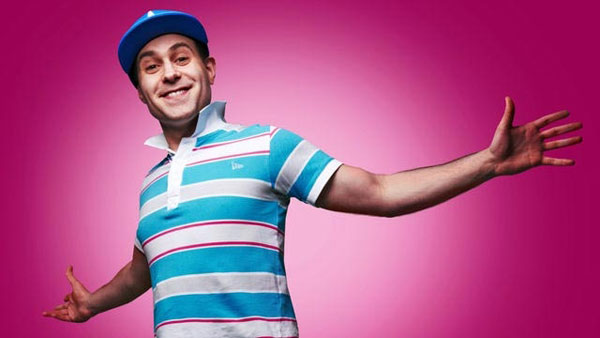
Lee Nelson.jpg

We've had a nerve-wracking couple of weeks here in Comedy Towers waiting to see how two brand spanking new shows for BBC Three would roll out.


When I arrived in the job last year, the Lee Nelson pilot was one of the first DVDs to land on my desk and I thought it was dynamite - a user-friendly version of the Edinburgh show I'd seen a couple of years before. I went to this hot and stuffy venue with Simon Wilson (Senior Executive Editor for Comedy Commissioning) and, despite the extreme heat, the show blew us away. We couldn't believe that Lee Nelson (a cheeky cockney character created by comedian Simon Brodkin) wasn't nominated for a major award that year - his hour-long stand-up was meticulous in terms of spot-on character comedy with an unusually high gag count.


But comedy's a mercurial business and often even the most high-profile Edinburgh successes don't 'travel well' to TV. There have been a few sticky moments when very strong Edinburgh signings have resulted in disappointing pilots. Not so with this Well Good Show. Simon Brodkin and his production team worked tirelessly to keep the joke count high and to ensure that, in the TV studio, Lee's buoyant persona was just as fizzy as it had always been in stand-up venues. Very few people have the knack of working an audience like Simon can and when you get it right it's comedy gold. My colleague Davina was in the hairdresser last week and the girls in there were saying that their favourite shows on TV were Russell Howard and Lee Nelson - so after just two weeks word is spreading fast that he delivers "qualiteeeeeeeeee" comedy.


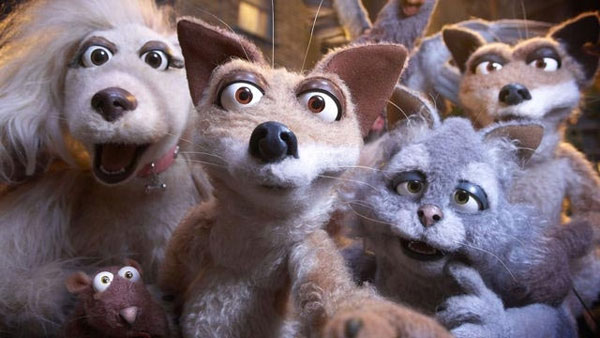
Mongrels

It's really not often that you get two great shows launching on the same channel in the same fortnight, but the puppet phenomenon Mongrels launched on BBC Three this week and we are all delighted that it's getting such a good reception.


The development process for this series has been lengthy and arduous, to say the least. Nearly three years ago when I was acting controller, Stephen McCrum, the producer, delivered a taster tape with a bunch of urban animal puppets begging for a series. It was very funny. We commissioned a pilot because we were intrigued to see how the characters might sustain over half an hour - would they connect with the viewer? In the case of Mongrels the quality of the puppets and their anthropomorphic personas was very seductive - Danny Cohen, Controller of BBC Three, was instantly smitten. The pilot demonstrated beyond any doubt that the puppet narrative was engaging and funny, although the rather cuddly storylines were deemed a tad too confusing for an audience who were not sure if this was meant to be a kids' programme or an adult one.


The two writers, Jon Brown and Danny Peak, adjusted the tone accordingly and the series scripts were far more colourful than the pilot - to the extent that during the scripting and post-production period we had lengthy discussions to gauge exactly where to draw the line in terms of the language and the tone, as the diverse range of characters had become considerably more belligerent and bawdy!


The audience certainly seem to have 'got it', though, if this first outing is anything to go by and it will be a fitting testimony to the extraordinary hard work of the production team if it becomes a hit.


It's notable that Lee Nelson's Well Good Show didn't change a huge amount between pilot and series, whereas Mongrels experienced a dramatic tonal makeover. Investing in pilots for new shows can slow down the process and is often expensive, but it can make the difference between a hit and a miss in comedy. We'd pilot all our new ideas if we could.


Cheryl Taylor is the Controller of Comedy Commissioning


George Campey and Eurovision

Blog comments are currently unavailable. Find out more.

Post categories:

Donald SteelDonald Steel|13:50 UK time, Thursday, 24 June 2010

George Campey

George Campey OBE, who coined the term 'Eurovision' to describe the idea of a TV link-up between broadcasters in Europe, has died aged 94. Without him, there might not have been a Eurovision Song Contest. It might have ended up as the Cross Borders Cultural Collaboration Between Public Service Broadcasters In Europe And Beyond Song Contest, which doesn't to me have quite the same ring to it. The BBC wanted to call it the Television Continental Exchange, which sounds now a tad risqué. George's snappier Eurovision title, coined in 1951, thankfully quickly caught on and the Eurovision Song Contest was born in 1956. He died just a week after the 55th Eurovision final, which took place this year in Oslo.

George was one of my predecessors in the BBC Press Office at a time when many of the big BBC press issues were stimulated by Mary Whitehouse, or the celebrated satirical programme That Was The Week That Was. Sometimes both!

George also created the first of what we now call accountability programmes. Information Desk, which began in 1955, answered viewers' queries. The BBC wanted to find a way of connecting directly with the TV audience. It was revolutionary at the time, and the forerunner of programmes like Points of View.

George Campey did a great job, and we're remembering him with gratitude at the BBC.

Donald Steel is Chief Communications Adviser

Behind the scenes at President Sarkozy's visit to Broadcasting House

Blog comments are currently unavailable. Find out more.

Post categories:

Liliane Landor|17:34 UK time, Friday, 18 June 2010

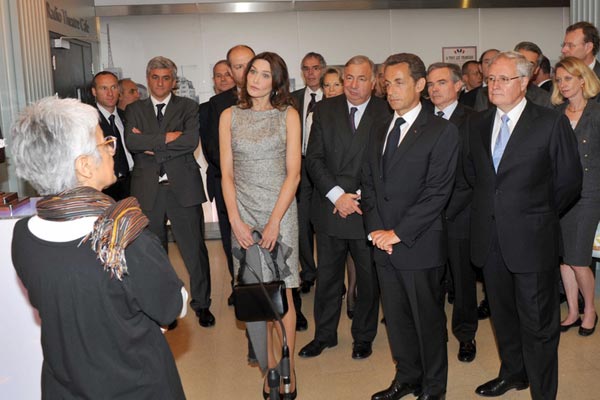
Sarkozy and Madame Bruni visit Broadcasting House

It was to be a big event, and we had to make every effort to get it right. President Sarkozy et Madame Bruni would be paying us a visit, and I was to do the honours in French. Not just because I was a native French speaker, or happen to be "Controller, Languages" in BBC Global but, I strongly suspected, because my size (5ft nothing) helped a great deal. I could look President Sarkozy in the eye.

Monday - I meet Robert Seatter, Head of BBC History, and quickly realise he hasn't left anything to chance. Robert has done his homework thoroughly. He tells me it will be a whirlwind visit - all of 10' from the moment le President et Madame set foot through the door of Broadcasting House. And it will be timed to the nearest second. I have a minute and a half to do my piece, and so does Jean-Louis Cremieux-Brihlac, the 94 year old resistance fighter who witnessed it all and will talk about what the broadcast meant to him and his compatriots.

Robert and I agree on the gist of my talk - a couple of words about BH and the circumstances in which De Gaulle made his appeal, exactly 70 years ago on 18 June 1940. I will explain that the British government at the time was not terribly keen but Winston Churchill put his foot down and made it happen. A grateful De Gaulle wrote in his memoirs: "Winston Churchill put the BBC at my disposal".

For the next 4 years, at 20.30 every single day, from a small studio on the 4th floor of BH and then from Bush House, the "Resistance" would speak to France through the BBC French Service. And 70% of the population of France would be listening. (The French Service - where I incidentally started my BBC career- is still in very good health, broadcasting to Francophone Africa where our audiences are in the millions.)

Friday - when he arrives, at 0945 precisely, President Sarkozy seems in a great hurry. Much more so than Carla Bruni who's calm and collected. 

Led by the BBC chairman and the DG they step with their retinue into the main area where a display of BBC archive pictures had been organised.

I greet them, try to capture their attention (much easier with Madame Bruni then the President), say my bit, and as I'm about to introduce Jean Louis, I notice M Sarkozy focusing on the tapestry behind me. So I explain that it was a gift from the French government to thank the BBC for its help and support during the war, that it was permanently on display and that it was inspired by Eluard's poem Liberte. Upon which Mr Sarkozy smiles broadly and recites to himself the last verse: "Je suis né pour te connaître pour te nommer Libérté". (I was born to know you, to name you, Freedom).

Anyone who's been through the French education system will know this poem off by heart. So I whisper it to myself too then handover to Mr Cremieux-Brihlac who declares that without the BBC there would have been no Resistance and the course of French history would have been altered. Applause. Our 3' are up. President Sarkozy is ushered into the main entrance with dozens of photographers fighting to get an angle whilst he and his wife are being introduced to World Service staff.

And then it's all over. The visit did indeed last 10', and we're left discussing the the beautiful Madame Bruni, and whether President Sarkozy enjoyed touring the heart of British Broadcasting.

 Liliane Landor is the BBC's 

Controller, Languages

BBC Three wins at the Broadcast Digital Awards

Blog comments are currently unavailable. Find out more.

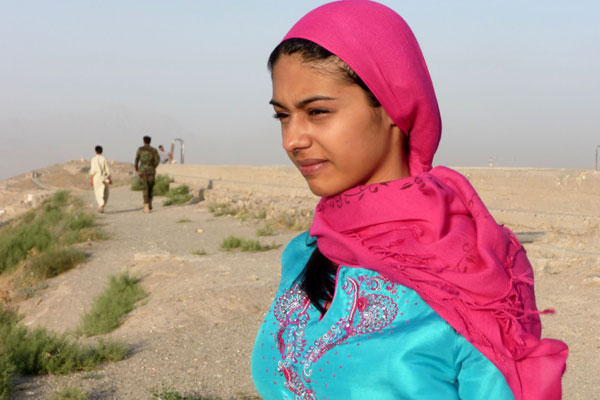
Nel from Women, Weddings, War And Me

BBC Three received valuable recognition last night for the work it is doing to bring serious and complex subjects to young British audiences.

At the Broadcast Digital Awards, BBC Three won Awards for the Best Current Affairs' programme for Women, Weddings, War and Me, and Best Popular Factual Programme for Blood, Sweat and Takeaways.

Both of these programmes are characterised by their engagement with the complexities of globalisation, foreign affairs, and human rights.

Women, Weddings, War and Me was a documentary broadcast on BBC Three this year in which a young Anglo-Afghanistani woman returned to her birthplace to explore how much the lives of women in Afghanistan have changed since the fall of the Taliban. It's a moving, very thought-provoking film which received an extraordinary response from the audience. The BBC runs a panel which allows viewers to provide feedback on the quality of the programmes they are watching on the BBC and other UK channels. This documentary got the highest feedback score of any factual programme on any channel ever reported. 

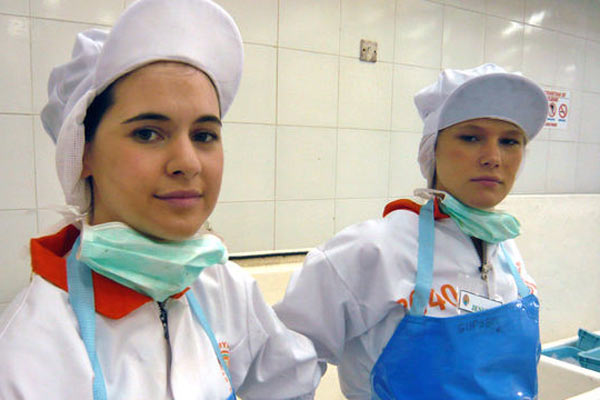
A still from Blood, Sweat and Takeaways.jpg

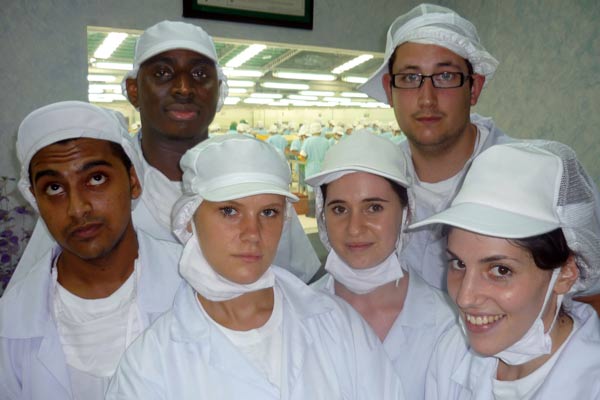
Blood, Sweat and Takeaways explored the impact of globalisation on the developing world by sending a group of young Brits to work in the factories that produce the food we eat. With this series, BBC Three found a compelling way of engaging young people with the impact that their personal choices can have on the lives of people thousands of miles away.

Watching these award-winning, serious factual programmes, it is hard to reconcile them with some of the criticism the BBC has recently received about its content. This week, the criticism has been about whether the BBC is serious or 'adult' enough. Next week, there will likely be another line of attack.

Inevitably the BBC does not get everything right but I believe it to be the most extraordinary public service broadcaster in the world, and one that makes an enormous contribution to serious debate on important issues such as those covered in these award-winning programmes.

Indeed, there are a wonderfully diverse and intelligent mix of programmes on the BBC every week.

A still from Blood, Sweat and Takeaways

Not all of them appeal to all audiences. But whether it is serious factual programmes on BBC Three like Blood Sweat and Takeaways, or dramas like Occupation and Small Island on BBC1, the BBC offers thought-provoking and compelling content in a way that is unrivalled anywhere in the world.

Danny Cohen is controller of BBC Three

Sarkozy marks anniversary of General de Gaulle's BBC broadcast

Blog comments are currently unavailable. Find out more.

Post categories:

Robert SeatterRobert Seatter|11:21 UK time, Thursday, 17 June 2010

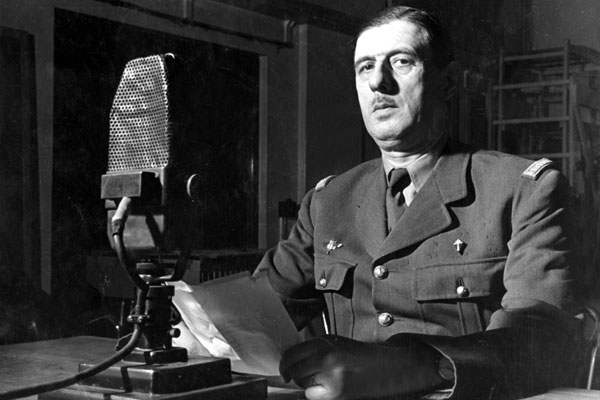
General de GaulleVive La France!

There's no denying that we British are a bit funny about the French. We love them for our houses in their countryside, their tasty gourmet food, their filmstars, their sex appeal. But when it comes to politics, it's a very different story. So it's a turn up for the books when there's a real moment of entente cordiale. And not token co-operation, but absolute open emotionalism.

I witnessed it at the French Institute, when I went to the first UK screening of a film about 'the Free French' in London during WW2. At the end of the film, an auditorium of (mainly) French viewers stood up and applauded their surviving Resistance fighters but also the BBC that gave them a unique voice.

It will be even more publicly expressed when President Sarkozy, his wife and an entourage of over 800 people come to the UK - and more especially the BBC - for the 70th anniversary of General de Gaulle's famous broadcast on BBC airwaves to occupied France on 18 June 1940. We in Britain know little about this momentous broadcast, but for the French it is absolutely huge. For this broadcast did in some way create the public personality of General de Gaulle, create the Resistance movement, and in turn create (in modern memory) the idea of unified and free France. President Sarkozy has himself said - 'We are all the children of the 18 June'.

So what exactly happened? General de Gaulle had fled his country on June 17, 1940, as the new administration, sought an armistice with Hitler. A relative unknown, de Gaulle entreated the British government to let him broadcast to France from London in a last ditch attempt to save his country. The cabinet initially refused but Winston Churchill insisted. And so the general went on air urging the French not to capitulate, but to fight on alongside Britain and the US, ending his broadcast with the famous words: 'The flame of French resistance must not, and will not be extinguished.'

The French Resistance - which went on to play a crucial role in defeating the Germans - was born as a result, and de Gaulle named as its leader. The Free French (as his followers were called) were allowed five minutes each day on the BBC French Service to broadcast to occupied France and orchestrate their defiance. Many impassioned addresses were made by de Gaulle himself, either from Broadcasting House or Bush House, and he was regarded as the 'secret hope' by those living under German rule. Even today, the sound of the opening jingle of those BBC broadcasts can bring tears to the eyes of surviving listeners. 'Unprecedented in media history' is how one of the most famous Resistance survivors described these lifeline broadcasts.

It's moving and humbling to be told by others of the impact of the BBC 70 years ago, and it's salutary to remind ourselves that wars go on, media freedom is still a precious thing, and many of our BBC News and World Service colleagues are today carrying on that vital role of giving voice to the voiceless on air.

Robert Seatter is Head of BBC History


Going Wild for Wildlife with the BBC Wildlife Fund

Blog comments are currently unavailable. Find out more.

Post categories:

Alec McGivanAlec McGivan|14:54 UK time, Monday, 14 June 2010

In order to see this content you need to have both Javascript enabled and Flash installed. Visit BBC Webwise for full instructions


There's been a real buzz in the office over the last few weeks as the BBC Wildlife Fund has been preparing for it's second appeal. The BBC Wildlife Fund is the youngest of the BBC's four corporate charities - the others being Children in Need, Performing Arts Fund and the World Service Trust. It's aim is to raise awareness and funds to help threatened wildlife and places and that's been addressed in a variety of ways since setting up just a few years ago.

Our nature documentaries often inspire people to ask us what they can do to help and we launched the Wildlife Fund in 2007 in response to public interest. We have been able to build on the awareness created by our programmes to get audiences involved and raise money to help animals and places.

BBC staff taking part in the BBC Springwatch Wild Days Out

During May and June we've been out and about encouraging people to 'Go Wild for Wildlife' at BBC Springwatch Wild Days Out, which are fun, family events where everyone can get involved with wildlife-themed activities.

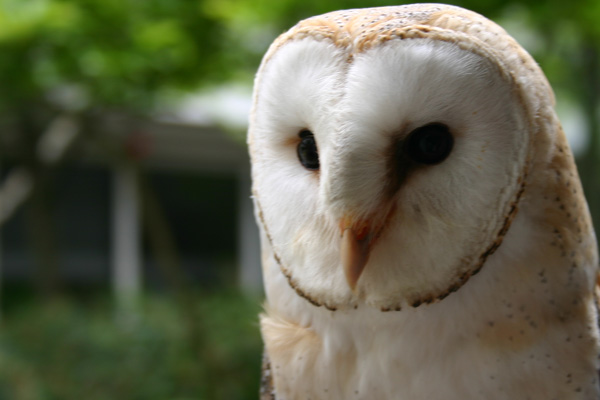
An owl at one of the BBC Springwatch Wild Days Out

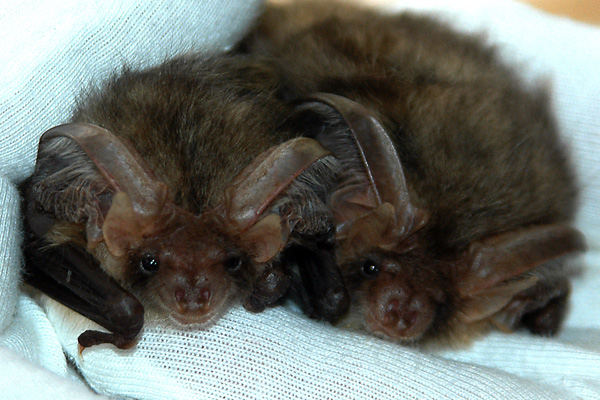
Long-eared bats at the BBC Springwatch Wild Days OutBBC staff have also been encouraged to get involved and we're delighted that they've responded enthusiastically. Over 100 staff volunteered to help out at the fundraising events and many others are helping out in other ways - from wearing their wildlife prints to work to taking part in team sponsored activities.

Watch the film above to hear Amy Coyte, Director of the Fund, talking more about their work. 

Springwatch Wild Days Out logo

As part of the appeal, the Fund has also given fundraising packs and other goodies to people who want to raise money with a 'wild' theme in their own time, with friends and family and in their own communities.

The BBC Wildlife Fund's first appeal, which featured the Saving Planet Earth series ended with a live broadcast event which raised £1.8 million thanks to fantastic public support. The Fund has since distributed this money via grants to independent charities working across the UK and abroad. Examples include funding for a project that created 'elephant corridors' to prevent conflict between the animals and farmers in Namibia, and a project to restore the food supply of the Adonis Blue butterfly in Suffolk, which is apparently a very fussy eater!

The Fund is already making a clear difference, although there is of course a lot more to be done. Good news then that the team is back with another appeal this year, to coincide with the UN International Year of Biodiversity.

I'll be at the recording of the live Wild Night In TV programme at London Zoo, which will be the climax of the appeal. It's airing from 8pm on Sunday 20th June on BBC TWO. The programme will feature some familiar faces from Springwatch, as well as contributions from Sir David Attenborough among others. It should be an entertaining evening (and doesn't clash with an England match!) so do tune in if you can and let us know what you think by leaving a comment below.

Alec McGivan is Head of BBC Outreach

The countdown to London 2012

Blog comments are currently unavailable. Find out more.

Post categories:

Roger Mosey|11:44 UK time, Thursday, 10 June 2010

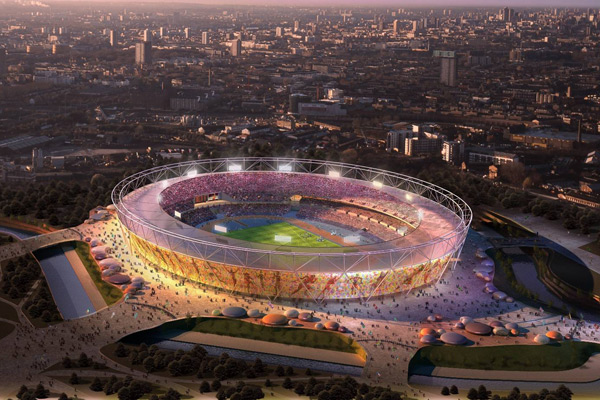
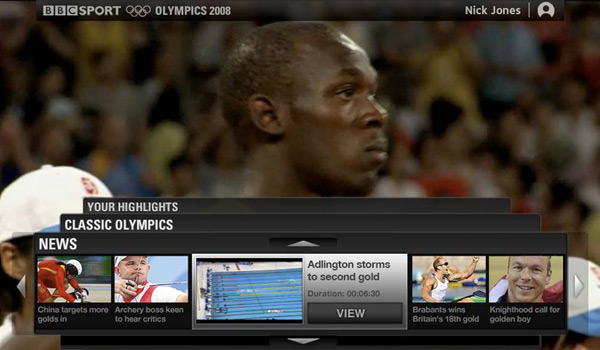
London 2012 stadiumThe BBC's aim for London 2012 is to bring the whole nation together in a way that combines the best of British values with all the opportunities of digital.

2012 is going to be a year like no other in the UK. It's not just about sport. There will be one of the biggest ever series of cultural events in Festival 2012 - a chance to showcase our arts and our creativity. Our news media will have one of their busiest periods as the preparations reach a climax and world leaders converge upon London; and for BBC News we'll be maximising our ability to operate globally, nationally and locally - on TV, radio and online. And then on July 27th there will be the Opening Ceremony of the biggest event in the UK in our lifetimes - the Games of the 30th Olympiad.

The Olympic Games are now, alongside the World Cup, one of the two events that bring pretty much the whole world together. It's estimated that around 4 billion people, about three-quarters of the world's population, watched the Games in 2008 in Beijing.

These are events that define their host cities and their times. Visiting Barcelona now you're conscious of its place in Olympic history, and anyone who watched those Games will have had images of modern Spain - and a confident Catalan culture - that still shape their thinking today. London shares that opportunity, with the extra factor of being a city that's home to diversity on a truly global scale.

But where the world has moved on is in the ability of technology to make all our experiences richer, more intense, more immediate and more personal. There will always be a battle for the title of 'the first digital Games' but London has a powerful claim: these will be the first Games for many countries since analogue started being switched off, and they're happening at a time of surging demand for digital media and social networking. Digital delivery will be at record levels.

This will be a showcase for Britain and for technology in general. In London people will expect media whenever and wherever they want it in one of the most connected cities on the planet.

I remember in Beijing going along to one of the swimming finals to find that a few seats along in the crowd was the President of the United States with the leadership of the Chinese Communist Party and then a couple of rows behind was Bill Gates. So it's those guys plus a few billion more who will sit in judgement on London.


Our promise is simple: every hour of every sport will be available - which we calculate as being around 5,800 hours. So if you want to spend all day watching the water polo: you'll be able to. Equally, we'll offer the customary service on BBC One that takes viewers to all the key moments from different sports. The choice will be yours not ours. It's worth saying too that this is about better value for money: you will get about 20 times the amount of content compared with ten years ago.

bbcsportsapp_crop.jpgThrough the events of 2012 we will offer you unprecedented choice and personalisation: you will be able to customise what you see and hear in a way that would have been unthinkable less than a decade ago. But we will also be bringing the UK together to share these massive national moments, so there will be tens of millions together for the Opening Ceremony of the Olympics or the 100 metres final or watching the Diamond Jubilee - and the opportunities of how, where and when to enjoy the output will form part of a common experience.

This is exciting because it suggests the gloomier predictions about the digital age are wrong. There are still things that can unite, and audiences are not destined to fragment in a multitude of different ways. The BBC can provide the national meeting place; and seizing the potential of digital allows us to bring people together enabling you to watch, communicate and share and feel part of the same experience. We can also take Britain to the world on our global services and provide the platforms that celebrate the world coming here.

There's a lot to do to make this happen. It's only just over 18 months to the New Year's Eve fireworks that will usher in 2012, But what we're trying to do should be quite simple: stage a set of wonderful events, captured for the largest number of people. At the BBC we're delighted to be at the heart of that, and the pleasure will be greatest if it's shared by as close as possible to 100% of the UK population. It's what you might call a stretching target - but we're determined to do just that.

For much more detail about our technical strategy for 2010, including project Canvas, mobile, 3D and HD and head over to my blog.

Roger Mosey is BBC Director, London 2012

Scheduling Glastonbury, the World Cup and a summer of live events

Post categories:

Laura MurrayLaura Murray|15:08 UK time, Tuesday, 8 June 2010

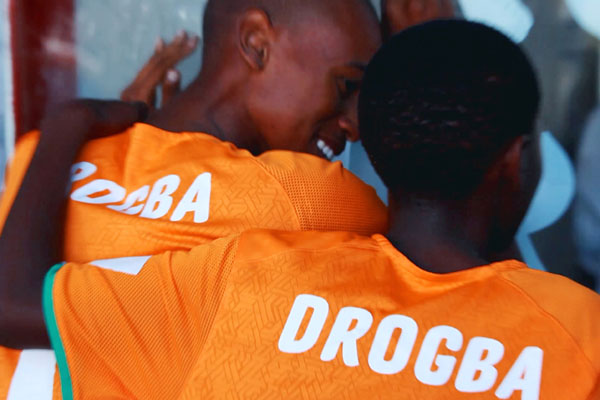
Two young Ivory Coast fans, complete with Didier Drogba shirts, look forward to the World Cup in a shot from the BBC's World Cup marketing promoIt's a particularly exciting summer on the BBC this year; we'll be covering all the major sporting events such as The Open and the 2010 World Cup from South Africa and music festivals including Glastonbury and T In The Park.

As many of these events are live, there will be some very difficult decisions to be made around scheduling. Over on the TV blog, Jana Bennett, Director of Vision for the BBC, reveals the breadth of BBC coverage in 2010 and explains how scheduling decisions are made.

You can read Jana's blog and comment on the TV blog.


Backstage at the Chelsea Flower Show

Blog comments are currently unavailable. Find out more.

Post categories:

Gill Tierney|13:06 UK time, Wednesday, 2 June 2010

In order to see this content you need to have both Javascript enabled and Flash installed. Visit BBC Webwise for full instructions


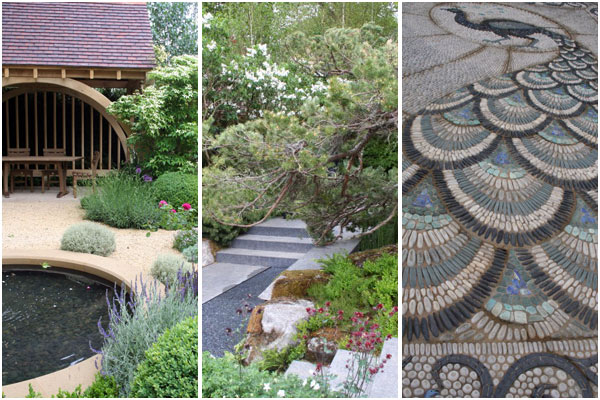
As I head to London early on Saturday in 28C of heat, I know we're in for a vintage Chelsea. The Royal Horticultural Society (RHS) have delivered a bigger and better show than the previous year and I'm hoping that, after the worst winter for 30 years, audiences might be ready for some light relief.

On day one, returning staff renew friendships and Chelsea virgins are shown the ropes. With 11 hours of linear programming plus 3 hours of red button and a comprehensive web offer, it takes a military operation (outside broadcast (OB) crew, portable single camera crews, editors, Red Button, online, runners, stewards and catering) to get it done on time and on budget.

First up is a "preview" on the Sunday before the show opens. The showground is a jumble of high-vis jackets and noisy diggers...something of a challenge for the directors. But, once we have the first show under the collective belt, we're back in our stride. With producers, OB directors and portable single camera directors, Chelsea is an exercise in teamwork and trust. Only the Exec and day producer see the big picture and no-one sees a whole programme until it's transmitted.

As the week plays out, there are high points, particularly when our presenter (and Chelsea garden designer), Andy Sturgeon, wins a Gold medal and Best in Show despite a terrible year in which his wife died suddenly. He's decided not to wait on his garden for the RHS official to hand over the result, so it falls to the producer to break the news when he's in make-up. A tear or two is shed across the team.

Another lift comes as the viewing figures are fed through from the office - our first BBC One show (apart from the preview) hits 4.4m viewers and excellent audience feedback. We're off and running.

chelsea.jpgAnd we welcome two viewers, Ian and Sue Forster to a "day behind the scenes at Chelsea". They bid £16,000 at Children in Need for two days out, at Chelsea and Gardeners' World. The whole team rolls out the red carpet to give them an unforgettable day including; tea on the Chelsea presenting "terrace" with Alan Titchmarsh; watching a live show from the OB van and personal tours of Chelsea show gardens by the designers themselves (arranged by our researcher).

In 2010, we are blessed with sunny days which make all the difference to the output, not to mention the good humour amongst the crew and talent. But, in the production office and cutting rooms (2 tiered portacabins), the temperatures peak at 37c. The OB van becomes a place of refuge, dark, quiet and cool.

As the week progresses, the audience figures remain solid and the web traffic and red button hits are all one might wish. A real dialogue with the audience ensues. The TV team respond to emails and publish viewers' photos. As both TV and web teams are in adjoining portacabins, the sharing of information becomes second nature.

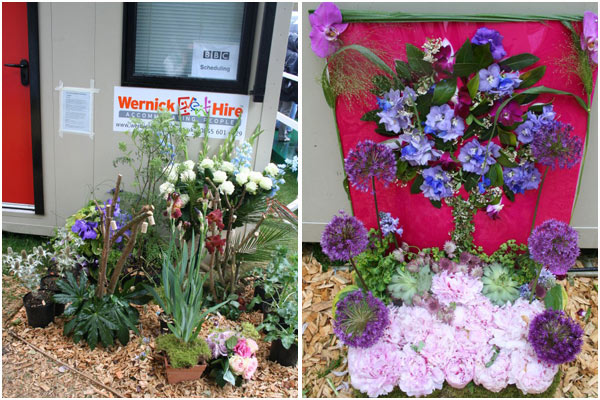
By Thursday, fatigue is setting in but spirits remain high. One last effort is all that's needed and then, from late on Friday, the pressure eases. It's then that a Chelsea crew tradition kicks in. For the past few years, different groups within the crew have built their own "show garden" within the BBC compound. Each is judged and awarded a medal based on a brief written by Alan T. Below are 2 "gardens" - on the left is that of Producer, Rosemary Edwards, her take on Andy Sturgeon's Best in Show garden. Below right is the rather more refined offer by the production manager and production coordinators.

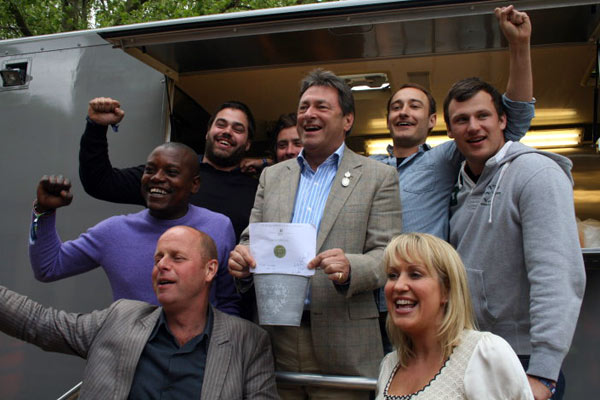
Production team's attempt at show gardens.jpgBy Saturday afternoon, there is just the one hour highlights show to complete for a BBC Two show that night and the mood in the compound is definitely demob-happy. It's time for judging to begin. Medals are hotly contested. As Alan mounts the steps of the catering truck to give his verdict the tension mounts. Who will be deserving of a gold medal? Who will win Best in Show? In 2010, the worthy winners are the production runners (below). Personally, I think it was all down to bribery. Still....there's always next year.

Alan Titchmarsh and production runners.jpg

Gill Tierney is Executive Producer, Chelsea Flower Show 

About this blog

Senior staff and experts from across the organisation use this blog to talk about what's happening inside the BBC. We also highlight and link to some of the debates happening on other blogs and online spaces inside and outside the corporation.

Here are some tips for taking part.

This blog is edited by Jon Jacob.

Subscribe to this blog

You can stay up to date with About the BBC via these feeds.

If you aren't sure what RSS is you'll find our beginner's guide to RSS useful.

[an error occurred while processing this directive]

Follow this blog

Other BBC blogs

More from this blog...

Categories

These are some of the popular topics this blog covers.