About the BBC - BlogAbout the BBC - Blog
Local Navigation

Archives for April 2010

The final Prime Ministerial Debate - a press round-up

Blog comments are currently unavailable. Find out more.

Post categories:

Laura MurrayLaura Murray|15:38 UK time, Friday, 30 April 2010

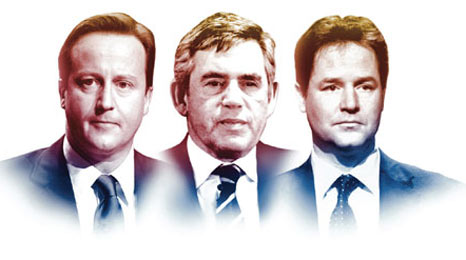
debate_promo_466.jpgLast night BBC One broadcast the last in a series of historic prime ministerial debates in front of a studio audience, live from the Midlands. You can watch Gordon Brown, David Cameron and Nick Clegg battle it out on BBC iPlayer until 6 May. Watch the final Prime Ministerial debate.

The broadcast was well received by the press. The Independent reported an audience of eight million watched the final leader's TV debate which focused on one of the more significant policy issues: the economy. It was the best debate so far according to The Times, which described it as "a good gig in Brum" and The Telegraph, which called it "a victory for the BBC".

The Scottish National Party did not succeed in their attempt to take part in the prime ministerial debate or stop it going ahead. In an interview with The Herald, Scotland's First Minister Alex Salmond said, "We lost support because we weren't allowed to turn up. It's an issue of fairness." In an article for The Guardian, Simon Jenkins describes the decision not to include the SNP in the debate as "bizarre" and "grotesque". But Mr Salmond had his say on a live BBC Question Time with Ed Balls and Vince Cable following the show.

So there it is: the final debate before polling day. But are you any clearer on which way to vote? Join the debate on Radio 5 Live

The search begins for new Radio 4 Controller

Blog comments are currently unavailable. Find out more.

Post categories:

Tim DavieTim Davie|10:18 UK time, Friday, 30 April 2010

BHnarrow.jpg

The advert for the job of Controller of Radio 4 is due to appear over the next few days. It's an important role - the network makes a significant contribution to the news agenda and cultural life of the nation. Like millions of listeners, Radio 4 has been part of my life for many years. When my family lived in the USA, one of my abiding memories is of evenings in deepest Connecticut listening via the internet to Today, the News Quiz or In Our Time. I realised that while I liked much of my US life, I would ultimately want to go home to the country where Radio 4 is a constant companion.

One of the outstanding characteristics of Radio 4 under Mark Damazer's leadership has been its capacity to sustain a buoyant audience without compromising the quality of its programmes. Great creative leaders like Mark have never been lured into choices between popularity and the intellectual high ground. The impressive performance of Radio 4 shows that there is a healthy appetite for intelligent speech radio: pushing our understanding of a wide range of topics, stimulating our curiosity through in-depth analysis and engaging us through passionate exploration. The recent series A History of the World in 100 Objects was not only a landmark set of popular broadcasts but has already chalked up over 2 million podcast downloads worldwide.

It is crucial that the next controller of Radio 4 continues to make brave decisions and adopts an innovative approach to programming. We will be advertising the Controller's job over the next few days and I am sure that we will have a strong list of people interested in taking up this exciting challenge.

Tim Davie is Director of Audio & Music at the BBC


BBC Strategy Review - Alan Yentob addresses the VLV conference

Blog comments are currently unavailable. Find out more.

Post categories:

Laura MurrayLaura Murray|09:14 UK time, Thursday, 29 April 2010

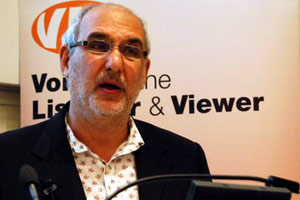
alanyentob.jpg"We will do our absolute best to fulfil our promise to put quality first."

This was the key message from Alan Yentob at yesterday's 27th annual VLV (Voice of the Listener and Viewer) conference

The morning event entitled 'Strictly Public Service Broadcasting - creative freedom and ambition?' focused on the BBC Strategy Review with keynote speeches from William Greswell, Controller of Strategy, BBC Vision and Alan Yentob, the BBC's Creative Director.

William began by setting out the strategy review and talking through five main themes: put quality first, do fewer things better, guarantee access to all, make the licence fee work harder and set new boundaries. He set the scene for Alan to talk about how the BBC will achieve these aims by focusing on delivering quality content. You can read Alan's speech in full here.

As soon as he came off the stage I asked Alan to summarise the key points from his speech, you can watch the video below.

In order to see this content you need to have both Javascript enabled and Flash installed. Visit BBC Webwise for full instructions


Make sure you have your say on the points laid out in the strategy review on the BBC Trust's consultation site. The consultation period ends on 25th May.

Great Coverage of Great National Events: The BBC Way

Blog comments are currently unavailable. Find out more.

Post categories:

Caroline ThomsonCaroline Thomson|15:44 UK time, Friday, 23 April 2010

One of the reasons the BBC exists is to unite audiences at moments of national celebration or reflection. Yesterday, we announced our coverage of two massive, yet very different, summer events - the 116th BBC Proms and our coverage of the 19th football World Cup. Both inspire incredible passion in a uniquely British way.

The ongoing election coverage and the extraordinary impact of the Prime Ministerial debates, has demonstrated the power of television, wherever it comes from and reminds us that the BBC is not the only broadcaster that can provide coverage of great national moments. But three things make our approach different. First, we will always bring you the big national events which form part of our heritage without needing to consider whether they are commercially attractive. From the Service of Remembrance at the Cenotaph to the State Opening of Parliament, our motivation is simple: we exist to bring people those events that resonate across the whole country.

Second, the BBC brings new audiences to these great national events. For example, the Olympics. Your first memory may depend on your age - was it Linford Christie's glory in 1992, Seb Coe and Steve Ovett's battle in 1980 or Dick Fosbury's unique jumping style in 1968? Whatever the memory, it was the BBC that brought these moments to you. We are always looking to find ways of opening up these events to new audiences. The enthusiasm and tradition of the Last Night of the Proms brings young and old together- 4.5m of you last year - in a celebration of music that has become a highlight of our cultural calendar. To help ensure this tradition endures, this year BBC Three will be showing its first Prom, a Doctor Who special, which will provide an introduction into the world of the Proms for many of its audience.

Finally, the BBC provides for audiences for whom these events can be a springboard to curiosity and new knowledge. This summer BBC Four will be exploring the history and culture of South Africa, which will attract new audiences initially interested because of the passion and drama of the action on the football field. This reflects our core mission of informing, educating and entertaining.

Our latest announcements promise more such wonderful moments this summer. It's no secret that I am a huge fan of the Proms, and this year's line-up looks set to be the best yet, with numerous highlights on Radio Three and BBC Two and Four over the two month programme. For me, Paul Lewis playing Beethoven's Piano Concertos with the BBC Symphony Orchestra will be a particular highlight. Meanwhile, I hope our coverage of Africa's first-ever World Cup will produce lifetime memories - and not just for the England fans following the competition.

These are the iconic events that the BBC exists to cover and excels at covering. Bringing our audiences the World Cup, the Proms, and the other landmark events that really resonate with everyone, is one of the five editorial priorities that we have set for the BBC. These are events that attract huge viewing figures - more than 16m people watched some of the Proms last year, while four-fifths of the population watched some of the last World Cup. But even more important than the size of the audience is the value they place on such events. Research shows 84% of people see sport as a vital way of bringing society together, while 82% feel entitled to watch key national events free-to-air because they have paid the Licence Fee.

While we're talking about value, all too often the BBC is accused of profligacy in a simplistic debate around staffing numbers for these great events. Yes, we must deliver value for money, and we have planned carefully to ensure spend on major events this summer is kept as lean and efficient as possible to guarantee our coverage does achieve great value.

But at the same time, this determination must never be at the expense of the quality experience Licence Fee payers demand and expect. It would be a complete false economy to cover these events half-heartedly. The viewer does not expect one of the world's greatest sporting occasions presented from some windowless room in the basement of Television Centre. They want iconic moments brought through knowledgeable top quality broadcasting. These are their events and the BBC has duty to them to deliver the goods. We are not going to short-change the audience.

BBC Music blog: Andy Parfitt on BBC Introducing's 20,000 uploads

Post categories:

Laura MurrayLaura Murray|09:17 UK time, Thursday, 22 April 2010

andyparfitt.jpgAs BBC Introducing hits a landmark 20,000 music submissions, Andy Parfitt, controller of Radio 1,1Xtra and the Asian Network explains the BBC's commitment to supporting new talent.

Head over to the Music blog to read Andy's post and to comment.

The Rise of BBC North at MediaCityUK

Blog comments are currently unavailable. Find out more.

Post categories:

Peter SalmonPeter Salmon|16:09 UK time, Tuesday, 20 April 2010

The sun is shining in the north-west, a good day for us to be showing Mark Thompson around our new home on the banks of Salford Quays this morning. There are major challenges ahead of course, but we have made a grand start and have taken possession of all three buildings on time and on budget. Now its time to get our teeth into the technology plans and to begin recruiting and developing a world-class workforce.

The short film below shows the progress of the site over the past few decades from its heyday as a working Quay all the way through to some great shots of the site from the air that were taken by a BBC News crew just a few weeks ago.

In order to see this content you need to have both Javascript enabled and Flash installed. Visit BBC Webwise for full instructions

In just over a year's time we will help start the next chapter in this remarkable area's history - working with our partners to help turn it back into a bustling centre for the region - but doing something very different than it has been used to in the past...

In order to see this content you need to have both Javascript enabled and Flash installed. Visit BBC Webwise for full instructions


BBC executive pay and expenses: October to December 2009

Blog comments are currently unavailable. Find out more.

Post categories:

Laura MurrayLaura Murray|16:01 UK time, Monday, 19 April 2010

This is a brief post to announce that we've just published quarter three of our disclosures around executive pay and expenses.

You can read more about the latest disclosure here.

Doctor Who and Churchill in BBC Archive collection

Blog comments are currently unavailable. Find out more.

Post categories:

Laura MurrayLaura Murray|10:19 UK time, Thursday, 15 April 2010

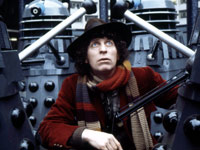
tom_baker2.jpgHello, I'm the new editor of the About The BBC blog. My first job was to speak to BBC Archive producer, Kate Wheeler about two exciting new collections featuring Doctor Who and Winston Churchill.

The viewing public seem to have awarded new Doctor Who Matt Smith an overwhelmingly enthusiastic thumbs-up. It's great news for him, the team at BBC Wales and the BBC, especially as these tricky transitional times haven't always been so warmly received. As a document from the BBC Archive's latest collection shows, even the most popular Doctor Who actors had a rough ride when they made their first appearance, such as Tom Baker, ever recognisable with his long, multi-coloured scarf and staring alien eyes, who initially struggled to win over fans of his predecessor Jon Pertwee. The naysayers were soon won over though and Baker went on to star in the series for seven years.

Back in February, the BBC Director of Archive Content, Roly Keating, promised that the BBC Archive would be providing an online retrospective of Doctor Who to tie in with this latest series.The BBC Archive Collections team revealed all this week with a collection that contains three galleries of images, each telling a different story of Doctor Who's history, plus nearly 60 years of correspondence, internal memos and Radio Times clippings. My particular favourite is a memo proposing how a potential replacement for original Doctor Who William Hartnell might come about, in which the process that would come to be known as regeneration is described in detail.

"The metaphysical change which takes place over 500 or so years is a horrifying experience...It is as if he has had the L.S.D drug and instead of experiencing the kicks, he has the hell and dank horror which can be its effect."

You can read the full memo here.

Just like the Tardis there is much more to discover than is immediately apparent so I urge all die-hard Doctor Who fans to go and explore the collection.

Also, be sure to check out Andy Dudfield's post about the relaunch of the Doctor Who website.

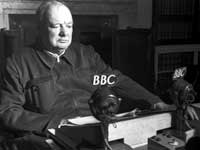
If you saw the last episode, you'll know that the Doctor will soon be meeting the legendary statesman Sir Winston Churchill.churchill2.jpgThe BBC Archive has unveiled a fantastic 'Remembering Churchill' collection including the full morning's broadcast of his funeral, narrated by Richard Dimbleby, where 1960s London paused to witness the procession and dockers bowed their cranes in acknowledgement as one of the first non-royals received a State funeral.


Sir Winston's complex nature is revealed beautifully through interviews with the people who knew him. Colleagues such as Anthony Eden and Harold Macmillan pay tribute to him, while we also hear from his former bodyguard, his private secretaries and the cook who served at 10 Downing Street for both of Churchill's terms in office. A real gem in the collection is an interview with Lord Alanbrooke, who was one of Churchill's closest advisers during World War II. Promoting the publication of his diaries, Alanbrooke discusses Churchill's strategies and reveals that at one time or other, he tried to have every one of his senior advisers sacked.


The Churchill collection is vast, offering so much to discover about the legendary statesman who was voted greatest of all Britons by BBC viewers in 2002.

Bye...

Blog comments are currently unavailable. Find out more.

Chris JonesChris Jones|17:06 UK time, Wednesday, 14 April 2010

This brief post is both to bid farewell as editor of the About The BBC blog and to also welcome our readers to Laura Murray who will be taking my place at the helm this week. It's been a pleasure to launch and guide the BBC's corporate blog through its first few months, and I'm sure Laura will easily exceed my efforts. So, for now, it's over to you, Laura...

The Future of 6 Music

Blog comments are currently unavailable. Find out more.

Post categories:

Tim DavieTim Davie|17:42 UK time, Tuesday, 13 April 2010

6 Music has been a hot topic since we announced the proposal to close the network in the Strategy Review. The speculation about its future took a new twist over the weekend with a newspaper report that claimed that the network is set to be rebranded as Radio 2 Extra.

Firstly, let me make it clear that, while we have proposed rebranding Radio 7 as Radio 4 Extra, there are no such plans for 6 Music. But I should also explain that the proposals made in the Strategy Review are the first part of a process. The BBC Trust are currently consulting the public on those proposals and nothing will happen until after the consultation is closed.

In my previous blog - here - I outlined the rationale for the closure of 6 Music and said that we will reinvest any funds from the proposed closure of 6 Music in digital radio content. This commitment to digital radio remains and we are looking at a number of ways of doing this. I said we would look at protecting some 6 Music programming by redeploying it elsewhere and considering how we can also do justice to its legacy in areas like new music development. This commitment also remains. But simply rebranding 6 Music as Radio 2 Extra is not one of our plans.

Leaving Radio 4

Post categories:

Chris JonesChris Jones|09:36 UK time, Tuesday, 13 April 2010

Mark DamazerYou may have already read in today's press that Mark Damazer, Radio 4's controller, is to leave his post in October.

Over on the Radio 4 blog Mark talks about his decision:

I will be leaving a job I have loved in October. I will miss almost all of it. But I always felt that I should not do much more than seven years as Controller of Radio 4 and by October I will have had the best job in the BBC for six of those years.

To read the full post and to leave a comment, head over to the Radio 4 blog.

A game of two halves - a Sport Relief roundup

Blog comments are currently unavailable. Find out more.

Post categories:

Diane ReidDiane Reid|17:15 UK time, Thursday, 8 April 2010

bleakely.jpgThey did incredibly well! This year's Sport Relief raised over £30m for disadvantaged people in the UK and across the world - an astonishing 50% increase on last year's total of £20m. Audience numbers were up too, from 8 million to 9.4 million.

Comic Relief's Red Nose Day campaign grew out of a desire to harness the talents of entertainers, especially comics, to make a positive change to the lives of disadvantaged people. Many comics have a strong sense of justice: this motivates many who take part in charity fundraising.

For Sport Relief, the association with sport means the potential for teamwork, challenge, international community, a sense of pushing yourself to the limit, which inspires people to step out of their comfort zone in aid of charity.

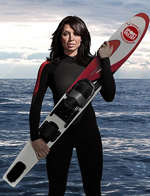
Eddie Izzard, an actor and comedian with no special athletic ability, ran a lonely, painful, awe-inspiring 43 marathons in 51 days. He raised over a million pounds for Sport Relief. James Corden took a considerable risk by performing an epic solo comedy sketch before thousands of sportsmen and women at the Sheffield Arena - a one take wonder with only a minute of recording time to spare. Christine Bleakley water-skied across the Channel and Blue Peter presenter Helen Skelton kayaked 2010 miles down the River Amazon for Sport Relief, breaking two world records in the process.

I was one of many people massively moved by Chris Moyles' film from a malaria clinic in Uganda where tiny babies were being given emergency treatment. Chris allowed the audience to share his feelings in the bleakest of circumstances. This was very different from Chris' usual style on Radio 1's breakfast show. BT handled 386,978 calls to the donation line during the live TV show, peaking at 210 calls per second.

But apart from the celebrities, there were the less famous contributors, who raised money or donated. There were runners in South Africa, in Manchester's Coronation Street set, around Television Centre and in local parks. There were films about inspirational local leaders in Africa and across the UK, and doctors and nurses working in daunting and difficult circumstances, all carrying out the work funded by Comic Relief.

In a less spectacular way, the BBC's other appeals continue throughout the year. Radio Merseyside has just launched an appeal for mobile clinics for the Clatterbridge Cancer Centre. BBC One's Lifeline is currently filming with Sandy Toksvig and a charity called Five Talents, showing how it supports microfinance in Tanzania. You'll be able to see the programme on 23 May.

[This is my last blog as BBC Charity Appeals Adviser, as I'm moving on to work as Chief Adviser for BBC North.]

Why the BBC must focus on quality content

Blog comments are currently unavailable. Find out more.

Post categories:

John TateJohn Tate|16:02 UK time, Wednesday, 7 April 2010

I am giving evidence to the House of Lords Select Committee today about the BBC's strategy review - Putting Quality First. I've spent a lot of time preparing for the session and - as part of that - I've been reminding myself about one of our key considerations in making the BBC more mission-focused: the impact on the rest of the broadcasting

industry.

For decades the UK has enjoyed higher levels of domestic media production and content spending per head than almost any other country in the world. UK audiences have grown up expecting and receiving a constant diet of extremely high-quality domestic content, whether two-hour episodes of Inspector Morse or seminal natural history like Life on Earth - all without a subscription and, on the BBC, without advertising.

While extensive high quality output available to all has been considered normal in the UK, one glance at schedules abroad shows it to be anything but in other parts of the world. In the two longest-developed broadcasting markets, the United States and Europe, very different traditions dominate. Much of European broadcasting has gone down the 'cheap and cheerful' route, with content spend focused increasingly efficiently on what drives audiences to adverts, while in the US a higher level of programme investment is maintained only through highly selective subscriber packages.

Is it inevitable we will end up going down either the European or US route? There has after all been a great deal of attention focused on the troubles facing public service broadcasting in the UK because of structural change in the industry. And the recession has increased further the pressure on budgets for original UK content.

A fact often lost in the debate is that billions of pounds of new money are flowing into the sector - it's just that this extra money isn't flowing back into domestic content production as much as it did in the past. This is primarily because commercial funding for TV is increasingly coming from subscription. Pay operators do not invest in original content at anything like the levels that advertising-funded broadcasters do, because their business model is more weighted to sports rights and films.

The BBC of course has a very different funding model which, as is so often pointed out, insulates our income against the worst of the recession. But more importantly, the security of our funding reinforces why the BBC exists and must focus on its mission to provide quality British programmes that inform, educate and entertain. And in delivering our mission, we not only serve the public and help maintain the standards which are an essential part of British broadcasting, we support the creative industry as a whole.

And that's the very purpose of Putting Quality First: to identify what more the BBC can do to enhance our commitment to high quality programming - because that's the centre of our mission and, in delivering it, we bring wider benefits to the UK's creative industry.

That's why we have pledged that in the next licence fee settlement period we will guarantee that at least 90p in every licence fee pound will be spent on the creation and delivery of content to audiences. We know this investment is essential to meet the expectations and demands of licence fee payers. That's why we have set out five editorial priorities so the public and the independent producers know what to expect from the BBC and we've capped our spending on sports rights and acquisitions from abroad. And that's why we aim to reduce spend on overheads to under 9p in every pound by the end of the Charter period in 2016 - costs reduced by a quarter from today's spend of 12p.

The BBC is committed to putting more money into content and making sure quality stays at the forefront of the BBC's output. And through this commitment to quality content, we will be doing our part to ensure that high standards survive in the future UK broadcasting market - good news or the domestic media industry, for the economy as a whole, and most

importantly, for our audiences.


John Tate,

Director of Policy and Strategy, BBC

BBC North: It's official!

Blog comments are currently unavailable. Find out more.

Post categories:

Peter SalmonPeter Salmon|15:39 UK time, Tuesday, 6 April 2010

MediaCity SalfordFrom this month BBC North - the proud new parent of BBC Children's, BBC Sport, Radio 5 Live, and stepdad for BBC Learning, parts of FM&T and all those teams currently based in Manchester Oxford Road - becomes an official group within the BBC.

It's an honour and a bit of a responsibility to launch the latest and most hybrid BBC Group to sit alongside Vision, Audio and Music, Journalism and the rest in helping the Corporation deliver our audience mission.

We've now taken all our three buildings on budget and on schedule which is a cracking place to be.....but now the hard graft really begins.

So, what's next?

Well we have to contract and install our new technology, recruit several hundred fresh staff and that little challenge - from the middle to the end of next year - of migrating wave after wave of journalists, sports staff, children's and learning producers, technologists, radio teams, local reporters, television production and an orchestra into our brand new home on the banks of the Ship Canal.

So what is going to change?

Well, BBC North is a unique federation of interests - hybrid, pan platform, mixed genre, commissioning and production, research and development, campaigns and content in a new centre designed to make and deliver media for the internet age. No other part of the BBC is quite so diverse - combining a horizontal slice of BBC life, rather than the traditional vertical one. We've broken out of the traditional silo, so what can we do as a result?

We want it to be an experiment in creativity and collaboration. A laboratory for the whole BBC to pilot and experiment with new ideas. All played out in a large and very public space designed to welcome in partners and licence fee payers alike, to help build deeper and long-lasting relationships with the whole North of England - from Carlisle to Hull, Liverpool to Newcastle.

In practice that means we are contemplating lots of new ideas for the place itself and our own people. They include performance on the site every day of the year; a visitor experience that brings licence payers into the heart of our programme-making areas; indies and students living and working right alongside us; technologists and producers working side by side; more fluid careers across genres and platforms; meeting rooms that you book online; mobile working the norm in a hot desk environment; studio rental not studio ownership; and open technologies that encourage plug and play. Even restricting the length of a BBC North meeting - one hour would be the maximum - not just a crowd-pleaser, a way of cutting down on organisational strain.

Across the North group we are working on a whole range of virtual and physical ideas that we hope will make it a really exciting and innovative place to work.

Having just announced a first big BBC Children's commission for Leeds based indie True North, a Radio 5Live fund that will help local independent radio producers get started with the network, and the final stages of our £500k @North digital media initiative, things are beginning to heat up. Recently though the most exciting thing that's happened is a visit from the doctor.

The new Dr. Who, Matt Smith, and his team helped launch the new series by visiting Sunderland and Salford with the Tardis last week and showing an exclusive preview of the first episode to lots of excitable school-children. And me. Me and my boy Joe snuck in the back to watch it and it was a real belter.

Events like that make it feel like the whole BBC is shifting a few degrees further North and let me tell you there are 16 million people there who are going to love us all the more for it.

Planning the BBC's election coverage

Blog comments are currently unavailable. Find out more.

Post categories:

Mark ThompsonMark Thompson|13:00 UK time, Sunday, 4 April 2010

Whilst in some ways it feels like the campaign has already started and the date has been announced, Westminster and the wider world are waiting with bated breath for the General Election to be formally called.

Like the political parties, our preparation and planning will have been in development for months before the Prime Minister finally drives to the Palace and asks the Queen to dissolve Parliament.

And, more than any election before it, this will be a television and digital election - the historic prime ministerial TV debates being the biggest and most obvious example.

The public looks to the BBC's expertise to help them navigate and make clear some of the political complexities they face. It is one of the BBC's key responsibilities and is arguably the most important and serious duty the BBC has. The BBC is the crucible where the big debates about the future of the country inevitably take place and where many opinions will be shaped. Above all, the BBC will aim to be the standard-bearer for fair, accurate and impartial journalism across the UK. We will provide election coverage that is both independent and unique offering unprecedented breadth, depth and insight.

This could be one of the closest and therefore most ferociously fought elections in living memory. With the stakes so high for the political parties, it would not be surprising if they were in contact about how we were covering what they do and say. Whilst we will always take seriously any accusations or questions about our even-handedness and accept any mistakes if we get things wrong, we will show neither fear nor favour in how we report the election.

It is vital that the BBC is able to provide a strong and independent space where the big debates can take place, free from political or commercial influence. In this public space, everyone can have access to the lifeblood of healthy democratic debate - impartial news and information. The strength of our impartial public service broadcasting, combined with a strong newspaper tradition, is what makes us distinct from most democracies around the world.

So how will our coverage be different from previous years?

Firstly, audiences will be able to put the politicians and their policies under the microscope and scrutinise them in more detail than ever before. The Prime Ministerial Debates will enable the public to engage in the campaign in a new way, with the BBC hosting the final debate on the economy. In addition, there will be special programmes on each night of the debates, with focus groups, specialist correspondents and party pundits providing the first full analysis and reaction. And, as in previous years, we will also try to secure on BBC One one-to-one interviews with the leaders of the main political parties.

The Daily Politics will be extended to 60 minutes, Monday to Friday, throughout the campaign. It will host nine 'Cabinet Contender' debates which will provide a unique opportunity for the public to compare and contrast what each party has to offer on the issues that matter most to them. The programmes will be broadcast during the last three weeks of the campaign and will be presented by Andrew Neil and an independent policy expert and BBC specialist correspondent.

In Scotland there will be two election debates in Edinburgh and Glasgow, broadcast on BBC One Scotland, and Newsnight Scotland will be extended for four nights a week for the election coverage and an election night special with Jackie Bird, Glenn Campbell and Brian Taylor. Noel Thompson and Jim Fitzpatrick will lead the coverage in Northern Ireland, reflecting the local and national election picture as results come in. BBC Newsline will have a series of special reports and political debates from around the constituencies, and of course there will also be a Leaders debate. BBC Cymru Wales will host three election debates from around the nation, including a Welsh Leaders debate. On election night, Huw Edwards will lead proceedings on BBC One Wales. A range of Welsh language content will produced for radio, TV and online, including three Welsh language debates. In addition, across England, towards the end of the campaign, there will be 12 regional television debates with politicians, each focusing on issues that matter to the region, in front of a live audience.

Finally, we will offer the most comprehensive coverage in trying to energise and engage different audiences in the democratic process. Audiences tell us they look to the BBC to unpick the complexities of policy and bring clarity to difficult issues. We'll be doing this through the use of our trusted expertise of our specialist editors including Nick Robinson, Stephanie Flanders and Robert Peston.

This means a quality offer not just on our flagship news and current affairs programmes - Today, Newsnight, The World At One, Jeremy Vine and many other key programmes, but to other audiences through Newsround, Radio 1 and Newsbeat. Digital and online will also play a central and enhanced role. A special General Election site on bbc.co.uk will bring the most immediate developments, showcase the best of our content, and provide depth and analysis on the key issues. There is no better example than the General Election, with our online coverage being a cornerstone of what the BBC should be about.

Of course this is not the totality of what we will do. Campaigns, and the coverage of them, can evolve and change based on events. And every campaign always has those unexpected and sometimes defining moments.

Every day the BBC seeks to inform. During a General Election campaign that responsibility increases. Whilst our attention will be on the political parties - reporting their policies, holding them to account and analysing their announcements - our focus will be on serving the British electorate. Our recent Strategy Review was about making the BBC more mission-focused so that we deliver the best service for licence fee payers. Providing the best journalism in the world - through independent, impartial and authoritative content which the electorate can trust - is one of the main reasons why the BBC exists, and it is exactly what we will seek to fulfil in the weeks ahead.


Continuing the drive for transparency

Blog comments are currently unavailable. Find out more.

Post categories:

Caroline ThomsonCaroline Thomson|16:44 UK time, Thursday, 1 April 2010

Last year, Mark Thompson said he would make the BBC more transparent to those who pay for it. He made a commitment to find new ways to show the public how we spend their compulsory licence fee to inform, educate and entertain everyone in the United Kingdom with quality programmes and services.

As part of this, we decided to provide information about the people who run the BBC, those who ensure that we meet our mission to serve the British public. So we decided to publish the names of the people in charge and the jobs they do, how much they get paid, what hospitality they receive, and what expenses they claim. And we committed to doing this on a regular basis. We have also, for the first time, provided a breakdown of our spend on on-screen and on-air performers.

With these steps, we have aimed to put the BBC at the forefront of transparency and public accountability. We have gone further than many other public bodies and we will continue to look for new ways to make ourselves more open to licence fee payers. And all this is in addition to the hundreds of requests under the Freedom of Information Act (FOIA) we respond to from journalists, politicians and members of the public.

Clearly, suddenly making information public that we've previously kept private has been a big change for many of us to get used to. Many people, no matter where they work, quite understandably expect that their salary should remain confidential between them and their employer. However, we decided that for senior managers at the BBC, those responsible for spending large amounts of public money, it is appropriate for the public to know how much they are paid. The public interest is greater than the personal discomfort.

In moving through this discomfort to a world where we are regularly publishing such a range of personal information about so many people, there is inevitably a vigorous internal debate in which sometimes unfortunate things are said. Yesterday, following a FOIA request from a journalist, we released a number of emails between BBC managers who were preparing for the disclosure of executive salaries in January. In one of them, one manager suggested changing the way the information was presented, to disguise the number of employees paid over £100,000.

This suggestion was dismissed by the BBC's Directors and the information was subsequently published in full in the already established bands as ruled upon by the Information Commissioner's Office. And we dismissed it because it is absolutely at odds with and counter to our complete belief that we need to change and become more open.

Although the contents of that email are embarrassing, I believe the incident actually underscores the BBC's commitment to transparency: a bad idea to disguise information from the public was rejected by the BBC's Directors; and the emails relating to the disclosure were released, unredacted, to a journalist who asked for them.

We will continue to push ourselves to ensure we remain at the vanguard of transparency and to demonstrate that we are securing value for money for licence fee payers.

Religious programming on the BBC over Easter

Blog comments are currently unavailable. Find out more.

Post categories:

Aaqil AhmedAaqil Ahmed|15:40 UK time, Thursday, 1 April 2010

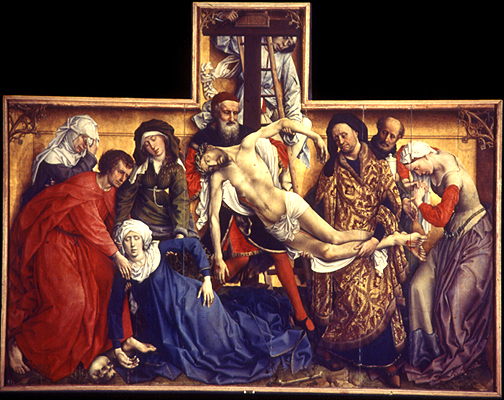
RogierVanDerWeydenDeposition.jpg

It's been a little over eight months since I rejoined the BBC to be the Head of Religion and Ethics and Commissioning Editor for Television and my first Easter is fast approaching.

Last year we got some criticism for our Easter coverage and, as I have already stated, I don't think the BBC got the balance of Easter programming on television right in 2009. But we've listened to viewers' feedback and worked hard to address this. I'm very proud of the output across both BBC TV and radio to mark and celebrate Easter this year. We have everything from live worship and sacred music to insightful and topical television documentaries on BBC One to mark both Good Friday and Easter Sunday. You can find a full list of the Easter programming on TV and Radio on this pdf

I hope you can take the time to watch and listen to some of the programmes listed and, if you do, I hope that you enjoy them!

About this blog

Senior staff and experts from across the organisation use this blog to talk about what's happening inside the BBC. We also highlight and link to some of the debates happening on other blogs and online spaces inside and outside the corporation.

Here are some tips for taking part.

This blog is edited by Jon Jacob.

Subscribe to this blog

You can stay up to date with About the BBC via these feeds.

If you aren't sure what RSS is you'll find our beginner's guide to RSS useful.

[an error occurred while processing this directive]

Follow this blog

Other BBC blogs

More from this blog...

Categories

These are some of the popular topics this blog covers.