About the BBC - BlogAbout the BBC - Blog
Local Navigation

Archives for March 2010

Do you like fish fingers and custard?: Doctor Who goes to Sunderland

Blog comments are currently unavailable. Find out more.

Post categories:

Phil RobertsPhil Roberts|13:45 UK time, Wednesday, 31 March 2010

The Doctor Who tour busI've just seen a seven foot monster on the streets of Sunderland - but don't worry, it was actually an actress called Sarah - after a good hour or so in make-up, that is. The result was impressive. She was there playing a Weeping Angel at a Doctor Who premier that I hosted yesterday. The event was one of five over three days: part of a whistle-stop tour to mark the beginning of a new series of Doctor Who - and a new cast to match.


Our event included a preview screening of the first episode, which worked really well in the University of Sunderland's HD cinema. The programme was introduced by none other than the new Doctor himself, Matt Smith, and his Assistant, Karen Gillan. They arrived on a branded tour bus (see pic above) - not quite the TARDIS, but still certainly impressive.


Allocating the 200 tickets for the event actually turned out to be a little controversial. We knew from the outset that it wasn't possible to open the premieres to members of the public, so we worked with BBC Outreach to pre-ticket the event. We felt that the fairest way to distribute tickets was by working with local primary schools. However, we also knew that some fans may still feel disappointed - and we were right. We had numerous requests for entry and there was even a Facebook group set up protesting that the events should be opened up to the public.
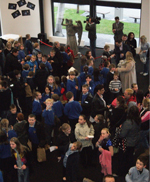


Children at the Doctor Who event, Sunderland UniversityEven I've been surprised by the reaction - the strength of the Doctor Who brand is amazing - we've even had requests for memorabilia from the tour to be put on sale. We weren't able to hold any additional premieres, so couldn't help the fans who got in touch, but I do hope that hasn't put them off. There will, however, be public events to mark the new series at BBC Big Screens from 1st to 3rd April in London, Manchester, Edinburgh, Plymouth and Swansea.


After the event, I still feel this we ran the ticketing system in the fairest way possible and having such a young audience created a real buzz on the day. The children seemed genuinely excited - as were all us adults!


The highlight of the day had to be the moment when Matt and Karen arrived and all the kids started screaming and applauding like mad. Alfie Joey from BBC Newcastle did a great job of keeping the audience entertained while we were waiting for the bus to pull into the University campus, as well as during the Q&A session after the episode. One young member of the audience posed the insightful question to the Doctor: "Do you like fish fingers and custard?" I can reveal, hot off the press, for all you fans that the answer is "Yes!"



Karen Gillan and Matt SmithFor me, the event was a great example of the BBC working better together internally - joining up with the Doctor Who team from Wales, BBC Outreach in London and getting some great coverage for my teams at BBC Newcastle and Look North. See for yourself by watching the film.


I also think it was a great day for Sunderland. We worked in partnership with the University and their team did a great job. We had the local and regional press there and I got a genuine sense of taking the best of the BBC to a place where you wouldn't usually find it, which was another key motivation for this tour.


Sunderland was chosen as a location in the context of BBC North, which is all about focusing more of the BBC's resources in the north of England. The most significant piece of that project is the relocation of BBC Sport and Children's (amongst other departments) from London to MediaCity in Salford. MediaCity will open next year and I'm optimistic that means we'll see more evidence of the BBC's commitment right across the north.


Now I'm looking forward to the Doctor Who series starting on TV so I can see what happens next! The first episode will air on BBC One at 6.20pm on Saturday 3rd April.


Check out all the action from the tour at bbc.co.uk/doctorwho/dw/news

Phil Roberts is Head of the BBC in the North East and Cumbria

As English as Egg and Bacon: The Boat Race

Blog comments are currently unavailable. Find out more.

Post categories:

Robert SeatterRobert Seatter|14:46 UK time, Tuesday, 30 March 2010

The Boat race in 1938So the Oxford-Cambridge boat race - 'as English as egg and bacon' as one commentator writes - is now back with the BBC, after five years with ITV. Dating from 1829, and billed as 'the world's longest surviving sporting challenge', it will hit the BBC multi-media airwaves (on TV/radio/online) over Easter weekend, on Sat April 3.

But why should such an atmospherically elitist event still hold such fascination, not only for British audiences but for the 120 or so countries around the world who also take it? Current Executive producer for this year's event, Paul Davies admits that it's a sport that 'most people don't know very well. They have no affinity with Oxford or Cambridge, but they do watch it... no-one can seem to explain why we get so many viewers.' He is hoping for seven or eight million of them, by the way.

So a whiff of Edwardian nostalgia, a moment of national togetherness, or the thrill of live action in adversity?

For difficult it is, and reading past reports of broadcast engineers only underlines this. The BBC first recorded it for the radio in Spring 1927, one of a clutch of commentary 'firsts' including Association Football, Grand National, FA Cup Final, cricket, Wimbledon Tennis. TV followed in April 1938. However, a complete televisation was not achieved until 1949 - mainly because the course was so long, demanding in terms of camera equipment, and hence expensive. The boat race actually runs over a gruelling four-and-a-quarter-mile distance from Putney to Mortlake: three times the length of an Olympic course. Plus the competitiors (and engineers/commentators) often have to face formidable waves and bitter winds.

The stories of technical challenge are legion: plastic tangled round the radio launch propellor, engines breaking down and launch drifting upstream towards the Cambridge crew, near collision with other boats... This year, there is technology a-plenty: nine boat-based cameras, a catamaram moving alongside the boats, a flotilla of commentators (including Sir Matthew Pinsent), a helicopter for aerial views plus 25 cameras at various locations on shore. Over in 20 minutes, it takes months of toil and preparation for all concerned - but that's sport for you!

The BBC voice that haunts the Boat Race is that of John Snagge. He made his initial commentary in 1931 - and went on to do it for 37 years (the war years intervening), listened to by people all round the world. His Michael Fish moment, which stuck to him he said 'like a tin can tied to a dog's tail' was the famous occasion during the 1949 recording when the engine of the TV launch broke down, and poor Snagge was left saying: 'I don't know who is winning. It is either Oxford or Cambridge'.

Let's hope Clare Balding, lead presenter this Saturday, has better luck!

BBC Online's top level directories

Post categories:

Chris JonesChris Jones|17:22 UK time, Monday, 29 March 2010

the archived My Science Fiction Life siteOver on the Internet blog Erik Huggers, Director, BBC Future Media & Technology, has written in more depth about the BBC's plans to reduce the number of top level URLs on the BBC website:

Erik says: 'The thrust of our recent strategy submission to the Trust on BBC Online is that we need to do fewer things better. We know that the parts of BBC Online that our users really value are significant, coherent, regularly updated and provide a great marriage of content and technology. Products like News, CBBC and iPlayer all have these characteristics; we want much more of the site to have them in future.

A symptom of our previous, less focussed, approach is the number of top level directories - we have on BBC Online, some 400 (this does not include the many re-directs we set up to make it easy to promote sites in our broadcasts). A number of people have asked us to publish the list and anyone who is interested can access it at the end of the extended entry of this post or as a .txt file here.'

Meanwhile, since the post went live, it's interesting to note this response from PaidContent:UK.

To read the full post and to leave comments visit the Internet blog.

Using Social Media to tell the Story of the BBC

Blog comments are currently unavailable. Find out more.

Post categories:

Chris JonesChris Jones|09:50 UK time, Thursday, 25 March 2010

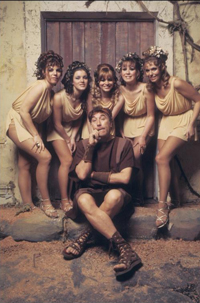
Frankie Howerd in Up Pompeii!Regular readers will know that we frequently post blogs from Robert Seatter, head of the BBC History site, where his team not only archives fascinating material detailing the corporation's 80-plus years as the world's biggest broadcaster, but also collects your memories of those remarkable moments.


In the last month the team has chronicled the anniversaries of the ribald historical sitcom, Up Pompeii! (starring the late great Frankie Howerd, pictured), the launch of classic radio comedy, Round the Horne, as well as the first televised Grand National. And next week Robert will be returning with an article on the grandfather of all antiques shows on the TV: Going for a Song.

In the meantime, it's worth pointing out that the site's regular Great Moments and Object of the Week slots will now be appearing on our Twitter and Facebook feeds. This week's Object is Lord Reith's Broadcasting House cigar box!

Sport Relief Weekend 2010

Blog comments are currently unavailable. Find out more.

Post categories:

Peter SalmonPeter Salmon|16:25 UK time, Thursday, 18 March 2010

In order to see this content you need to have both Javascript enabled and Flash installed. Visit BBC Webwise for full instructions


When I lace up my running shoes on Friday for Sport Relief I'll be mulling on how far we've come since we set up the charity ten years and £75 million ago.

The Sport Relief Mile is reputedly the biggest mass participation event in the world, and this weekend's television is one of the biggest of the year, with a galaxy of stars from Robbie Williams to Richard Hammond, Claudia Winkleman to Cheryl Cole.

Celebrities have really risen to the challenge this year and the feats have been both serious and magnificent - from battling Christine Bleakely water-skiing the Channel, to Eddie Izzard's 43 astonishing marathons and who could forget Blue Peter super-girl Helen Skelton kayaking down the River Amazon alone.

Back in 2000 I had just taken up the reins of BBC Sport and together with Comic Relief CEO Kevin Cahill, we hatched a plot to use the inspirational power of sport for good - to change people's lives and also to help BBC Sport get closer to their phenomenal audiences.

The rest is fund-raising history.

Since then I've been lucky enough to see the results throughout the UK as well as far and wide, on visits to hospitals and schools, orphanages and smallholdings in Ethiopia and Zambia, where I travelled this year with Strictly'sAustin Healey and Something for the Weekend's Tim Lovejoy among others.

Now I can't wait for the shows and I'm anxious about living up to the steep targets we have set ourselves to raise money in the teeth of a terrible recession - just when vulnerable people need help most.

This weekend there is so much to choose from, 'Smithy' of Gavin and Stacey fame coaching the cream of British sport - have a sneak peak at him putting Wayne Rooney and friends through their paces above - Dragon Den stars battling it out on Strictly Come Dancing, Frank Skinner hosting a Question of Sport Relief, and the Match of the Day team putting their reputations on the line as they swap football shirts for aprons as they try there hand at Masterchef.

There are specials of Outnumbered, Mock the Week and the One Show, as well as The Choir's Gareth Malone trying his best to train Olympic and Paralympic heroes to perform a song on the night.

On Sunday at 16.05 on BBC1 look out for the Sport Relief Mile show and Kelly Holmes and Alan Shearer launching the first ever international Sport Relief Mile in South Africa. Phew.

What still astonishes me is the capacity of UK audiences, communities, schools and celebrities to keep on giving, supporting and caring. And the magic and alchemy of translating wonderful BBC entertainment and documentary into money and help.

All we need to figure out is what to do next - 2012, our most important year of sport yet is looming.

Bring on The London Olympics!

Evolution of the BBC homepage

Post categories:

Chris JonesChris Jones|17:41 UK time, Tuesday, 16 March 2010

newhomepage.jpgOver on the Internet blog Jo Wickremasinghe, Head of Homepage and Syndication Services, has written a post concerning the launch of the beta version of the new BBC Homepage. She points out that it may seem pretty familiar, with its modular customisable layout, but that if you take a closer look you'll notice a number of significant improvements.

To learn more about the differences and to leave your comments visit the Internet blog.

Changing attitudes to Feminism on the BBC Archive

Blog comments are currently unavailable. Find out more.

Post categories:

Chris JonesChris Jones|13:47 UK time, Friday, 12 March 2010

munitions factory workerThis time last month I wrote about the BBC Archive's expanding set of online collections centred on particular themes and subjects drawn from the corporation's fascinating history.

This week has seen the launch of a brand new collection based on the BBC's collection of material documenting 20th century feminism. It's designed to run in tandem with the launch of Vanessa Engle's three-part documentary series on BBC Four, Women, as well as the celebration of International Women's Day last Monday. I spoke to two of the site's producers, Emer O'Reilly and Kate Wheeler, about this fresh look at how women's roles in society have changed since the advent of the BBC.

Emer, who is an archivist with over 20 years experience at the BBC, revealed how the angle of the collection had been inadvertently inspired by a teenager who had used a previous archive collection on the Suffragettes to research a school project. The archive team wanted to help young people to understand what happened next in the story of the struggle for women's rights. The new collections reveal that although the Suffragettes won the battle to gain British women universal franchise in 1928, it was many years until anything like true equality was attained. For decades jobs were still advertised by gender and women's salaries stalled at a rate of approximately one third of their male counterparts.

Emer told me that one of her favourite programmes on the site - the story of Bella the Welder, drawn from the groundbreaking 80s series Out Of The Doll's House (the interviews were later re-broadcast as Voices From The Doll's House) - demonstrates the changes in women's rights perfectly. It documents the tale of a Scottish woman who, like millions of others, found employment during the Second World War, replacing a male workforce that had gone to fight abroad. In fact, by 1943 90% of single women and 80% of married women were involved in war work outside the home. Despite excelling at, and loving, welding, Bella was paid only half of a man's regular wage and was made redundant when the war ended. It wasn't until 1975's introduction of the equal pay and sex discrimination acts that she was able to eventually regain employment as a welder, despite years of interviews (often posing as a male candidate on paper!).


With such amazing material on offer, the Archive site's reputation and popularity is steadily growing. And while one of the biggest draws is still the steam train collection each addition increases the reach and appeal to broader sections of our audience. For example, the Feminist collection has already been much talked about on sites like Twitter and Facebook, as well as on feminist blogs.

The team are particularly proud of its commitment to the true Reithian value of using the material as a way of providing historical context for educational purposes. Indeed, the one of the site's next projects - set to coincide with the launch of a new 'face' of Dr Who - not only looks at the show's evolution but also aims to use the time lord's encounters with real figures from history to reveal the true stories behind key events. Add to this, amongst many other treats, an in-depth look at how general elections have been covered by us over the years and the release of classic material from Richard Feynman's Fun to Imagine series, supporting BBC Vision's Science season, and the future looks very bright for the BBC's past!

News: The Next Generation

Blog comments are currently unavailable. Find out more.

Alec McGivanAlec McGivan|16:22 UK time, Thursday, 11 March 2010

Some days make me really proud to work at the BBC and today has been one of those. Quality news coverage is, and always has been, at the core of the BBC and this includes a responsibility to help audiences understand the issues affecting them.

We're always looking for fresh voices and today we were able to offer the nation's 11-14 year olds a chance to talk about the issues that matter to them on BBC School Report News Day, the annual event which sees young journalists preparing and broadcasting their own reports.

It's been all go from early this morning at Television Centre, where the day kicked off with a world record attempt. Students from schools across the UK, including a team here in the Blue Peter garden, recorded the temperature at precisely 9.15am then sent through their data to the BBC Weather Centre. The data was verified by, amongst others, the Mayor of Hammersmith & Fulham as well as the legendary weatherman, Michael Fish. We then compiled it into what we hope will be the largest ever interactive weather report.

Later on, I was joined by Caroline Thomson, the BBC's Chief Operating Officer, to see students from the London Academy as they talked on a live radio broadcast. The students had the opportunity to put their questions to Maggie Atkinson, the new Children's Commissioner for England, and to interview Blue Peter presenter Helen Skelton who has just returned from her gruelling trip rowing the Amazon for Sport Relief.

Of course, the action wasn't all happening in Television Centre. Broadcasts have been coming in from all over the country. You can read, watch and listen to the reports online but the highlights for me included a humbling conversation between the Winterbourne International Academy and students in Kabul, the Cockermouth School report on the floods which hit their town last year, (during which they got to speak to Lord Mandelson as he visited the town) and David Cameron being grilled by students from schools in Bristol, Lewisham and Salford.

It's been particularly rewarding for me to see the success of today as I remember the start of the project four years ago. To see over 700 schools taking part, a good rise on the 524 which took part last year, makes me feel especially proud and privileged to be a part of such an organisation. Next week, the focus shifts to Schools Question Time and the judging of the regional finals. It starts on Monday at Cator Park school in Bromley and ends in July when the winners get to broadcast their own Schools Question Time programme. I'm one of the judges and looking forward to it already!


Alec McGivan is the Head of BBC Outreach, Corporate Responsibility & Partnerships

Thank you for your comments

Blog comments are currently unavailable. Find out more.

Post categories:

Mark ThompsonMark Thompson|14:47 UK time, Friday, 5 March 2010

This is a short post to say, very simply, thank you. I've had a chance to catch up on your comments this morning and I am really grateful to so many of you for taking the time to get in touch.

Having set out proposals which included closing some much-loved services, I am not surprised that some of our plans have provoked a strong reaction. From what I've read, I don't see there's much I can add to what I've said previously about specific proposals linked to 6 Music or the Asian Network or what my colleagues Tim Davie and John Tate have posted over the week.

But I would like to reinforce a few points about the overall strategy - as I think it's really important people do not lose sight of the fact that our plans are about safeguarding the future of the whole BBC. Because the BBC's contribution to UK culture and society is bigger than the sum of its parts.

As a public institution we have a very clear public mission which we must fulfil to justify our existence. For us to be confident and ambitious into the digital future, we must be consistent in delivering that mission. And after a very comprehensive piece of work, I am convinced we need to make some changes to how we operate to guarantee consistency in the future.

Whilst I believe our proposals are right, it is also absolutely right that the people who own and pay for the BBC get their say before final decisions are made.

Now is your opportunity to get involved. The BBC Trust - our governing body - wants your input so they can take it into account when judging our proposals. We will forward your comments to the Trust, but if you really want to be heard you should also visit their site and complete the consultation.

As I said in my post on Tuesday:

"My ambition is for us to become more confident and proud of the fact that we exist to be different. Our purpose is not to make money, it is to enrich people's lives by capturing the essence of Britain today and making sure everyone can access excellence in programmes and content whoever they are."

And my ambition is for the whole BBC to be held up as meeting this vision, not just bits of it. The proposals I set out on Tuesday are just the start of an exciting new chapter for the BBC.

The BBC Strategy Review & BBC Radio

Blog comments are currently unavailable. Find out more.

Post categories:

Tim DavieTim Davie|13:26 UK time, Thursday, 4 March 2010

There has been a huge amount of online discussion about the BBC's Strategy Review since Tuesday's announcement, much of it around the proposal to close 6 Music. I would like to explain the thinking behind this proposal and the plans for the Asian Network, but it's important to explain them in the context of the wider strategy.

BBC Radio is an essential part of the BBC's mission to inform, educate and entertain. The BBC's Strategy Review was borne out of the need to preserve this mission in a rapidly-changing digital environment, while recognising that the BBC needs to focus its efforts and investment.

So, while we have proposed a strategy based on our traditional principles of making high-quality programmes, we have also acknowledged that we need to do fewer things better.

In radio, we're proposing bold steps to strengthen and simplify our station line-up. I do not believe that offering the current range of nine stand-alone digital networks is the right way to serve audiences and ensure radio remains strong in a digital world. And, while digital radio has seen growth, my concern is that current development remains slow.

So we are proposing to reduce the number of stations and re-invest in our five core networks - Radios 1, 2, 3, 4 and 5 live - and extensions of these services, such as 1Xtra and 5 live sports extra, while maintaining our overall investment in digital radio to use in a range of innovative ways to provide listeners with great digital content.

For example, Radio 7 would be developed through closer ties with Radio 4, culminating in the re-branding of the station as Radio 4 Extra. This will offer listeners the best of Radio 7 as well as offering new possibilities, such as extending existing Radio 4 favourites, newly commissioned programmes and more second runs of popular programmes.

But this strategy of focusing efforts on doing fewer things better also means difficult decisions. Clearly we didn't arrive lightly at the decision to recommend the closure of 6 Music: It is distinctive, much loved and I too am passionate about its output. But I believe the best way for us to provide that kind of programming is by looking at other ways to find it a bigger audience. Currently, only one in five adults have heard of it and less than one in 50 listens each week. Yes, we could invest heavily in marketing to try to address this, but my preference is to ensure that money is focussed on unique, high quality radio, not supporting a large number of services.

While we are re-focussing on fewer networks, we will consider how the range of music played on Radio 1, Radio 2 and Radio 3 should adjust to ensure we continue to offer a diverse spectrum of new and UK music as part of our stronger focus on originality and distinctiveness.

I also believe it is essential that, as we re-invest the money currently spent on 6 Music, we protect some of its precious programming by redeploying it elsewhere in BBC Radio and consider how we can also do justice to its legacy in areas like new music development.

The Asian Network has offered a distinctive national service to British Asian audiences since it moved onto a digital platform in 2002. But the increasing plurality and diversity of British Asian audiences are stretching the coherence and relevance of this service, its audience reach is in decline and its cost per listener is high. While the quality of much of its programming is very high, changes in its strategy have led to an inconsistent listening experience and the national station has been less successful at replicating the sense of community which was fundamental to the growth of the original local Asian service. So we have proposed closing the Asian Network as a national service and will be exploring a number of options for redeploying its investment, including replacing it with a network of part-time local services. We believe this would offer listeners a better service - Asian Networks where they're most relevant - closer to audiences and with a mixture of locally tailored and syndicated programmes.

I know that there is real sadness that we are losing valued services, but this is part of a strategy to ensure BBC Radio continues to be as relevant and popular as ever in the digital world.

I am confident that these proposals are the right way for us to deliver our mission, but it's also right that licence fee payers get to have their say. That's why the BBC Trust exists: to ensure you get a chance to input before final decisions are made.

Tim Davie is Director, BBC Audio & Music

The Strategy Review - some questions answered

Blog comments are currently unavailable. Find out more.

Post categories:

John TateJohn Tate|18:04 UK time, Wednesday, 3 March 2010

Thank you for all your comments both on Mark Thompson's post, and elsewhere. I'm John Tate, the BBC's Director of Policy and Strategy, and I'd like to take this opportunity to answer the main questions and concerns that seem to be emerging, outlined below. We'll be commenting more over the coming days across the BBC's blog network, but here are some initial thoughts from me.

Why is the BBC doing this strategy review at all? What's the point?

Mark Thompson outlined the purpose behind the strategy review in his blog yesterday, where he said:

"The BBC has one mission: to inform, educate and entertain audiences with programmes and services of high quality, originality and value. That is not for debate. What today is about is how we are going to deliver that mission.

"My ambition is for us to become more confident and proud of the fact that we exist to be different. Our purpose is not to make money, it is to enrich people's lives by capturing the essence of Britain today and making sure everyone can access excellence in programmes and content, whoever they are."

The external environment has changed radically over the last two years, with explosive growth in digital, platforms converging, big changes in audience behaviour and a commercial sector facing real strain and new pressures.

We felt it was the right moment to take a hard look at what the BBC should be doing and where it delivers the most value.

The strategy we outlined yesterday focuses the BBC on putting quality programming first, with a smaller and more focused BBC that does fewer things better, leaving space for others with clearer limits. And we'll focus on areas that build overall public value, and that are most at risk of being ignored or under-invested in elsewhere.

We are proposing changes that will put the BBC in a stronger position to deliver the kind of high quality and distinctive programmes we exist to provide, free at the point of use.

The BBC stated yesterday that the strategy review was "Putting Quality First", and yet a great demonstration of quality, 6 Music is to be cut. How is this justified and not contradictory?

Many of you are passionate about radio, and proposed changes to 6 Music and the Asian Network have provoked strong reaction.

I spoke about this issue today on The Media Show and you can listen to my answers here.

In addition Tim Davie, the BBC's Director of Audio and Music, will be blogging on proposals for BBC Radio networks here tomorrow.

Discussion has also centred on the future of the BBC's web presence. If Digital is the BBC's 3rd platform alongside TV and radio for future, why are we cutting the site?

Online is very much part of the BBC's future - the bottom line is that we remain absolutely committed to the web as our third platform alongside TV and Radio. Whereas BBC TV and Radio have natural boundaries, currently these don't really exist on the web. After a period of rapid expansion online, now is the right moment for us to re-focus and re-prioritise.

Precisely because online is so important, it must meet the same thresholds of quality and effectiveness as our other services. It's about imposing a clear remit on BBC Online, and re-shaping the service with a stronger focus on the five editorial priorities (the best journalism; inspiring knowledge, music and culture; ambitious UK drama and comedy; outstanding children's content; and events that bring communities and the nation together): doing less but doing it better. This will re-balance BBC Online with an emphasis on high quality, distinctive content and services which provide greater, long-term value to the audience

It's also about ensuring that it can introduce to people the best of what's available inside the BBC AND across the web.

Keep an eye out on the Internet blog for more detail on this in the coming weeks.

Political implications have also come up - whether these proposals are to pre-empt the election and a possible Conservative government, and whether this is simply a political move. Are they?

The strategy we're announcing today is rooted in a really clear vision of what the BBC is here to do, and the value it delivers every day to audiences here and around the world.

As I said at the start of this post, we are proposing changes that will put the BBC in a stronger position to deliver the kind of high quality and distinctive programmes we exist to provide, free at the point of use, underlining our core mission: to inform, educate and entertain.

We began work on this review last June and it is the result of many months work.

As I mentioned earlier, the past 18 months has forced everyone to think very carefully about the balance of the media sector and where we can add the most value.

You announced yesterday that the BBC would be reallocating £600m - how and where will this money be spent?

We announced proposals yesterday to reprioritise nearly £600m of existing licence fee funding into programmes and activity that will increase the quality of our programmes in the 5 priority areas we've been discussing here.

Of this £600m, almost £400m of funding will come from existing service licence and genre budgets, and will be spent in new ways to drive higher quality content in local radio, BBC One, Two and Four, Children's programming, Radio 2, and the revised budget for Online. A further £100m will be raised by reducing the running costs of the BBC, and through continuing efficiencies, while the final £100m will come from service closures and by reducing spend on BBC Online and acquisitions.

Another question coming up is why the BBC does not further reduce spend on management pay, rather than cut services - why don't you?

We are committing to reducing the cost of running of BBC and the amount we spend on infrastructure projects so we can spend more on content. First of all, 10 years ago, the BBC spent ¼ of the licence fee on running the BBC. We have halved that to 12p in the pound today, and the strategy review pledges to cut that by a further ¼ to 9p by the end of the current Charter.

We are already taking tough action on reducing senior management pay - these proposals recommend a combination of both. We've already committed to dropping senior management headcount by 18%, and their pay bill by 25%, and executive pay has been frozen, and bonuses suspended.

Mad Men, The Wire and other US imports are some of the best programmes on TV, and fall into that high quality drama category highlighted in the review. Why are these going when they add so much value?

The proposals are not about individual shows but the BBC's future focus - there will always be a place in BBC schedules for high quality programming and distinctive acquired programming.

.

There is an expectation that the licence fee should be spent on the best UK originated programming - what the majority of our audiences watch, listen to, and love. There are some distinctive things we will want to acquire, including international documentaries, foreign language films, and uninterrupted family films at special moments of the year such as Christmas Day, as well as selected high quality series. By cutting spend on acquisitions by 20%, we will invest more on original UK programming for our 5 editorial priorities outlined above.

Lastly, it's worth reminding you that the BBC Strategy Review proposals are now with the Trust, where they will undergo a public consultation. This will run until May 25 2010, after which the Trust will look at all the submissions which they have received, including those from the public and industry, alongside other research and analysis which they will carry out. The Trust will then form a final view on what the future strategic framework for the BBC ought to be, and will aim to provide a provisional view of their conclusions this summer and a final strategy in the autumn.

Anyone can participate, and full details are available here

Putting Quality First

Blog comments are currently unavailable. Find out more.

Post categories:

Mark ThompsonMark Thompson|09:31 UK time, Tuesday, 2 March 2010

Today I'm going to set out the conclusions of a piece of strategic thinking we've done over the past few months. We're calling it 'Putting quality first'. Last summer, the BBC Trust and I agreed to formulate proposals for the shape and direction of the BBC in the second half of the Charter from 2012 to 2016.

You may have read plenty of speculation of some of the specific recommendations of this review. This morning I will be giving clarity on the detail, but also putting the review in the proper context. The proper context is not: how big should the BBC be? The right question is: what is the BBC for? Get the answer to that right and everything else - editorial priorities, size and scope, role online - everything else flows from it.

The BBC has one mission: to inform, educate and entertain audiences with programmes and services of high quality, originality and value. That is not up for debate. What today is about is how we are going to deliver that mission.

The external environment has changed beyond recognition over the last two years - explosive growth in digital, big changes in audience behaviour and a commercial sector facing real strain and new pressures. It is exactly because the media is changing so fast that we must articulate our public service mission and our values more clearly and consistently than ever before. We must explore new ways of delivering our mission - and of ensuring that the benefits of digital can be enjoyed by all. There can be no turning back on our digital journey.

We therefore have to change how we deliver and fulfil our core purpose. But these reasons alone do not explain why we will today set-out our new strategy. The BBC needs to acknowledge that we must also change the way we behave and act. As broadcasters and newspapers bump into each other online and on other platforms the strain has increased.

We also have to recognise the profound challenges facing much of commercial media. And that, while some attacks made on the BBC are destructive and baseless, others represent legitimate concern about the boundaries of what we do, and about our future public service and commercial ambitions. We need to listen more closely than we have in the past to these. We have not always been clear enough about our boundaries or recognising where the market should lead. We now need to create more space for others. We can't do everything and, after years of expansion of our home services, we propose some reductions.

Our new strategy addresses all these issues. Firstly and most importantly, it will bring an unprecedented focus on high-quality programmes. Quality is our raison d'être. The BBC exists to deliver to audiences in the UK and around the world, programmes and content of real quality and value - content which audiences would never enjoy if the BBC did not exist.

We will refocus licence fee investment around five clear priorities: the best journalism; inspiring knowledge, music and culture; ambitious UK drama and comedy; outstanding children's content; and events that bring communities and the nation together. We will focus on the areas which most clearly build public value and which are most at risk of being ignored or under-invested in by commercial players.

The BBC will live or die by the quality of its programmes and content. We will retain an unswerving, unwavering, unflagging focus on quality. To ensure we do, we are committing to unprecedented investment in high-quality, original UK content. We will do this in part by reducing the cost of running the BBC and reducing spending on programmes from abroad. Carefully selected acquisitions are valued by audiences but our priority is original, UK content.

We will also deliver a more focused BBC doing fewer things better and leaving space for others by setting clearer boundaries. It will pledge new ways of guaranteeing access to licence fee payers to see and hear our content first and for free. And we will deliver greater value by making the licence fee work harder for the wider economy.

But the strategy review will only be a start. I want things to change further at the BBC. My ambition is for us to become more confident and proud of the fact that we exist to be different. Our purpose is not to make money, it is to enrich people's lives by capturing the essence of Britain today and making sure everyone can access excellence in programmes and content whoever they are.

Some critics will always say this is not enough and will never stop in trying to further erode the BBC - they will be disappointed by what we have announced today. Our loyalty and prime responsibility will always be to our audiences - we know they want a strong BBC, clear about its purpose and delivering services they love, value and can be proud of.

The BBC's Strategy Review - a press round-up

Blog comments are currently unavailable. Find out more.

Post categories:

Chris JonesChris Jones|12:16 UK time, Monday, 1 March 2010

Following Friday's article in The Times by Patrick Foster entitled 'BBC signals an end to era of expansion' there's been a flurry of activity both in the press and online speculating on the possible findings of the BBC's Strategy Review and where any cuts might fall.

The major newspapers tended to repeat the main message of the Times' article with the Telegraph reporting, 'BBC to drop radio stations and cut web pages', the Guardian stating: 'BBC ''to axe radio stations and halve website'' in strategic review' while the Independent went with 'BBC surrenders to commercial pressure to prune its services'. Similar reports appeared amongst many online press, music and media journals such as the Wall Street Journal, Billboard, and the Register while both the FT and the BBC itself reported the growing chance of industrial action.

The key issue that piqued interest was the possible closure of 6 Music. Later that day the Guardian reported the growing... 'Opposition to closure threat regarding 6 Music' and the following day presenter Phil Jupitus contributed a piece headlined: 'Killing BBC 6 Music would be a slap in the face to licence-payers'.

The Guardian also emphasising the political aspects of the news with 'Shadow culture minister Ed Vaizey welcomes proposals for BBC cuts' although by today the story was, 'Tory culture spokesman joins 6 Music fanclub with U-turn over closure'. Meanwhile the Times returned to the subject via its business pages saying: 'BBC caps sport and ditches imported hits in shake-up'.

Editorially, The Times described the BBC as 'Big, bloated and cunning' and the Guardian and Observer typically invited comment from, amongst others Jude Rogers, Peter Preston, Jean Seaton and Emily Bell amongst others, as well as a piece stating that, 'Axed channels shouldn't mean a loss of character and flair.' Meanwhile there was a surge of interest in Facebook groups as well as Twitter campaigns.

By this morning the story was being looked at in more depth by James Robinson and Maggie Brown, while Patrick Foster again returned to the subject in the Times.

There will be a large amount of discussion and speculation around this particular subject over the next few days. It's worth noting that, as well as issuing an official statement on the BBC Press Office site, we have just re-launched the About the BBC website which will be publishing all the announcements on the BBC's Strategy Review and will also be providing links to, and coverage of conversations on the topic.

About this blog

Senior staff and experts from across the organisation use this blog to talk about what's happening inside the BBC. We also highlight and link to some of the debates happening on other blogs and online spaces inside and outside the corporation.

Here are some tips for taking part.

This blog is edited by Jon Jacob.

Subscribe to this blog

You can stay up to date with About the BBC via these feeds.

If you aren't sure what RSS is you'll find our beginner's guide to RSS useful.

[an error occurred while processing this directive]

Follow this blog

Other BBC blogs

More from this blog...

Categories

These are some of the popular topics this blog covers.