Archives for February 2010

5 live Controller on Radio 4's Feedback

Blog comments are currently unavailable. Find out more.

Steve BowbrickSteve Bowbrick|17:07 UK time, Friday, 26 February 2010

In order to see this content you need to have both Javascript enabled and Flash installed. Visit BBC Webwise for full instructions

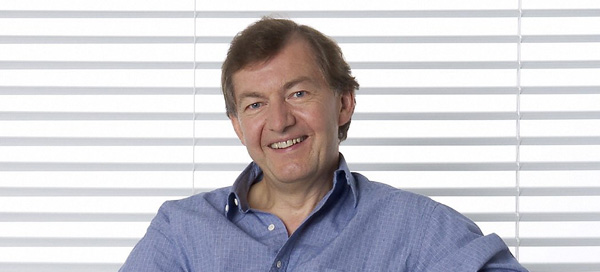
5 live Controller Adrian Van Klaveren appeared on Radio 4's Feedback programme this afternoon - click play to listen to the interview. He answered Roger Bolton's questions about the cost of the new daytime schedule ("...I can assure you that those costs have not increased."), the Salford move ("We now have a whole weekday line-up where those presenters will be part of what we do from Salford...") and Richard Bacon ("Richard is a big personality broadcaster. There's a sense of identity about his programmes which very much comes from his own life...").

Steve Bowbrick is editor of the 5 live blog

  • Feedback is on BBC Radio 4 at 1330 on Friday and repeated at 2000 on Sunday.

Premier league radio rights

Blog comments are currently unavailable. Find out more.

Post categories:

Adrian Van-KlaverenAdrian Van-Klaveren|16:51 UK time, Thursday, 18 February 2010

turf

As you may have seen, the Premier League has today awarded the rights for Premier League football commentary over the next three years. Radio rights work in a very similar way to television with live matches divided into seven packages based on kick-off times and days.

The BBC has been successful in four of the seven packages - the games which kick off on Saturday lunchtimes, first choice of the Saturday 3pm games, the Sunday 4pm kick off and Monday and Tuesday evenings. This is two fewer packages than 5 live currently has - the other packages covering the Sunday early kick-off and Saturday evenings/Wednesday evenings have been awarded to TalkSport. As was announced last week, Absolute Radio have won the second choice Saturday afternoon games - the package currently held by TalkSport.

What this means is that 5 live will still have more live Premier League football than anyone else including what would generally be seen as the biggest matches. But it's also true that we will have less live Premier League football from next season which of course is a disappointment to us and I know many of our listeners.

In our bidding for these packages, we have had to balance the vital importance of live football to our audience with the need to ensure we are offering value-for-money to all licence fee payers and an awareness of the overall radio market for football commentary. It's fair to say it's been a far more competitive process this year than previously.

Winning four packages still leaves us in a position where 5 live can offer an outstanding service of live commentary as part of our overall mix of sports programmes - and as well as the Premier League, we also have Champions' League, FA Cup, Europa League, Football League and Carling Cup matches plus internationals including of course the World Cup this summer.

Live football is a vital foundation for us and we will be working hard to ensure we offer the best and most comprehensive service for football fans that we possibly can. I'd welcome your thoughts on what we can do better - both in terms of live coverage and as we think about our programme schedule for next season.

Adrian Van Klaveren is Controller of BBC Radio 5 live

First class row over train fares

Blog comments are currently unavailable. Find out more.

Post categories:

Stephen Nolan|13:58 UK time, Thursday, 18 February 2010

sir-nicholas-winterton.JPG


What a pleasure it is to be on the network during the day! I'm used to 'doing battle' with Ulster politicians every day - its what my usual daily morning show on BBC Radio Ulster is all about - and the politicians in Northern Ireland give me as good as they get over there. I love it!

That grounding proved useful today when I interviewed the Tory MP Sir Nicholas Winterton. He was arguing that MPs needed to travel first class on trains and it was right that the public purse should pay for it.

Sir Nicholas kept on talking about the "status of a MP" and it intrigued me that he seemed to be saying politicians were somehow different than others.

What did he mean? Are you ready for his reply?

He said people travelling on the significantly cheaper standard tickets had "a different outlook on life". And he added, "If I was in standard class, I would not do work because people would be looking over your shoulder the entire time."

Are people in standard more likely to "look over your shoulder"? Is he comfortable saying this on a national network? Clearly, he is.

When I asked him whether he thought standard-class passengers behaved differently from those with first class tickets, Sir Nicholas replied: "Yes, I do. They are a totally different type of people. There are lots of children, there is noise, there is activity."

He went on to say, "They have a different outlook on life. I very much doubt whether they are undertaking serious work and study, reading reports and amending reports which MPs do when they are travelling."

Sometimes a politician will say something in the heat of an interview that they don't mean to, and I was in good form today, so I gave Sir Nicholas a chance to retract his "different type of people" bombshell.


He responded: "They very often have a different outlook, of course they do, because they are in a different area of activity."

His comments prompted a huge response from you. Take a look at the 5 live Now page to get a sense of the reaction.

My Twitter account has been going ballistic both during and after the show.

Please continue to send me your tweets - I will reply to as many of you as I can.

Some of the cool interactive dudes in here have informed me I describe my Twitter address in an old fashioned way - so for those of you a lot cooler than me, you can tweet me @stephennolan

You can listen to a clip from the interview below

In order to see this content you need to have both Javascript enabled and Flash installed. Visit BBC Webwise for full instructions. If you're reading via RSS, you'll need to visit the blog to access this content.

And you can listen to the full interview for the next 7 days on the 5 live website.


Stephen Nolan is usually on 5 live on Friday to Sunday, from 10pm to 1am.


This week, he's been standing in for Victoria Derbyshire between 10am and noon.

What's a mup?

Blog comments are currently unavailable. Find out more.

Post categories:

Innes BowenInnes Bowen|17:45 UK time, Wednesday, 17 February 2010

toilet paper

It's Friday lunchtime, and the team from the Donal MacIntyre show is frantically scouring the pages of this week's newspapers.

Me: "What about the one-armed thief who stole a single cufflink?"

Phil: "That one's true, I'm afraid."

Bob: "And the North Yorkshire Police really did have had 200,000 calls about a job ad. Though even if they hadn't, I'm not sure that story was interesting enough to be a MUP."

MUP is our shorthand term for Made Up Phenomena: stories which, though widely reported, turn out to be at best gross exaggerations and at worst completely untrue. An alleged link between Facebook and cancer; a plan for Kellogg's to laser their logo onto cornflakes; and an epidemic of middle class shoplifting. All have been outed as MUPs by team MacIntyre.

Donal MacIntyre is 5 live's own investigative magazine show. Most of what we do is hard-hitting, serious stuff. In recent months we've exposed flaws in the government's new student visa scheme, heard from a whistleblower about corruption inside the Royal Military Police and revealed how MPs routinely pay their staff a fraction of the minimum wage they voted into law.

Most of the week is spent researching big stories like these. However on Friday mornings everyone in the office applies the full forensic might of their investigative skills to more trivial subjects.

This week, we were struggling. But then... MUP alert! We noticed a story running in several of Thursday's papers about the imminent launch of a luxury toilet roll.

"Waitrose has included a 'significant' amount of cashmere, a luxury fibre usually associated with expensive jumpers, socks and scarfs, in the new toilet roll billed as 'the most luxurious bathroom tissue yet'," according to the The Daily Mail.

Really?

Our reporter Phil Kemp rang Waitrose to request a telephone interview. Keen for some extra publicity, they agreed. The spokesman admitted that there wasn't in fact any wool in the cashmere toilet roll. But it does contain, he said, oil extracted from goat hair.

A few minutes research on the internet and our reporter Phil was in touch with Martha Ann Englert, lead reporter on the website All About Goats. (Yes, there really is a website specialising in goat stories.) Did the idea of making a toilet roll containing goat wool oil make any sense? "I read a lot of scientific research papers on goats and I speak to a lot of people who breed them. This is the first time I have ever heard of someone claiming to extract oil from the fibre of goats."

Sheep wool apparently is much richer in oil. But who'd pay extra to wipe their bottom on Shetland or worsted?

Innes Bowen is Assistant Editor at BBC Radio Current Affairs and Producer of the Donal MacIntyre show

5 live news and sport on your mobile

Blog comments are currently unavailable. Find out more.

Post categories:

Brett Spencer|12:30 UK time, Wednesday, 17 February 2010

MANYMOBILES.jpg

2010 is going to be a big year for radio. DAB continues to grow, there is a new industry Radio Player to look forward to, and of course the small matter of the World Cup.

But one thing is for certain for radio, the future is going to be more mobile. Our intention is to make sure you can enjoy 5 live on as many devices as possible while on the move.

While FM radio has been available on mobile for some time, 5 live has been trickier, given that our analogue transmission remains on 909/693 MW.

Very soon, you'll be able to listen live on a range of phones by accessing the 5 live stream via the BBC mobile website.

In addition Erik Huggers, BBC Director of Future Media & Technology, announced today that the BBC will be developing official BBC Sport and BBC News apps for the iPhone and then for the BlackBerry and Android devices later in this year.

The new BBC Sport iPhone application will offer you all the sports programmes you currently listen to on 5 Live. For the first time all of 5 live's commentary and analysis will available on mobile. You'll be able to access all BBC Sport content: text, audio and video, in one place while on the move.

All of 5 live's programming is available on demand via BBC iPlayer on mobile, with live access coming soon. 5 live's podcasts along with the rest of the BBC podcast portfolio can be accessed directly from mobiles on a WiFi connection, without the need to connect with a PC and very soon, visitors to the 5live mobile site will have access to a live audio stream, even over 3G networks.

And we're just getting started.

Brett Spencer is Interactive Editor at BBC Radio 5 live

Let the games begin!

Blog comments are currently unavailable. Find out more.

Post categories:

Vassos AlexanderVassos Alexander|12:01 UK time, Sunday, 14 February 2010

vancouver_fireworks_600x196.jpgWalking through Vancouver on Friday evening after the opening ceremony of the Winter Olympics is reminiscent of a city celebrating a Champions League triumph. There are groups of locals excitedly chanting for no apparent reason, and even the odd hug for complete strangers in the street.

The reason, of course, is pride; they're taking these Winter Games personally here. There's a big digital clock in one of the main squares which counted down every second of the seven years since Vancouver won the right to host the Olympics - and with very few exceptions, excitement has been rising steadily as the clock has ticked towards zero hour, and the start of the opening ceremony.

So it's been seven years in the making, and the city is all dolled up like a teenage girl on prom night. There's perhaps a little too much make-up here and there, but you can forgive Vancouver her delirious reaction to a successful evening - even if the ceremony was rather overshadowed by the tragic death of luger Nodar Kumaritashvili.

The Georgians will compete in memory of their team-mate, the Canadians want to "own the podium", while the British are hoping for their most successful Winter Olympics since the 1930s. So I'm here with Eleanor Oldroyd to report and commentate on all the highlights - as well as the inevitable lighter moments. Ellie's currently swanning around in the mountain village of Whistler, hoping for some snow.

Vancouver is eight hours behind the UK, so we'll have a daily roundup of all the overnight action from 6am on the Breakfast programme. It'll then be repeated on a loop from 7.30am on sports extra. And all the sports bulletins during Breakfast for the next fortnight will come live from Canada.

Britain's first medal could come as early as Tuesday, with Zoe Gillings in the snowboard cross. Watch out too for Shelley Rudman and the bob-skeleton team, in action from Thursday at the notorious Whistler Sliding Centre. Three medals is the target for Team GB, who also have high hopes in women's bobsleigh, curling, speed skating, and could even figure in the ice dancing.

Let the Games begin!

Vassos Alexander is a sports reporter at BBC Radio 5 live

  • There'll be a daily highlights catch-up from Vancouver repeated on a loop from 7.30am on sports extra.
  • Commentary from Vancouver is restricted to the UK, so international listeners may be unable to listen to 5 live at times during the Winter Olympics.
  • If you haven't watched Eleanor Oldroyd's bobsleigh run yet, you should.
  • Picture shows fireworks exploding at the end of the Opening Ceremony of the 2010 Winter Olympics seen from the Vancouver Olympic Village on February 12, 2010. AFP/Getty Images.

How long is a podcast?

Blog comments are currently unavailable. Find out more.

Post categories:

Brett Spencer|17:22 UK time, Friday, 12 February 2010

stopwatch

Something I wrote on a blog a couple of weeks ago has provoked quite a lot of debate. Unfortunately, because the blog was from an executive over at Absolute Radio, some of you may not have seen it.

Adam Bowie, Head of Strategy and Planning at Absolute, wrote a post on his personal blog questioning our decision to split some of our podcasts into two parts. It seems that iTunes is only serving the second half of some of these podcasts to listeners automatically, requiring more manual downloading to get both parts. You can read Adam's post here. I thought it worth repeating some of our reasoning here on our own blog.

I'll take our new two-part Danny Baker podcast (149,730 downloads in December) first. We had correspondence from listeners before the new Saturday morning show even started. They all wanted to know if the podcast was going to be the whole show, we assured them it would be. Now if we offered this entire show as one part, it would be one hour and forty minutes. I don't know about you, but I really wouldn't download a podcast that is one hour and forty minutes let alone listen to it.

In addition we have discovered that listeners like podcasts made available as soon as possible. With Danny Baker the intention has always been to make Part 1 available before the show is over at 1100. So anyone that tunes in late, or doesn't get up that early, or dare I say it, is listening to something else, can get it immediately. There have been a lot of emails from the listeners thanking us for making the whole show into a podcast but, as yet, no complaints.

In terms of Mark Kermode and Simon Mayo's Film Reviews (288,037 downloads), we get three very common questions:

  1. Why don't we get the whole show (you do).
  2. Why are all the reviews so rushed at the end (that's what the show sounds like)
  3. Can we have the reviews in a separate podcast? This last one is quite common:


We have experimented with putting the interviews at the end of the podcast, but I often found listening back it didn't make the show terribly cohesive. We have also podcasted 2 or 3 shows from Mark and Simon during the week and this been well received.

Now, faced with the longer show, we want to offer the whole thing. So how do we do that given that we know listeners don't want a 90-minute file, they want the reviews in a separate podcast, and they want the whole show? The two-parts seems to us the best solution. We may be wrong. You, the audience will, as always, tell us. One part or two? The decision rests with you.

Brett Spencer is Interactive Editor at BBC Radio 5 live

Breakfast embraces social media

Blog comments are currently unavailable. Find out more.

Steve BowbrickSteve Bowbrick|17:55 UK time, Friday, 5 February 2010

typewriter keyboard

Social Media Week: day five

Richard Jackson is editor of 5 live Breakfast, the network's biggest programme (2.51 Million listeners weekly). We saved him for last.

How do you use social media on your programme?

We use Facebook as a way of keeping in contact with listeners - and often go there to see if ideas or themes interest them. It's a great way to get quick reaction. The Breakfast blog we use to allow the conversation about the phone-in to carry on after broadcast, and it's a good way of talking about other things on the programme.

Breakfast is unique in that it uses Facebook, Twitter, the blog and live Now. Most programmes just pick one. Why use so many forms of social media?

Partly because we just keep adding them on, partly because it worth trying each one to see which works best with our listeners, but mainly because each can offer something different - for both us and the people who interact with us.

What are you getting out of it?

Feedback, ideas, new angles to stories and issues - and of course a degree of abuse

What are the listeners getting out of it? How have they responded?

Any success the programme has is largely down to the interaction with the listeners - so hopefully it gives them a variety of ways to contribute. They can hear (and see on 5live Now) their comments being used, so hopefully they feel the programme is in touch with what they are thinking.

What isn't working?

Our hardest task is just making sure we look at it all. There can be 100s of texts each morning, plus scores of Facebook comments, blog posts, emails and Tweets.

Any fears surrounding social media? Editorial concerns? Security worries?

One big issue is whether the people who contact us via social media are representative of our audience as a whole. It is only a minority who get in touch - so we have to bear that in mind when we are putting the programme together - and in deciding how much resource we can dedicate to social media.

Why promote external social media sites so much? How does this add value for the license fee payer?

We know large numbers of people are using social media, so it makes sense for us to engage with them there. Programme makers used to just wait for the audience to come to them, but we know that won't always work in the future and we need to ensure people know what we are doing.

How important is it for 5 live to embrace social media?

It's important to us so we can tell as many people as possible about our programmes, but editorially it's vital because we learn so much about what people are interested in and we can pick up on themes and topics which can become programme items. On occasions, like the 5th anniversary of 9/11, we've used posts on our blog as the core of special programming.

How do you hope to use social media in 2010?

The most interesting thing about social media is you are never quite sure what is going to happen next. I'd hope we can use it to make some excellent radio.

Steve Bowbrick is editor of the 5 live blog

Hear Elly scream

Blog comments are currently unavailable. Find out more.

Post categories:

Jacqueline Phillimore|18:22 UK time, Thursday, 4 February 2010

When 5 live Sport's presenter Eleanor Oldroyd signed up for a Sport Relief challenge recently, she not only agreed to do a bobsleigh run, she also agreed to take a microphone with her.

Here's a video of her in Igls, Austria at the World Olympics event. You can hear her audio commentary over footage of the Igls run.

Hold onto the seat of your pants!

In order to see this content you need to have both Javascript enabled and Flash installed. Visit BBC Webwise for full instructions. If you're reading via RSS, you'll need to visit the blog to access this content.

606 tackles social media

Blog comments are currently unavailable. Find out more.

Steve BowbrickSteve Bowbrick|17:13 UK time, Thursday, 4 February 2010

606phone.jpg

Social Media Week: day four

Jo Tongue is the senior producer responsible for 606, so she's in the thick of the network's interaction with listeners and she's in charge of an important chunk of 5 live's sport coverage. So we couldn't leave her out of this survey of 5 live's use of social media. She answered our questions about social media on 606.

How do you use social media on the programme?

Facebook and Twitter act as essential tools for listener interaction during the show and throughout the week on the biggest issues in football. Facebook leans towards the 606 message boards while Twitter gives listeners a chance to link in football news through external sites. We also use listener posts as on air content to add to or generate more discussion. We also use it to post pictures of presenters, outside broadcasts and the pre-match meal (i.e. the production team eating chocolate). Spoony also writes a weekly blog which reflects on issues we talk about during the show. All these formats give listeners an opportunity to continue the debate once we're off-air.

What are you getting out of it?

Mainly on-air content - but it's also way of talking directly to our listeners as they access Facebook and Twitter on their phones at matches, on lap tops, or while at work. We can communicate directly with our listeners in way that is different to when they call up the show and we can communicate with them during the week as opposed to just the few hours we are on air.

What are the listeners getting out of it?

It gives the listeners a chance to feel included with the show - especially if they do not want to appear live on the show. They can talk directly to the 606 team and each other. If they don't want to call up the show they can still discuss issues instantly and dont need to wait until we come on air. For example, this week at the end of the transfer window our Facebook site was buzzing with gossip. Our listeners love predicting scores on Facebook so we've just started giving a shout out to anyone who gets a corrent score - in the old "Lawro predicts" style.

How have the listeners responded?

606 social media has become a mini family. The Facebook page especially has its own community. We provide a forum for discussion in an arena that is less daunting than being on live radio but adds content to our output.

What isn't working?

We aim to tweet and post on Facebook from grounds when we manage to get out of the office and go to games but reception is often so hard to find. That means it's never been as immediate as i would like. I presume our listeners have similar issues?

Any fears surrounding social media? Editorial concerns? Security worries?

We have disclaimers on our Facebook and twitter sites stating that "the Comments and images on those pages do not represent the views of BBC Radio. They are reactively moderated - if you wish to report anything inappropriate, please email: [email protected]" But it's hard to moderate the pages 24/7 as we are a very small team.

Any special challenges/bonuses in using social media on a sports programme as opposed to a news programme?

Not really - editorially, it is slightly less sensitive.

How does listener interaction through social media sites compare to traditional methods like texting and emailing?

It's more transparent and open. Also text and email tend to be more statement led. On social media our listeners can interact with each other as well as ourselves instead of just 606 uniquely.

Why point listeners to external sites like Facebook and twitter? How is that a good use of licence fee money?

It allows for greater inclusion for listeners/followers - more options available, especially for something so interactive as 606. The Facebook and Twitter sites are aimed to drive listeners back to the programme - we use their comments on air and everything relates to generating better content for the on-air show. The pages also help the listeners feel part of the programme- a phone in show is completely listener dirven and social media is just another way for people to communicate with us.

How important is it for 5 live to embrace social media?

Very. Especially if we want to attract a bigger and younger audience. It's a great way to attract people to the programmes, to build our profile and branding and to drive people to listen to the on-air content.

How do you hope to use social media in 2010?

Increase its importance to the 606 brand and to interact more with the 606 message boards.

Steve Bowbrick is editor of the 5 live blog

The RAJARs are in

Blog comments are currently unavailable. Find out more.

Post categories:

Adrian Van-KlaverenAdrian Van-Klaveren|13:24 UK time, Thursday, 4 February 2010

earphones

The latest set of radio listening figures are out, giving us a picture of how we're doing in terms of the actual number of people listening. These figures cover the last three months of 2009 so before the changes to the schedule we made in January.

The headline for 5 live is that 6.11 million people listen to us each week. There are always a number of seasonal factors which affect 5 live listening, above all related to the sporting calendar. So the story of these figures is that we're up on the year by 120,000 but down on the previous quarter (which included the Ashes series and Wimbledon) by 280,000. What's most encouraging is that this is our highest figure for this quarter for six years; it's also the first time in five years where 5 live's weekly reach has been above six million for four quarters in a row.

Listening to 5 live Sports Extra is even more seasonal and there's a significant quarterly drop here but, with 660,000 listeners per week, listening to the station is again up year-on-year.

Of course listening figures are by no means the only indicator of how we're doing and there are many other ways of measuring the quality, range and ambition of our programmes. But these numbers do give us a snapshot both of who's listening and for how long. We'll be looking over the next few days at the detailed picture for each programme. Of course we want more people to listen for longer and we'll continue to work on ways of achieving this.

We're bedding in the new programmes which we launched in January as well as trying to make sure 5 live as a whole is as compelling as possible. I think our coverage over the last few weeks of events ranging from the Iraq inquiry to the Australian Open has clearly shown what we're capable of. As we build up to both the General Election and the World Cup, there should be plenty more highlights over the next few months.

Adrian Van Klaveren is Controller of BBC Radio 5 live

Victoria Derbyshire on Facebook and closing her blog

Blog comments are currently unavailable. Find out more.

Steve BowbrickSteve Bowbrick|18:16 UK time, Wednesday, 3 February 2010

Social Media Week: day three

We cornered Victoria in a studio during the busy run-up to her show yesterday morning. In the video she explains why Facebook is her primary social network, why she interacts with listeners using her profile and not a Facebook 'page' and the reasons for closing her blog. It's fascinating. Tell us what you think in a comment.

Steve Bowbrick is editor of the 5 live blog

Social media stays Up All Night

Blog comments are currently unavailable. Find out more.

Post categories:

Steve BowbrickSteve Bowbrick|17:12 UK time, Tuesday, 2 February 2010

rhodforblog.jpg

Social Media Week: day two

Rhod Sharp has been a regular presenter of 5 live's Up All Night since he came up with the idea in 1994. These days he presents the programme from his home near Boston in the USA. We asked Rhod some questions about about his use of social media.

How do you use social media on your programme?

I still think the most important social interface we have is our text terminal. People can and do vent their views on all our stories by text and they are read. What has always bugged me about this is that unlike a more streamlined social media interface we cannot text back.

I am thinking of one texter last week who accused us of not covering Scott Brown's sensational victory in the special election for Ted Kennedy's Massachusetts senate seat. He was disappointed, he said. I was disappointed that he clearly vented before he listened, given that we had a live report from a polling station ten minutes after they closed, three commentaries by first rate journalists, and were undoubtedly the first international outlet to report Martha Coakley's concession phone call to Brown at 0219 GMT. I could have called him back to tell him personally, but that would have been taking it too far.

I will also point out that email has tremendous integrity as a two-way street, even if it is not fashionable to describe it as a "social" medium. I have many conversations with individual listeners stretching back years, in some cases.

What are you getting out of it?

I was introduced to Twitter before Obama's inauguration, for which I am very grateful. Its virtues in reporting news as it breaks are now unquestioned, but it is only as good as the cellphone networks. For example, my attempts at Twittering from the Mall were thwarted by the secret service who choked everyone's bandwidth, and by the effect on traffic of my million plus companions all trying to do the same thing.

A year later, we were covering the Haiti earthquake by monitoring the hashtag #Haiti and watching the pictures uploaded to twitpic. It was amazing how quickly a comprehensive picture of the destruction began to emerge, and we could quickly identify and communicate with people who were using satellite internet connections. From those contacts came our memorable interview with Haiti Radio 1 DJ Carel Pedre. Our team in London co-ordinated its posting on the BBC News site, and I was then able to post the URL on Twitter. It was good work all round.

I use my Twitter account to post little teasers for the most recent show, along with a short URL to its iPlayer location. It's not especially interactive but I think less is more in this case.

What isn't working?

My followers can be numbered in the hundreds, which is fine by me. I don't use Twitter to collect followers like so many butterflies on pins. A news programme has to have integrity, and celebrity blogging plays no part in its culture, IMHO. Others differ.

Do you have any editorial or security concerns around your use of social media?

I was reading Andy Murray's Twitter posts in the 48 hours leading up to the Australian Open final and they are truly insightful about the pressures on a star athlete, but also the sheer banality of being on tour. On the other hand private life is what it says on the label, private, so I have relatively few security concerns.

Why do we promote external sites like the social networks? How does this add value for the licence fee-payer

Of course if the BBC had invented either Facebook or Twitter we'd be even more all over them like a rash. They are part of the media ecosystem now, but they are still media brands like The Guardian or The Wall Street Journal and there's a limit to how much anyone in the media should be plugging someone else's brand.

How important is it for 5 live to embrace social media?

I think the question is "how should 5 Live embrace social media" and the answer is, intelligently. Very intelligently.

How do you hope to use social media in 2010?

I'd like to see much more conscious use by the mainstream media of the social media resources. Our Pods & Blogs podcast has been chronicling the rise and rise of social media and what people do with them since 2005 when Chris Vallance, Kevin Anderson (now with The Guardian) and I came up with the idea and as Jamillah Knowles reminds us "failed to come up with a decent name for the segment." We need more recognition of the social media as a beat for our own journalists, and a big one at that. The BBC News User Generated Content team, for which Jamillah works, can only go from strength-to-strength.

Steve Bowbrick is editor of the 5 live blog

It's social media week on the 5 live blog

Blog comments are currently unavailable. Find out more.

Steve BowbrickSteve Bowbrick|15:20 UK time, Monday, 1 February 2010

Social Media Week: day one

No, it's not something I just made up. It's a real, international week of conferences on the theme of social media (Facebook, Twitter, blogs and so on). It's mostly for business-people and techies but we've hijacked it to do something useful here on the blog. At the end of last year I promised I'd be starting a survey of 5 live's use of social media in the new year.

In order to see this content you need to have both Javascript enabled and Flash installed. Visit BBC Webwise for full instructions. If you're reading via RSS, you'll need to visit the blog to access this content.

So, starting today with Richard Bacon, I'm publishing five interviews with important 5 live figures about their use of social media. We caught Richard in his studio right after he came off the air last Thursday. He talks mainly about Twitter, his principle means of interacting with his audience while off-air and a genuine source of stories and reactions for the programme itself. Play the video and then tell us what you think in a comment.

Is 5 live making too much use of social media or are programmes improved by engagement with users of the social networks? Is social media a substitute for old-fashioned editorial effort or an essential enhancement. Should 5 live be investing in content and interaction on non-BBC web services like Facebook and Twitter or should we confine our efforts to our own site?

And between now and the end of the week you'll hear from presenters Rhod Sharp and Victoria Derbyshire and producers Richard Jackson (Breakfast) and Jo Tongue (606).

Steve Bowbrick is editor of the 5 live blog

  • Richard Bacon is @richardpbacon on Twitter. He has 1,329,894 followers.
  • The programme of activities for Social Media Week London, which is unconnected with the BBC.
  • An embeddable version of this video is on YouTube.
  • Thanks to Aaron Eccles for organising the interviews and to Guy Oldfield and Jimmy Smallwood from the 5 live Interactive team for their essential help with the video.

More from this blog...

Categories

These are some of the popular topics this blog covers.