

This week's space weather roundup and Saturn's northern storm
Post categories: Sun, Videos, space weather
 |16:00 UK time, Tuesday, 12 July 2011
Distance travelled ~ 496'550'400 km
Day 193 on our circumnavigation of the Sun. Down on planet Earth it's been a rather boring start to July weather-wise, overcast, a bit humid a bit stormy. But in space it's been anything but dull.
July 5th NASA recorded the fiery death of an unnamed icy comet, which plunged into the Sun.
On July 6th NASA published some photos of a massive electrical storm on the planet Saturn that's been raging for months. The so-called Great White Spot is so massive it would cover half of the Earth and so violent those scientists have counted over ten lightening flashes a second. Such giant storms are relatively rare and only six have been witnessed in the last 135 years.
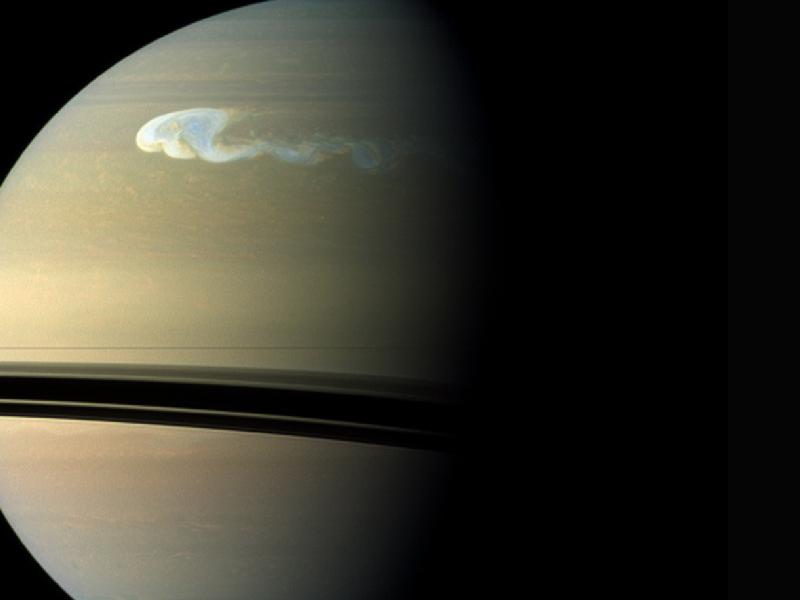
Image © NASA/JPL-Caltech/SSI
Then on July 7th a Coronal Hole opened up in the surface of the Sun. So what's a coronal hole. Well as we orbit the Sun we're bathed in essential warmth and energy, but we are also blasted by a blizzard of radioactive particles called the solar wind. This barrage is 24/7 but sometimes a hole opens up in the suns surface, a coronal hole, triggering the release of a really intense stream of solar wind. Normal solar wind travels at around 1,440,000 kilometres per hour but the wind blasting out of a coronal hole shoots out at up to 4,000,000kmph. These supercharged solar wind particles finally reached us two days later. Most were diverted by our magnetic shield but some hit the atmosphere and triggered auroras far south across the USA.
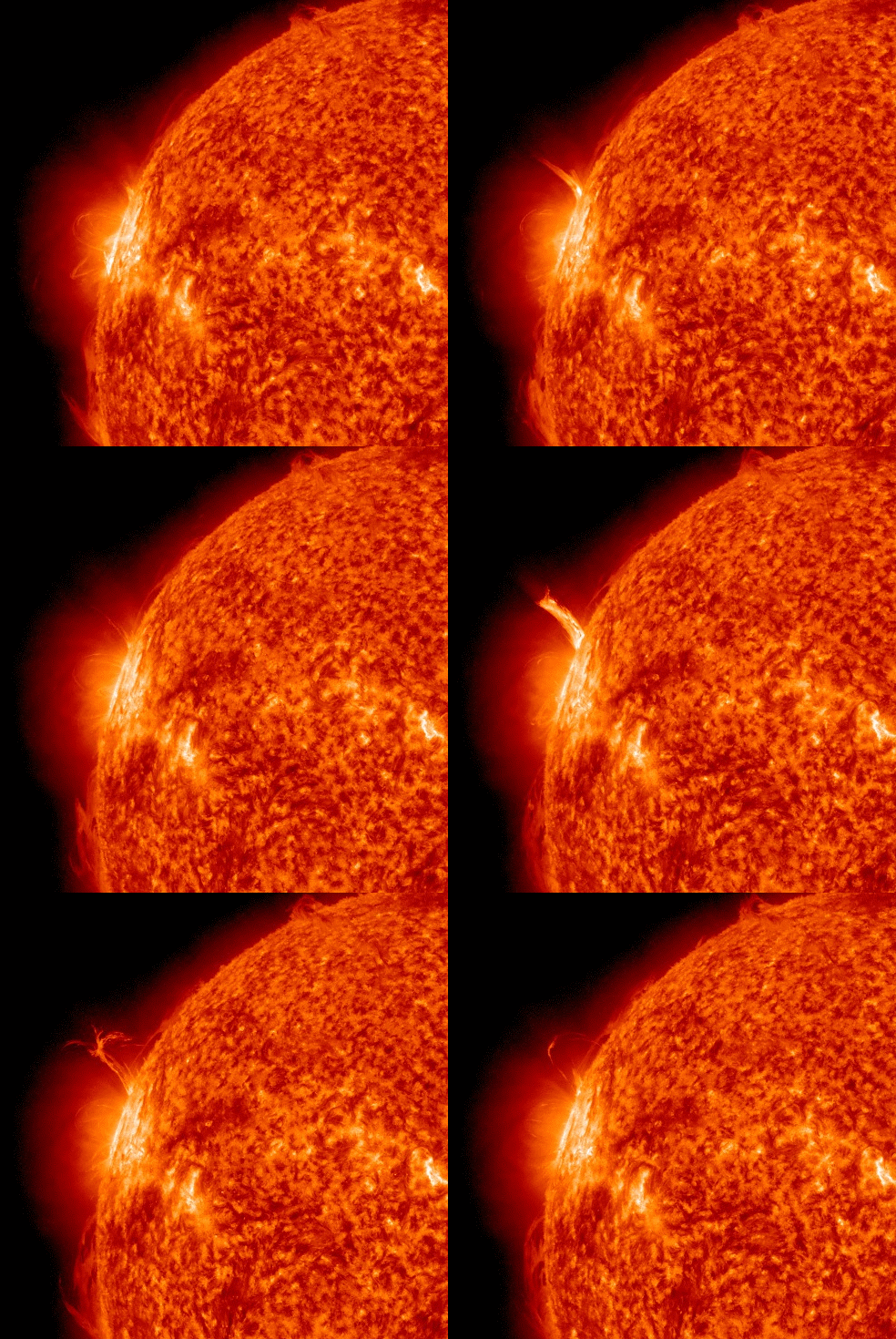
Today NASA released footage of some increased activity on the eastern region of the Sun. The Sun was hurling up huge amounts of material high above the stellar surface. You can see it yourself at spaceweather.com
As it happens this activity is not directed towards Earth, but NASA has detected a very active sunspot with the "oh so catchy" name 1247.
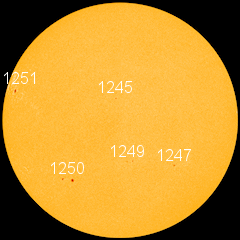
Image NASA/SDO
But don't let the unexciting name fool you, because it's anything but boring. It has a magnetic field with enough stored energy to create a M-Class solar flare, that's a pretty big explosion from the sun surface. Solar flares are classified according to their x-ray brightness. X-class flares are huge and can cause giant radiation storms and nation-wide radio blackouts. M-class flares are as the "M" suggests medium-sized and can trigger/cause small radio blackouts while C-class flares are small and have no effects on Earth.
NASA predicts there's a 10% chance of an eruption from the sunspot in the next 24 hours, and that one is directed towards Earth so watch this space.
Who said space is empty?
 Kate Humble:
 Helen Czerski:
 Stephen Marsh:
 Aira Idris:


Comments Post your comment