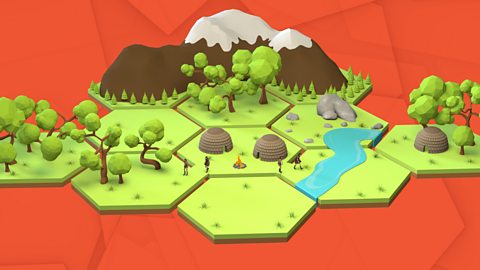
What is a biome?
Biomes are large scale ecosystems. They are defined by factors such as climate, soils and vegetation. The world's major biomes include rainforest, desert, savanna grassland and tundra.
Ecosystems are communities of plants and animals that live in a particular environment. They range from small ecosystems such as a freshwater pond, to global ecosystems such as deserts. They contain biotic and abiotic components.
Biotic means living things like insects, plants, trees and mammals.
Abiotic means non-living things such as soils, rocks and the climate.
Watch: Biomes video
Watch this short clip to learn about the world’s major biomes
There are thousands of communities, all across the world. Hundreds within one country. Dozens within a city. Maybe a few within your own classroom. The natural world has its own communities. Huge ecosystems, which contain plant and animal groups that are suited to a specific environment. These natural 'communities' are known as biomes. There are a few aspects of the climate which can give a biome its identity, including temperature and rainfall.
There’s no one approved list of every single biome in existence. Scientists love to argue about this stuff. But there is a huge variety – from the monsoon forests of India to the temperate forests of Europe, and the arid, boiling hot deserts of Africa to the freezing polar deserts of Greenland and Antarctica.
But biomes can shift. Can fight over territory. And although this process has always happened naturally, something is now speeding it up. Us. In the rainforests of South America, humans are making our presence felt in a big way. The forests are being cleared for logging, mining, farming and hydroelectric schemes. All those loggers, miners, farmers, and hydroelectricians? Need housing, of course. As well as roads to join everything up. When all’s said and done, there may be very little forest left.
Globally, an area of rainforest the size of the Czech Republic is cleared every single year. Many species of plants and animals are facing extinction because of deforestation. And these changes could be long-lasting – less tree cover can leave the soil open to erosion and the loss of nutrients, making it far more difficult for plant life to recover.
It can also have knock-on effects on other biomes. Apart from the wide-ranging effects of climate change caused by deforestation, the water cycle can also be affected. But there are ways of turning the tide. There’s selective logging, ensuring that only particular trees are cut down. Environmental laws and the establishment of national parks can make logging in particular places illegal. International aid can help developing countries rely less on the fragile resources of the rainforest.
And of course, if all else fails, there’s the old-fashioned way. And while it’ll take quite a few seeds to replant the entire Amazon rainforest, the same process is at work, on a slightly smaller scale, back home in Wales. Some people are trying to adapt our native biomes, on purpose. Reversing the changes that have taken place over the past few centuries. They want to replant wild forests and reintroduce native animals like wolves and lynxes, beavers and eagles. It’s called rewilding.
It’s nothing new. Judaism has always taught of the importance of the natural world, particularly trees, with the Torah prohibiting their destruction. Jewish societies are key to reforestation projects in Israel, and trees are planted on the festival of Tu Bishvat to mark the revival of nature.
Not everyone agrees that rewilding is a good idea. But we are becoming aware of the biomes which make up our planet. Realising that there are indeed natural 'communities' and that we are part of them.
Some of the world’s major biomes
- Tropical forests are found near the equator in Central and South America, parts of Africa and Asia. They are hot and humid and contain a huge variety of plants and animals - around half of all the world's species. The trees are mostly hardwood. The climate is called equatorial.
- Savanna or tropical grasslands are hot and dry, dominated by grass, scrub and occasional trees. They have two distinct seasons - a dry season when much of the vegetation dies back, and a rainy season when it grows rapidly. They are found in central Africa (Kenya, Zambia, Tanzania), northern Australia and central South America (Venezuela and Brazil).
- Desert is the driest and hottest of areas. The world's largest desert is the Sahara in North Africa. Areas of scrub land that border the desert are called desert scrub.
- Temperate deciduous forests contain trees that lose their leaves and are found across Europe and USA. The weather is mild and wet. The climate is called temperate maritime.
- Coniferous forests, containing evergreen trees, are found in Scandinavia, Russia and Canada. They have a cool climate with moderate rainfall called cool temperate.
- Tundra/Polar surrounds the north and south poles. They have an extremely cold climate, with limited numbers of plants and animals able to survive there.
Biome climates
Climate is the average weather conditions over a longer period and over large areas.
The temperature and the amount of rainfall an area receives depend on:
- position in relation to the poles and equator
- the effect of any nearby large water bodies such as seas and oceans
- the way that the landscape changes in height, which is called relief
Climate graphs show the average annual rainfall and temperature throughout the year for a particular area. They can give us a better understanding of the type of climate experienced in a biome.
This graph shows temperature and rainfall typical of a tropical rainforest. There is a distinct rainy season from December to May. The amount of rainfall varies over the year - with the highest monthly rainfall in March with over 300mm, while the lowest is in August with less than 50mm. Over the year, the temperature only varies by 2°C.
Other biomes would also have distinct climate graphs. The desert biome would receive very little rainfall across the year with average temperatures being high throughout. A deciduous forest would have a milder temperature and a consistent amount of rainfall all year round.
Adapting to different habitats
In order to survive in each biome, plants and animals have had to adapt to cope with the environment they live in and the challenges they might face.
Here are two examples of how animals have adapted to their habitat.
Adapting to hot climates
Adapting to cold climates
Human impact on biomes
Deforestation
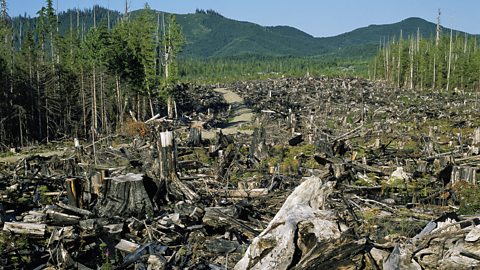
Deforestation is the clearing of large areas of trees. It is a particular threat to tropical rainforests in places such as the Amazon Basin.
Increased human activity has led to large portions of the forests across the world being lost. This is mainly as a result of:
- logging - trees like mahogany are cut down and sold for timber to make furniture. Other trees are cut down for making paper products
- farming - large areas of the rainforest are lost as spaces are cleared for cattle ranches that produce beef
- mining - the Amazon Basin is rich in natural resources such as iron ore, copper, tin, aluminium, manganese and gold. The rainforest is cleared to get access to these resources
As a result of these activities, animals are being driven out of the forests or even made extinct.
The orangutan is a prime example of a threatened species. A century ago, they lived in forests all across south-east Asia but today they’re only found on the islands of Sumatra and Borneo.
The rainforests where they live are being cut down to make way for agriculture and the growing of trees for palm oil production.
Climate change
Human-caused climate change has a drastic impact on the world's biomes.
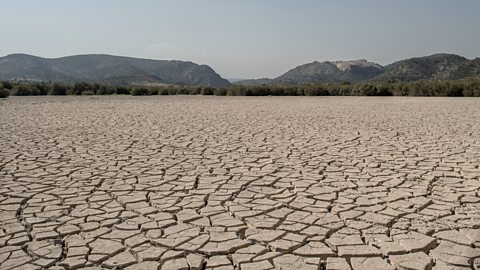
In arid and semi-arid biomes, desertification is becoming even more common. This is a reduction in the productivity of the land temporarily or permanently. It can’t support the same plant growth it could in the past.
Desertification can be caused by several things such as:
- drought
- deforestation
- overgrazing
- fire
- overfarming
When the land is less productive it is harder to farm and can result in economic challenges.
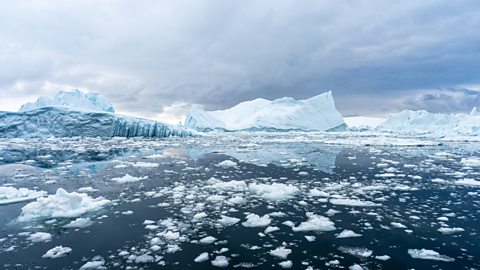
Polar biomes are affected by the rise in global temperatures. The ice caps at the poles are melting at an increasing rate.
It is becoming more difficult for animals, such as polar bears and walruses, because they are losing their native habitats. These animals have been forced to migrate further south in search of land and food to sustain themselves.
In the Antarctic, disappearing sea-ice threatens to wipe out the penguin species that live there.

More on Identity
Find out more by working through a topic
- count3 of 3
- count1 of 3