Key points
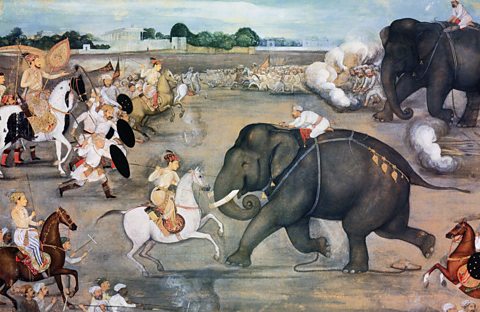
- The Mughal Empire covered modern day India, Pakistan and Afghanistan by the time of Aurangzeb’s death in 1707.
- Following the death of Aurangzeb, the Mughal Empire fell into decline and local princes fought for control of the empire.
- The British East India Company used the wars between local princes to take control of land for themselves.
- After the Nawab of Bengal lost the battle of Plassey in 1757, the East India Company rapidly took control of the Mughal Empire.
- To end a rebellion from Indian troops, British reinforcements were sent to put a stop to the rebellion and take control of India.
- From 1857 Mughal India was officially a A country, state or territory ruled over by another country, state or territory. of the British crown. The Mughal Empire had come to an end.
The East India Company arrives in Mughal India
In 1600, Queen Elizabeth I approved the creation of the East India Company. This was a company made up of A person involved in buying and selling items, usually between different countries. In the British Empire, this was done using a lot of force and violence when local people did not cooperate with the merchants. who wanted to sail to Asia and trade goods they could sell back in England.
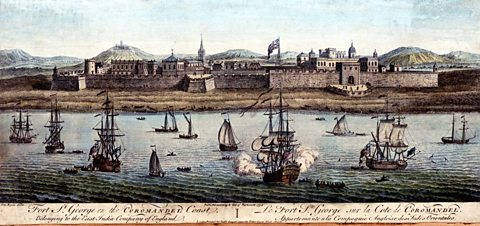
In 1639, an English merchant reached what is now the city of Chennai in southern India. There, they set up a fort called Fort St George.
Was the East India Company set up to take control of India?
No, it was set up as a trading company by merchants who believed there was a lot of money to be made from trading spices in Asia. Their initial intention was to become wealthy from bringing these goods back to England to sell for large profits. However, they soon discovered they could become even wealthier if they took control of the land for themselves.
The death of Aurangzeb
Aurangzeb has been remembered as a brutal and merciless ruler, however as the last great Mughal Emperor he created stability across the empire and grew the Mughal Empire to the largest it would ever be.
Following his death, local princes fought for control of the empire. The East India Company would take advantage of this and slowly gain control of parts of the Mughal Empire.
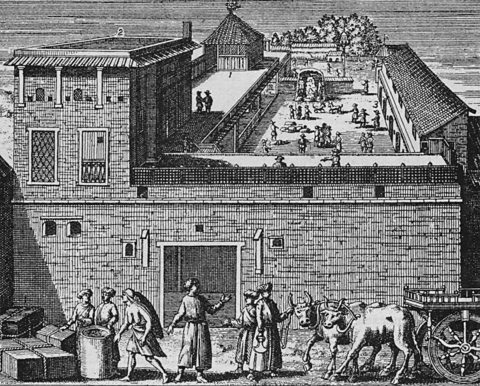
The A person involved in buying and selling items, usually between different countries. In the British Empire, this was done using a lot of force and violence when local people did not cooperate with the merchants. of the East India Company would make alliances with local princes and offer their support to fight against other princes. In return these merchants were given the right to trade in their land. Sometimes the merchants would exploit this agreement and take over almost all trade in the region. As the East India Company’s army was growing larger with each new alliance, it was difficult for local princes to resist.
Historian, William Dalrymple has said that the East India Company existed for the single purpose of making its merchants and investors richer. This meant that those in charge of running the company in India were willing to go to any length to achieve this aim, even at the cost of Indian princes and the Indian people.
The East India Company rules in Mughal India
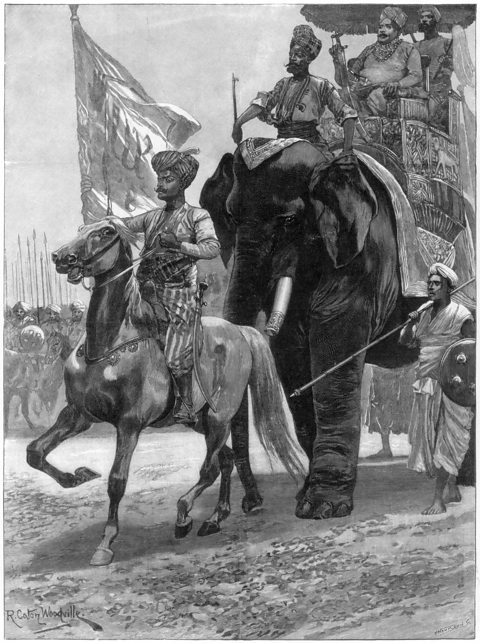
By the 1750s, Britain and France both had A person involved in buying and selling items, usually between different countries. In the British Empire, this was done using a lot of force and violence when local people did not cooperate with the merchants. companies competing for control of trade in Mughal India. While they were technically only trading companies, they had also started building armies to protect the areas they had gained control of.
Local princes were growing frustrated with both companies extending their control without permission and looked for ways to keep their control. Many local princes were willing to use the French merchants against the British in order to win back control.
As a result, in 1757, the Battle of Plassey broke out as the A Muslim ruler of Bengal, who was typically loyal to the Mughal Emperor. of An area of South Asia that is today made up of Bangladesh and the Indian state of West Bengal., Siraj ud-Daulah, took back control of a British fort in Kolkata with the support of French troops.
Robert Clive led the British forces against ud-Daulah’s army. Both ud-Daulah and his French supporters were defeated in battle. Clive put a man called Mir Jafar in charge of Bengal, as he agreed to work in support of British interests.
Mir Jafar was considered a A person who seems to be in charge, but is actually controlled by another person, group of people or country. for the British. This means he was technically another Indian ruler but he followed the demands of British East India Company governors. This is seen as the beginning of British control in India. The East India Company went on to take over more provinces and use their armies to turn more princes into puppet rulers. Those who resisted often paid with their lives.
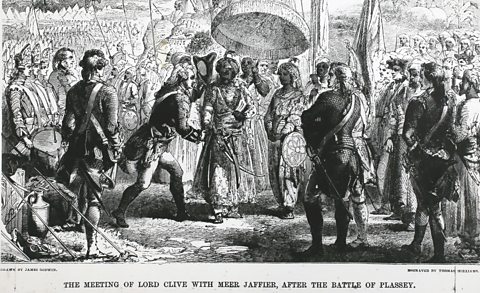
The British victory in the Battle of Plassey meant that the British East India Company was able to seize control of Bengal. This was a significant part of the Mughal Empire because they had a large shipbuilding industry and had become a centre of industrial trade.
This was a huge loss to the Mughal Empire, and many historians argue that this battle marks the beginning of the end for Mughal India.
Was a British victory at the Battle of Plassey inevitable because of their military advantage?
No, it initially seemed as though the Indian troops would win. It was only when a storm broke out and the Indians' store of gunpowder was soaked that the tables turned. The Indian generals assumed the British had also lost their gunpowder and the battle would have to be fought by the sword – in which the Indian army would have the advantage. So, the Indian troops charged towards the British as the storm lifted. However, the British had covered their gunpowder before the storm. As the Indian troops charged forward many of them were shot and killed.
The Indian Rebellion
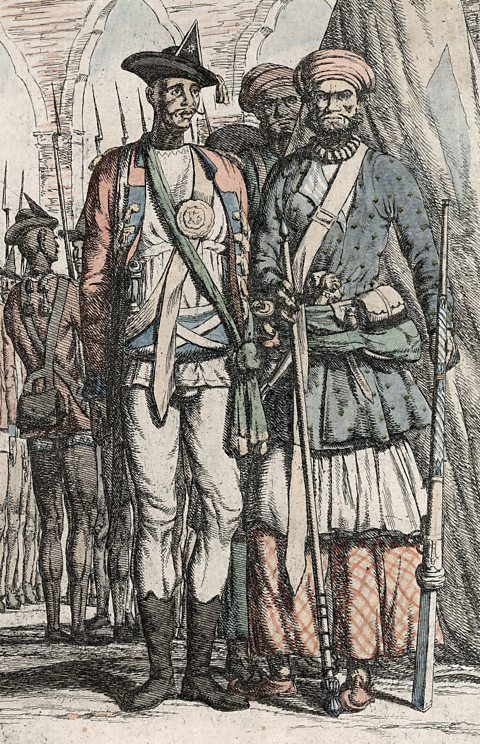
After 1757, the East India Company began to recruit more Indian troops into their army, they were known as sepoys. By 1857, there was growing tension amongst the sepoys as rumours spread that the British would force them to convert to Christianity.
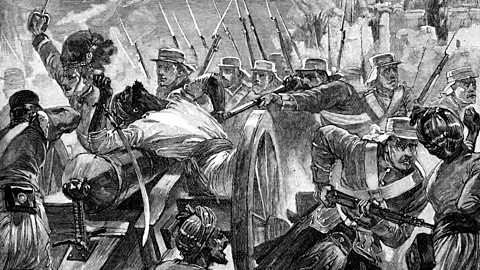
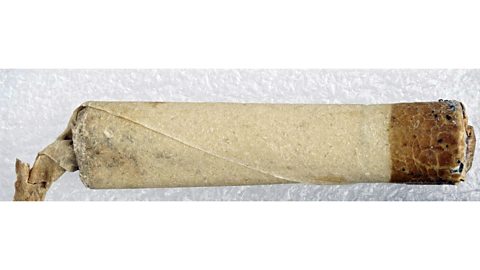
However, a rebellion broke out when the sepoys heard of a new rifle - the Enfield rifle. Religious tensions were already high and rumours were spread that to load the new rifle they would have to bite off the end of a cartridge - covered in pig and cow fat. Both Muslim and Hindu sepoys were furious since it is against the religious beliefs of Muslims to eat pig products and it is against the religious beliefs of Hindus to eat cow products. So even if the British were not forcing them to convert, they saw their values being deeply disrespected.
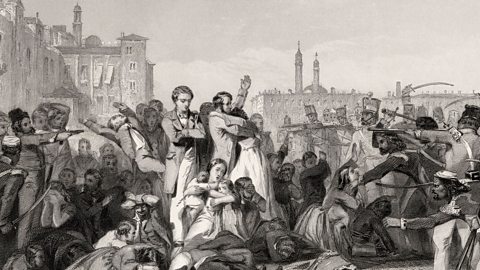
As a result, in March 1857, a sepoy named Mangal Pandey attacked his British officer and was executed. By May, the rebellion spread as tens of thousands of other sepoys turned on their officers, in some cases killing them. Although the sepoys initially had some successes and took some territory, the British government sent troops to defeat the rebellion after 18 months of fighting.
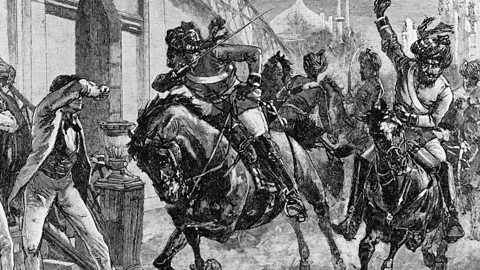
Image caption, Rebels charged through the streets of Delhi in 1857
1 of 4
Were the sepoys who remained loyal to the British seen as traitors?
As the East India Company took greater control over India, the attitudes towards sepoys were complicated. In some parts of India, the sepoys were recruited from poorer communities and saw working for the East India Company’s army as a way of providing for their family and protecting them from British control. In other areas, sepoys were recruited from higher classes and were therefore respected men in society.
After the rebellion, those who stayed loyal to the British were seen as traitors by some – but many understood that to rebel against the British could cost you your life.
The End of the Mughal Empire
Some historians have estimated that Indian rebellion led to the deaths of around 100,000 Indian people, whereas others say it was led to as many as 800,000 Indian people. Many sepoys and civilians died in the conflict but many also died as a result of famine - as crops and land were destroyed in the rebellion. The Mughal Empire was left in pieces, ruled in part by local princes - most of whom had sworn their loyalty to the East India Company to keep some power.
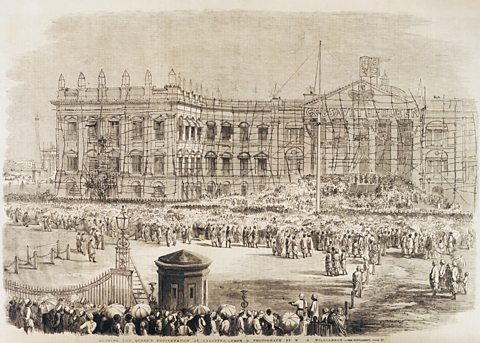
In August 1858, the British passed the Government of India Act. The land controlled by the East India Company was to be handed over to Queen Victoria and her government. The Mughal Empire officially came to an end. India officially became a A country, state or territory ruled over by another country, state or territory. of the British Empire after 100 years of informal control under the East India Company.
What happened to the Indian princes of the Mughal Empire?
Some of the princes swore loyalty to the British crown and were puppet rulers for the British empire in India. However, there were some who maintained almost all their power to rule their province as they chose – on the agreement that it would not conflict with British interests
Test your knowledge
Revise for your exams with BBC Bitesize
Get ready for the GCSEs with quizzes, past papers, flashcards, podcasts and more resources!

More on Mughal India (1526-1857)
Find out more by working through a topic
- count1 of 3

- count2 of 3