Key points
- Male and female reproductive systems allow human reproduction.
- Fertilisation occurs when a sperm and egg join to form an embryo.
- An embryo develops into an unborn baby in the uterus during pregnancy.
Human reproduction interactive
Play this game to explore human reproduction and the stages of pregnancy.
Gametes and fertilisation
Humans reproduce through sexual reproduction. This produces offspring that are genetically unique because half of their genetic material - The store of genetic information for all living things, passed from parents to offspring. - comes from each parent.
Gametes are the male and female sex cells:
- The egg cell. Plural: ova. are female gametes
- sperm are male gametes
In sexual reproduction, a male and female gamete can join together. This is fertilisation. These gametes are Cells which have a particular adaptation to allow them to complete a specific function. which have adaptations to increase the chances of fertilisation and successful development of a baby.
Reproduction
Video
In humans, conception begins when a sperm fertilises an egg. In female reproductive organs, ovaries produce the eggs and the hormones that regulate the ovulation cycle.
Each cycle an egg travels from an ovary through the oviduct to the uterus or womb, where it settles.
An opening between the uterus and vagina called the cervix, allow sperm in and menstrual blood out. The vagina, or birth canal, connects the cervix to the outside of the body.
In male reproductive organs, the scrotum holds the testes, which produce sperm and sex hormones, including testosterone. During ejaculation, the sperm pass through the sperm duct and combine with seminal fluid produced by the glands to create semen, which exits the body through the penis.
When ejaculation takes place inside the vagina, the sperm swim through the cervix into the uterus. If an egg is waiting, they might fertilise it and when that happens, the cells begin to divide and multiply and eventually become a fetus.
Can you answer these questions based on the video?
1. What else is produced by the ovaries besides ova (egg cells)?
2. What is semen made from?
Hormones.
Sperm and seminal fluid.
Male reproductive system
The function of the male reproductive system is to produce sperm cells - male gametes - and release them inside a female.
The male reproductive system has two testes (singular: testis). These are contained in a bag of skin called the scrotum. The testes have two functions:
- to produce millions of sperm
- to make male sex Chemical messages produced by glands. They travel in the blood to a target organ where they take effect. which affect the way bodies develop.
During ejaculation the sperm pass through the sperm ducts and mix with fluids produced by the glands. The fluids provide the sperm cells with nutrients. The mixture of sperm and fluids is called semen. This passes out of the penis.
Urine also passes from the body through the penis but not at the same time. The urethra is the tube inside the penis that can carry both urine or semen. A ring of muscle makes sure that there is no chance of urine and semen getting mixed up.
Female reproductive system
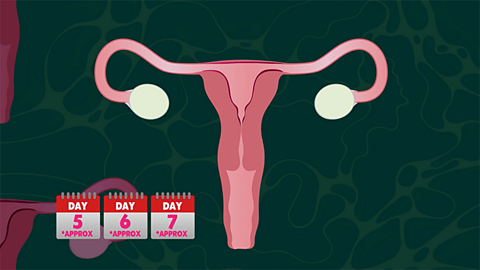
The female reproductive system has two ovaries (singular: ovary). These have two functions:
- They contain undeveloped eggs (plural: ova, singular: ovum). These are present from birth.
- To make female sex hormones, which affect the way bodies develop and also regulates the menstrual cycle.
Each ovary is connected to the The part of the female reproductive system where a fertilised egg cell develops into an embryo and then a fetus. Also called the womb. by an Tubes in the female reproductive system which join the two ovaries to the uterus. Also called fallopian tubes.. The oviduct is lined with cilia, which are tiny hairs on cells. As part of the menstrual cycle, an ovum develops, becomes mature and is released from an ovary. The cilia move the ovum along the oviduct and into the uterus.
The uterus is a muscular bag with a soft lining. The uterus is where a baby develops until birth. The cervix is a ring of muscle at the lower end of the uterus. It keeps the baby in place during pregnancy.
The vagina is a muscular tube that leads from the cervix to the outside of the body. A penis goes into the vagina during sexual reproduction. This is also where menstrual blood leaves the body and where a baby exits during birth.
Gestation and birth
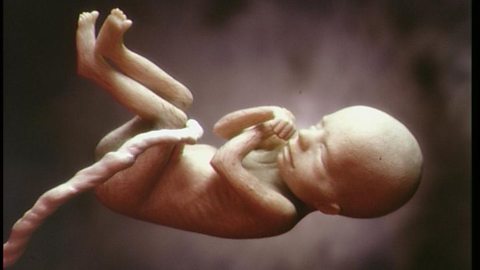
A fertilised ovum divides to form a ball of cells called an embryo. The embryo attaches to the lining of the uterus. It begins to develop into a An unborn baby. and then becomes a baby when it is born. It takes about 40 weeks for a fetus to develop in the uterus. This time is called gestation.
The fetus relies upon its mother for:
- protection against knock and bumps, and temperature changes
- oxygen for A chemical reaction that occurs in the mitochondria of cells in which glucose and oxygen react to produce carbon dioxide and water, releasing energy.
- nutrients - food and water
- removal of waste substances
The fetus is protected by the uterus and a liquid called amniotic fluid.
The placenta is an organ responsible for providing oxygen and nutrients, and removing waste substances. It grows into the wall of the uterus and is joined to the fetus by the umbilical cord. The mother's blood does not mix with the blood of the fetus, but the placenta lets substances pass between the two blood supplies:
- oxygen and nutrients The overall movement of particles of gas or liquid from an area of higher to lower concentration. across the placenta from the mother to the fetus
- carbon dioxide and other waste substances diffuse across the placenta from the fetus to the mother
Health and lifestyle
Other substances can also pass through the placenta, including recreational drugs and alcohol. Drugs can affect the fetus - slowing the growth of the fetus, reducing the amount of oxygen and causing bleeding - which can be life threatening.
Drinking alcohol or smoking while pregnant are also dangerous and can increase the risk of stillbirth, premature birth and long-term health conditions.
Birth
After gestation, the baby is ready to be born. The cervix relaxes and muscles in the wall of the uterus contract. Waves of muscle contractions push the baby out of the mother's body through the vagina. In some cases a A method of delivering a baby by making a surgical cut into the abdomen and uterus. is performed as a vaginal birth is not possible for health or medical reasons.
Test your knowledge
Quiz
Test questions
Describe the journey of a sperm from testis to ovum.
Tap 'Show answer' to see five points you could have included.
- Sperm are produced in the testes.
- During ejaculation, they travel along sperm ducts through internal reproductive glands, where they mix with seminal fluid, or semen, on the way to the penis.
- Semen, which contains the sperm is ejaculated into the vagina.
- Sperm swim through the cervix into the uterus.
- They then travel along the oviducts where a sperm might fertilise an ovum.
Teaching resources
Looking for more science resources to share with your students? This series of short films explores the science and stories of remarkable people around the world, giving insight to the human body and its capabilities.
BBC Bitesize for Teachers has thousands of free, curriculum-linked resources to help deliver lessons - all arranged by subject and age group.
Play the Atomic Labs game! game
Try out practical experiments in this KS3 science game.
More on Reproduction
Find out more by working through a topic
- count2 of 5
- count4 of 5
- count5 of 5