Although Wales is a small country with a population of just over 3 million, it is a country recognised for the richness of its artistic culture. It has its own cultural identity, and is known to many as the ‘the land of song’.
Video - The land of song
The land of song. Music is part of our national identity – Wales is known around the world for its musicality. It’s deep-rooted in our cultural history. From festivals, to the roaring crowds at international matches, there’s always music. Where does this rich culture originate? Who have we inherited it from? And how far back does it go?
A good place to start is with the Eisteddfod, the largest festival of competitive poetry and music in Europe. It’s possible to trace the beginning of the Eisteddfod back to a bardic competition held by Lord Rhys in Cardigan Castle in 1176. The roots of the more modern Eisteddfod lie in the late 18th century, around 1789, (also the year of the French Revolution) when the Gwyneddigion Society of London decided to support the small eisteddfodau being held in taverns across north Wales.
At the same time Iolo Morgannwg established a society of poets and musicians called The Gorsedd of the Bards of the Island of Britain, in 1792. You may be surprised to know that this wasn’t created in Wales, but in Primrose Hill in London.
Fast forward to the Victorian era around 1837, and the development of hymn singing in Wales took off. It’s closely tied with the Welsh Methodist revival of the 18th century. Hymns were popularised by writers such as William Williams. In the first half of the 19th century, musical collections of tunes were printed and distributed. Congregational singing was given a further boost with the arrival of the temperance movement. The publication of Llyfr Tonau Cynulleidfaol by John Roberts in 1859 also laid the foundation for the Cymanfa Ganu – the hymn singing festival.
More recently in 1983, the BBC Cardiff Singer of the World competition was created. Young classical singers compete for the prize in St David’s Hall, Cardiff every two years. You could say it was the original X Factor. The first winner was soprano Karita Mattila from Finland. In 1989, Bryn Terfel competed and although he didn’t win, he’s now one of the most successful opera singers in the world.
Music has been an important part of our national identity for over ten centuries. Music to Wales is like pizza to Italy, kilts to Scotland and American football to the USA. It’s our trademark.
The Eisteddfod tradition
One of the main events that showcases the richness of Welsh artistic culture, is a festival called the Eisteddfod that features many competitions including poetry and music. It is likely that the first was held by Lord Rhys at Cardigan Castle in 1176. However, the foundations of the National Eisteddfod were laid at the end of the 18th century.
This is the period when Iolo Morganwg established Gorsedd Beirdd Ynys Prydain (the ‘Gorsedd of Bards of the Isle of Britain’), a society of poets, writers, musicians and other distinguished figures in the cultural life of Wales. The gorsedd was first linked to the National Eisteddfod in 1819, at a special meeting in the Ivy Bush Hotel in Carmarthen.
The first official National Eisteddfod was held in Aberdare in 1861, and the festival that is familiar to people today is based on a similar format.
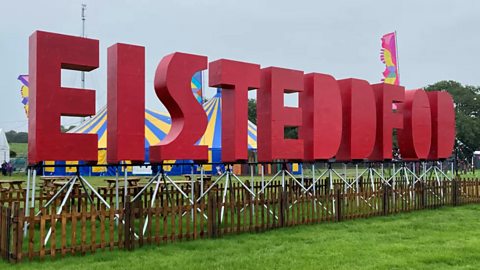
The National Eisteddfod continues to be held annually over a week at the beginning of August. It features eight days of competitions and performances, and is known as the largest festival of music and poetry in Europe.
It attracts 6,000 competitors, over 150,000 visitors and around 250 stands. The pavilion is the festival’s main stage, where a variety of choral, dancing, acting and writing competitions are held, for example.
Maes B
As part of the National Eisteddfod festival, Maes B has been held since 1997. Maes B is a festival of contemporary Welsh-language music held in the evening featuring performances from the most popular Welsh-language bands and artists.
Eisteddfod yr Urdd
Eisteddfod yr Urdd is Europe’s largest youth festival which is organised annually by the Urdd Gobaith Cymru movement.
Eisteddfod yr Urdd was first held in Corwen in 1929, and today up to 100,000 people visit the festival every year. Young people can take part in a wide range of competitions such as singing cerdd dant, instrumental, choirs to folk dancing and disco dancing.
Llangollen International Musical Eisteddfod
Thousands of people across the world come to Llangollen to compete in the Llangollen International Musical Eisteddfod. It began in 1947 in an attempt to heal and Boost the popularity of an idea or event. peace following the Second World War. By today, more than 5,000 singers, dancers and musicians from over 50 countries perform over six days.
Over the years, some famous faces in the arts world have performed at Llangollen, including Luciano Pavarotti (who competed with a choir from his hometown of Modena), Bryn Terfel, Hayley Westenra and Elaine Page.
Folk music in Wales
Folk music has been a part of the culture of Wales for centuries, and it was used as one of the main means of communicating in the old days. Welsh people used the harp, pipes and the crwth, a six-stringed instrument to create their folk music.
Folk music was frowned upon after the Acts of Union, due to the fact that English was prioritised. The Evangelical revival in the 18th century in Wales. in the 18th century put an end to many folk traditions and in the 19th century choral singing became more popular.
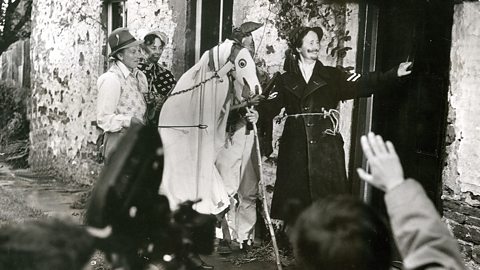
Despite this, folk music is an important part of ancient Welsh traditions that are still celebrated today, such as the Mari Lwyd at Christmas and new year. The Mari Lwyd is the skull of a horse on a pole with a white cloth over it, and is guided by a crew of people from home to home requesting access by singing. The people in the house are expected to deny access to the horse and its people, and both sides continue to respond to each other by singing. If the people in the house eventually Give up on something or stop disagreeing., the Mari Lwyd and its crew gain access and receive food and drink.
The Victorian Age and Land of my Fathers
The words of Hen Wlad fy Nhadau (Land of my Fathers) were written by Evan James in 1856, and the music by his son James James in the same year. The song’s words are probably Evan James’ response to his brother’s request for him to migrate to the United States of America. He says that “the land of his fathers” is good enough for him – in a time when a large number of Welsh people were The process of moving from one country to another. to the USA to seek employment and a new start.
The song was first performed in 1856 in Maesteg, before being sung at the Great Llangollen Eisteddfod in 1858. It was sung at an international rugby match for the first time in 1905 at a game between Wales and New Zealand.
The brass band culture in Wales also saw growth during this time, particularly in the south Wales valleys. The Cory Band, from the Rhondda was one of the most famous in the world.
The Victorian Age also saw the beginning of the choral culture in Wales, where one of Wales’ most famous songs, Myfanwy, was composed by Joseph Parry during this period. The popularity of hymns grew as a result of the Methodist revival in the 18th century. In 1859, a congregational hymnal book (‘Llyfr Tonau Cynulleidfaol’) was published by John Roberts. This prompted groups to join together to sing hymns, which formed the basis of the tradition of the hymn singing festival known as the Gymanfa Ganu.
The 60s
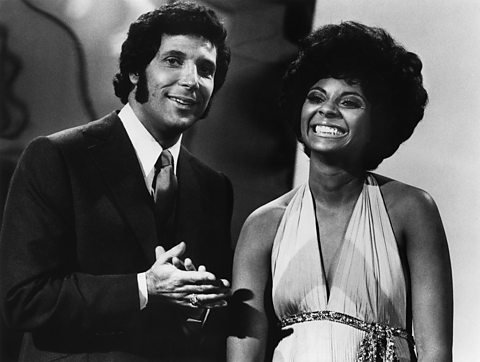
Two famous Welsh singers came to the fore in the 60s, Tom Jones and Shirley Bassey. Tom Jones, from Trefforest, has now sold over 100 million records with the most famous including It’s Not Unusual and Green, Green Grass of Home – which some say refers to Wales.
Shirley Bassey was born in Cardiff, and she was the first person from Wales to reach the top of the UK Charts with her single As I Love You, in 1959. She became even more famous for singing theme songs of three James Bond films.
Cool Cymru
The influence of Wales continued through the 1990s into the early 21st century, when the term ‘Cool Cymru’ was coined to describe Wales’s new cultural and artistic identity.
The success of Welsh bands such as Stereophonics, Manic Street Preachers, Catatonia, Gorky’s Zygotic Mynci and Super Furry Animals demonstrated that Wales is part of the world of popular music in the UK and internationally.
Contemporary music
In the 21st century, Welsh language music has continued to grow in popularity with bands and artists such as Adwaith, Alffa and Sage Todz. Many events are held all across Wales throughout the year that promote Welsh culture and performers. Since 2006, Tafwyl has been held in the city of Cardiff. Other events include Gŵyl Canol Dre in Carmarthen and Gŵyl Arall in Caernarfon.
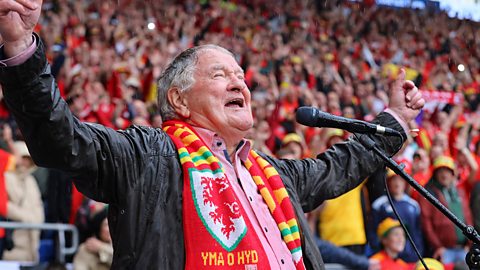
On an international stage, Dafydd Iwan’s song Yma o Hyd has grown in popularity from its origins as a protest song against the political situation in Wales at the time, to being sung at the Wales football teams matches in its bid to reach the 2022 World Cup in Qatar.
Quiz - The land of song
More on Identity
Find out more by working through a topic
- count2 of 2