How do living things use smell to communicate?
Video - How plants and animals use smell
In this video, learn about how animals (like ants and bees) and plants (like roses and orchids) use smell to communicate and survive.
Find out how animals and plants use smell to communicate.
Welcome, class, to this lovely botanical garden, where we’ve come to find out about how animals and plants use smell to communicate and survive.
Ants don’t actually have noses to smell with, but their antenna can detect chemicals called pheromones that are released by other ants.
Some ants lay trails of pheromones to mark a path to sources of food. When the food runs out, there are other ants that can lay repellent pheromones, which are a bit like stop signs, telling the ants to turn back when all the food’s finished.
Smell is very important to plants that need to attract pollinators, which are insects or birds that transfer pollen from one plant to another, letting the plants reproduce.
Different flowers have different smells to attract different types of pollinators. Bees like these tend to be drawn to sweet smelling flowers, like roses.
Careful not to get too close, kids. Just like the ants, bees also communicate using pheromones. When they feel threatened, they can produce alarm pheromones that signal all the bees around to attack.
Aaargh!
Not all flowers, of course, smell sweet. Some give off stinky smells that attract pollinating insects that like that sort of thing.
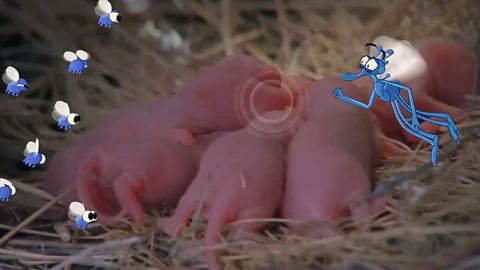
This bulbophyllum orchid for example, smells a bit like poo which attracts… Let me see… Oh yes, flies.
Do come along children, we don’t really have time to… Ooh, go on then. Sweet, stinky, orchid!
Quiz
More on Living things
Find out more by working through a topic
- count8 of 36

- count9 of 36
- count11 of 36