Greetings, Emit here!
Living things are adapted to their habitat. This means that they have special features or adaptationsthat help them to survive. Now, I’ve got MY furry jacket but polar bears have adapted the ultimatesurvival suits. Thick layers of fat and fur to keep them warm. And a white coat, camouflaging themagainst the snow to help them hunt.
I’m being hunted aren’t I?
POLAR BEAR ROARS!
Run!!
It’s fine…
It’s all under control…
Barely a flesh wound, now my friend – the polar bear – would get pretty toasty out here in his furcoat. But this giraffe has no problem! She can go for weeks without drinking water. She hascamouflage skin, a long neck for reaching the tops of trees and an amazingly flexible tongue forgrabbing leaves.
Oh, and beards…
Cheeky girl!
Adaptation
Living things are adapted to their habitats. This means that they have special features that help them to survive.
An African elephant, for example, lives in a hot habitat and has very large ears that it flaps to keep cool.
A polar bear, on the other hand, lives in a cold habitat and has thick fur to keep warm.
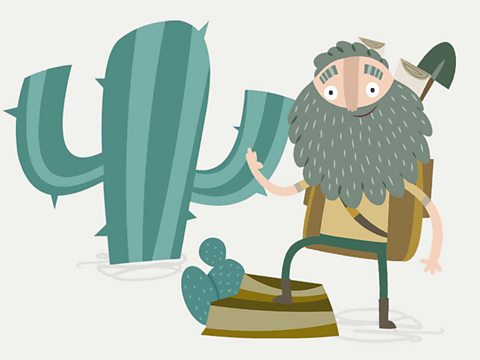
It’s not just animals that are adapted to their environment, plants are too. A cactus is well adapted for survival in the desert. They have long roots to collect water from a large area and a stem that can store water for a long period of time.
The animals and plants in one habitat are suited to live there and may not be able to survive in other habitats. When a habitat changes, the animals and plants that live there are affected.
More on Living things
Find out more by working through a topic
- count36 of 36
- count1 of 36
- count2 of 36

- count3 of 36