What is a habitat?
A habitat is the environment where different animal and plants live. It provides everything they needs to survive.
Habitats can be as small as a puddle or as large as a forest. They can be found on land, in water, and even in the air.
All animals need the same important things to survive; water, air, shelter and food and a habitat provides plenty of all of them for all the species that are found there.
Animals don’t choose their habitat because they are suited to it. Their adaptations (the features that make them suited to their environment) happened randomly. If these adaptations help an animal to survive then they are passed on to its offspring. This is called evolution.
Watch: How have different animals adapted to their habitats?
See how animals have adapted to live in different habitats all around the world.
Some animals live where the weather is always hot.
Now, this is a type of lizard called an agama. Agamas can't live where it's cold because they need the heat to keep their bodies warm. Lizards are cold-blooded.
These lizards love bathing in the sun and they have an unusual way of talking to each other. They use their curly tails to make signals. It's a bit like waving but, instead of using their hands to wave, these agamas use their tails.
So these lizards live where the weather is hot.
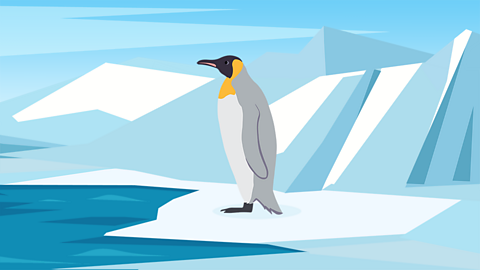
But these penguins live where the weather is snowy and cold.
They all have to huddle together when the wind blows and it snows. This is called a blizzard. And it is so cold and icy, the penguins are covered in snow!
Penguins are warm-blooded and they have a thick skin and are nice and fat to keep them warm. They have to go fishing in the icy cold sea for their supper. They are great at swimming. And the cold water doesn't bother them at all.
So these penguins live where the weather is cold.
In some places in the world, it rains for weeks and weeks on end. It's impossible to get out of the rain! This creature is sopping wet.
Birds don't mind the rain too much because they have waterproof feathers, so the rain runs off. And these fruit bats manage to keep dry by using their wings as umbrellas.
These bats live where the weather is wet.
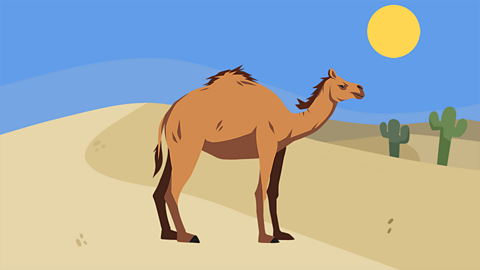
You might have seen these animals before. They are camels. Camels often live in the desert, where it's very hot and dry. The humps on their backs have fat in them, which means the camels don't have to have food and water for a long time.
Because deserts are so dry, when the wind blows, there are sandstorms. In the sandstorm, camels can close their nostrils and their big eyelashes help to keep out the sand. When camels find water, they drink lots and lots.
These camels live where the weather is dry.
Animals live everywhere.
Whether the weather is hot……cold……wet……or dry.
Fascinating facts
Polar bears have adapted to their habitat with their thick white fur that traps heat and provides camouflage.
The largest animal that has ever existed is adapted to an ocean habitat. The blue whale can grow up to 30 metres long and weigh 200 tonnes.
A rainforest habitat can receive between 2,000 to 10,000 millimetres of rain per year so the plants there have adapted to live in very wet conditions.
Foxes are omnivores which means they eat both other animals and plants in their habitat.
Frogs are vertebrates that eat invertebrates in their habitat such as snails and slugs.
Why does an animal live in a particular habitat?
Animals are often born in a particular habitat that meets their needs and they won’t ever need to move to a different one.
However, animals are capable of moving to new habitats if their current one becomes unsuitable e.g. it runs out of food and water or the temperature changes.
Animals choose environments based on these characteristics:
Food: Animals need food to survive. In their habitats - herbivores need plants to eat and carnivores need prey to eat. Omnivores can survive on both.
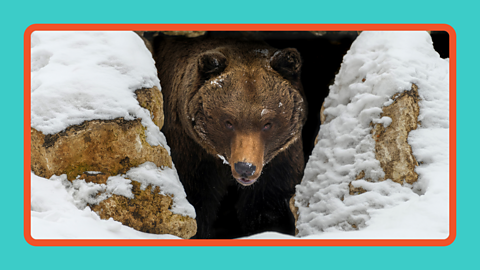
Shelter: Animals need shelter to protect themselves from predators, the weather or any other hazards. For example, bears like to shelter in caves and rabbits shelter in burrows.
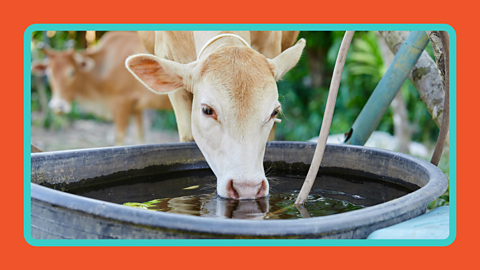
Water: All living things need water. Animals need clean water for drinking, bathing, and maintaining their body temperature.
Climate: Animals are adapted to specific climates. Tropical animals, such as tigers, monkeys or snakes, prefer warm, humid climates, whereas arctic animals, such as polar bears, are adapted to cold, snowy environments.
What is a habitat?
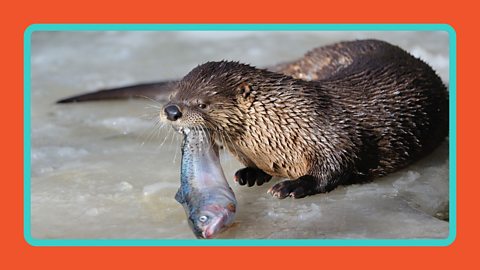
Image caption, Food
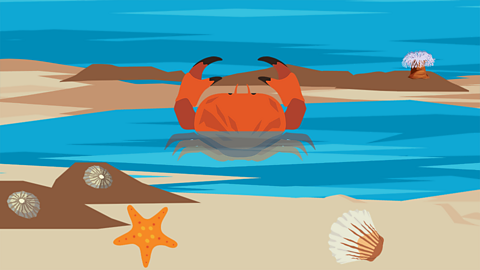
Animals need food to survive. A habitat must provide enough food for the animal to survive.
1 of 4
Did you know?
Some lichens and mosses have adapted to their environment and can grow without needing roots. They can take all of their water and nutrients from the air.
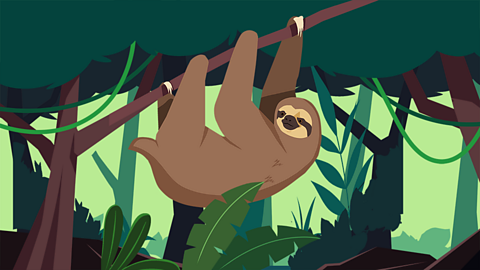
Sloths are very slow moving animals which live in tropical rainforests.
In fact, sloths are so slow moving that they will often have algae growing in their fur. Some sloths even have moths living in their fur!
The sloth provides a habitat for the algae. The algae can then help camouflage the sloth.
Important words
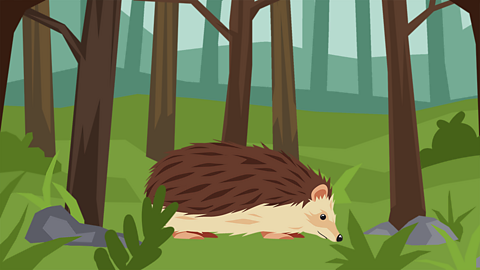
Adaptation – The way animals change to suit living in different conditions.
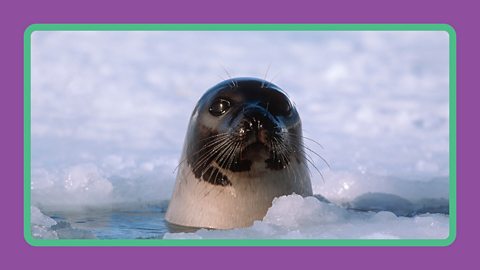
Air – All animals need air to breathe. Although they live in water, whales, walrus and seals all need to come to the surface to breathe.
Evolution – The way that animals can develop small differences over time.
Food – The things an animal or plant eats and obtains nutrition from.
Habitat – The environment where an animal or plant lives.
Shelter – Where an animal finds protection from the weather and predators.
Water – All animals need to drink or take in water to survive. Penguins can drink salt water.
Activities
Activity 1 – Take the quiz
Activity 2 – What is a habitat?

NEW Creative Lab game - summer update! game
Time to get creative as you paint, draw, build and design. Now with 3D sculpt mode, immersive backgrounds and new materials like wood, marble and gold. Plus summer-themed stickers and templates! Play Creative Lab today.

More on Living things and their habitats
Find out more by working through a topic
- count3 of 11
- count4 of 11
- count5 of 11
- count6 of 11