What is context?
Context refers to the background of a novel. It includes ideas about the author and important events and issues that were happening at the time it was written or set.
Boys Don’t Cry is a realistic novel set in recognisable, modern Britain. Its context reflects issues which are relevant today.
The author, Malorie Blackman, has spoken about drawing on some of her own experiences as a parent as inspiration for this novel, as well as wanting to challenge prejudice around teenage fathers.

Remember
In your essay on Boys Don’t Cry, you need to link to the wider context of the novel. You could:
- write about relevant aspects of the author’s background
- link to wider issues in society when the book was written and now
- explore possible messages for the reader.
Malorie Blackman
Malorie Blackman has written over 70 books for children and young adults. Many of her books have also been adapted for stage and television, including Pig Heart Boy and Noughts & Crosses.
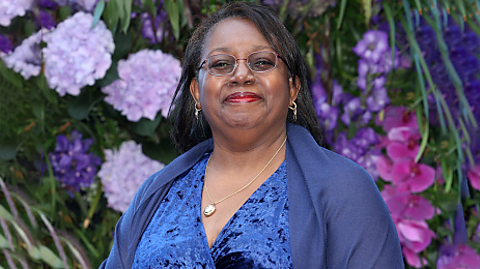
Blackman grew up in Clapham, London. She was a keen reader and noticed the lack of Black authors and characters in the books she read. She began writing from a young age, partly as a way to help cope with problems at home such as her parents’ separation.
As a young Black girl, Blackman says she faced Holding negative views on someone based on their race.. She felt that society had low expectations for her and, even though she dreamt of being a teacher, she was advised against it.
Blackman’s stories often feature teenage The main characters in a story. and explore the experiences and issues involved in growing up.
Her work is also known for including characters that represent all classes, races and sexualities. For example, Noughts & Crosses challenges racist stereotypes, whilst Pig Heart Boy explores animal rights and scientific advances.
Question
Malorie Blackman is known for addressing prejudice and social issues in her work. Can you think of any examples of these in Boys Don’t Cry?
Homophobia: Blackman addresses this most obviously through the characters of Adam and Josh, but also through Tyler and Dante.
She explores how homophobia can be immensely damaging, both emotionally and physically, and challenges the reader to look at their own attitudes and reflect on how their behaviours might support or harm the homosexual community.
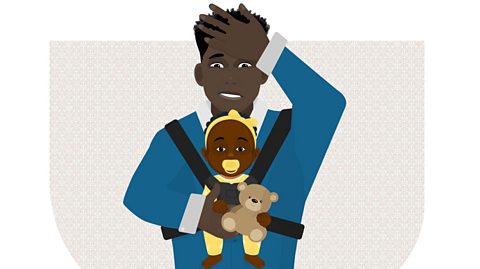
Teenage parents: The novel begins with Dante showing his own prejudice towards Melanie as a single teen parent before she reveals that Emma is his daughter.
A range of characters also struggle to believe that Dante could be an effective father due to his age and gender: he is verbally abused in a shop and called a "waster", the doctor’s receptionist suggests the mother comes back instead, and Veronica the social worker is clearly concerned.
Homophobia
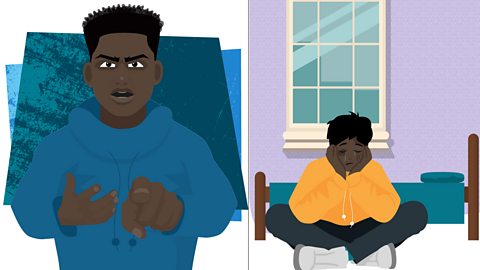
Civil Partnerships were legalised in 2004 in the UK but same-sex marriage was not legalised until 2013 in England and Wales. Boys Don’t Cry was published in 2011 – two years before this.
At this time, attitudes to homosexuality were the subject of debate – including the issue of same-sex marriage and adoption. This high-profile meant that members of the gay and other marginalised communities were at risk of discrimination, hate crime and violence.
In an interview about the book in 2011, Blackman shared her concerns, saying that "there seems to be less tolerance for people’s sexual orientation than there used to be".
In Boys Don’t Cry, Blackman clearly explores the damage that Showing dislike or prejudice towards gay people and same sex relationships. can cause, particularly through Adam and Josh’s relationship, but also through the attitudes of Tyler, Dante and his friends.
Question
Which characters does Blackman use to explore homophobia in Boys Don’t Cry?
| Character | Quote | Explanation |
|---|---|---|
| Dante | Dante tells Adam "This is a phase you’re going through and you’ll grow out of it" | Dante and his father don’t accept Adam’s sexuality. This is harmful for Adam as he feels he has to keep his boyfriend a secret. He is not able to discuss the unhealthy parts of his relationship or seek help from his family. |
| Adam | Adam says that Josh "wants me to whisper my way through life like him". | Adam is not ashamed of being gay and wants to live his life ‘out loud’. Blackman uses Adam to show how damaging homophobia can be. |
| Josh | Josh tells Adam "You’re disgusting". | Josh insults Adam for being gay, even though he is also homosexual. He seems ashamed of his feelings and hides them through aggressive homophobic actions directed towards Adam. |
Teenage pregnancy and single parenting
Blackman is a parent herself and understands the hard work and dedication needed to raise a child.
Through the characters of Dante and Melanie, she presents a sympathetic attitude towards teenage parents and helps the reader to understand and empathise with the challenges and pressures that teenage parents face.
Question
What do these quotes suggest about the challenges of parenthood?
Dante:
Dad, I have no money, no job, no way of looking after it.
Dante experiences financial difficulties as he is unable to find a job that also allows him to look after Emma. This means that he becomes more reliant on financial support from his father.
Melanie says that she has also struggled. Her and Emma have been living in "one bedroom in my aunt’s cupboard-under-the-stairs-sized flat".
Dante:
So will you look after the baby whilst I go to uni then?
Dante cannot afford childcare for Emma, and his father needs to work, so he cannot continue his education as planned.
Melanie dropped out of school when she became pregnant, before she could complete her A-levels, so her education has also been impacted.
Woman at the shop:
Wasters like you.
The woman at the shop, who verbally insults Dante, symbolises the prejudice towards teenage parents in the UK.
She believes the stereotype that teenage parents have carelessly thrown away their life chances and happily rely on government funding instead. This is not true of Dante or Melanie.
Melanie:
Sometimes the thoughts in my head scare me.
Melanie seems to be suffering from poor mental health when she visits Dante at the start of the novel. She is anxious, depressed and feels unable to look after Emma. With no one to support her, she resorts to leaving Emma with Dante.
Gender stereotypes
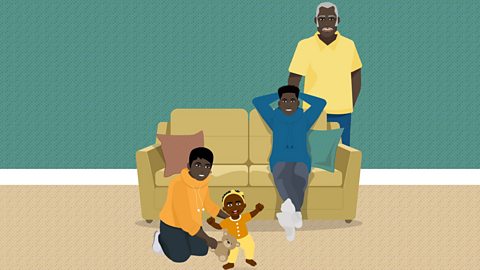
An image or idea about how a group of people behave and think based on their gender. Stereotypes can often be unfair and untrue. are an often untrue or unfairly held ideas about how different genders should behave. In Boys Don’t Cry, Blackman explores how harmful gender stereotypes can be.
For example, Dante and Tyler start off following typical male gender stereotypes – they want to be independent and don’t accept help, are career focused and unwilling or unable to speak openly about their emotions. This attitude to masculinity is ultimately shown to be unhelpful or ‘toxic’. Emma’s arrival turns their lives upside down and they learn that they need to support each other and share their emotions in order to survive.
Blackman also challenges the gender stereotype that all women will naturally take to being mothers. We see Melanie struggle to cope with Emma alone and Collette chooses to prioritise her education over her relationship with Dante.
In an interview in 2011, Blackman said that its "automatically assumed" that teenage fathers are "no good" and "worthless" and "expected to do a runner". To challenge this stereotype, she created the character of Dante who shows that men can be reliable, competent, loving parents – especially when they embrace their own feelings and connect with others.
Question
The phrase "boys don’t cry" reinforces the harmful idea that men shouldn’t show when they are sad and that crying is a sign of weakness.
Dante turns this phrase around and tells Adam that:
Boys don’t cry, but real men do.
What might he mean by this?
Dante might be saying that:
Showing emotion is healthy as it allows us to share and process problems
Sharing your true feelings is a brave act and should be praised
Bottling up emotion is immature and only makes the problem worse
Mental health

In 2021, suicide was the biggest cause of death for men under 50 in the UK.
Despite this fact, it is believed that men are less likely to seek help if they feel depressed. This could be due to unhelpful gender stereotypes around expressing weakness.
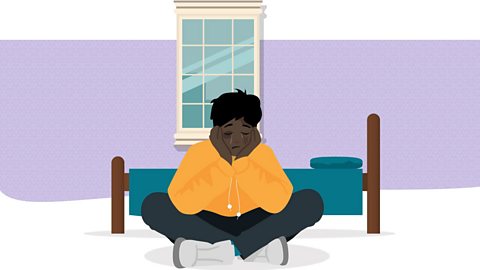
Dante, Tyler and Adam all feel depressed at various points in the novel and struggle to express themselves or reach out to others. Their poor mental health shows itself in their strained relationships, feelings of anger and isolation, and most dramatically in Adam’s overdose.
The character of Melanie also struggles with her mental health. She tries to adjust to life as a single parent, forced to move from one place to another without any real support, but the toll this takes on her is immense. With no family to turn to, she feels she has no choice but to abandon Emma to protect herself.
Through the events in Boys Don’t Cry, Blackman raises awareness of the impact of poor mental health and stresses the importance of talking about our emotions, particularly for men.
Adoption and foster care

Adoption and foster care are issues that drive key decisions in the book.
Dante considers putting Emma "up for adoption or to be fostered" when she first arrives, then later worries that she will be taken into care by the social services. He stops his attack on Josh when he realises the consequences could be a prison sentence which would mean he couldn’t look after Emma.
Melanie is also unwilling to "give up" Emma. She says "I took one look at Emma and I couldn’t do that either". She believes that Emma "will be better off" with Dante.
Dante and Melanie’s decisions may reflect their bonds with Emma, showing how emotionally difficult adoption and fostering can be for everyone involved.
Certainly Tyler is critical of Dante’s plans to "give up" Emma, which may reflect the fact that children in care tend to achieve lower levels of qualifications and have poorer mental and physical health than the general population.
Question
What is Veronica’s role as a social worker?
Social workers work within a community to help protect and support vulnerable people and families. When Veronica, Collette’s sister, first visits Dante and Emma, she says:
"I’m here in an unofficial capacity, but I do have a duty of care to make sure that Emma is in a stable, nurturing, safe environment."
This makes Dante feel threatened because he doesn’t want Emma to be taken away from him. However, he soon learns that Veronica is there to help. They discuss practical aspects of parenting and Veronica advises Dante on how to access child-benefits for Emma.
On her final visit, Veronica says, "I hope I’ve been of some use to you both". This highlights that her main aim was always to ensure Emma’s safety and help Dante and his family cope independently with this major change in lifestyle.
Race
Malorie Blackman has talked openly about her own experiences of racial prejudice as a Black woman, the low expectations of her when she was young and the lack of representation she saw in books. As such, race is a common theme in many of Blackman’s novels.
However, in Boys Don’t Cry, the Bridgeman family’s race is only mentioned once in Chapter 38:
God only knows what Josh said about me and other black people behind my back.
The character of Dante is ambitious, popular and academically successful – his race is deliberately not presented as an important plot point. By revealing the Bridgeman family's race so late in the novel, perhaps Blackman wanted readers to challenge their own unconscious biases and assumptions about Dante's character.
Blackman has said she tackles racism "by showing Black people doing everyday worthwhile things" and this is what is shown through Dante and his journey into fatherhood.
Quiz
Test your understanding of the context of Boys Don't Cry by taking this multiple-choice quiz.
GCSE English literature revision podcasts. audio
Whether you're at home or on the go, listen to these podcasts by Bitesize and BBC Sounds to refresh your memory of key texts.

More on Boys Don't Cry
Find out more by working through a topic
- count1 of 5
- count2 of 5
- count3 of 5