What do you know?
What is an industry?
An industry is any economic activity which creates jobs and generates income.
Key points
- There are four main types of industry: primary, secondary, tertiary and quaternary.
- The type of industry a country specialises in changes over time.
- There are social, environmental and economic impacts of industry.
Types of industry
Industry is any economic activity which creates jobs and generates income.
There are four main types of industry:
- Primary sector
- Secondary sector
- Tertiary sector
- Quaternary sector
Primary industry involves the production or extraction of The basic material from which a product is made eg copper or wool. and includes forestry, farming, fishing and mining.
Secondary industry is the manufacturing of goods. For example, the north west of England used to have a thriving textile industry making cloth from cotton, China has a thriving manufacturing sector producing electronics, and Germany is one of the largest manufacturer of cars.
A video explaining primary and secondary industries.
Industry is any economic activity which creates jobs and generates income.
All industry is made up of four sectors that are a linked together like a chain: primary, secondary, tertiary and quaternary industry.
Industries in the primary and secondary sectors are the oldest types of industry and involve working directly with raw products.
Primary industries are the starting point for all industrial activities. They involve the growing, extracting or collection of raw materials from the Earth or sea.
Farming, fishing and mining are examples of primary industries. Work in these industries tends to be hard and physical. In the past, it required a lot of human power or the use of working animals like horses.
Secondary industries are the second link in the chain of industries. Industries in this sector turn raw materials from the primary sector into a manufactured product. Examples of a secondary industry include food processing, which transforms raw produce into the food products we buy in shops. And energy production, where coal, water or other natural resources are used to generate power for our homes and businesses. Car manufacture is another good example of a secondary industry, as it processes raw materials like metal and rubber into the cars we drive around in.
Historically, primary and secondary industries were often sited close together to minimise the cost of transporting materials. Today, it's common for the raw materials used in manufacturing to cross oceans.
For example, in plane manufacture the component parts can be made in several different locations across the globe and brought to one place to be assembled.
While primary and secondary industries may be less visible in the economy of many developed countries like the UK, they remain the essential first steps in every product that you use or consume.
Tertiary industry involves providing services to people, for example a cleaner or a doctor.
Quaternary industry is the newest sector and focuses on Industries related usually to high-tech industry, the service sector or business services. These usually rely on people rather than physical inputs such as raw materials. or high-tech industries such as ICT (information and communication technologies) and research and development.
A video explaining tertiary and quaternary industries, what they are and how they fit into global economy.
All industry is part of a chain that starts with primary industry: the production or extraction of raw materials, like agricultural products or mining; and secondary industry: the processing of these raw materials into usable products.
Next in the chain come tertiary and quaternary industries, also known as the service industries. Tertiary and quaternary industries tend to be more important in more economically developed countries.
The tertiary sector includes the selling of the goods that have been produced in the primary and secondary sectors. This might be in shops or online.
Tertiary industries also include the selling of services and skills, for example financial services, legal services, health services, hospitality services and also the transportation of goods and people.
The most recent types of industries are the quaternary industries which support and develop the service industries and often involve information, technological and digital services.
This sector really grew in strength during the latter half of the twentieth century.
Examples of quaternary industry include computing, consultancy, project management, education and research and development.
Digital products, like the new game everyone's downloading or the latest phone, are all developed in the quaternary sector.
In the past, primary and secondary industries were the biggest employers in the United Kingdom. But towards the end of the twentieth century, the manufacturing sector here greatly declined and the digital revolution saw new industries and ways of working come to prominence.
Today, most jobs in the United Kingdom are found in the tertiary and quaternary sectors which employ over three quarters of the workforce. They tend to focus around big towns and cities. It's thought that future economic growth in the United Kingdom will focus around this sector.
What are some examples of primary industries?
Primary industry includes farming, fishing and mining.
Test your knowledge
Phases of industry
What industry or industries a country focuses on changes over time and can be shown using the Clark Fisher model.
The model is split into three phases:
- The A time before there were machines to produce goods on a large scale. phase – a country is mostly focused on the primary sector and the main activity is likely to be agriculture.
- The industrial phase – secondary and tertiary sectors increase in importance. Primary sector activities start to decline. For example, in cities such as Manchester and later Liège in Belgium during the The period in the 18th and 19th centuries when European countries and the United States began to use machines to produce goods on a large scale. .
- The A post-industrial economy is when manufacturing is replaced by service industries. phase – manufacturing starts to decline as the tertiary sector becomes the most important sector and A sector that consists of those industries providing information services, such as computing or research and development. start to develop. Only a very small percentage of the overall population will now be involved in primary industries.
Question
In the pre-industrial phase, which sector employs the most people?
In the pre-industrial phase, the primary sector employs the most people.
The effects of industry
Different countries around the world are at different stages of industrial development and there are regional variations within countries. Countries rely on each other for the manufacture and sale of goods to take place. For example, raw materials may be bought in one country, used to manufacture goods in another, and then sold in a third country. This can have positive benefits as it improves co-operation between countries through international When countries buy and sell to one another. but can also be a source of conflict.
As countries develop, they move through the phases of the Clark Fisher model. When a country no longer mainly manufactures goods and moves into the service sector, this is known as de-industrialisation.
Economic effects
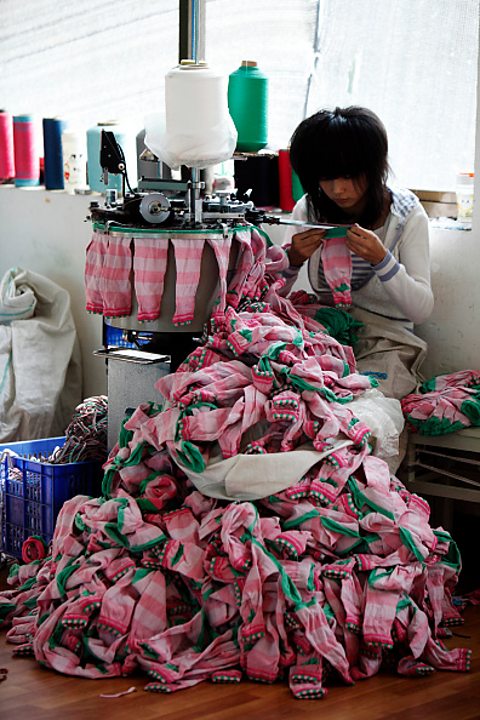
The transition of phases (Clark Fisher model) can happen for a number of reasons but one of the most significant is the Relocate (a business for example) to a foreign country to take advantage of lower taxes or costs. of manufacturing from a high-income country (HIC) to a low-income country (LIC) or a newly emerging economy (NEE). An example of this is the relocation of aeroplane engine production from Barnoldswick in Lancashire, in the UK, to Singapore. This is done for a number of reasons:
- To increase profits by exploiting the lower cost of The effort put into making something by the workers. by paying lower wages.
- To take advantage of less rigorous rules for example fewer environmental or health and safety laws.
Social effects
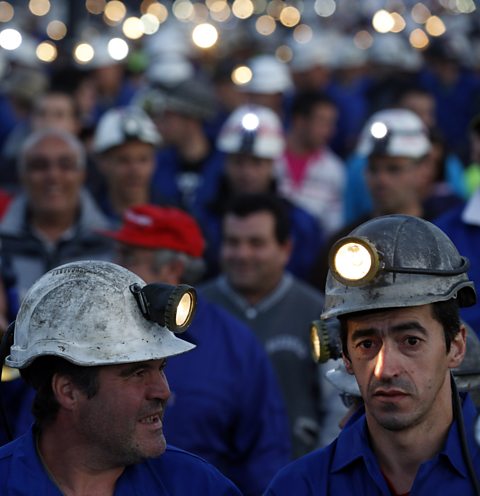
When primary and secondary industries, and their workers, are abandoned in favour of new industries this can lead to A serious disagreement between individuals or groups. within a country.
This happened in the United Kingdom in the 1980s as the government decided to move from the secondary sector to a new phase of post-industrialism, where the tertiary and quaternary sectors were encouraged.
The decline in primary and secondary industries in many places has led to unemployment and many other Problems related to people eg health or wellbeing..
The countries who benefit from a decline elsewhere in primary and secondary industries are the Countries that have rapid industrialisation along with economic development. (NEEs). Nigeria, for example, as it moves into the industrial phase of their development and begins to develop tertiary industries, can use the money generated to improve schools, hospitals and infrastructure in the country and provide jobs for the workforce.
Environmental effects
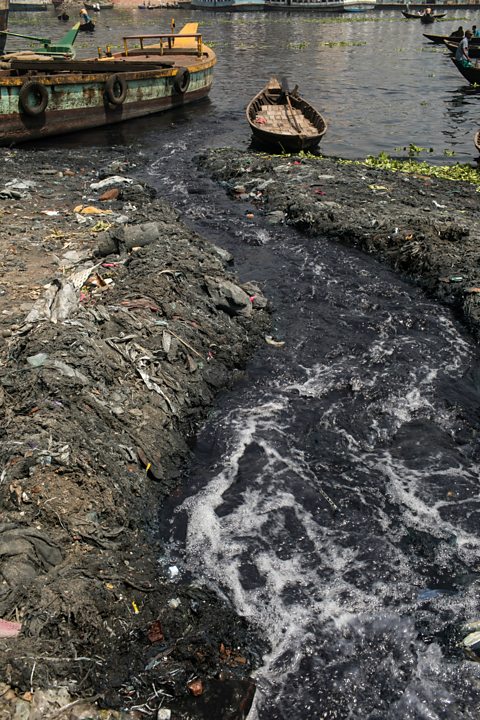
There may also be negatives for these countries as industry can be polluting.
For example, leather manufacturing is one of the largest causes of pollution in the River Ganges in India. This includes waste water from factories being released into rivers and lakes along with chemicals.
Increasingly there are calls for a new ‘Green Industrial Revolution’ in manufacturing with a move away from polluting industries such as energy production using fossil fuels towards the development of green, environmentally friendly, technology such as wind turbines.
In 2020 the UK government announced a ten point plan for a green industrial revolution to support green jobs and move towards a An economy based on low-carbon power sources that has a minimal output of carbon dioxide and other greenhouse gases into the atmosphere..
Political effects
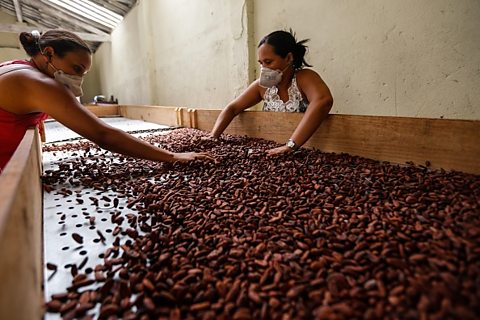
Low-income countries (LICs) tend to still rely on the export of raw materials, such as cocoa beans, to more developed countries to be converted into manufactured goods, such as chocolate. This can lead to exploitation of the poorer countries by those who are richer and reinforces the dominance of already powerful nations.
Question
When a country no longer focuses on manufacturing goods and moves into the service sector what is this process called?
When a country no longer focuses on manufacturing goods and moves into the service sector this is known as de-industrialisation.
Test your knowledge
Solve the Story!
An exciting new series from the Other Side of the Story, designed to help young people strengthen their media literacy skills.

More on Development and globalisation
Find out more by working through a topic
- count3 of 3
- count1 of 3