What is a net?
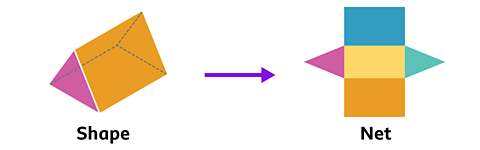
The net of a 3D shape is what it looks like if it is opened out flat.
There are many types of nets for the different 3D shapes.
A net is made from polygons that can be folded and joined to make a polyhedron.
Here is the net of a triangular prism.
Quiz: Nets of 3D shapes
Why not see how much you know about this topic already? Then complete the page and see if you can beat your score.
Polygons and polyhedrons
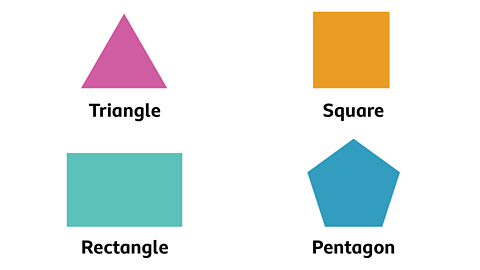
A polygon is a flat shape with straight sides.
Triangles, squares, rectangles and pentagons are examples of polygons.
A polyhedron is a 3D shape with faces made from polygons.
Cubes, cuboids, tetrahedron and prisms are examples of polyhedra.
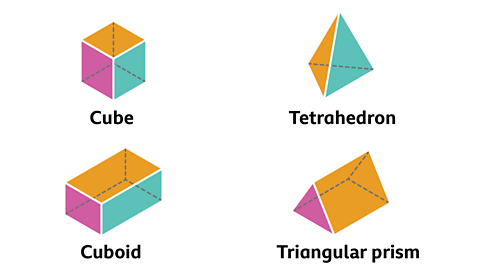
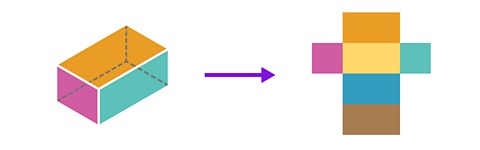
When you open out a polyhedron as a net, it shows all the polygons that it is made from.
For example here is the net of a cuboid.
Nets of cubes
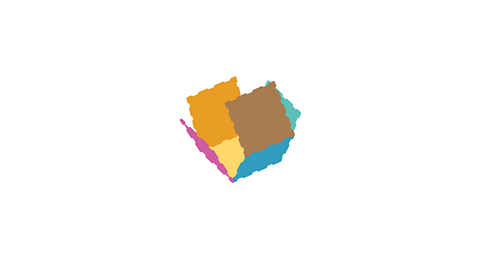
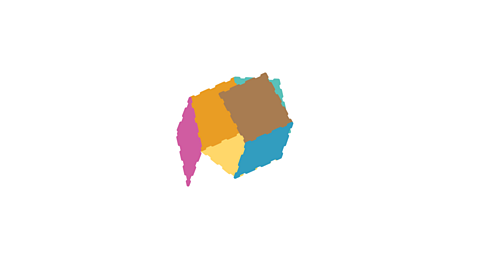
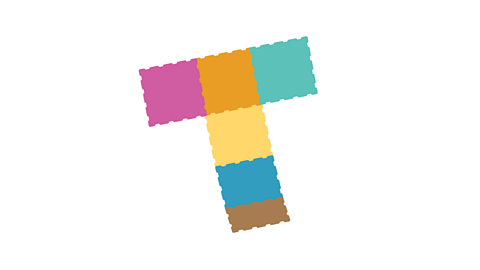
A cube is a 3D shape with 6 square faces.

Image caption, Click quickly through the slides to see how it can open out into a net.
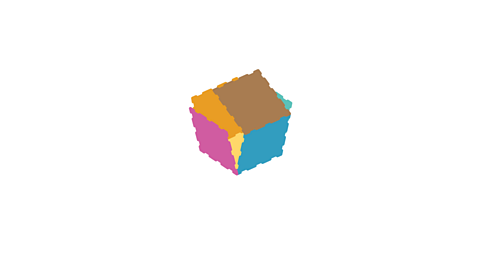
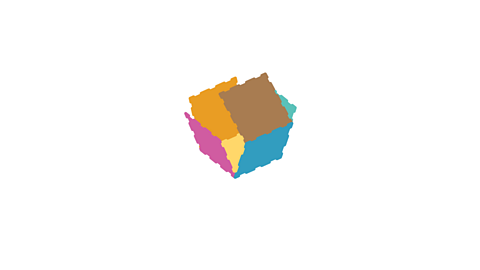
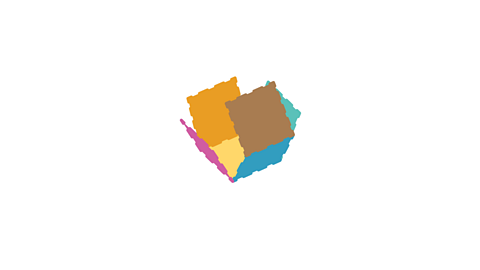
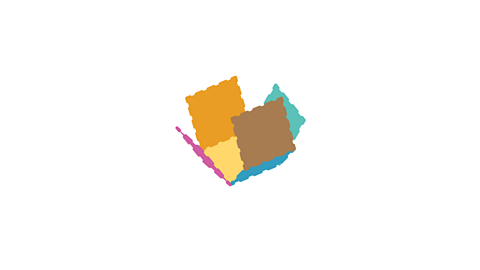

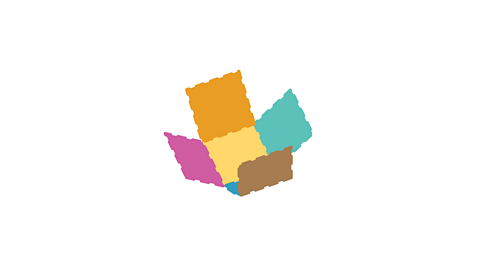
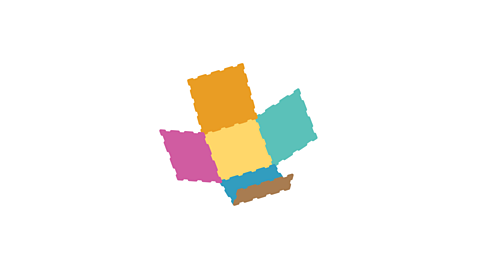
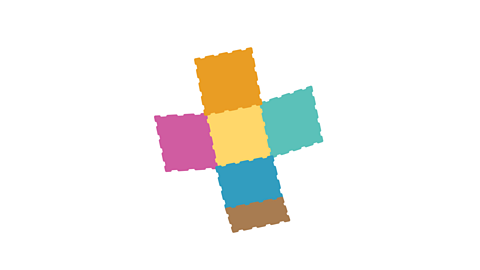

1 of 10
If the net is closed up again, it can open into a different net.

Image caption, Click through the slides quickly to see the net of the cube close up and open up again.
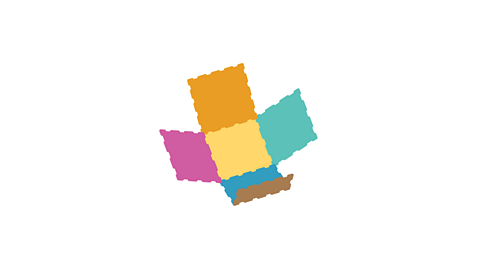





1 of 10
There may be several possible nets for one 3D shape.
Nets of 3D shapes
The nets of 3D shapes help you see some of the properties of the shape.
This net of a tetrahedron shows you the shape of each face and the number of faces.
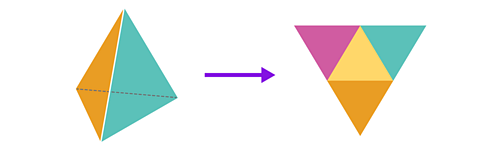
Can you see that a tetrahedron has 4 triangle faces?
Now let’s look at the net of another shape.
Here is the net of a triangular prism.
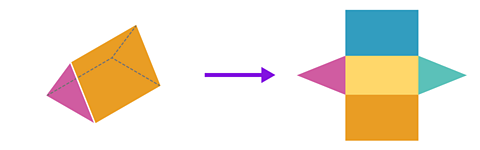
Can you see that a triangular prism has 5 faces. It has 2 triangle faces and 3 rectangle faces.
When you have the net of a 3D shape, look carefully at the shape of each face and the number of faces to work out which 3D shape it is.
Example
Another name for a tetrahedron is a triangular pyramid.
Other pyramids are named after the shape of the polygon at the base.
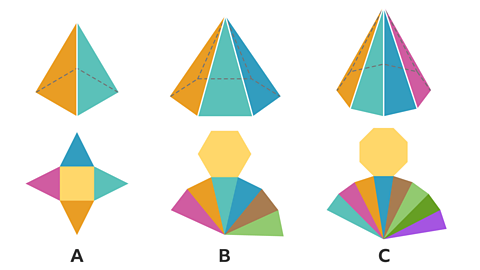
What are the names for these pyramids?
✓ Look at the base to work out the answer.
A) square pyramid.
B) hexagonal pyramid.
C) octagonal pyramid.
What do you notice about the number of faces for each pyramid?
The number of faces is 1 more than the number of sides of the base polygon.
Primary maths teaching resources
Visit BBC Bitesize for Teachers to see videos, activities and more resources to use in maths classes for KS1 and KS2.

More on 2D shapes
Find out more by working through a topic
- count1 of 6
- count2 of 6

- count3 of 6

- count4 of 6