Watch: Punishing crime in Tudor Britain
Watch this video to find out how crime was punished in Britain during Tudor times.
Woman: Please sir, I’m hungry and tired. Could you spare a little food?
Man: Get away, you vagabond! We don’t like your type here.
DOOR SLAMS
Woman: Please, could you spare some food?
Man: Get away from here! Dirtying our streets. Constable, we’ve got another vagabond.
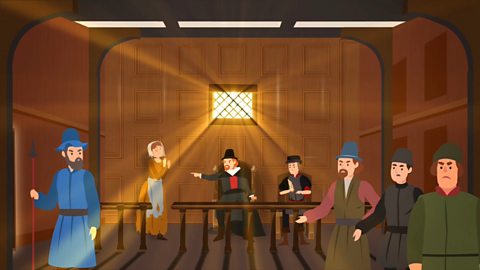
Judge: You’re accused of vagrancy, wandering around the country, no job to speak of. Shame on you!
Man: We don’t want any vagabonds in our town!
Man 2: Scaring our kids!
Man 3: Stealing from us hardworking folks.
Judge: Silence! The sentence for vagrancy is to be burned through the ear and then lashed ten times.
Woman: no, please sir! I was just starving and trying to survive!
Judge: Silence, and if I find you are still a vagabond in our town, you’ll be sentenced to death.
Life was hard in Tudor Britain
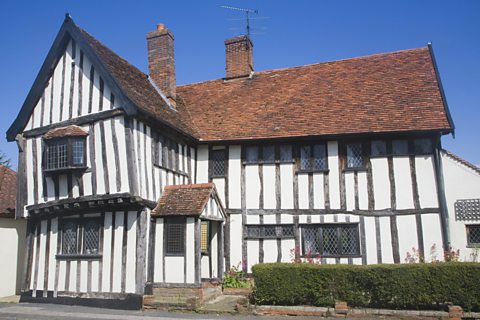
- The Tudor period was from 1485 to 1603CE.
- This was a time of many changes. Explorers discovered new lands. Maps had to be rewritten and there were religious changes in England and Wales.
- There was religious fighting between the Protestant and Catholic faiths.
- The church was a centre for communities. Most people were very religious and went to church regularly.
- Life for people hadn't changed much since medieval times.
- Life could be harsh and many people died before they were 35.
- Most of the population lived in small villages and worked by farming.
- When the harvest failed it was tempting for poor people to steal food to feed their families.
How did parish constables keep control?
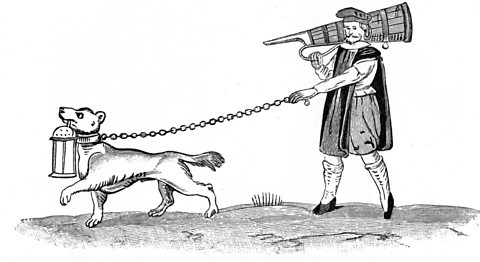
- There was no police force in Tudor times.
- Often in smaller towns and villages, preventing crime was left up to the people. Some villages and towns employed Parish Constables who would be responsible for keeping the peace and catching criminals.
- The laws were strict and most crimes were punished severely.
- People believed if a criminal’s punishment was painful enough, then it would stop others from doing it as well.
How did the Tudors punish people?

- Whipping was a common punishment for a wide variety of crimes. Vagrants (homeless people), thieves who stole goods worth less than a shilling and those who refused to attend church could all be whipped.
- Being branded (burned) with a hot iron was another common punishment.
- Criminals were also locked in stocks. These were large wooden frames that held your head between two planks of wood. Stocks were placed in the centre of the village so everyone could see you were being punished and could make fun of you.
- The worst punishments were reserved for the most serious crimes. Executions, such as beheading, being hung, drawn and quartered or being burnt at the stake were punishments for people guilty of treason (crimes against the king) or heresy (following the wrong religion).
- Executions were public events that people would come to watch. They were very popular and huge crowds would attend.
Activities
Activity 1: Tudor crime quiz
Activity 2: Compare and contrast
Listen to this Tudors sketch from BBC School Radio
- Write down all the surprising things that were considered crimes in Tudor times.
- Listen out for where you should be on a Sunday and what games you shouldn't play!
Horrible Histories: Raid and Trade game! game
Play Horrible Histories: Raid and Trade KS2 History

More on Crime and punishment
Find out more by working through a topic
- count4 of 5
- count5 of 5

- count1 of 5

- count2 of 5