What is solar energy?
Solar power uses the energy of the Sun to generate electricity.
In this article you can learn about:
- How the Sun's energy gets to us
- How solar cells and solar panels work
- What energy solar cells and panels use
- What the advantage and disadvantages of solar energy are
This resource is suitable for energy and sustainability topics for primary school learners.
Video - What is solar energy?
In this video, learn about solar energy and how the Sun's energy gets to us.
Allow me to introduce Solar Power - Sol, for short.
She's a wee bit shy. Especially when it's dreich, or grey out.
But when the sun finally shows its face… Well, Sol is just bursting with energy.
And that's because she uses sunlight to generate electricity.
Dundee is one of the sunniest places in Scotland. So it's the perfect place to demonstrate the power of the sun.
Light from the sun travels to the earth in just over 8 minutes. That's 147 million kilometres in the time it takes you to have a shower.
When the sunlight gets to Dundee the first thing it does is warm us all up a bit!
In fact, some houses have hot water solar panels and they use the sun to heat the water you shower in.
But Sol is a different, even cleverer type of solar technology, called solar cells.
She generates electricity.
You'll have seen solar cells on calculators and… other things.
Their most common location is rooftops, where they're contained within solar panels. Rooftop solar panels use a material, called silicon, to help transform some of the sun's light into electrical energy.
This electrical energy then flows into the house, where it's used to power your hairdryer… after your 8-minute shower.
But, just like your hairdryer, solar panels get hot. They actually end up wasting quite a bit of energy through heat.
Even worse, solar panels don't work at all when it's dark and they don't store energy. So, if you want to use electricity at night, you have to get it from the grid like everyone else.
But solar farms, like this one in Perthshire, can power thousands of homes, even at night. And that's because they have big batteries that store extra energy built up over sunny days.
So there she is – Sol.
A sensitive soul of a renewable energy type.
She's not very much use when it's cloudy and no use at all at night. And, she wastes a fair bit of energy through heat.
But, on the plus side, she's renewable, she doesn't produce any harmful gases and, best of all, once you've bought the solar panels, the energy she produces is free.
See you, Sol!
Why is solar energy useful?
The Sun generates radiant energy that it gives off as heat and light. The light of the Sun travels the 147 million kilometres to Earth in just over 8 minutes. Lots and lots of the Sun’s energy reaches Earth every day.
How do solar panels work?
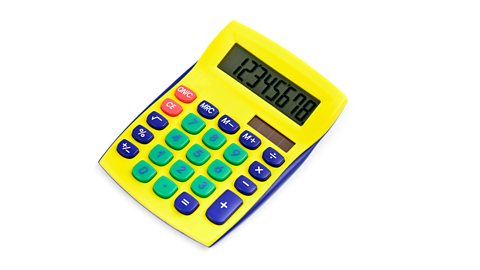
When sunlight hits the Earth’s surface, we capture some of it using Solar panels are used to produce electricity. They can be found on buildings but can also be used on a solar farm to harvest the power of the sun. Solar panels are made from lots of solar cells. - large panels made up of Solar cells are put together to make a solar panel. Made from a material called silicon, solar cells convert the light from the sun into electricity..
You can see an example of solar cells on the top of some calculators.
If you cover up the solar cells for long enough, the calculator will go off because the light is no longer able to reach it to power it.
When sunlight hits layers of silicon inside solar cells, an electric charge builds up, creating a flow of electricity.
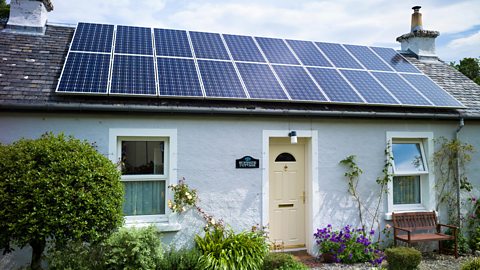
Solar panels are mainly located on the roofs of homes and buildings and can generate electricity and heat water free of charge.
In the Northern Hemisphere (including Scotland) solar panels work best when they face south. This lets them face towards the sun all day.
Because solar panels rely on sunlight, they only generate electricity during the daytime when sunlight is shining on them.
If it is cloudy, they are less effective and if it is night time, they do not generate any electricity.
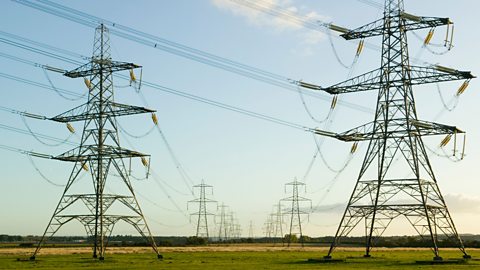
If you have solar panels and use electricity at night, you will be accessing power from the The name given to the network of pylons and power lines that transport electricity to our homes, schools, offices and businesses., not the solar panel. This is because solar panels do not store energy.
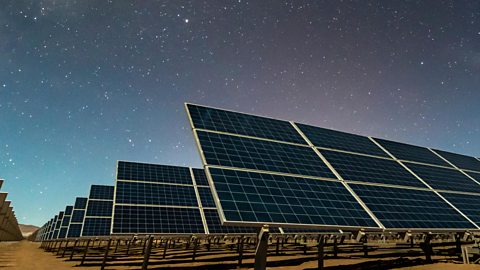
Image caption, Solar panels will not generate power at night time because there isn't any sunlight. (Francisco Javier Ramos Rosellon / Alamy Stock)
1 of 2
What is a solar farm?
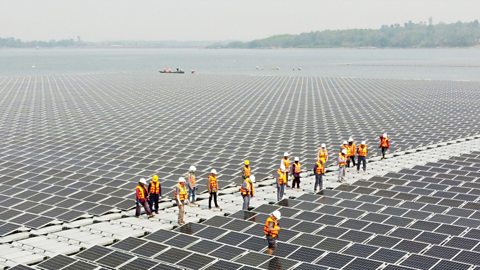
Solar farms are large areas of land that can be covered with thousands of solar panels that generate lots of electricity.
Some solar farms have fixed solar panels that always face the same direction. Some have moving panels that turn so that they always directly face the Sun. This helps them generate as much electricity as possible.
Solar farms have batteries which store energy so that they can keep providing electricity to thousands of homes even when there is no sun.
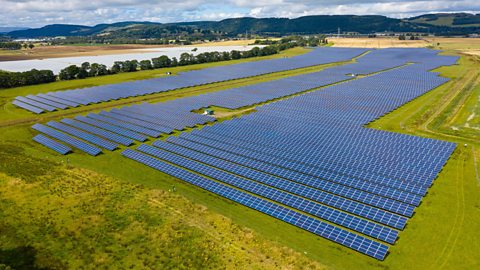
Image caption, Errol Estate in Perthshire, Scotland
Scotland’s largest solar farm at Errol Estate in Perthshire opened in 2016. It has 55,000 solar panels which provide electricity to more than 3,500 homes
1 of 2
What is light energy?
The Sun has light energy which travels to Earth and is then captured by the solar panels.
Other things that give off light energy are lightbulbs, fire, a torch and traffic lights.
It can be easy to confuse light energy with heat energy because lots of things that give off light energy also give off heat energy.
It is important to remember that is only the light energy from the sun that solar panels use.
The temperature does not change the amount of energy generated by a solar panel, so it doesn't matter if it is a hot or cold day, It is only the strength of sunlight that makes a difference.
The advantages and disadvantages of solar energy
Advantages of solar energy
It is Something that does not run out when used. because the Sun’s energy is not going to run out for billions of years.
Solar panels create no harmful gases, so it is very environmentally friendly.
If the sun is shining on a solar panel on your house, you are able to use the energy for free, reducing electricity bills.
Learn more about the Sun and how the Sun's heat and light affect our daily life: What is the Sun?
Disadvantages of solar energy
Solar panels are not useful when it is cloudy (which means solar farms are more effective in places with less cloud cover).
Solar panels generate no electricity at night time.
Solar panels can't store energy, so you have to use the electricity they generate when the sun is shining. You need batteries to store the energy generated. These are expensive.

Key words about solar energy
Check your connection, refresh the page and try again. – Solar cells convert the light from the sun into electricity. Many solar cells can be put together to make a solar panel. Solar cells are made from a material called silicon.
Check your connection, refresh the page and try again. – Solar panels are used to produce electricity. They can be found on buildings but can also be used on a solar farm to harvest the power of the sun. Solar panels are made from lots of solar cells.
Check your connection, refresh the page and try again. – Silicon is a chemical element found in the earth’s crust. Silicon is used in computer chips, solar cells and in other electronic devices.
Check your connection, refresh the page and try again. – The National Grid is the name given to the network of pylons and power lines that transport electricity to our homes, schools, offices and businesses.
Test your knowledge
Quiz
Challenge
Make a leaflet
Make an information leaflet to persuade someone to install solar panels on their house.
Mention the advantages and disadvantages and explain how the solar panels use the Sun’s energy to generate energy for their home.
Here are some top tips for designing a leaflet: How to create a leaflet
More on Sustainability
Find out more by working through a topic
- count10 of 16
- count11 of 16
- count12 of 16
- count13 of 16