What are multiples?
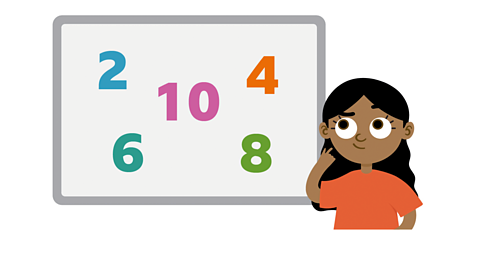
A multiple is a number that can be divided by a smaller number, or itself, an exact number of times, without a remainder.
Another way to think of it is that multiples of a number belong to that number's times table.
For example, the multiples of 2 are all the numbers in the 2 times table.
The multiples of 2 are 2, 4, 6, 8, 10…
The multiples of 5 are 5, 10, 15, 20…
Activity: How to spot multiples
Complete this interactive activity to better understand multiples. Then put your knowledge to the test.
Looking out for remainders
You can use blocks to help you work out if a number is a multiple of another.
If you can put the cubes into equal groups with none left over, then you can say that the number is a multiple.
If there are blocks left over, then the number is not a multiple.
Here are 16 blocks.
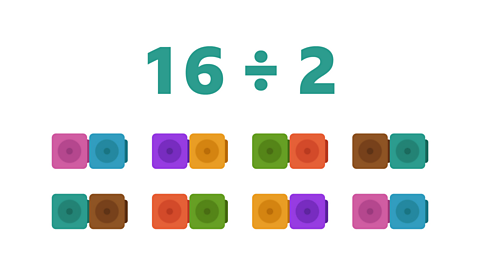
Image caption, You can divide 16 by 2 and there are no remainders, so you can say that 16 is a multiple of 2.
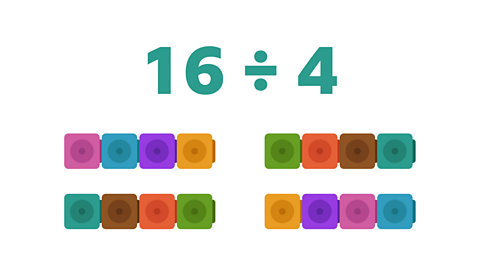
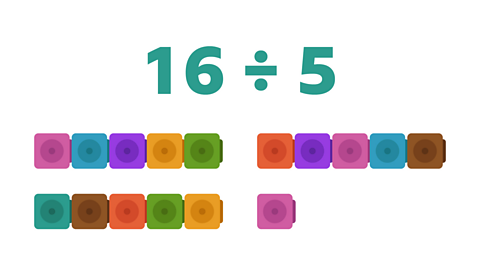
1 of 3
Example 1
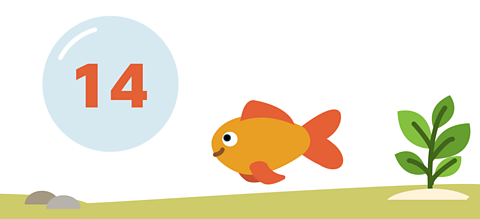
Is 14 a multiple of 2?
✓ Yes. 14 is a multiple of 2.
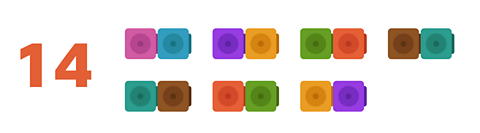
You can arrange 14 cubes into equal groups of 2 and there are no remainders.
Example 2

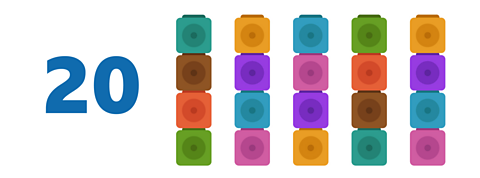
True of false? 20 is a multiple of 4.
✓ True. 20 is a multiple of 4.
20 can be divided by 4 and there are no remainders.
Example 3

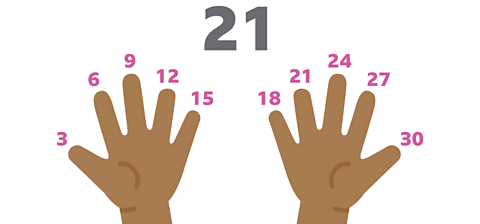
Is 21 a multiple of 3?
✓ Yes. 21 is a multiple of 3.
You can quickly check by counting up on your hands in 3s.
Karate Cats Maths game. game
Train with the Karate Cats to become an expert in addition and subtraction, multiplication and division, place value and more!

More on Number
Find out more by working through a topic
- count25 of 25
- count1 of 25

- count2 of 25

- count3 of 25