Introduction
This study guide will cover the following:
How to make plans and take decisions to further a person's career - Career plans.
Following through on plans and making progress - this is career action.
What is career planning?
Career planning is a lifelong process.
When people land their dream job, they often think they are set up for life. However, the business world changes rapidly and individuals must be prepared to change as well.
How can an individual plan their career?

The first step for an individual in developing a career is to evaluate their career to date and to identify strengths and areas for improvement. The four stages of career evaluation are:
- reviewing and evaluating learning, progress and achievements
- goal setting
- target setting
- taking action
Why is reviewing and evaluating learning and achievements important?
A person should think about their personal qualities, skills and attitudes.
It's important to remember:
| Personal | Definition | Examples |
|---|---|---|
| Skills | Something you can develop | • Problem solving • Communication |
| Qualities | Something which a person possesses | • Ambition • Honesty |
| Attitudes | How a person thinks or feels about something | • Sport is brilliant for improving mental health |
- Are there any skills, qualities or attitudes that could prevent someone moving forward in their career?
- Are there skills that they need to improve or attitudes which they should reconsider?
- If there is a particular skill, quality or attitude which an employer would not like then this is the time to try and target and improve in this area.
When an individual has identified the skills, qualities or attitudes they could develop or improve, they can then start to set goals to help achieve this.
What is goal setting?
Think about goal scoring in sport; this would be considered the main objective in the game and when the goal is achieved, the player would feel personal satisfaction and pride that they have done what they set out to do.
The same applies to setting goals for a career.
Short-term goals

An individual should start off by setting short-term goals. These are goals which they would like to achieve within a short timeframe, like six months or one year’s time.
Some short-term career goals could be:
- completing a training course
- attending a conference
- getting support with a particular part of a role which an individual finds challenging
- find a mentor to give career guidance
Long-term goals
These are goals which an individual would want to achieve in the future - five, ten or twenty years from now. In order to achieve these, it is likely that an individual will need to complete short-term goals which will help them to reach their final long-term goals.
What is the difference between a long-term goal and a short-term goal?
The difference between a long-term goal and a short-term goal is illustrated by the following example.
Long term goal
Joan works in a leisure centre and would like to progress from administration assistant to a team supervisor.
BUT
In order to do so she will have short term goals to achieve first.
Short term goal
Joan will need to complete qualifications in leadership to be in a position to apply for a promotion and become a team supervisor.
Why is target setting helpful?
Using SMART targets will help an individual to meet their goals.
- Specific – be precise about what achievement.
- Measurable – how will a person know when they've achieved their goal?
- Achievable – is it possible to reach goals?
- Realistic – don’t set standards too high.
- Time – give a deadline.
How important is taking action?
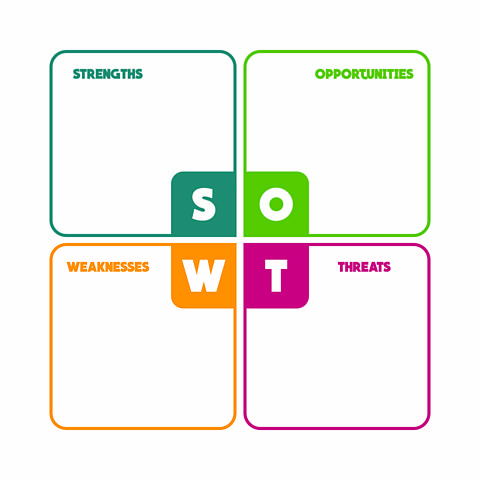
What is the SWOT Technique?
After setting goals, it is time for action.
An individual could draw up an action plan including all their goals and the steps they need to take to achieve them.
People should use the SWOT technique to determine:
Strengths
What are they good at?
What are they passionate about?
Weaknesses
Which areas need development?
What roles or tasks should they avoid?
Opportunities
What possibilities are open to them?
Who can give them support or mentorship?
Threats
What challenges will they encounter?
What might restrict them?
What external influences can help with career progression?
A manager isn't the only place to look for support in the workplace. There are several options for getting the guidance needed to help with career progression:
Find a mentor
- A mentor is a person who has the skills and experience that an individual would want for themselves, or is working in a respected role.
- A good mentor provides advice on how to achieve an individual’s goals. They might suggest relevant training, or give advice when there is a difficult decision to make.
However, if the mentor has a negative attitude towards their work, this could influence the individual’s opinion also. It is vital to choose a mentor who will not share some of their ‘bad’ habits in the workplace as this could lead to poor practice in the workplace.
Industry knowledge
- Set aside time to read about industry related issues in magazines and blogs. Attend conferences and seminars where there will be an opportunity to liaise with like-minded people and keep up-to-date with the latest thinking in the field.
However, some of these courses can be expensive or travel might not be a possibility.
- Sign up to a professional website like LinkedIn, where there is an opportunity to make contacts and see the latest training and job opportunities.
Talk to family and friends
- Family and friends know you better than anyone else. Talk to them about career objectives. They might help you to see a side of yourself that you rarely consider, or identify skills that no one else is aware of.
However, family and friends are unlikely to have seen someone in a professional context before and might underestimate their capabilities.
Family and friends may have their own agenda when giving advice such as wanting someone they love to to stay close to home and not do a job which involves travel.
Talk to teachers
- Teachers can provide another perspective on a career. They see students at school, where they’ve done most of their work to date. They can give advice on jobs that might suit an individual’s strengths and also give information about courses they can take.
However, teachers will have their own subject preference and could unintentionally encourage a student to pursue a job in an industry they are not interested in.
Talk to careers teacher
- Careers teachers are specifically trained to give students employment advice. They have up-to-date information about the job market, understand which skills are necessary for a range of careers and understand the challenges that young people face in the job market.
However, there are new and emerging careers and industries which the career’s teacher may not yet have knowledge of and therefore would be unable to give students relevant and or up-to-date information.
Government organisations
- Go online to see what courses and training are available for all career interests.
- Learn Direct and the Open University are good places to start. The Job Centre, or NI Direct are also excellent places to get some career advice.
However, there can be a lot of information to absorb online and it can be confusing to locate the information which is specific to an individual's needs. There might also be technical terms related to specific industries which may be difficult to understand.
The Media
The media will promote specific jobs and industries where there are skills shortages or a recruitment drive. This could be in the form of television, radio or posters and advertisements on billboards and in newspapers. This is beneficial because the information is brought to the individual without them having to search for it.
The media make it clear that this is a service or organisation with vacancies so any effort or training undertaken by the individual will be more likely to lead to a job.
However, the media are exceptional at making something very dull look quite exciting. They might highlight all of the benefits of the job but fail to mention any of the negative aspects so the information the public receives might not be relevant and may not help you make an informed decision.
How can people make informed career choices?
A considerable amount of life is spent in the workplace, this should be somewhere to feel fulfilled and that provides opportunities to thrive.
Why is carrying out research and planning so beneficial?

- Research is more likely to lead to a job which matches someone's personality instead of accepting the first job offered.
- There is less chance of someone wasting time in a job they dislike because they have carefully considered what will and will not be suitable for them.
- When a person does a job they love, this will be reflected in their mental health.
- All terms and conditions will be clear before accepting a job. For example, if an individual wants a job where they can work from home, they can narrow their research to eliminate any jobs which do not fit these criteria.
- By researching the company a prospective employee can find out if it is a company they would feel proud to work for?
- Will there be opportunity to engage in lifelong learning or career progression?
- Risks or challenges related to the job will be clear in advance of signing a contract.
- Could this job still be possible if there is a change in circumstances eg addition to the family or relocation?
Watch: How to get ahead career-wise
Watch this career management video
Narrator:
The key to getting ahead in your career is to continually learn new skills and take on more responsibility.
This will help you to grow and develop, fulfil your potential and increase your wages.
There are several options for getting the guidance you need.
A mentor could be a person working in your company or in a different company who has the skills and experience you want or is working in the role that you're aiming for.
A mentor should listen to your goals and then provide advice to help you to achieve them. They might point you in the direction of relevant training or help you with making difficult career decisions.
To get a better understanding of your chosen career, read relevant publications or blogs. You can find magazines and blogs on most career areas which will give you a better understanding of how your industry works.
Do some research on conferences and seminars where you can hear from people outside your own company and keep up to date on the latest thinking in your chosen fields.
Your family and friends know you better than anyone else. Talk to them about your career objectives. They might help you to identify a key skill that you have but might not realise or help you to shape your career path.
Go online to see what courses and training are available for your preferred career.
Start with your local colleges and universities and also consider distance learning courses which you can do from your own home or at a pace that suits you.
Check out Learn Direct or the Open University.
NI Direct and your local job centre could also offer careers advice.
