Key points about describing festivals and events in French

The ‘he’, ‘she’ and ‘they’ forms of the A word used to describe an action or state of being. are useful for describing how people celebrate religious festivals.
Use the ‘on’ form of the verb to mean ‘we’, ‘one’ or ‘they’ when describing the actions of other people.
Used to describe verbs and adjectives. describe verbs or An adjective is a word that describes a noun. In French, adjectives have different endings depending on whether the noun they are describing is masculine, feminine, singular or plural. and are useful for giving more detail about where, when or how something is done.
Vocabulary - Festivals and events
Useful vocabulary to describe annual cultural festivals and events includes:
| French | English |
|---|---|
| le 14 juillet | Bastille Day (French national holiday) |
| la Saint-Sylvestre | New Year’s Eve |
| le Nouvel An | New Year’s Day |
| la Fête de la Musique | World Music Day |
| le Tour de France | Tour de France (a cycling road race) |
Other useful vocabulary includes:
| French | English |
|---|---|
| un événement religieux | a religious event |
| une fête traditionnelle/historique | a traditional/historic festival |
| une fête locale/régionale | a local/regional festival |
| un festival national/international | a national/international festival |
| un spectacle culturel | a cultural show |
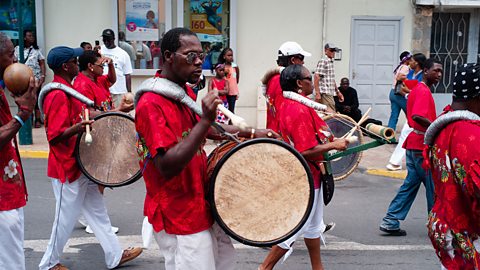
For example:
En France, le 14 juillet est une fête nationale. - In France, Bastille Day (14 July) is a national festival.
La Fête de la Musique se passe chaque année le 21 juin. - World Music Day takes place every year on 21 June.

Remember
Une fête has two meanings – it can mean a festival or a party.
The verb fêter means to celebrate and faire la fête means to party or to have fun.

Did you know?
Bastille Day takes place on 14 July every year in France. It celebrates the storming of the Bastille, a prison in Paris, in 1789.
It’s a bank holiday and is marked with a military parade in Paris and fireworks around the country.
Grammar – Using verbs to describe other people’s actions

Use the il/elle/on (he/she/we) forms to talk about what he/she does or is doing or what we do or are doing.
For example:
Il fait toujours la fête pour la Saint-Sylvestre. - He always parties on New Year’s Eve.
Elle aime les fêtes traditionnelles. - She likes traditional festivals.
On fête toujours le Nouvel An ensemble. - We always celebrate New Year together.

The on form is really useful as it can be used to mean ‘we’, ‘one’ or ‘they’ (in the sense of people generally).
For example:
Dans ma famille, on profite des jour fériés. - In my family, we make the most of bank holidays.
Use the ils/elles forms of verbs to talk about what 'they' do or are doing.
For example:
Ils vont au festival chaque année. - They go to the festival every year.
Elles préparent pour un événement religieux. - They are preparing for a religious event.
Common verbs in the 'he', 'she', 'they' forms
Remember that the present tense in French can also translate as ‘do’ or ‘are doing’ in English, depending on the context.
For example:
| French | English | French | English |
|---|---|---|---|
| il/elle est | he/she is | ils/elles sont | they are |
| il/elle a | he/she has | ils/elles ont | they have |
| il/elle va | he/she goes/is going | ils/elles vont | they go/are going |
| il/elle fait | he/she does/makes / is doing/making | ils/elles font | they makes/do / are doing/making |
| il/elle porte | he/she wears/is wearing | ils/elles portent | they wear/are wearing |
| il/elle mange | he/she eats/is eating | ils/elles mangent | they eat/are eating |
| il/elle regarde | he/she watches/is watching | ils/elles regardent | they watch/are watching |
| il/elle joue | he/she plays/is playing | ils/elles jouent | they play/are playing |
Describing the actions of others - Mini quiz
Translate the following present tense verbs into French.
They go / are going.
Ils vont/Elles vont
Use elles for a feminine group of people and ils for a masculine or mixed group.
Ils vont/Elles vont can translate as ‘they go’ or ‘the are going’ in English.
She does/makes.
Elle fait.
This is the correct form of the verb to translate ‘she does/makes’ as well as ‘she is doing / is making’.
We are.
On est.
You can use on to mean ‘we’ as this form of the verb is often easier to remember than the nous form (eg nous sommes – we are).
He is wearing.
Il porte.
This is the correct form of the verb to translate ‘he is wearing’ as well as ‘he wears.
Listening practice
Listen and decide which festival or event is being described.
Vocabulary - Where and when events take place
Useful vocabulary for talking about where events take place includes:
| French | English | French | English |
|---|---|---|---|
| se passer | to happen, take place | dans la rue | in the streets |
| dehors | outside | au stade | at the stadium |
| en ville | in town | à Paris | in Paris |
| dans le parc | in the park | en France | in France |
| dans la place | in the square | à la maison | at home |
Useful vocabulary for talking about when events take place includes:
| French | English | French | English |
|---|---|---|---|
| chaque année | each year | au printemps | in the spring |
| deux fois par an | twice a year | en été | in the summer |
| au début de l’année | at the start of the year | en automne | in the autumn |
| à la fin de l’année | at the end of the year | en hiver | in the winter |
| au mois de décembre | in the month of December | pendant les vacances (scolaires) | during the (school) holidays |
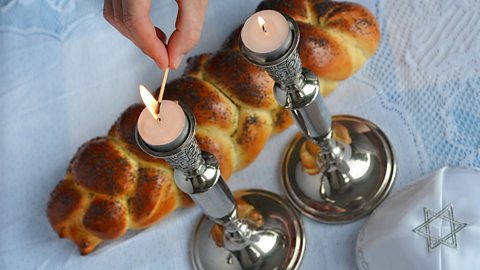
For example:
Ils fêtent un festival religieux chaque année, en été. - They celebrate a religious festival each year, in the summer.
Deux fois par an, il y a une fête culturelle dans la rue. - Twice a year, there is a cultural festival in the street.
All Foundation Tier vocabulary listed in this guide can be found on the vocabulary sheet below.
Grammar - What are adverbs in French?
Used to describe verbs and adjectives. describe a A word used to describe an action or state of being. or An adjective is a word that describes a noun. In French, adjectives have different endings depending on whether the noun they are describing is masculine, feminine, singular or plural. , giving information about where, when or how something is done.
How to form regular adverbs
To make an adverb, take the feminine singular form of an adjective and add ment.
For example:
- finale (feminine singular of final, meaning final) becomes finalement (finally).
If an adjective ends in a vowel, use the masculine form and add ment.
Fo example:
- vrai (real) becomes vraiment (really)
If an adjective ends in ent, remove the ending and add emment.
For example:
- récent (recent) becomes récemment (recently)
If an adjective ends in ant, remove the ending and add amment.
For example:
- étonnant (surprising, amazing, incredible) becomes étonamment (surprisingly, amazingly, incredibly)
Adverbs of time and frequency
To give more information about when or how often something happened or is happening, use an adverb of time or frequency. These include:
| French | English | Example |
|---|---|---|
| Check your connection, refresh the page and try again. | today | Aujourd’hui, c’est mon anniversaire. - Today it is my birthday. |
| Check your connection, refresh the page and try again. | soon | Elles vont arriver bientôt. - They are going to arrive soon. |
| Check your connection, refresh the page and try again. | tomorrow | Nous allons au festival demain. - We are going to the festival tomorrow. |
| Check your connection, refresh the page and try again. | at the moment | Je ne suis pas très content en ce moment. - I’m not very happy at the moment. |
| Check your connection, refresh the page and try again. | now | On est à la maison maintenant. - We are at home now. |
| Check your connection, refresh the page and try again. | yesterday | Il a fait la fête hier. - He partied yesterday. |
| Check your connection, refresh the page and try again. | often | Je vais souvent à Paris. - I often go to Paris. |
| Check your connection, refresh the page and try again. | always | Nous mangeons toujours ensemble. - We always eat together. |
Adverbs of place
Use an adverb of place to add information about where something happened or is happening. These include:
| French | English | Example |
|---|---|---|
| Check your connection, refresh the page and try again. | outside | Les enfants ne veulent pas jouer dehors parce qu’il pleut. - The children don’t want to play outside because it’s raining. |
| Check your connection, refresh the page and try again. | here | Il va venir nous voir ici. - He’ll come and see us here. |
| Check your connection, refresh the page and try again. / Check your connection, refresh the page and try again. | there/over there | Tu vois l’arbre là(-bas) ? - Do you see that tree (over) there? |
Adverbs - Mini quiz
Choose the adverb that is the odd one out from each set of options.
Press Start to begin the activity.
Find out more about using adverbs in the Adverbs in French guide.
Reading practice
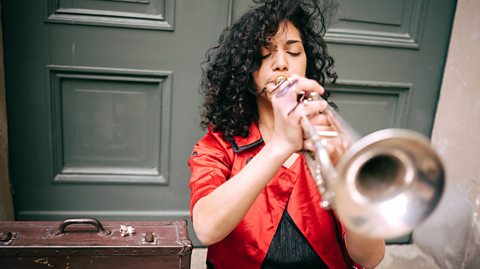
Read the article about World Music Day and complete the activity below.
La fête de la Musique a lieu* chaque année le 21 juin. C’est un grand festival français et international où les chanteurs, les chanteuses et les groupes de musique donnent des concerts gratuits. C’est une occasion d’écouter de la musique de tous les genres – traditionels et modernes – et de connaître de nouveaux talents.
Il y a une sélection énorme de concerts à découvrir partout en France comme en France d’Outre-Mer – et ailleurs dans le monde aussi. En tout, plus de 120 pays y participent tous les ans. Si vous chantez ou jouez d’un instrument, vous pouvez participer vous-même. La fête est ouverte aux musiciens de tous niveaux – pas seulement aux professionels !
Les événements se passent dans les endroits publics, y compris* des salles de concerts, des parcs, des cafés et dans la rue. Il ne faut absolument pas rater* cette occasion spéciale qui est toujours extrêmement populaire parmi les jeunes. Regardez le programme entier pour cette année en ligne dès qu’il devient disponsible.
*a lieu = takes place
*y compris = including
*rater = to miss
Decide if the following statements are true or false.
- World Music Day takes place every summer.
True
- Tickets for World Music Day are expensive.
False.
Tickets are free (gratuit).
- Only French-speaking countries take part.
False.
The festival takes place in France, overseas France and elsewhere in the world as well (France, France d’Outre-Mer – et ailleurs dans le monde aussi).
- Anyone can take part and perform.
True
- Performances only take place in concert rooms.
False.
Performances also take place in parks, cafés and in the street (des parcs, des cafés et dans la rue).
- This year’s programme is available online now.
False.
You can see it online as soon as it becomes available (dès qu’il devient disponsible).
Click or tap on Show more to read a translation.
World Music Day takes place every year on 21 June. It’s a big French and international festival where (male and female) singers and bands give free concerts. It’s a chance to listen to music of all types – traditional and modern – and to get to know new talents.
There is an enormous selection of concerts to discover all over France and in overseas France – and elsewhere in the world as well. In total, more than 120 countries take part in it every year. If you sing or play an instrument, you can take part yourself. The festival is open to musicians of all levels – not only to professionals!
The events take place in public places, including concert rooms, parks, cafés and in the street. You absolutely must not miss this special occasion, which is always extremely popular among young people. Look at the whole programme for this year online as soon as it becomes available.
Vocabulary sheet
Click or tap on the image below for a list of useful vocabulary to use when describing festivals and events.

Higher Tier – Vocabulary – Festival and events
Useful vocabulary includes:
| French | English |
|---|---|
| un spectacle multiculturel | a multicultural show |
| dans le monde entier | all over the world |
All vocabulary listed in this guide can be found on the vocabulary sheet below.
Higher Tier - Vocabulary sheet
Click or tap on the image below for a list of useful Higher Tier vocabulary to use when describing festivals and events.
Now you have revised the important vocabulary and key grammar points for describing festivals and events, why not try have a look at the Describing life at school in French guide.
More on Customs, festivals and celebrations
Find out more by working through a topic