How to skim and scan

Skimming and scanning are two useful reading techniques. They can help you to find information really quickly in a text.
Skimming is when you look over a text quickly to get the general idea of it. You don't need to read every word - just pick out key words and sentences.
Scanning is when you look over a text quickly, line by line, hunting for key words, dates, names and numbers. It's a useful skill to use when you need answers to specific questions.
Watch: Skimming and scanning
Learn all about speedy reading in this Teacher Talk and then give it a go!
Hello, I'm Mr Smith.
And today we're speed reading to find information super fast.
If you're reading a great story, you want to enjoy every word.
But what if you open a non-fiction book looking for specific information?
Or a website, or news report?
You don't have to read it all.
You can skim or scan to get the details you need super quickly.
Skimming and scanning are two kinds of speedy reading.
And I'll show you how to do them with two speed testing games.
When you skim a piece of writing, you do not need to read it all.
Your aim is to get a rough idea of what it's all about.
We call that "getting the gist".
So, how do you do it?
Here are my top tips.
Read the first paragraph and the last paragraph.
And the opening words and closing words of the paragraphs in between.
Leave out the rest.
Other things to look out for are headings and subheadings.
Visual clues, such as bullet points.
And keywords shown in bold or in italics, in capitals or underlined.
OK, let's give it a go.
Coming up is a long piece of writing.
Paragraphs will show for sure periods of time, so you won't have to read every word.
But can you get the gist in under just 30 seconds?
I think so.
Remember to read beginnings and ends, titles, subtitles, and look out for keywords.
Ready, steady, go!
Time's up.
Whoo-hoo!
Did you work out the writing was about blue whales, the largest animal on earth?
Did you see it gave details about them such as their size, where they live and the food they eat?
And did you see that the blue whale is endangered?
But the numbers of blue whales are rising again.
Well done.
You skimmed the writing and got the gist.
When you scan a piece of writing, again, you do not read every word.
You run your eyes over the writing searching just for the information you want.
And again, titles, subtitles, keywords and bullet points are your friends.
Let's try it with the blue whale report you've just skimmed.
Your mission?
Scan the report for three key facts.
One, how heavy is a blue whale?
Two, how much food does a blue whale eat every day?
And three, how long can a blue whale live?
You've got just 20 seconds.
Ready?
Steady…
Go!
OK, and time's up.
How did you do?
Let's have a test.
Shout out your answers as I ask.
How heavy is a blue whale?
That's right.
It's up to 200 tonnes.
How much food does it eat in a day?
Four tonnes.
That's a lot.
How long can it live?
Yes, up to 90 years.
If you found all that information, then you are a super scanner.
So, remember, when you're reading for information, skimming and scanning can help you find it super fast.
For more help, challenges and games on this subject, visit bbc.co.uk/bitesize.
Top tips
Let's recap on those top tips!
Skimming
Read the first paragraph and last paragraph in full.
Read the opening words and closing words of the paragraphs in between.
Use headings, sub-headings, bullet points or key words
(those in bold, italics, capitals or underlined) to guide you.
Scanning
You don't need to read every word. Just look for the information you want.
Again, use headings, sub-headings, bullet points or key words to guide you.
Activity 1
Complete this quick quiz to show off your understanding of skimming and scanning!
Activity 2
Open the 'Who was Mary Seacole?' article and give yourself one minute to skim the information.
You're going to answer some questions on key facts about Mary Seacole's life afterwards.
When your minute is up, close the article and try the true-or-false quiz!
Top tip!
- Remember to read the first paragraph and last paragraph in full.
- Read the opening words and closing words of the paragraphs in between.
Activity 3
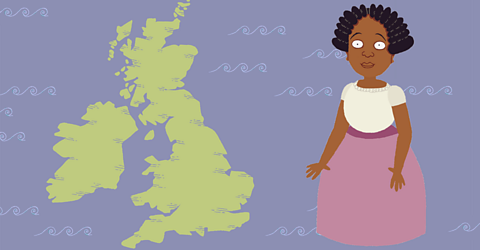
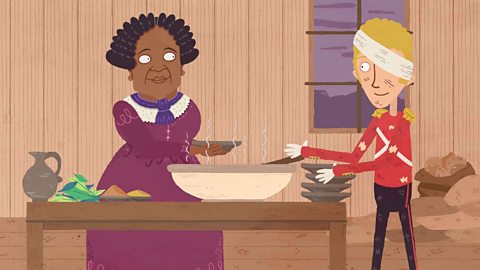
To show what you've learned about Mary Seacole, you're going to complete an acrostic poem.
Each line of the poem needs to start with a new letter from Mary Seacole's name!
For example:
Mother Seacole was her nickname.
And to Crimea she came,
Ready to help the wounded soldiers.
Y
S
E
A
C
O
L
E
Before you start, scan over the article again, looking specifically for key facts that you could use.
Why not challenge yourself to do this in one minute too?
Play our fun English game Crystal Explorers! game
Use grammar, punctuation and spelling skills to explore jungles, caves and tombs on your mission.

More on Comprehension
Find out more by working through a topic
- count10 of 11
- count11 of 11
- count1 of 11
- count2 of 11