What is globalisation?
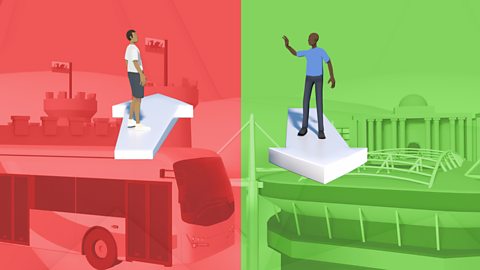
Globalisation is the way the world has become more interconnected. It refers to how people communicate as well as world trade, international investment and the sharing of ideas.
It might seem strange to think that our world is becoming smaller. Not in terms of the size of the Earth but in the way we interact with one another. This is because of globalisation.
It has resulted in the increasing internationalisation of people, companies and governments across the world.
Over the years we have been able to communicate and travel far quicker than we did in the past. In the 1800s, it would have taken a letter days or weeks to reach its destination.
These days it only takes a matter of seconds to phone, text or email someone on the other side of the world.
Globalisation’s roots lie in the Middle Ages. Colonisation and exploration meant that ideas, cultures and technologies were shared from one country to another.
Recently, this process has been accelerated because of developments in communication and transport technologies.
These days it's hard to imagine living in a country that isn’t influenced by the wider world. This can be the food that we eat, the music we listen to or the clothes that we wear.
Watch: Globalisation video
Watch this short clip about the effects of globalisation on Wales and the world.
You can’t get away from it. And by ‘it’, I mean everything. Trade, transport, cultural exchange, and perhaps technology most of all, have changed our lives in ways we can’t fully comprehend. Our world has ‘shrunk’. Internet communications can pass freely over borders, bringing us all closer together – but at the same time, can steamroll over the thousands of cultures that make up our planet.This process is known as globalisation. Although we tend to think of large-scale globalisation as a new phenomenon, there’s no question that the process has been underway since at least the 19th century.
Wales saw huge changes as a result of globalisation. The city of Swansea and Cyfarthfa Ironworks near Merthyr Tydfil, among other places, developed directly as a result of globalised trade. Unfortunately, it’s thanks in part to one trade in particular - the slave trade - that these places, and more, developed so quickly. Globalisation is a process which is constantly changing with countless advantages and disadvantages.
Globalisation can bring countries together. It’s hard to think of huge projects, like the International Space Station, happening without it. It has also strengthened links between far-flung countries. The close relationship between Wales and Patagonia, for example, couldn’t happen without globalisation. But this closeness also has its disadvantages. Diseases like malaria and the flu can spread all the quicker, with all kind of restrictions put in place to prevent outbreaks.
On one hand, it’s so much easier for us in Wales to export our culture thanks to globalisation. From music to TV, from film to sport, audiences around planet Earth are suddenly becoming aware of our small corner of the world.
On the other hand, globalisation can change the way we think about ourselves. People tend to identify themselves based on their culture and history – which has less of an impact in a globalised world, with majority languages and cultures becoming even more prominent. Indeed, various religious faiths teach that humans are made in God’s image, and that we have more similarities than differences. These beliefs are often used as a foundation in order to communicate a globalist message.
Without globalisation, institutions like the United Nations could not exist. Then there’s the environmental impact of globalisation. Free trade and open borders naturally lead to more travel, and more pollution. The arguments about globalisation could rage all day. But it’s a process that’s still fairly new. As technology evolves and we evolve with it, the question remains: can we learn to live with globalisation? And with it, fulfil the promise of a truly borderless world.
Factors that have affected globalisation
Developments in technology
Advancements in technology have contributed to globalisation considerably. New technologies have driven companies to become even more global and has made connecting across the world far easier.
- Transport
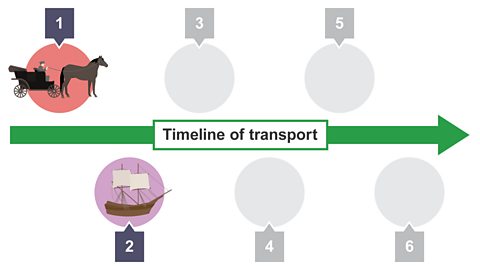
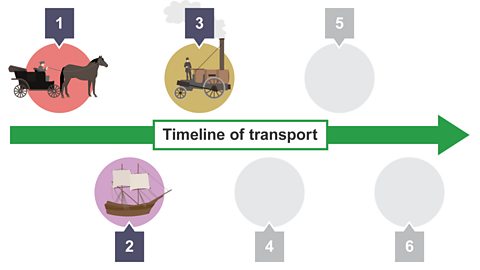
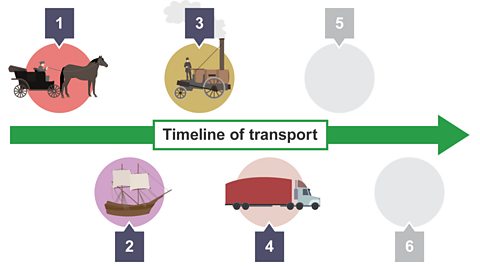
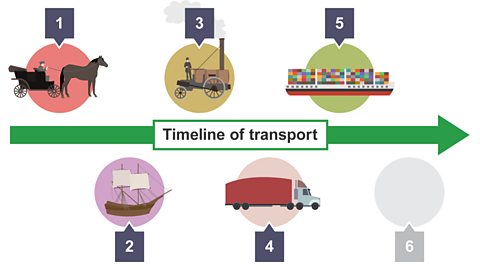
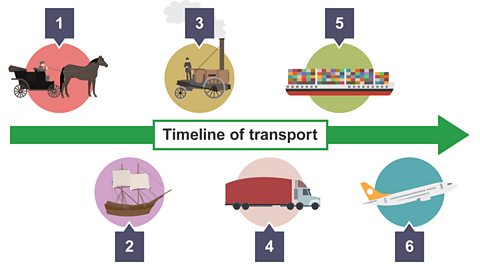
The way we travel has developed considerably since the 19th century. The introduction of the internal combustion engine, railways and aeroplanes means we can now travel from one country to another in a fraction of the time it would have taken in the 17th century. Back then, people primarily relied on horses or ships as a means of transport. The introduction of the petrol engine has led to the use of cars, buses and lorries, and the construction of huge highway networks.
Developments in aviation mean that large numbers of passengers and large amounts of freight can be moved over long distances much more quickly.
Newer technologies have enabled transport to become automated. The use of drones and the ease with which ships can load and unload cut operating costs which is an advantage for businesses.
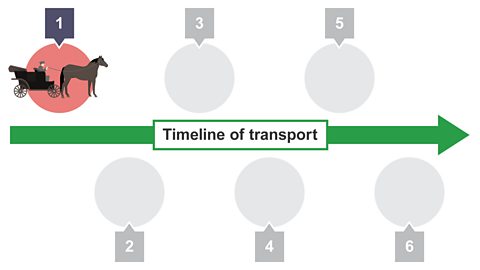
Image caption, Horse-drawn carts have played a part in our history since the invention of the wheel. Carriages used for transport have been dated back as far as the Egyptians and this was seen as the best way of moving goods for centuries.
1 of 6
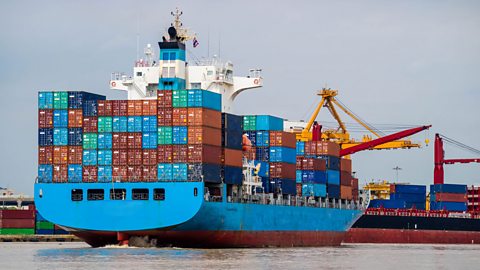
One of the biggest contributors to globalisation was the introduction of container ships in the 1950s. They make transporting bulky goods quick and easy.
Using containers to transport goods means that they can be handled anywhere in the world with specialised ships, lorries and cranes. This allows suppliers to move their goods quicker and more efficiently from the back of lorries onto ships.
These changes, and operating at a large scale, has reduced the cost of shipping goods for many suppliers. This has made the global market much easier to access and export to.
However, the sheer size of container ships have also caused problems. During the 1960s the London Docklands saw a big decline as it could no longer accommodate the new, larger ships on the River Thames. As a result, trade moved to deepwater docks like Dover and Felixstowe.
- Communication
The 21st century has seen huge leaps in communication technology. This has driven globalisation even more and has broken down political and cultural barriers.
- The internet allows people and businesses to communicate instantly.
- Satellite communications allow a global view and communications links even in very remote areas. They enable TV and telephone communications.
- Mobile phones enable people to communicate and to access the internet wherever they are.
- Social networking brings people from all around the world in contact with one another.
These technological advances mean that Transnational companies (TNCs) have been able to develop in countries across the world and still be monitored from one headquarters in a developed country. The reduction in communication time means companies can work even more efficiently and reduce their costs.
Government decisions
Government decisions can have a big impact on the role of globalisation.
Government reforms in India during the 1990s changed the way it operated as a country. These changes allowed for much more foreign investment into the country. As a result, saw a rise in the amount of TNCs moving to develop there. Since this change, India is now seen as one of the leading countries on the world market behind China.
Forming partnerships with other countries makes it far easier to trade and reduce costs. The European Union is an example of such an agreement. It has policies that aim to ensure the free movement of people, goods and services within its member countries promoting globalisation.
Impacts of globalisation
Globalisation has shaped our cultures and identities into both homogenous and heterogenous societies.
Heterogeneous society
A heterogeneous society has a wide variety of races, religions, different cultures, beliefs and even leisure activities as is the case in Wales.
Homogeneous society
A society where there is less variation, eg in cultures, beliefs and languages spoken. This can even relate to the films you watch or the food you eat, as we begin to see the same types of shops and trends emerging in areas across the world.
Globalisation can have a positive and a negative impact.
Positive impacts
- Transnational companies developing in lower income countries can help to improve the economy and provide new jobs and skills.
- Far easier to connect with the rest of the world and keep up to date with foreign news and events.
- People can experience new countries and cultures around the world due to the media and better transport.
- We are able to buy cheaper products from abroad.
- Countries can share ideas and help each other develop new technologies.
Negative impacts
- Transnational companies can exploit poorer countries for their resources. In some cases people are given low pay or made to work in illegal conditions.
- Small businesses are forced to close due to the competition from global chain stores.
- Threat to diversity - towns and cities are becoming more and more uniform, almost like clones of one another.
- Large amounts of pollution created by air travel and the movement of goods on ships and lorries.
- Diseases such as Covid-19 can spread from one country to another far easier with so many people and goods moving around the world.
Quiz: Globalisation
More on Change and movement
Find out more by working through a topic
- count3 of 3
- count1 of 3