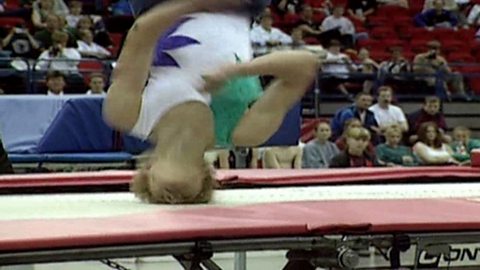
Pushing, pulling, twisting, and stretching.
All of these are examples of forces. But what is a force?
In this article you will find out more about:
- different types of forces
- what effect forces have on objects
- what happens when forces are balanced or unbalanced
- how to do an experiment about different types of forces
Watch and learn
Watch this video to find out more about different forces and the effect they have on objects.
Video
Let's explore different kinds of forces.
We can’t see a force, but we can describe what a force is doing.
Football can show us a lot about forces. Kicking the ball is a push force, which makes the ball move.
Title: Exploring forces
This hammer hits the nail with the force of a quick, big push.
To open this jar, a twisting force turns the lid around.
Pulling forces can stretch and shape modelling clay.
This baker is pushing, pulling, twisting, and squashing the dough to make bread.
Sometimes forces are evenly balanced. When we sit on a chair, the chair pushes up as much as our weight pushes down. So when we sit in the chair, the chair hold us up – we don’t fall down.
In this tug of war, both teams are pulling with the same force. The forces look evenly balanced – right up until they aren’t.
This football is stopped by the goalkeeper because they apply a force on the ball in the opposite direction.
As this football rolls, it rubs against the ground. This creates a force called friction that brings the ball to a stop.
A football kicked into the air will also slow down, but not as quickly. It is slowed down because air friction is pushing against it. It is also slowed down by gravity pulling it down to the ground.
If we could kick the football with enough force to make it leave Earth and go into outer space, what do you think might happen? In space there is no ground or air to rub against the ball, so it would just keep on going, and going, and going…
What is a force?
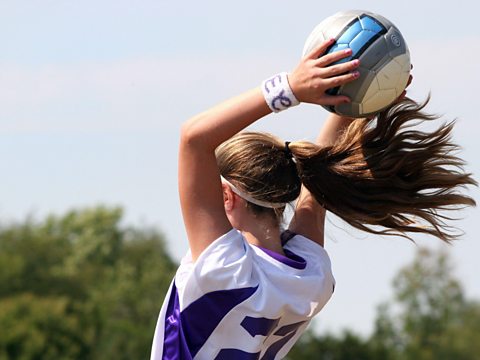
While we can't see forces, we can describe what they do to the objects and things around us.
If you push or pull something you can make it move.
Both of these are examples of forces:
- When you throw a ball you are using a force by giving the ball a push.
- When you pull a door shut you are using a pull forces.
What can forces do?
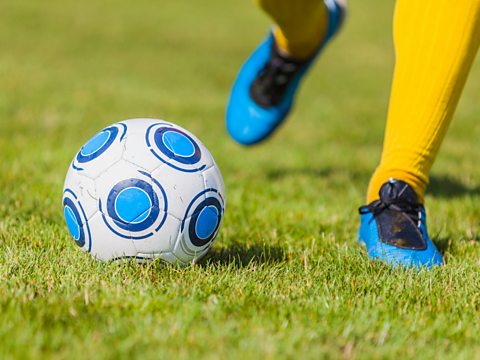
Forces can make objects start to move##
If you kick a ball, you are applying a push force. The ball starts to move when your foot pushes it.
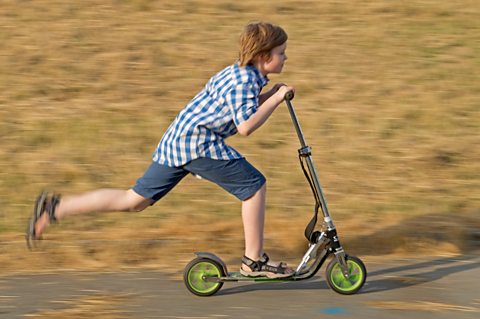
Forces can make objects speed up
If you are riding a scooter you can make it go faster using a push force. Pushing your foot against the ground will push the scooter forwards faster.
Forces can make objects slow down
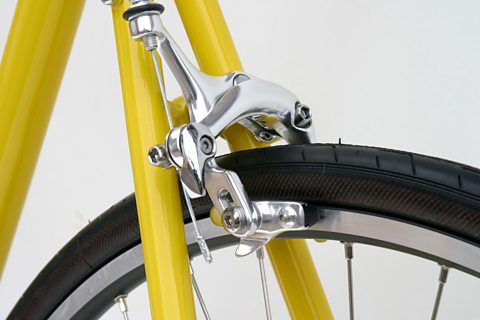
If you use the brakes on a bike, you are applying a push force. The bike wheels are spinning fast but then slow down and eventually stop due to the force caused by the brake pads pushing against the wheel. This force is called Check your connection, refresh the page and try again..
All moving things eventually stop, they can’t go on forever.
Forces can make objects change direction
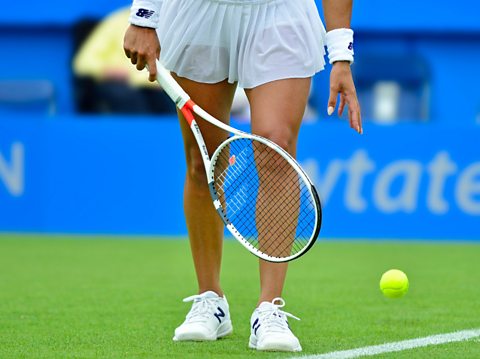
If you bounce a tennis ball on the ground, when it hits the ground the ground pushes against it.
This force causes the ball to change direction and come up again.
Forces can make objects change shape
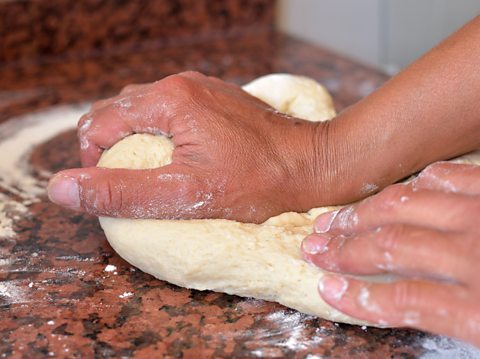
Bread dough can be squashed, stretched, and twisted into different shapes. These are all forces, too.
Balanced and unbalanced forces
If two pushes or two pulls are equal in strength and opposite in direction then there is no movement. We say that these forces are balanced.
In the photos below, which seesaw has unbalanced forces and in which one are the forces balanced?
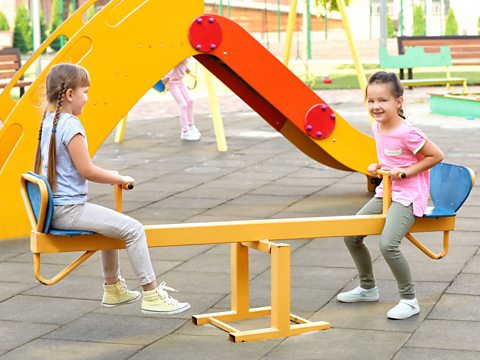
Is this seesaw balanced or unbalanced?
Answer
This seesaw is balanced. The push forces at each end of the seesaw are equal, so the seesaw does not move.
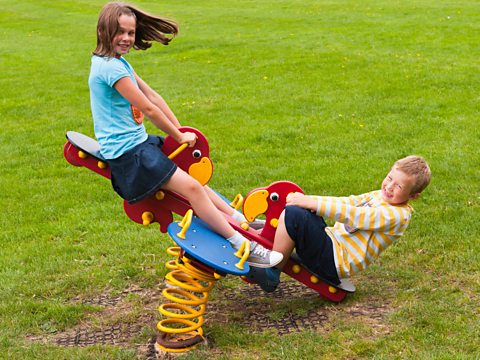
Is this seesaw balanced or unbalanced?
Answer
There is a bigger push force down at the boy's end of the seesaw than at the girl's end. The forces on the seesaw are unbalanced so the boy's end moved down and the girl's end moves up.
Activity
Try experimenting with different forces!
You will need some of the following:
- Modelling clay
- Cardboard tubes
- A soft toy
- Tissue paper
- A jar with a lid
- A water bottle
- Some cards with forces written on them (pull, push, squash, stretch, twist)
Which forces can you use on different objects? What happens to the objects?
Watch the video to find out more.
Video
Watch this video to find out what to do!
Quiz
Think you've got to grips with forces? Take our quiz and find out!
More on Forces
Find out more by working through a topic
- count2 of 4
- count3 of 4
- count4 of 4