How fair is representation at the Scottish Parliament?
Quick version
As of September 2024:
46% of MSPs are women
- this under-represents women (51% of Scotland's population)
4.5% of MSPs are from black or ethnic minority backgrounds
- this under-represents 7.1% of Scotland's population
4.6% of MSPs have described themselves as disabled
- this under-represents people with disabilities in Scotland (24% of the population)
These groups all face social barriers, financial barriers and practical barriers
to election.
Methods of addressing these barriers can include:
- making working patterns more inclusive and accessible
- encouraging participation for under-represented groups at different levels of politics in Scotland
- providing financial support and practical support
Learn in more depth
How are women represented at the Scottish Parliament?
As of September 2023, of the total of 129 MSPs:
- 70 were men
- 59 were women
This means approximately 46% of MSPs were women. This is lower than the proportion of women in Scotland (51%).
Of the total of 28 MSPs serving in the Scottish Government:
- 12 were men
- 16 were women
This means approximately 57% of MSPs in the Scottish Government are women.
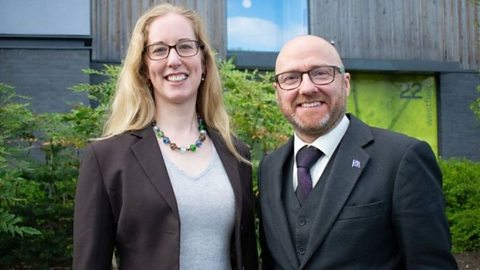
The number of women leading or co-leading political parties has fallen in recent years.
In 2017, four of the five political parties in the Scottish Parliament were led or co-led by women.As of October 2024, only two women lead or co-lead the six parties now represented at Holyrood:
- Lorna Slater is co-leader of the Scottish Greens
- Ash Regan leads the Alba Party at Holyrood (she is the only MSP representing Alba)
What barriers are there to women serving as MSPs?
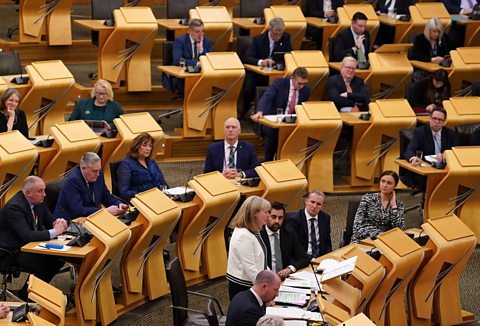 Image source, PA Images / Alamy
There are a number of social and political barriers that may prevent women from standing as an MSP or continuing to serve:
- women are still seen as the main carers in the family - this can make it difficult to balance the work of an MSP with family life
- women are under-represented at other levels of political representation, for example as local councillors - this can make it difficult to build up political experience and more difficult to be selected as a candidate for election to parliament
- campaigning to become an MSP can be expensive and time consuming - this can be difficult for women who are more likely to have lower income
- political meetings held in evenings can clash with family and caring commitments
- lack of maternity pay or maternity leave may put off women who want to start a family
- current Presiding Officer Alison Johnstone has suggested that “toxic” social media discourse, which women bear the brunt of, puts many off
Women and people from minority groups may face additional barriers in the parliament itself.
The Gender-Sensitive Audit of the Scottish Parliament carried out in 2022 raise a number of issues faced by women MSPs and MSPs from other minority groups including:
- “everyday” and routine sexism embedded in the parliamentary norms and culture
- an "increased adversarial tone" of debate putting off some women MSPs from speaking in the chamber
- concern about the noise level of the Chamber, which can have an impact on members with specific accessibility requirements
- reports of problematic comments and attitudes to women of different backgrounds and characteristics, such as at the intersections of age, race, disability (including hidden disabilities), neuro-diversity, or class
Image source, PA Images / AlamyWhat measures can encourage fair representation of women?
In the 2021 Scottish Parliament election, all but one of Scotland’s major political parties introduced measures to improve representation of women. Methods included:
- all-women shortlists for constituency selection contests
- zipped lists - where female and male candidates are alternated on a party's regional list
The Scottish Parliament has 'normal' working hours - sessions in the Debating Chamber end at 6pm - which makes it more possible for MSPs to balance work and family life.
The Parliament has a creche which can help MSPs who have childcare commitments.
Travel to and from the Scottish Parliament is relatively quick and easy for many parts of Scotland -
The Gender-Sensitive Audit of the Scottish Parliament carried out in 2022 aimed to improve representation of women in the parliament, including looking at:
- hybrid working, which can help working women with caring commitments
- maternity and parental leave for MSPs
- proxy voting (where an MSP can nominate another MSP to vote on their behalf) including during parental and caring leave
- an improved code of conduct for MSPs to end behaviour that is "demeaning, discriminatory or harassing towards another Member based on that Member’s protected characteristics"
How are people from ethnic minorities represented at Holyrood?
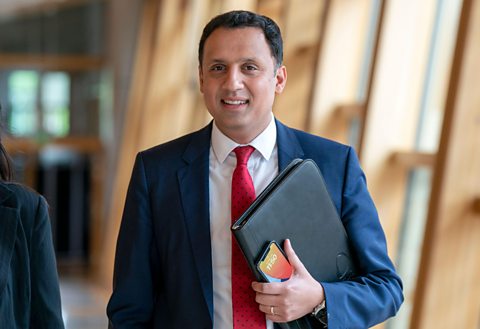 Image source, PA Images / Alamy
As of September 2022, there are six MSPs from minority ethnic backgrounds, four men and two women.
This represents 4.5% of the total number of MSPs. This is lower than the proportion of people from black and ethnic minority backgrounds (7.1% in the 2022 Census).
two MSPs are of Indian heritage (1.55% of all MSPs)
- this is higher than the 0.97% of Scots who described themselves as Indian, Scottish Indian or British Indian in the 2022 Census
three MSPs are of Pakistani heritage (2.33% of all MSPs)
- this is higher than the 1.34% of Scots who described themselves as Indian, Scottish Indian or British Indian in 2022
one MSP is of Bangladeshi heritage (0.78% of all MSPs)
- this is higher than the 0.13% of Scots who described themselves as Indian, Scottish Indian or British Indian in 2022
There are no MSPs representing Scotland's other black and minority ethnic communities.
- no MSPs come from African, Scottish African or British African backgrounds (compared to 1.08% of the population in 2022)
- no MSPs come from Chinese, Scottish Chinese or British Chinese backgrounds (compared to 0.87% of the population in 2022)
Image source, PA Images / AlamyWhat barriers to being an MSP do people from ethnic minorities face?
Like women, people from ethnic minority backgrounds face social, political and practical barriers to becoming an MSP:
people from ethnic minority backgrounds are under-represented at other levels of political life, for example as local councillors - this can make it difficult to build up political experience and more difficult to be selected as a candidate for election to parliament.
campaigning to become an MSP can be expensive and time consuming - this can be difficult for people from ethnic minority backgrounds who are more likely to have lower income.
the low number of MSPs from ethnic minority backgrounds means there is a lack of role models - this might create the impression that being an MSP is not a role for people from ethnic minorities to pursue.
a lack of people from ethnic minority backgrounds in political life can limit the support and networks that can help develop political skills and experience.
the vast majority of current MSPs are white. Those incumbent MSPs who choose to stand for re-election are likely to be reselected by their party. This acts as a barrier to potential new candidates from ethnic minorities, or other minority groups.
MSPs including Humza Yousaf and Anas Sarwar have talked about racism they have faced - racism could potentially affect the number of votes a candidate receives. The thought of being subjected to racism while campaigning or serving may put some people off standing as candidates.
How can representation of people from ethnic minorities be encouraged?
The Scottish Government has funded workshops run by Elect Her 'for women of colour to support them in their political journeys and once they are elected'.
In 2022, the Scottish Government and other groups ran a survey of candidates in local government elections
- Collecting data on candidates sex, ethnicity and disability status is a step towards measuring fairness of representation.
The 2023 Scottish Local Authorities Remuneration Committee Report looked into the pay of local councillors. It recommended:
- linking councillors' pay to that of public sector workers
- providing severance pay for councillors who lose elected office
Addressing these financial issues may help improve representation from minority groups, improving pathways to election as an MSP.
In 2022, the Convention of Scottish Local Authorities (COSLA) - An organisation set up to represent Scotland's local authorities and councillors.Barriers To Elected Office Special Interest Group was set up to address barriers to groups and individuals who are currently under-represented amongst councillors.
In February 2023, the Scottish Government published the Participation Framework.
The Framework aims to encourage and improve participation at all levels of decision-making in how Scotland is run. It specifically aims to improve inclusion and encourage involvement from ethnic minority communities.
Encouraging involvement from under-represented groups in all levels of decision-making could help individuals gain experience of political activity and provide more routes to election as an MSP.
How are people with disabilities represented at Holyrood?
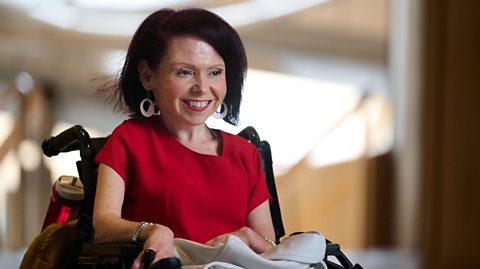 Image source, SST / Alamy
 Although the Scottish Parliament building was designed with accessibility in mind, representation of people with disabilities (visible and non-visible) is very low.
In 2021, six elected MSPs openly described themselves as disabled. This represents 4.6% of all MSPs.
In Scotland's 2022 Census, 24% of the population reported they had a disability or long-term health problem that affected day-to-day activity. 29 MSPs would represent a similar proportion of Members of the Scottish Parliament,
Image source, SST / Alamy What barriers are there to people with disabilities serving as MSPs?
People with disabilities face social, political and practical barriers to becoming an MSP:
people with disabilities are under-represented at other levels of political life, for example as local councillors - this can make it difficult to build up political experience and more difficult to be selected as a candidate for election to parliament.
campaigning to become an MSP can be expensive and time consuming - this can be difficult for people with disabilities who are more likely to have lower income.
people with some disabilities face additional costs to campaigning or serving as a political representative, for example:
- transport
- equipment like assistive technology
- support such as interpreters or carers
the low number of MSPs with disabilities means there is a lack of role models - this might create the impression that being an MSP is not a role for people with disabilities to pursue.
a lack of people with disabilities in political life can limit the support and networks that can help develop political skills and experience.
The Equality and Human Rights Commission's 2019 report into "Barriers to participation in standing for election to local government in Scotland" found that some people with hidden disabilities, much as mental health issues, felt their conditions were held against them, preventing them from being elected. Issues were also raised about application forms not being accessible.
How can representation of people with disabilities be improved?
The Access to Politics Charter set up by Inclusion Scotland was launched in 2018.
It was signed by the leaders of Scotland's five main political parties, who agreed that their parties would aims to tackle barriers that prevent people with disabilities from being involved in politics. This includes:
- investigating alternative means of participation such as remote and digital voting
- publishing data on protected characteristics of candidates
- investigate job-sharing for elected roles
- actively support and encourage disabled people to stand for elected office
The Scottish Government's Access to Elected Office Fund can provide funding to help people with disabilities stand for election.
According to Inclusion Scotland, the Fund supported 14 candidates during the 2021 Scottish Parliament elections.
Quiz
Recap what you have learned
As of September 2024:
46% of MSPs are women
- this under-represents women (51% of Scotland's population)
4.5% of MSPs are from black or ethnic minority backgrounds
- this under-represents 7.1% of Scotland's population
4.6% of MSPs have described themselves as disabled
- this under-represents people with disabilities in Scotland (24% of the population)
Barriers to election include:
social barriers
- discrimination may affect chance of election
- lack of role models or support networks
- lack or representation (eg in local councils, civil service) provides fewer routes to standing as an MSP candidate
financial barriers
women, people from ethnic minorities and people with disabilities are more likely to have lower incomes and may struggle with the costs of campaigning
they may face additional costs (eg childcare, assistive technology)
practical barriers
- work in evenings or weekends may be difficult to balance with caring responsibilities
- attending parliament may be more difficult for people with disabilities
- incumbent MSPs (more likely to be white and male) are more likely to be elected than new candidates
Steps have been take to make representation fairer:
- the Scottish Parliament limits working hours, making it more possible for MSPs to balance work and family life
- the Parliament has a creche which can help MSPs who have childcare commitments
- political parties have produced all-women shortlists for constituency selection contests
- the Access to Elected Office Fund can help address financial issues for people with disabilities standing as candidates
- the Scottish Government's Participation Framework aims to increase participation from under-represented groups in all levels of decision-making in Scotland
More on Democracy in Scotland
Find out more by working through a topic
- count16 of 18
- count18 of 18