What is a coast?
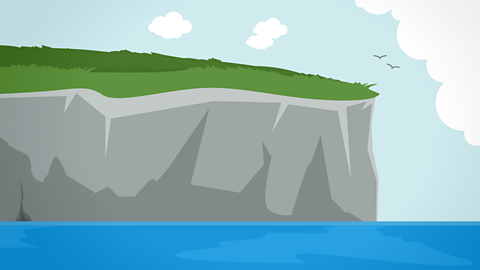
A coast is a strip of land that meets the sea or ocean. This land could be made of things such as rock, sand, mud or gravel.
Watch: Explore different coastal areas around the UK
Find out more about the coastlines of Blackpool and the Giant's Causeway in the UK.
Did you know that in the UK, you're never more than 113km away from the sea. Which is good, because I like to be beside the seaside!
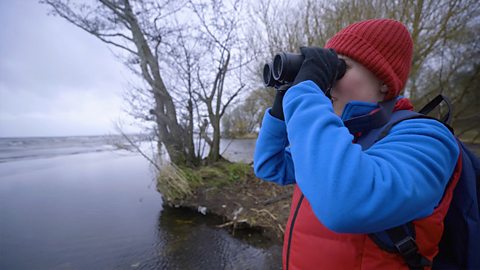
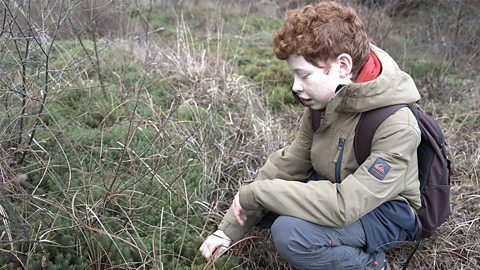
My name's Charlie and today I'm exploring the UK's coasts.
I'm in Northern Ireland, at a place called the Giant's Causeway. There are about 40,000 of these columns made of a really hard rock called Basalt, all fitting together like an enormous puzzle.
For a long time, no one could explain how they got here, so stories were told about a giant called Fin McCool who built the stone bridge or causeway all across the sea to Scotland and this is all that is left of it. But the real explanation is even stranger.
It is a really cold day today, but if I dug down closer to the centre of the Earth, it would get much hotter. So hot, that rock actually melts.
Sometimes if there is a gap in the Earth's crust, the molten rock called magma bursts out of the ground onto the surface, where it is called lava. And that's exactly what happened right here about 60 million years ago.
Lava flowed across the land and as it cooled and got harder, cracks began to form like you get in dried mud and by the time the rock was completely solid, it had split apart to make these amazing columns.
People come here all the time to see this beautiful coastline, but because the Giant's Causeway is so unusual, it is looked after really carefully so that no one is allowed to build shops or houses here.
But over in Blackpool, it is very different. This part of the coast has been changed by all the people who've been coming here on holiday for the last 200 years.
Hotels, souvenir shops, amusement arcades, piers and a tram system were built and to protect the town from the sea, an 11km wall was constructed along the coastline.
If you're ever visiting a coast, why not look out for the ways it has been shaped by nature and all the ways it has been changed by people.
See you next time. Bye!
Coasts around the UK
Coasts are always changing. These changes are caused both by nature and humans.
This means that coasts have lots of different features, such as beaches, cliffs, islands, caves and mudflats.
The UK is surrounded by the North Atlantic Ocean, the North Sea, Irish Sea, and the English Channel.
It is a maritime nation, which means that the lives of people living here are connected with the sea.
Differences around UK coasts
Cities and towns have been built on some coasts, and parts of the coastline are easily accessible from the land and sea.
Other coastal areas are protected because of their natural beauty, wildlife and scientific importance. They might not be suitable for settlements.
The UK coast can be different depending on:
the location
the type of rock the coastline is made of
Blackpool, North-West of England
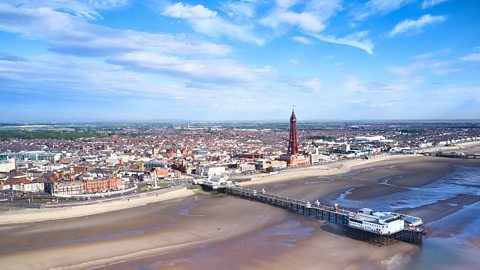
Blackpool is a large seaside resort and town located on a sandy coast by the Irish Sea.
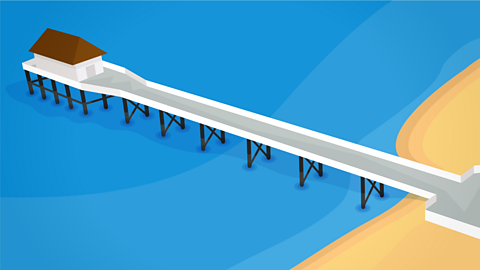
It is the only beach resort in the UK with three piers.
With its tourist attractions, accommodation, promenades and amusement parks, it is visited by locals and tourists.
Blackpool rests on softer rocks, which means that they wear away more easily. The coastline here needs strengthening to protect homes from flooding.
Giant's Causeway, north coast of Northern Ireland
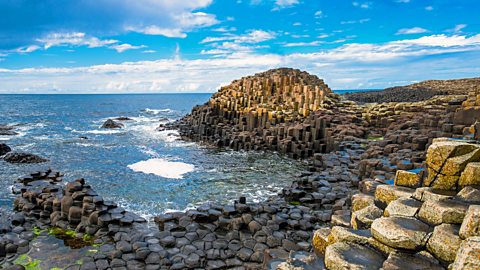
The Giant’s Causeway is an area of column-like basalt rocks, which was created in a volcanic eruption around 60 million years ago.
A flood of hot lava poured from A narrow crack in the surface of the Earth. in the ground and created layers of basalt; as the lava cooled, it contracted and cracked into the columns.
It is an important landmark because it helps scientists understand the The study of the physical features and history of the Earth. It helps to explain how the Earth has come to have its present shape. of the Earth.
Basalt, like other Rocks that are formed when molten rock cools and becomes solid., is very hard. That means it takes longer to wear away, so it takes much longer for the coast to change.
Did you know?
The UK has around 31,368 km of coastline.
The processes that form coastlines
Coasts are always changing because the sea is always moving.
Waves can be caused by storms, movement under the sea, and the pull of the Moon’s gravity. The rising and falling of sea levels along coasts are called tides.
There are two main processes involved in the shaping of coastlines:
Erosion
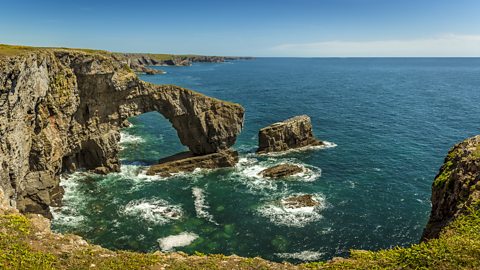
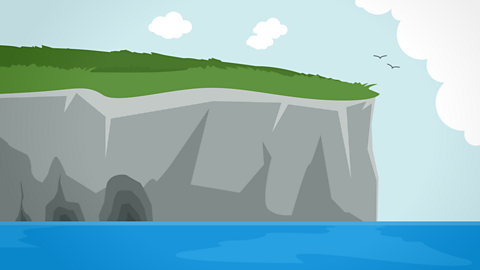
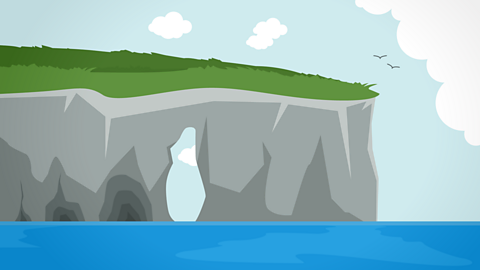
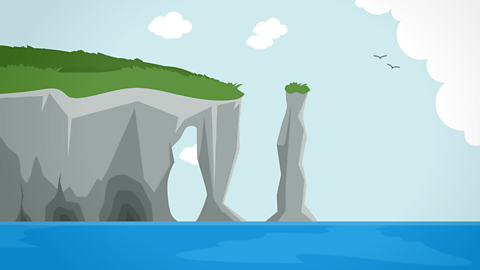
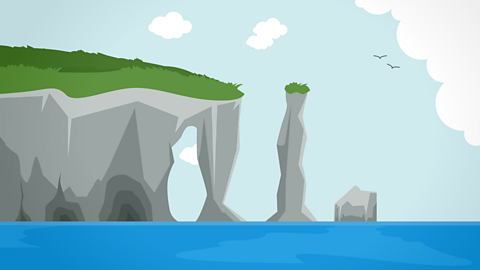
As powerful waves crash against the rocks on the shore, the rocks can be eroded. This erosion causes pieces of rock to fall off. Erosion helps create caves and arches on the coastline.
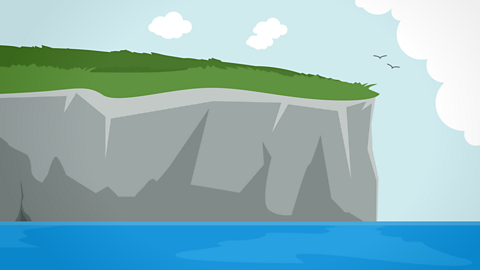
Image caption, Over time, waves cause cracks to open in the coastline.
1 of 5
Deposition
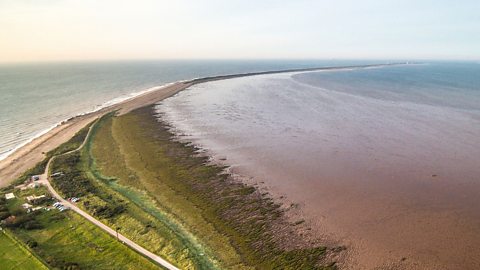
Pieces of rock that have fallen off are then tossed around by the waves and broken down into rounded stones and sand.
These pieces are carried by the water to more sheltered parts of the coastline, where the calmer, slower waves deposit the stones and sand.
These deposits can form long beaches, spits and sand dunes.
Activities
Quiz: UK coastline
Quiz: Erosion
How can we generate electricity from the sea?
GREEN CLASSROOM
Race Across the Continents game - new update! game
Help this team of adventurers race their way to victory. Explore the globe in this exciting game update to discover new audio voiced by Ade Adepitan and fun animations. Challenge yourself with brand-new achievements and become a high-flyer!

More on Geography of the UK
Find out more by working through a topic
- count3 of 17
- count4 of 17
- count5 of 17
- count6 of 17