Watch: Democracy and active participation
How can individuals actively participate in democracy?
Narrator:
There's so many ways that you can play a part in making the world a better place.
You could volunteer for a charity, one that improves healthcare, protects the environment, helps the homeless, supports women and children, or offers foreign aid.
You can become a member of a group or association, or raise money for a cause that you believe in?
Why not go for a position on the school council? You can help run the school and get experience of how people make decisions together.
It can sometimes seem like the people who are calling the shots are distant and don't care.
It's not true, your opinion matters, so it's important to speak up and be heard.
Write to your representatives in Parliament, the Northern Ireland Assembly or in your local council.
Powerful people care about how the media sees them.
Newspapers publish letters to the editor to show the public's view on things, and they want to hear, but you have to say.
A good way to get attention is through a petition.
This is a letter that experienced your concerns about a law or policy signed by people who agree. The more people who sign, the more powerful it is.
You can vote with your wallet. If a company is acting in a way that you don't agree with, you can choose not to buy their products.
The small choices we make each day can add up to be big changes in the long run.
And when you're old enough to vote - make sure you do.
Politicians don't feel pressured to represent non-voters. Don't let them ignore you. Vote.
Persuade others to vote or join a political party.
Democracy is all about participation.
The more you put in, the more you get out.
What is democracy?
Some of the defining features of a democracy are:
- choice of political party to vote for
- equality and fairness for all
- fair elections
- freedom of speech and ability to criticise the government
- head of state
- human rights
- laws that protect the people
- media not controlled by the government
- openness about how the government is run
How democratic is NI?
Political scientists have developed criteria to test whether a society is democratic. These criteria measure:
- Participation. Are ordinary people involved in the political process?
- Voting equality. Is each person’s vote equal to all others?
- Education. Do people have the information they need to make informed choices about politics?
- Control of the agenda. Can ordinary people decide which issues will be debated at a governmental level?
- Inclusiveness. Do all groups participate in the political process?
Northern Ireland’s political system is designed to meet each of the criteria for a democracy.
How does Northern Ireland's democracy measure up?
How can young people participate in democratic processes?
Young people living in a democracy can actively participate in their country's democratic processes at school, in their community and in the wider world.
School
- Participate in the school council and help influence decisions taken about the school.
- Join school debating groups and organisations that promote critical thinking and contribute to discussions about government and politics.
- Become a member of school groups and societies that promote democratic participation and education.
Community
- Contact the local media to help focus attention on to individual causes and concerns.
- Lobby local government (councillors and MLAs) to persuade them to act on or address issues.
- Vote in local elections and/or become involved in politics.
- Write to representatives in the Northern Ireland Assembly, or in local council, to express concerns about about a law or bill that is being passed.
Wider world
- Contact the national media to highlight individual causes and concerns.
- Political activists sometimes call for a boycott of goods that are produced in unethical ways. Boycotts brought the government’s attention to the problem of elephant poaching and led to the introduction of laws to restrict ivory sales.
- Take part in peaceful demonstrations and protests — raising public awareness of issues.
- Sign petitions to highlight the level of public support for the issue or cause. If a national petition reaches 100,000 signatures, it must be debated in Parliament.
- Use social media to share and express views with others about social issues helping to draw the attention of decision makers.
- Volunteer and join a Non-Governmental Organisation (NGO) working with them to influence societal changes.
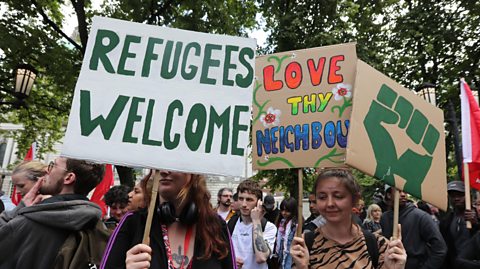
How does active participation benefit young people and society?
How can people actively participate in democracy?
Benefits to young people
Both society and young people can benefit greatly from actively participating in democracy.
| Benefit | Young people |
|---|---|
| Confidence | Participation boosts self-esteem and confidence as young people see their contributions valued and their voices heard. |
| Educational | Increases awareness of political processes, civic rights and societal issues, contributing to a better understanding of how government and politics work. |
| Empowerment | Ability to influence decisions that affect their lives and communities. |
| Informed | Educated young people are better prepared to make informed choices, vote responsibly and contribute to discussions about public policy. |
| Leadership | Involvement in student councils, youth organisations or advocacy groups provides opportunities to develop leadership, public speaking and organisational skills. |
| Responsibility | Fosters a sense of responsibility and connection to the community. |
| Skill development | Helps young people develop critical thinking skills. |
Benefits to society
When young people are active in their democracy there are many benefits for society.
| Benefit | Society |
|---|---|
| Active citizenship | Engaged citizens contribute to a vibrant democracy by participating in elections, advocacy and community service, which strengthens democratic institutions and practices. |
| Enhanced representation | Ensures diverse perspectives are considered in policy-making, leading to a more inclusive and representative decision-making process. |
| Progressive policies | Helps address issues that will impact future generations, leading to more forward-thinking policies. |
| Stronger democracy | Engaged citizens contribute to a vibrant democracy. |
Participation in democracy offers valuable benefits for both young people and society. Encouraging democratic participation among young people is crucial for the health and vibrancy of democratic systems and for building a more engaged and informed society.
