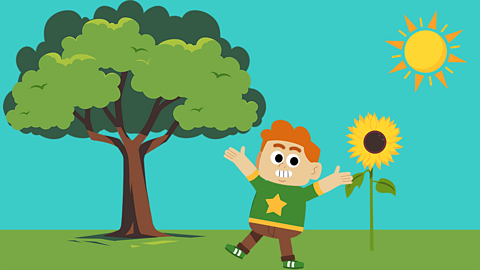
Plants have four important parts
There are plants almost everywhere on our planet.
They may grow from a seed or a bulb but all have four important parts.
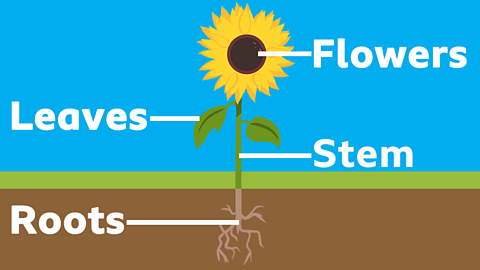
Flowers
Flowers are often brightly coloured and have petals. Flowers are where the seeds of the plant develop.
Leaves
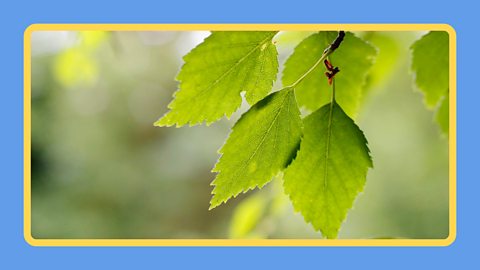
Leaves take in the sunshine and turn it into food for the plant.
Stem
The stem holds up the plant and carries water and nutrients to the leaves.
Roots
Roots keep the plant in the ground and hold it up, they also take in water and nutrients from the soil for the plant to grow.
Other important plant parts

Branches
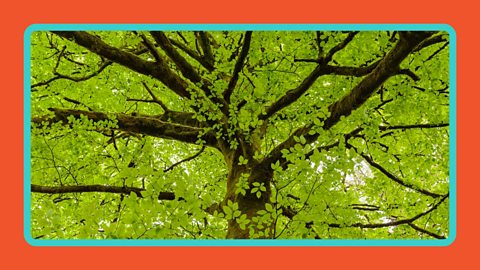
Branches allow plants to spread their leaves so they can reach more sunlight.
Fruit
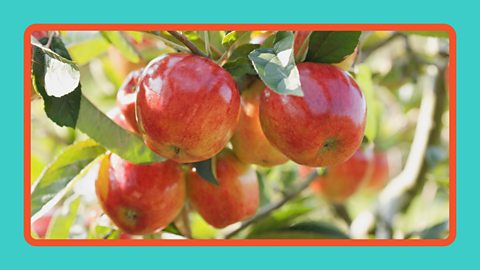
Some plants produce fruit that an animal will eat and transport their seeds to reproduce.
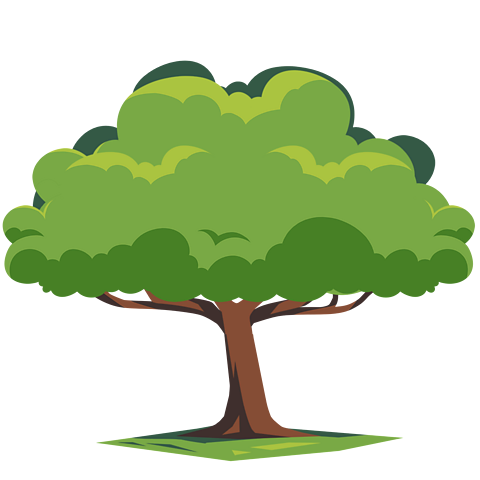
Trunk
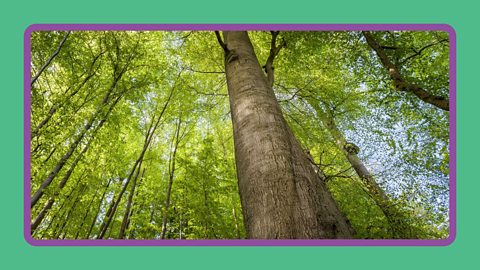
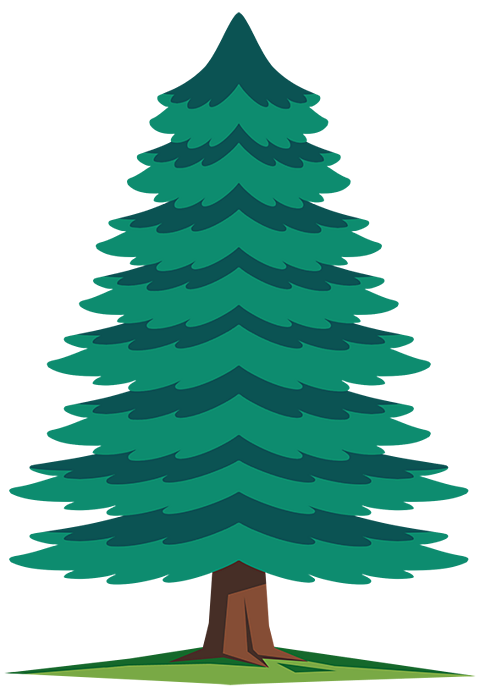
A tree's trunk is made of wood and is covered in bark. The trunk of a tree is like the stem of a small plant, only a lot stronger. It too carries water around the tree.
Roots
The roots of a tree can go very deep under the ground and spread out a long way. The roots help a tree to stay upright in strong winds.
Watch – The structure of plants
Anna: There are lots of different types of plants, and even though they're all different, there are lots of parts that are the same. Lots of plants have roots, stems, leaves, and flowers. But what do they each do? This is a root. It takes water and nutrients up from the ground. This is a stem. It carries the water and nutrients to the different parts of the plant.
Leaves absorb light and make food for the plant. Flowers are brightly coloured and have petals. The flower is the part of the plant where the seeds are made, which in time become other plants. In some plants, fruit forms around the seeds - like this apple. Some seeds come in all sorts of sizes and shapes. We need to remember that plants look different throughout their life and in different seasons too.
So, we're looking at different parts of this plant. Let's get it out of the pot. So we can see here are the roots, down here. This is its stem. And these are the leaves. Some plants, like deciduous trees, have lots of leaves in the summer but lose them in winter. Others like evergreen trees, keep their leaves all year round.
Leaves come in all sorts of different sizes, shapes and colours. This tree has a trunk and lots of branches. In the spring, it even has blossom. Can you identify the different fruits and seeds that plants produce?
Fascinating plant facts
Plants turn light from the Sun into food so that they can grow.
A tree's stem is called its trunk.
Some plants, like the Venus fly trap, are carnivorous and eat meat from insects.
In 2016, Kew Gardens found that there were over 390,000 different species of plants.
Apples are a fruit that can float on water, they're made up of 25% air.
There are some plants which live underwater. Some aquatic plants like seaweed live in the sea.
There are two types of tree: deciduous which lose their leaves in autumn and winter, and evergreen which keep their leaves all year round.
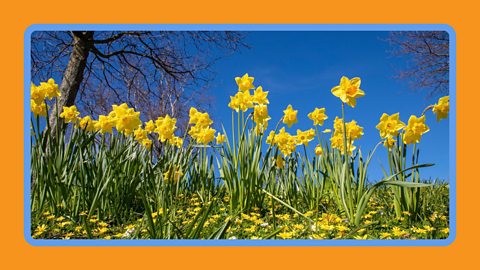
All the nations in the UK have national flowers, the rose is England's, the thistle Scotland's, the daffodil Wales's and the shamrock Northern Ireland's.
The parts of a plant
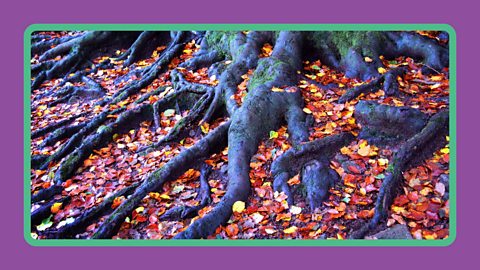
Image caption, Roots
A plant gathers water through its roots which grow underground.
1 of 6
Did you know?
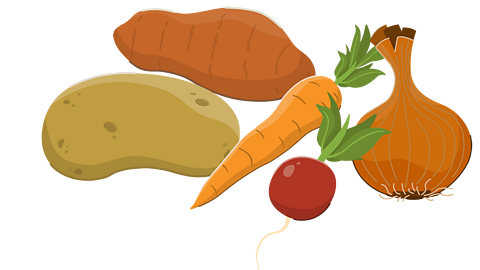
Many wild animals, such as grey squirrels, rabbits and water voles, will eat the roots of plants and trees.
It's not just animals though! Humans can also eat the roots of some plants.
Beetroots, carrots, parsnips, onions and turnips are all common examples of root vegetables that you will see in a supermarket.
Important words
Aquatic – Aquatic plants live or grow in water. Plants like water lilies, seaweed, and duckweed all live in water.
Branches – Plants have branches to allow them to spread their leaves and capture more sunlight.
Carnivorous – Carnivorous plants eat meat. Usually they grow in thin soil that does not have many nutrients. Carnivorous plants usually eat invertebrates but some will eat small mammals and birds!
Deciduous trees – Deciduous trees are a type of tree that goes through changes with the seasons. Most deciduous trees lose their leaves in the autumn and grown new leaves in spring.
Evergreen trees – Evergreen trees are a special type of tree that keeps their leaves or needles all year round, and throughout every season.
Flowers – Flowers are often brightly coloured to attract insects which then pollinate the flowers and cause new seeds to grow.
Fruit – Some plants produce fruit, which contain seeds. Animals eat the fruit and then the seeds are deposited in other places.
Leaves – Leaves take in sunshine and turn it into food for the plant.
Roots – Roots spread underground and help keep the plant in place and take up water and nutrients from the soil.
Stem – The stem holds up the plant and carries water to the leaves.
Trunk – The strong stem of a tree, which is made of wood.

Did you know?
Trees and plants absorb a gas called carbon dioxide through their leaves. Carbon dioxide is the gas that humans breathe out. In the leaves, this gas is turned into sugar which the plant can use to help it grow.
Trees and plants produce another important gas called oxygen. Oxygen is the gas in air that humans and all other animals need to breathe, so plants are helping to keep us all alive.
Activities
Activity 1 – Parts of the plant
Activity 2 – Quiz
Activity 3 – Identify the parts of a plant
Play Galaxy Pugs. game
Help the pugs observe Earth’s animals, learn how to grow plants, study the human body, experiment with materials and much more!

More on Plants
Find out more by working through a topic
- count3 of 4
- count4 of 4

- count1 of 4