Key points about changing habits and routine
Use An adjective used to compare two things, eg better, taller, older. adjectives to compare two things.
Use A word that describes the most of something, for example the biggest, the strongest, the fastest. adjectives to compare more than one thing.
The imperfect tense is used to talk about repeated or continuous actions in the past.
Vocabulary – Describing changing habits and routines
Useful sentences in the present tense to describe changing habits and routines include:
| Spanish | English |
|---|---|
| Mi estilo de vida es más sano ahora porque voy al gimnasio tres veces a la semana. | My lifestyle is healthier now because I go to the gym three times a week. |
| Es importante saber el tamaño correcto de las porciones para tu edad. | It’s important to know the correct size of portions for one’s age. |
| Intento llevar una dieta equilibrada porque ayuda a reducir el riesgo de enfermedades. | I try to eat a balanced diet because it helps reduce the risk of disease/illness. |
Useful past tense sentences to describe changing habits and routines include:
| Spanish | English |
|---|---|
| El año pasado cambié mi dieta y ahora como menos azúcar. | Last year I changed my diet and now I eat less sugar. |
| Cuando era joven, comía demasiada comida basura. | When I was younger, I used to eat too much fast food. |
| Cuando era menor, hacía más ejercicio porque jugaba al fútbol cada día en la calle. | When I was younger, I used to do more exercise because I used to play football every day in the street. |
| Cuando era pequeño/a mi mamá decía que tenía que comer cinco porciones de fruta y verduas cada día. | When I was small, my mum said that I had to eat five portions of fruit and vegetables every day. |
| Recientemente he comenzado a comer una dieta vegetariana. | Recently I have started to eat a vegetarian diet. |
| Mi papá ha decidido dejar de fumar porque es malo para su salud. | My dad has decided to stop smoking because it's bad for his health. |
Grammar - Comparative adjectives
Comparative adjectives are used to compare two things and say one thing is more, less, better, etc than the other, eg faster, slower, happy.
For example:
Mi vida es más sana ahora. – My life is healthier now.
Mi hermana come menos verduras que yo. – My sister eats less vegetables than me.
To form the comparative meaning ‘more than’, use más followed by the adjective and que.
To form the comparative meaning less than’, use menos followed by the adjective and que.
Remember
Don’t forget that the adjectives still have to agree. For example:
Mi casa es más pequeña que tu piso - my house is smaller than your flat.
Using más and menos with nouns
You can use más (more) and menos (less) with nouns, for example to compare how much more or less you eat or do.
For example:
Hago más ejercicio que tú. – I do more exercise than you.
Mi amiga come más verduras que yo. – My friend eats more vegetables than me.
Irregular comparatives
The adjectives good, bad, old and young have the following irregular forms in the comparative:
| Adjective | Translation | Comparative adjective | Translation |
|---|---|---|---|
| bueno/a | good | mejor (que) | better (than) |
| malo/a | bad | peor (que) | worse (than) |
| viejo/a | old | mayor (que) | older (than) |
| joven | young | menor (que) | younger (than) |
When using these adjectives in the comparative, it is not necessary to include más or menos.
For example:
El azúcar es peor para ti que las verduras. - Sugar is worse for you than vegetables.
Es mejor para tu salud. – It’s better for your health.
Comparative adjectives - Mini Quiz
Complete the following sentences in Spanish
Mi vida es __________ .
My life is healthier.
Mi vida es más sana.
Vida is feminine singular, so sana ends in a to agree with it.
Más is the comparative that means ‘more’.
Ahora come _______ azúcar.
Now he eats less sugar.
Ahora come menos azúcar.
Menos is the comparative that means less.
Es _______ hacer ejercicio regularmente.
It’s better to do exercise regularly.
Es mejor hacer ejercicio regularmente.
Mejor is the irregular comparative that means ‘better’.
Cuando era ________ .
When I was younger.
Cuando era menor.
Menor is the irregular comparative that means ‘younger’.
Find out more about comparative adjectives in the Comparative and superlative adjectives guide.
Listening practice
During a Spanish podcast, two guests are talking about their lifestyle.
Listen to each audio clip and decide:
Which part of each speaker’s lifestyle is good?
Which part needs to improve?
| A | exercise |
| B | sleep |
| C | use of social media |
| D | food |
| E | handling stress |
| F | drink |
Guest 1
Guest 1
Good - sleep
Needs to improve - handling stress
Transcript
Es importante dormir lo suficiente y normalmente duermo por lo menos ocho horas. … Necesito reducir el estrés en mi vida porque me preocupan demasiado los exámenes.
Translation
It is important to get enough sleep and I usually get at least eight hours. … I need to reduce the stress in my life because I worry too much about exams.
Guest 2
Guest 2
Good - exercise
Needs to improve - drink
Transcript
Estoy en forma; hago muchas actividades deportivas. Por ejemplo voy al gimnasio tres veces a la semana y juego en el equipo de fútbol de mi colegio. … Sé que tomo muchas bebidas que están llenas de azúcar y tengo que tomar menos en el futuro.
Translation
I am fit; I do a lot of sports activities. For example I go to the gym three times a week and I play on my school football team. … I know that I drink a lot of drinks that are full of sugar and I need to drink less of these in the future.
Vocabulary - Describing frequency and routines
Here is some vocabulary to describe frequency and routines:
| Spanish | English | Spanish | English |
|---|---|---|---|
| a menudo | often | todos los días/cada día | every day |
| a veces | sometimes | raramente | rarely |
| diariamente | daily | dos veces a la semana | twice a week |
| nunca | never | tres veces a la semana | three times a week |
| siempre | always | cada año | every year |
| regularmente | regularly | cada semana | every week |
| de vez en cuando | from time to time/once in a while | cada fin de semana | every weekend |
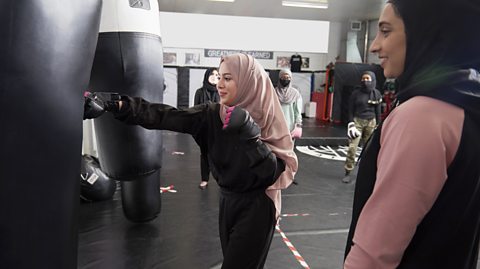
For example:
Juego al tenis regularmente con mis amigos. – I play tennis regularly with my friends.
Voy al gimnasio tres veces a la semana. – I go to the gym three times a week.
Me gusta correr diariamente. – I like running daily.
Monto en bicicleta cada fin de semana. – I go cycling every weekend.
Como pescado una vez a la semana porque es bueno para la salud. – I eat fish once a week because it’s good for your health.
Tomo cinco raciones de fruta y verduras cada día. – I have five portions of fruit and vegetables every day.
Voy a la piscina para nadar de vez en cuando. – I go the pool to swim from time to time.
All Foundation Tier vocabulary listed in this guide can be found on the vocabulary sheet below.
Grammar - The imperfect tense
The imperfect tense is used:
to describe repeated or continuous actions in the past
to describe what something or someone was like in the past
to say what people used to do or what things used to be like
For example:
Iba a pie todos los días. - I walked/used to walk every day.
Cuando era joven, nunca comía verduras. – When I was young, I never ate vegetables.
En el pasado, jugaba al baloncesto. - In the past, I used to play basketball.
The imperfect tense is frequently used with phrases that describe how often something used to happen. For example
regularmente - regularly
a veces - sometimes
cada día/todos los días - every day
generalmente - usually
How to form the imperfect tense of regular verbs
The majority of Word used to describe an action, state of being or an occurrence. are Something that follows the usual or ‘regular’ pattern. in the imperfect tense.
The imperfect is formed by removing the ar, ir and er endings from the infinitive to form the The part of the verb that is left once the infinitive ending (ar/er/ir) has been taken off. It can also be called a radical. and adding the imperfect endings:
| ar verbs | er verbs | ir verbs |
|---|---|---|
| Check your connection, refresh the page and try again. - to play | Check your connection, refresh the page and try again. - to make/do | Check your connection, refresh the page and try again. - to live |
| Check your connection, refresh the page and try again. - I used to play | Check your connection, refresh the page and try again. - I used to do | Check your connection, refresh the page and try again. - I used to live |
| Check your connection, refresh the page and try again. - you (singular) used to play | Check your connection, refresh the page and try again. - you (singular) used to do | Check your connection, refresh the page and try again. - you (singular) used to live |
| Check your connection, refresh the page and try again. - he/she used to play | Check your connection, refresh the page and try again. - he/she used to do | Check your connection, refresh the page and try again. - he/she used to live |
Note that the endings for er and ir verbs are the same.
Examples of verbs in the imperfect tense:
Cuando era joven, jugaba al fútbol cada día con sus amigos. – When he was young, he played football every day with his friends.
De niño, siempre comía demasiado azúcar. - As a child, I always used to eat too much sugar.
How to form the imperfect tense of irregular verbs
There are only three Something that does not follow the usual or ‘regular’ pattern. verbs in the imperfect tense in Spanish:
| Check your connection, refresh the page and try again. - to go | Check your connection, refresh the page and try again. - to be | Check your connection, refresh the page and try again. - to see |
|---|---|---|
| Check your connection, refresh the page and try again. - I used to go | Check your connection, refresh the page and try again. - I used to be | Check your connection, refresh the page and try again. - I used to see |
| Check your connection, refresh the page and try again. - you (singular) used to go | Check your connection, refresh the page and try again. - you (singular) used to be | Check your connection, refresh the page and try again. - you (singular) used to see |
| Check your connection, refresh the page and try again. - he/she used to go | Check your connection, refresh the page and try again. - he/she used to be | Check your connection, refresh the page and try again. - he/she used to see |
The imperfect tense - Mini quiz
Complete the following sentences in Spanish.
_______ cada día.
I used to play football every day.
jugar = to play
Jugaba al fútbol cada día.
Jugar is a regular ar verb.
To form the imperfect tense in the ‘I’ form, take off the ar and add aba.
_______ muchas verduras.
She used to eat lots of vegetables.
comer = to eat
Comía muchas verduras.
Comer is a regular er verb.
To form the imperfect tense in the ‘she’ form, take off the er and add ía.
_______ al gimnasio tres veces a la semana.
I used to go to the gym three times a week.
ir = to go
Iba al gimnasio tres veces a la semana.
Ir is an irregular verb. The imperfect tense in the ‘I’ form is iba.
Find out more about using the imperfect tense in the Imperfect tense in Spanish guide.
Reading practice
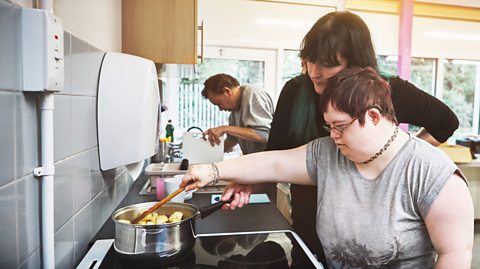
Read the article giving health advice for parents and complete the activity.
Una buena nutrición* es esencial para la salud de los niños y niñas, y tiene beneficios en el futuro. Pídele a tu hijo que te ayude a preparar las comidas. Disfrutará cocinando contigo comidas sanas para toda la familia.
Si tu hijo no quiere comer sus verduras, intenta comerlas en su presencia y para mostrarle que te gustan.
Comer demasiado puede llevar a un aumento de peso. Por lo tanto, es importante enseñar a tu hijo el tamaño correcto de las porciones* para su edad.
*nutrición = nutrition
*porciones = portions
Complete the following sentences. Write the letter for the correct option in each box.
- Good nutrition …
| A | means eating lots of fruit and vegetables. |
| B | has future benefits for children. |
| C | involves healthy school meals. |
The answer is B.
The text says - Una buena nutrición es esencial para la salud de los niños y niñas, y tiene beneficios en el futuro.
Good nutrition is essential for children's health and has benefits for the future.
- Parents should…
| A | ask their children to help them to prepare meals. |
| B | teach their children about what vitamins there are in different foods. |
| C | ask their children to watch them cooking. |
The answer is A.
The text says - Pídele a tu hijo que te ayude a preparar las comidas.
Ask your child to help you prepare meals.
- If children don’t want to eat vegetables, parents should…
| A. | not insist that they eat them. |
| B. | eat them in front of their children to show they like them. |
| C. | insist that their children finish all the food on their plate. |
The answer is B.
The text says - Si tu hijo no quiere comer sus verduras, intenta comerlas en su presencia y para mostrarle que te gustan.
If your child doesn't want to eat his vegetables, try eating them in his presence to show him that you like them.
- It’s important to teach children…
| A | not to overeat. |
| B | that eating too much can mean that you put on weight. |
| C | the correct portion sizes for their age. |
The answer is C.
The text says - …es importante enseñar a tu hijo el tamaño correcto de las porciones para su edad.
…it is important to teach your child the correct portion sizes for their age.
Click or tap on Show more to read a translation.
Good nutrition is essential for children's health and has benefits for the future. Ask your child to help you prepare meals. They will benefit from cooking healthy meals for all the family with you.
If your child doesn't want to eat his vegetables, try eating them in their presence to show him that you like them.
Eating too much can lead to weight gain. It is important, therefore, to teach your child the correct portion sizes for their age.
Vocabulary sheet
Click or tap on the image below for a list of useful vocabulary to use when describing changing habits and routines.

Higher Tier – Vocabulary – Changing habits
Useful past tense sentences to describe changing habits and routines include:
| Spanish | English |
|---|---|
| Cuando tenía catorce años decidí no volver a comer carne nunca más. | When I was fourteen, I decided to never eat meat in future. |
| Hace unos años descubrí que beber bebidas gaseosas con mucha azúcar era malo para mi salud. | A few years ago I discovered that drinking fizzy drinks with lots of sugar was bad for my health. |
All vocabulary listed in this guide can be found on the vocabulary sheet below.
Higher Tier - Grammar – The imperfect tense
The full conjugation of verbs in the imperfect is needed at Higher Tier only.
Click or tap on Show more to see the full conjugation of regular ar, er and ir verbs in the imperfect tense.
| ar verbs | er verbs | ir verbs |
|---|---|---|
| Check your connection, refresh the page and try again. - to play | Check your connection, refresh the page and try again. - to make/do | Check your connection, refresh the page and try again. - to live |
| Check your connection, refresh the page and try again. - I used to play | Check your connection, refresh the page and try again. - I used to do | Check your connection, refresh the page and try again. - I used to live |
| Check your connection, refresh the page and try again. - you (singular) used to play | Check your connection, refresh the page and try again. - you (singular) used to do | Check your connection, refresh the page and try again. - you (singular) used to live |
| Check your connection, refresh the page and try again. - he/she used to play | Check your connection, refresh the page and try again. - he/she used to do | Check your connection, refresh the page and try again. - he/she used to live |
| Check your connection, refresh the page and try again. - we used to play | Check your connection, refresh the page and try again. - we used to do | Check your connection, refresh the page and try again. - we used to live |
| Check your connection, refresh the page and try again. - you (plural) used to play | Check your connection, refresh the page and try again. - you (plural) used to do | Check your connection, refresh the page and try again. - you (plural) used to live |
| Check your connection, refresh the page and try again. - they used to play | Check your connection, refresh the page and try again. - they used to do | Check your connection, refresh the page and try again. - they used to live |
Click or tap on Show more to see the full conjugation of the three irregular verbs in the imperfect tense.
| Check your connection, refresh the page and try again. - to go | Check your connection, refresh the page and try again. - to be | Check your connection, refresh the page and try again. - to see |
|---|---|---|
| Check your connection, refresh the page and try again. - I used to go | Check your connection, refresh the page and try again. - I used to be | Check your connection, refresh the page and try again. - I used to see |
| Check your connection, refresh the page and try again. - you (singular) used to go | Check your connection, refresh the page and try again. - you (singular) used to be | Check your connection, refresh the page and try again. - you (singular) used to see |
| Check your connection, refresh the page and try again. - he/she used to go | Check your connection, refresh the page and try again. - he/she used to be | Check your connection, refresh the page and try again. - he/she used to see |
| Check your connection, refresh the page and try again. - we use to go | Check your connection, refresh the page and try again. - we used to be | Check your connection, refresh the page and try again. - we used to see |
| Check your connection, refresh the page and try again. - you (plural) used to go | Check your connection, refresh the page and try again. - you (plural) used to be | Check your connection, refresh the page and try again. - you (plural) used to see |
| Check your connection, refresh the page and try again. - they used to go | Check your connection, refresh the page and try again. - they used to be | Check your connection, refresh the page and try again. - they used to see |
For example:
Cuando éramos jóvenes, íbamos a la piscina cada fin de semana. – When we were young, we used to go to the swimming pool every weekend.
Iban al gimnasio tres veces a la semana. - They used to go to the gym three times a week.
Higher Tier - Vocabulary sheet
Click or tap on the image below for a list of Higher Tier useful vocabulary to use when describing changing habits and routines.
Now you have practised the key vocabulary and grammar needed for talking about changing habits and routines, why not have a look at the Discussing illnesses in Spanish guide?
Careers advice and tips from BBC Bitesize
Future careers, further studies and the world of work - we're here to help with advice from experts and from young people who've found their path.

More on Healthy living and lifestyle
Find out more by working through a topic
- count1 of 3
- count2 of 3