Key facts about heath and safety in manufacturing
Importance of health and safety: Ensuring employee safety is both a legal requirement and good business practice. Injuries at work can be disruptive, expensive, and lead to bad publicity.
Employer responsibilities: Under the Health and Safety at Work Act (1974) and Health and Safety (NI) Order 1978, employers must provide staff training, safety equipment, drinking water, toilets, washing facilities, and first aid equipment.
Employee responsibilities: Employees must complete training, use safety equipment, take responsibility for their own safety, and report any risks to their employer.
Working time regulations: These regulations limit working hours to an average of 48 hours per week, ensure a minimum of 5.6 weeks' holidays per year, mandate at least one day off each week, 11 consecutive hours off in every 24-hour period, and a 20-minute break when working more than 6 hours.
Why is health and safety crucial in manufacturing?

Looking after your employees is not only a legal requirement, it is also good business practice. If an employee gets injured at work, it is:
Disruptive: the worker will need medical attention and cannot work until he or she is fit to return.
Expensive: sick pay will have to be paid to the injured person and another worker will have to be employed to replace them until they are fit to return to work. Also, the employer may have to pay compensation to the employee for injuries sustained as well as possibly having to pay a fine as punishment if the Health and Safety Executive felt that the employer did not take due care of the employee.
Bad publicity: other staff will not feel cared for if they are allowed to work in dangerous conditions and might leave to find a job elsewhere. If the incident is reported in the local newspaper, the business might find it hard to recruit staff in the future. It could even cause sales to fall as customers do not want to buy products from a business which does not treat its workers in an ethical way.
Health and safety at work
What are the responsibilities of employers and employees?
In order to prevent accidents and keep workers safe, the Health and Safety at Work Act (1974) and Health and Safety (NI) Order 1978 outlines the responsibilities that both employers and employees have in keeping the working environment safe.
Compliance with the law is monitored by the Northern Ireland HSE (Health and Safety Executive).

What should employers provide?
- staff training
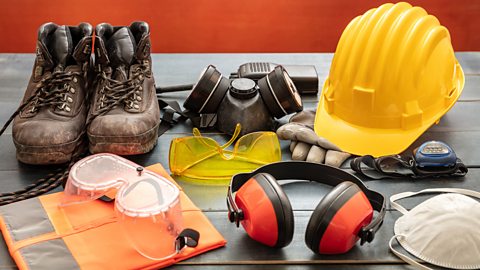
- safety equipment, including tools and clothing where appropriate
- drinking water
- toilets and suitable washing facilities
- first aid equipment
What are employees are expected to do for health and safety?
complete training provided by their employer
use safety equipment tools and wear safety clothing
take responsibility for their own safety in the workplace
report any risks to their employer
In addition, the Working Time Regulations (1998, amended 2003) place limits on the number of hours that employers can expect staff to work. They also specify the breaks employees are entitled to. The regulations ensure that staff:
can only be asked to work, on average, up to 48 hours per week
are entitled to a minimum of 5.6 weeks’ holidays per year
have a minimum of one day off each week
have at least 11 consecutive hours off in every 24-hour period
take a 20-minute break when working more than 6 hours
Health and Safety Executive Northern Ireland (HSENI): Promotion and enforcement of good health and safety at work
What are the two main roles of the Health and Safety Executive Northern Ireland?
Promotion: providing advice, information and guidance to local employers and workers on good health and safety practices
Enforcement: investigating complaints / reports of accidents at places of work, writing reports and taking legal action where necessary
Try the health and safety quiz
Final checks
Why is it considered good business practice for employers to ensure the health and safety of their employees?
Ensuring the health and safety of employees is good business practice because it prevents disruptions from injuries, avoids costly sick pay, potential fines, and compensation. Additionally, it helps maintain good publicity, making it easier to retain staff and customers.
