Key points
- Cellulose is the main substance found in plant cell walls and helps the plant to remain stiff and strong.
- Humans cannot digest cellulose, but it is important in the diet as a source of A food group that cannot be broken down in the digestive system . Foods like cereals, pasta, bread, fruits and vegetables are high in fibre.
- Cellulose is used to make clothes and paper.
Video - What is cellulose?
A case study video explaining cellulose.
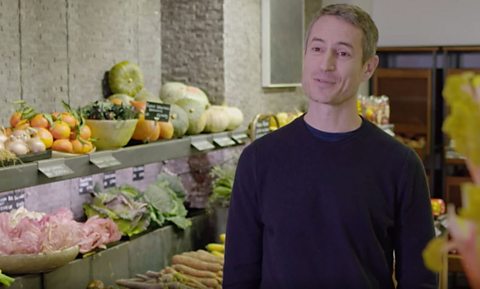
This is celery. If I snap it like that, you can see the actual fibres of cellulose there, which is allowing the plant to stand up.
Certain plants such as cotton would have even longer fibres, and they're very useful for making into the clothes you wear, such as this cotton shirt that I'm wearing.
How is cellulose useful?
Cellulose is a molecule, consisting of hundreds – and sometimes even thousands – of carbon, hydrogen and oxygen atoms. Cellulose is the main substance in the walls of plant cells, helping plants to remain stiff and upright.
Humans cannot digest cellulose, but it is important in the diet as fibre. Fibre assists your digestive system – keeping food moving through the gut and pushing waste out of the body.
Animals, such as cows, sheep and horses, can digest cellulose, which is why they can get the energy and nutrients they need from grass.
Cellulose has many uses. In cotton, it makes clothes like t-shirts and jeans. Paper-making needs huge quantities of cellulose, obtained mainly from wood.
A model of a strand of cellulose.
Cellulose polymerisation
Cellulose is an example of a natural polymer. A polymer is a long and repeating chain of the same molecule stuck together.
Cellulose is a long-chain polymer of A sugar produced by plants in photosynthesis and used by all living organisms to release energy during respiration. molecules joined together. As the plant adds one glucose molecule to the polymer, one molecule of water is released. You can see this mechanism in the video opposite. Cellulose polymerisation occurs as a plant grows and creates new cells.
A model of the polymerisation of cellulose.
Play the Atomic Labs game! game
Try out practical experiments in this KS3 science game.

More on Living organisms
Find out more by working through a topic
- count13 of 15
- count14 of 15
- count15 of 15

- count1 of 15