Key points about Christianity, peace and conflict

- Peace is an important theme in Christianity. Within Christianity there are divergent attitudes to war, peace and pacifism.
- The The Christian Holy Book containing scriptures and including the Old and New Testaments. contains extensive teachings on justice, the sanctity of life, resolving conflict and working for peace.
- Some Christians see the Just War theory as an important set of guidelines to ensure a war is fair and just.
- Throughout history, Christians have been involved in holy wars. However, the concept of holy war is no longer a wider accepted view in modern day Christianity.

Remember
There are a range of Christian denominations and therefore a variety of Christian teachings on many ethical issues, including those found in the study of religion, peace, and conflict.
Video
Watch the video below to compare Christian, Muslim and Sikh attitudes towards whether war can ever be justified.
Christian presenter: Hello. I'm a Christian.
Muslim presenter: I'm a Muslim.
Sikh presenter: And I'm a Sikh.
Christian presenter: All our religions agree that war is one of the worst things that can happen to humanity.
Muslim presenter: But wars are fought right across the world.
Sikh presenter: For many different reasons.
Christian presenter: Can war ever be justified?
Muslim presenter: In other words? Is it ever right to go to war?
Sikh presenter: Or is war never justified because so many innocent people suffer? What do our religions say about it?
Christian presenter: About 800 years ago, a Christian thinker called Saint Thomas Aquinas came up with a list of conditions which had to be met before Christians could fight in what he called a Just War. It has to be for a just cause, such as self-defence. It must be declared by the official government of the country, and the aim must be for good, to defeat evil.
Muslim presenter: So what does Islam teach? A war must meet several conditions in order to be justified as a Holy War, which in Arabic is called a Harb al-Muqadis. It must be declared by a religious leader, it must be fought in self-defence or the defence of others, it must bring about good and not evil, and it should never be fought to gain more money, land or power. War should always be a last resort. Force should only be used after peace talks have failed.
Sikh presenter: And it's similar in Sikhi. In 1699, the leader of the Sikhs, Guru Gobind Singh Ji formed the Khalsa, a group of Sikhs who committed to the Sikh identity and who stood up against the oppressive rule of the emperors in India. Guru Gobind Singh Ji argued that people had a right to defend themselves against injustice. Guru Ji wrote, ‘When all other means have failed it is permissible to draw the sword', so all members of the Khalsa and Sikhs in general should be ready to fight in a Dharam Yudh, which means a war in the defence of righteousness. But Sikhs should only fight when all peaceful solutions have failed.
Christian presenter: So that's how our religions justify going to war. But there are also rules on how a war should be fought. Saint Thomas Aquinas also said that Christians should only fight as a last resort and if there's a good chance of winning, so that lives are not wasted. The force used should be enough to defeat the enemy, no more. And innocent people should be protected.
Muslim presenter: The Qur'an says 'Fight in the way of Allah those who fight against you, but do not transgress'. Which means that Muslims must always follow Allah's rules when fighting a war and never disobey them. Innocent people should not be made to suffer and even trees, crops and animals should be protected.
Sikh presenter: The rules for a Sikh Dharam Yudh say that only the minimum force should be used to defeat an enemy, and any land or property captured during a war should be returned. Every Sikh who fights should be a “Sant Sipahi” a “saint soldier” who is devoted to upholding righteousness, challenging injustice, and who wouldn't use violence against innocent people.
Christian presenter: So all three of our religions say that the innocent should be protected during a war.
Muslim presenter: But those rules were all made a long time ago when wars were fought with swords and spears.
Sikh presenter: So can a war still be justified using the type of weapons we have today?
Christian presenter: We saw the horror of nuclear weapons when atomic bombs were dropped on Japan at the end of World War Two.
Muslim presenter: Surely, it's impossible to protect the innocent.
Sikh presenter: So - knowing the cost in innocent lives can going to war ever be justified, when eventually, both sides are going to have to sit down and talk whatever happens?
Christian presenter: But what if you're up against an enemy that refuses to talk?
Muslim presenter: Governments have a duty to keep their citizens safe, so there might be situations where strong action is needed to protect them.
Sikh presenter: Some people say that there are circumstances when people have to make difficult decisions, and what's right and wrong depends on the situation. The usual rules don't apply.
Christian presenter: It's called situation ethics and helps to explain why so many Christians,
Muslim presenter: And Muslims,
Sikh presenter: And Sikhs,
Christian presenter: fought in World War Two, because allowing the Nazis to win would have been a greater evil than fighting a war to stop them.
Muslim presenter: It's all very well talking about the theories, but I believe that the reality of war and the tragedy of innocent people being killed should be a good enough reason not to fight. I've lost family in recent wars, and so have many of my friends. It's a pain that never goes away.
Sikh presenter: War might sometimes appear to be a lesser evil, but can it ever be justified?
Christian presenter: Our religions set out rules for warfare, but they weren't made for the modern world.
Muslim presenter: And innocent people always suffer.
Sikh presenter: What do you think?
Key concepts in religion, peace and conflict
The key terms below will appear repeatedly through the theme of Christianity, peace and conflict.
Religion, peace and conflict key terms quiz
For your exam on religion, peace and conflict, it is important to know the definitions of key terms. Take the quiz below to test your knowledge.
War
War is an organised conflict, usually consisting of intense violence carried out by one state or states against another state or states.
The reasons for war are often complicated and interlinked. Christian teachings say they may include one of these three elements:
- Greed - Christian teachings warn against greed - “For the love of money is a root of all kinds of evil. Some people eager for money, have wandered from the faith and pierced themselves with many griefs.” (1 Timothy 6:10)
- Self-defence - Some Christians may accept war may be necessary if acting in self-defence, especially if peaceful attempts at reconciliation have failed - “Defend the weak and the fatherless; uphold the cause of the poor and the oppressed.” (Psalm 82: 3)
- Retaliation - This is seen by many Christians as making a bad situation worse - “Do not repay evil for evil …if it is possible … live at peace with everyone.” (Romans 12: 17-19)
Many Christians believe that war should be avoided if possible, and should only be undertaken if all efforts to resolve an issue by peaceful means have failed. Some Christians believe that war occurs when life doesn’t go according to God's plan: “Scatter the nations who delight in war,” (Psalm 68:30).
However the Bible also states that there is:
A time to love and a time to hate, a time for war and a time for peace."
Ecclesiastes 3:8
The Just War theory
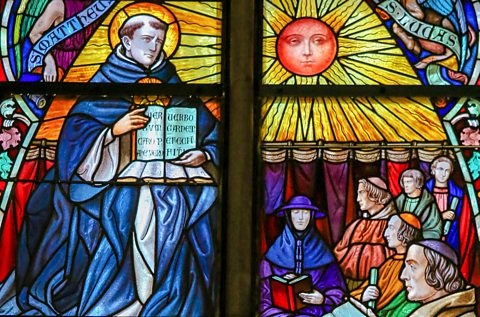
The Just War theory is based on the teachings of Christian philosophers St. Augustine (354 – 430) and St. Thomas Aquinas (1225 – 1274) and sets out conditions on whether a war can be justified, and how it should be conducted. The Just War theory, with some amendments, is still used by many Christians and others today.
The aim of Just War theory is to provide a guide to the right way for states to act in potential conflict situations.
Some Christians believe that the Just War theory provides a useful framework for individuals and political groups to use for their discussions of possible wars. The theory is not intended to justify wars but to prevent them, by showing that going to war except in certain limited circumstances is wrong, and thus motivate states to find other ways of resolving conflicts.
What are the six commonly accepted criteria of the Just War theory?
- Just cause: The reasons for going to war must be fair, for example in self-defence, and never for revenge or greed.
- Correct authority: Those declaring war should be in a legitimate position to do so, such as the recognised government or United Nations.
- Intention of going to war: The aim of the war should be that it results in peace, so that more good is achieved by the war, than by not going to war.
- Last resort: Going to war should the last choice after trying to resolve issues through measures such as diplomacy or economic sanctions.
- Reasonable chance of success: There must be a belief that the war can be won before starting it, to prevent unjustifiable deaths.
- Proportional and appropriate force: Only the minimum required amount of force and weapons should be used so as to avoid harming innocent civilians.
Violence
Christianity teaches non-violence. However, some believers argue that as humans were given free will to decide the best course of action, therefore, violence may sometimes be justified, especially if other reconciliation methods have failed.
Terrorism
The Christian Church strongly opposes terrorism.
Terrorism threatens, wounds, and kills indiscriminately; It is gravely against justice and charity.”
Catechism of The Catholic Church paragraph 2297
Terrorism is illegal and the UK’s Terrorism Act 2000 defines it as:
The use or threat of serious violence against a person or serious damage to property where that action is: designed to influence the government or an international governmental organisation or to intimidate the public or a section of the public; and for the purpose of advancing a political, religious, racial or ideological cause."
Examples of modern terror attacks include:
- 11 September 2001, suicide attackers seized US passenger planes and crashed them into two New York skyscrapers, killing 2,977 people.
- 22 July 2011, Anders Breivik killed 77 people in Norway by firstly detonating a van bomb and then carrying out a mass shooting.
- 14 October 2017, at least 587 people were killed in a truck bombing in Mogadishu, the capital of Somalia.
In opposing terrorism, Christians may refer to the Proverbs (22:8) teaching: “Whoever sows injustice reaps calamity, and the rod they wield in fury will be broken.” This teaches Christians that actions carried out in anger and injustice do not solve problems, but instead cause more destruction.
Attitudes to warfare
Weapons of mass destruction (WMDs) can kill lots of people and include chemical, biological, radiological and nuclear weapons.
Nuclear weapons are enormously powerful explosives that use a nuclear reaction. The explosions they produce are so powerful that one nuclear bomb can destroy a large city, which Does not show any careful thought, choice or planning. kills huge numbers of people.
No religion agrees with the use of weapons of mass destruction.
Christians believe in the The concept that life is holy, sacred and precious and belongs to God. and therefore the effects of these weapons in particular go against a central teaching of the religion: “Do not kill,” (Exodus 20:13). Most Christians believe that only God has the right to take life away.
It is impossible to conceive of a Just War in a nuclear age.”
Pope John XXIII
What is the difference between conventional warfare and technological strikes?
Conventional warfare – the traditional means of war where armies come face to face and fight using conventional weapons and battlefield tactics in open conflict. Weapons such as tanks, guns and aircraft are what is normally used in this type of warfare.
Technological strikes - the use of bombs with a computer guidance system in the missile. In theory, they can be remotely controlled to a specific target, such as an army base but in practice, they are not completely accurate and widespread civilian deaths often occur.
GCSE exam-style question
Explain two Christian views about the use of weapons of mass destruction.
In your answer you must refer to a source of wisdom and authority.
One Christian view about the use of weapons of mass destruction is that they should never be used. In The Ten Commandments, the Bible teaches Christians that ‘You should not kill’ (Exodus 20:13) and weapons of mass destruction can cause a very high number of deaths. Christian pacifists, for example Quakers, oppose war in all situations and believe that non-violent methods should be used to resolve conflict. They therefore disagree with the use of weapons of mass destruction under any circumstance.
Some Christians argue that whilst weapons of mass destruction should not be used because they can kill lots of people and go against the criteria of the Just War theory that innocent civilians should not be harmed, their existence can be justified as a deterrent. They believe countries are less likely to use them because of the concept of mutually assured destruction.
Case study – Hiroshima and Nagasaki

On 6 August 1945, the USA dropped an atomic bomb on the Japanese city of Hiroshima. The blast devastated an area of five square miles, destroying more than 60 percent of the city’s buildings and killing around 140,000 people.
Three days later the USA dropped a second atomic bomb on the Japanese city of Nagasaki, killing around 74,000 people. The nuclear radiation released by the bombs caused thousands more deaths from radiation sickness in the weeks, months and years that followed.
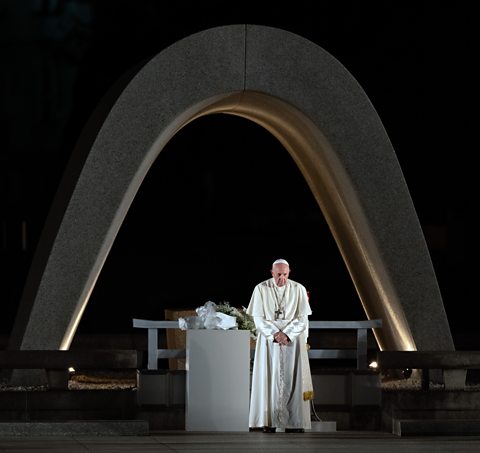
During a visit to Nagasaki in 2019, Pope Francis made an impassioned appeal for the abolition of nuclear weaponry.
He condemned the "unspeakable horror" of nuclear weapons and insisted they were "not the answer" for global peace: "This place makes us deeply aware of the pain and horror that we human beings are capable of inflicting upon one another."
Justice
Christianity teaches that God has always existed as judge over his creation, and his judgement decides whether a person reaches heaven or hell.
For we must all appear before the judgement seat of Christ.”
2 Corinthians 5:10
Christianity teaches that a time will come when God will ensure that there is peace between all nations.
Nation will not take up sword against nation, nor will they train for war anymore.”
Isaiah 2:4
Many Christians believe that until that time arrives, they should put their efforts into living a good, honest life and work towards what is right and just in all that they do.
“He will rise up to show you compassion. For the Lord is a God of justice.”
Isaiah 30:18
Some Christians adopt absolute pacifism and say that participating in war, even in self-defence, is never justifiable. Other Christians, however, believe in conditional pacifism, acknowledging that sometimes war might be a lesser evil compared to alternatives. This draws on the theory of Utilitarianism, a moral framework that looks at the consequences of actions to determine the morality of pacifist decisions.
GCSE exam-style question
State three Christian beliefs about justice.
For many Christians, justice means bringing fairness into a situation and it is a repeated theme in the Bible.
Christianity teaches that God has always existed as judge over his creation, and his judgement decides whether a person reaches heaven or hell.
Many Christians believe that until that time arrives, they should put their efforts into living a good, honest life and work towards what is right and just in all that they do.
Attitudes to peace and pacifism
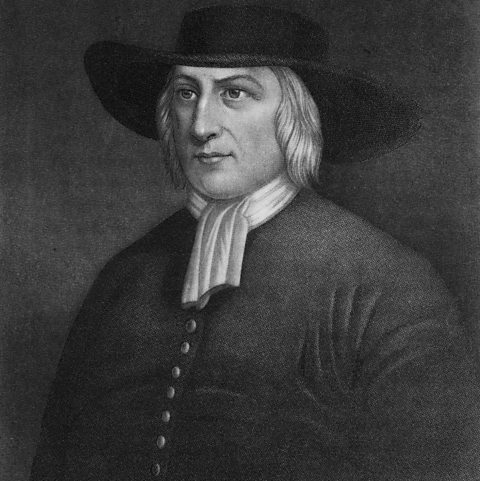
Christianity is not a Someone who refuses to take part in war and any other violence. religion although, individually, Christians may be pacifists. The Christian Distinct groups within Christianity with own organisation and, traditions. of Quakerism however, is pacifist, and opposes war in all circumstances, believing that non-violent methods should be used to resolve conflict instead.
Quakers believe that there is something of God in everybody and that each human being is of unique worth. This is why Quakers value all people equally and oppose anything that may harm or threaten them.
Jesus taught in Luke 6:27 that it is important for Christians to love their enemies:
“But to you who are listening I say: Love your enemies, do good to those who hate you, bless those who curse you, pray for those who mistreat you. If someone slaps you on one cheek, turn to them the other also. If someone takes your coat, do not withhold your shirt from them. Give to everyone who asks you, and if anyone takes what belongs to you, do not demand it back. Do to others as you would have them do to you.”
Jesus also described the importance of being a peacemaker:
Blessed are the peacemakers, for they shall be called children of God.”
Matthew 5:9
Many Christians follow Jesus’ example when he was arrested in the garden of Gethsemane but refused to respond with violence, even healing one of the guards who had been hurt by one of the disciples. “When Jesus’ followers saw what was going to happen, they said, “Lord, should we strike with our swords?”. When one of them struck the servant of the high priest, cutting off his right ear, Jesus answered, “No more of this!” and proceeded to touch the man’s ear and heal him. Luke 22:49-51
Whilst Jesus taught that violence was never the answer and that peace should always be sought, some Christians believe that war must sometimes be fought for the greater good, but only if all other methods to restore peace and justice have been exhausted. In 2022, Pope Francis said: “A war may be just; there is the right to defend oneself.”
Some Christians will support the principle of passive resistance which can be described as a non-violent and opposing response to authority an example of which can be seen in the following case study.
Video
Watch the video below to compare Christian, Jewish and Muslim attitudes towards whether religious people should always be pacifists.
Christian presenter: Hi. I'm a Christian.
Muslim presenter: I'm a Muslim.
Jewish presenter: And I'm Jewish.
Christian presenter: We all agree that in an ideal world, there would be no war.
Muslim presenter: We'd all be living in peace.
Jewish presenter: But sadly, that's not the world we live in where violence is a reality.
Christian presenter: A pacifist is someone who believes that violence should never be used.
Muslim presenter: Mainly because human lives are precious.
Jewish presenter: So should religious people like us who want to live good lives in a better society be pacifists?
Christian presenter: In the Bible, Jesus certainly seems to teach about pacifism. He said, 'blessed are the peacemakers. Love your enemies and if anyone slaps you on the right cheek, turn to them the other cheek also'.
Muslim presenter: Muslims traditionally greet each other by saying Salaam alaikum, which means peace be with you in Arabic. And it reminds me to live a peaceful life. The Qur’an says 'Paradise is for those who curb their anger and forgive their fellow men. And the true Muslims walk on the earth humbly. And when the foolish address them improperly, they only respond with peace.'
Jewish presenter: The traditional Jewish greeting is similar. We say Shalom, which means peace in Hebrew. The Jewish prophets look forward to a time without war. 'Nations will not raise their swords at each other, and they will no longer learn war.' And we believe there will be a messiah, a great future leader, who will bring peace. He will be called 'Wonderful Counsellor, Mighty God, Everlasting Father, Prince of Peace'. So all our religions teach that we should live peacefully.
Christian presenter: And many religious people do lead a pacifist life. There's a Christian denomination called the Quakers or the Religious Society of Friends, which was founded on the idea of pacifism. Many Quakers were conscientious objectors during both World wars, which means they refused to fight because of their Christian beliefs. Instead, they used non-violent methods to campaign against injustice. Martin Luther King Jr was a pastor in the Baptist church who, in the 1950s and 60s campaigned to get equal rights for black people in the USA. Because of his Christian beliefs he insisted his protest should always use non-violent methods, even though violence was often used against him.
Jewish presenter: Martin Luther King was helped in his non-violent protest by people from many faiths, including Jewish Rabbi Abraham Joshua Heschel, who not only campaigned but he also called for an end to the USA's war in Vietnam.
Muslim presenter: More recently, the Muslim campaigner Malala Yousafzai became the youngest person to ever win the Nobel Peace Prize when she was just 17 in 2014. In a speech to the United Nations, she outlined her belief that ignorance is a cause of violence. She said, 'let us pick up our books and our pens. They are the most powerful weapons. One child, one teacher, one book and one pen can change the world.'
Christian presenter: But many would argue that sometimes violence has to be met with violence, because the alternative is to let evil win. During the Second World War, a German Christian pastor, Dietrich Bonhoeffer, argued that violence is sometimes necessary to restore peace, and he followed up his argument with action. He was arrested and executed in 1945 for his part in a plot to assassinate Hitler.
Jewish presenter: The Book of Ecclesiastes says, 'There is a time for everything. A time to love, a time to hate. A time for war. A time for peace'. Judaism teaches that we should fight when our existence is threatened, as it was during World War II in Nazi Germany. At a time like that, pacifism doesn't feel like an option to me. But the book of Deuteronomy instructs us to fight only after peace talks have failed, and innocent people should not be killed.
Muslim presenter: Many Muslims also believe that sometimes it's a duty to fight. The Qur’an says, 'Why should you not fight in God's cause? And for those oppressed men, women and children who cry out?'
Jewish presenter: If everyone put their weapons down, then we can all finally live in peace. But my late grandfather was the only member of his family to survive the Holocaust. So I know that there are times when people do have to fight to stay alive. If the UK was threatened by another country, what would my faith tell me to do? I hope that I'd make the right decision.
Christian presenter: It's something I'd have to weigh up really carefully to.
Muslim presenter: And decide if a pacifist alternative to fighting was realistic.
Jewish presenter: I think we'd all agree that although pacifism is difficult in a violent world,
Christian presenter: peace is something that religious people should be actively working towards.
Muslim presenter: Because we all want to live in a community where we are valued and safe. But what do you think?
GCSE exam-style question
State three Christian beliefs about the importance of peacekeeping.
Answers could include:
Many Christians believe that Jesus’ teachings are incompatible with the waging of war, as he praises those who are peacemakers: “Blessed are the peacemakers,” (Matthew 5:9).
The Bible also encourages Christians to: “Love your enemies and pray for those who persecute you,” (Matthew 5:44), this means that Christians should avoid conflict and support peace.
Isaiah 11:6 describes a time when there will be absolute peace and Christians believe that by standing up for social injustice and other wrongs in society that the promised peace will come sooner.
Case Study - Dr Martin Luther King Jr
Dr Martin Luther King Jr led the American civil rights movement in 1950s and 60s. He was a Christian and believed that peace should be a way of life for everyone. Under his leadership, the movement adopted tactics of non-violence, peaceful protest and civil disobedience. He believed non-violent methods were the best way to live true to his faith.
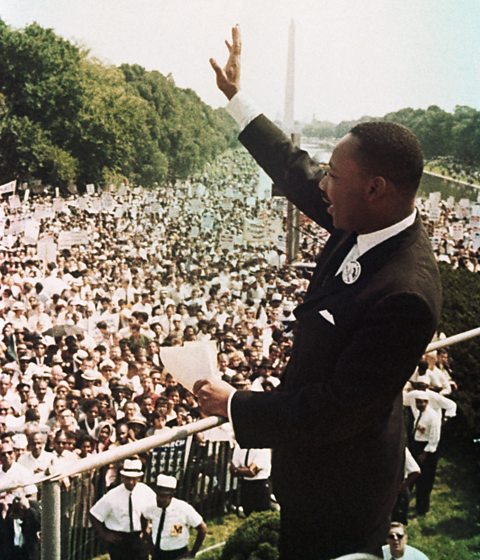
In August 1963, 250,000 people gathered in Washington DC to protest about civil rights. Dr King made his famous, “I Have a Dream” speech to a worldwide audience.
He encouraged his followers to stand up for their rights without using violence. He believed this approach would have a stronger impact on achieving civil rights goals.
In spite of temporary victories, violence never brings permanent peace.”
Dr King (Nobel Peace Prize speech, 1964)
Useful quotes about peace and conflict from Christianity
1 of 5
Forgiveness and reconciliation
Showing grace and mercy and pardoning someone for what they have done wrong. is a central teaching in Christianity and is mentioned throughout the Bible.
Blessed are the merciful.”
Matthew 5:7
Most Christians believe that God is all forgiving, therefore it is the responsibility for humans to forgive each other. The Lord’s prayer states: “And forgive us our trespasses, as we forgive those who trespass against us,” based on Jesus’ teachings where he said:
For if you forgive other people when they sin against you, your heavenly Father will also forgive you. But if you do not forgive others their sins, your Father will not forgive your sins."
Matthew 6:14-15
In Matthew 18:21-22, the disciple Peter asked Jesus whether it was enough to forgive someone seven times, Jesus replied, “Not seven times but seventy times seven,” Some Christians see this as evidence that forgiveness should be granted in all situations.
However other Christians may believe that forgiveness should only be given if the person is truly sorry for their actions.
If your brother or sister sins against you, rebuke them; and if they repent, forgive them.”
Luke 17:3
Reconciliation
Reconciliation is making up and rebuilding relationships between two sides after a conflict. It is more than just apologising, it is actively working towards peace and moving on from the situation.
Despite the difficulties, many Christians believe that forgiveness and reconciliation are important not just once war has happened, but also as a way of preventing conflict.
Christians use the example of Jesus as the ultimate in reconciliation:
We were reconciled to him through the death of his [God’s] Son, how much more, having been reconciled, shall we be saved through his life!”
Romans 5:10-11
GCSE exam-style question
Explain how religious teachings have influenced Christians working for forgiveness and reconciliation.
You should refer to sources of wisdom and authority in your answer.
Answers could include:
Many Christians use the teachings of the Lord’s Prayer as an example of forgiveness. Christians following this teaching would be encouraged to forgive others as God forgives them, “If you forgive other people when they sin against you, your heavenly Father will also forgive you.”(Matthew 6:24).
However, some Christians believe you should only forgive if the person is truly sorry and repents, “If your brother or sister sins against you, rebuke them; and if they repent, forgive them,” (Luke 17:3). Forgiveness is seen as an important part of reconciliation and rebuilding relationships.
Some Christians might use the example of Jesus as the ultimate in reconciliation: "We were reconciled to him through the death of his [God’s] Son, how much more, having been reconciled, shall we be saved through his life!” (Romans 5:10-11).
Case study - Gee Walker
Gee Walker’s son Anthony was murdered in Merseyside, UK, in a racially motivated attack in 2005.
Gee is a Christian and after the murder, she spoke out about wanting good to come out of something so terrible. She said at the time:
I have to forgive them. My family and I will stand by what we believe in: forgiveness.”
She set up the Anthony Walker Foundation, which challenges people to love, care and change the world so that peace might become part of everyday life and that events which took her son would not happen again.
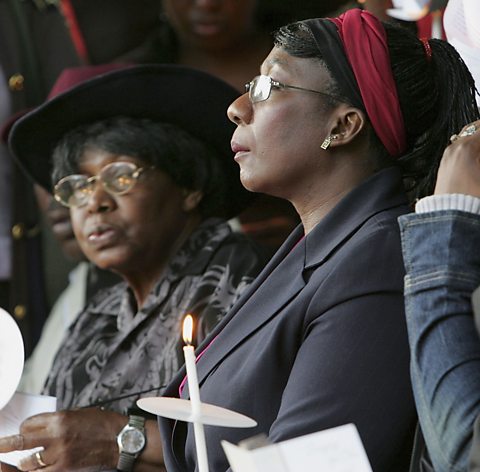
Gee chose to forgive her son's killer, even though it was incredibly difficult for her.
When talking about her decision, she explained:
I am in enough pain. Why take on and carry about hate and anger as well? I see it as if it was a suitcase. I can take what I need, or pack it with more things that are not useful; and injure myself in the process as I lug it about.”
Additionally, in line with her Christian faith, Gee believes that in the same way God forgives us, we are to forgive others too. Whilst she did not find it easy, she says that by forgiving she is able to live life to the full again.
Religion as a cause of war and violence - holy war
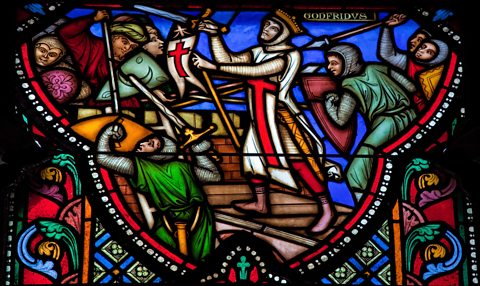
In Christianity holy war refers to a war which is fought ‘on behalf of God’. The concept of holy war is rejected by all mainstream Christian denominations today.
The idea of a holy war was developed in the medieval era, when several Military campaigns undertaken by Christians who believed that it was possible for them to reclaim the Holy Land for Christianity from Islam. Muslims who lived in the Holy Land regarded the arrival of these Christian soldiers as an invasion. were made by people from European Christian countries. Crusaders believed they were carrying out their God's work by taking part in military campaigns to ‘reclaim' the Holy Land for Christianity.
According to Pope Urban II: “If you are killed, your sins will be pardoned”, which some Christians took to mean that spiritual rewards were available for those who take part and die in battle.
Christianity scripture quiz
More on Christianity
Find out more by working through a topic